Brutalist Interior Design: The Soft Brutalism Guide for Livable Concrete Spaces in 2026
Brutalist furniture searches hit 6,600/month. But 2026's version is not cold concrete — it is Soft Brutalism: raw materials balanced with bouclé, warm wood, and layered lighting. Here is how to get the look without living in a bunker.
 Easy Room AI Team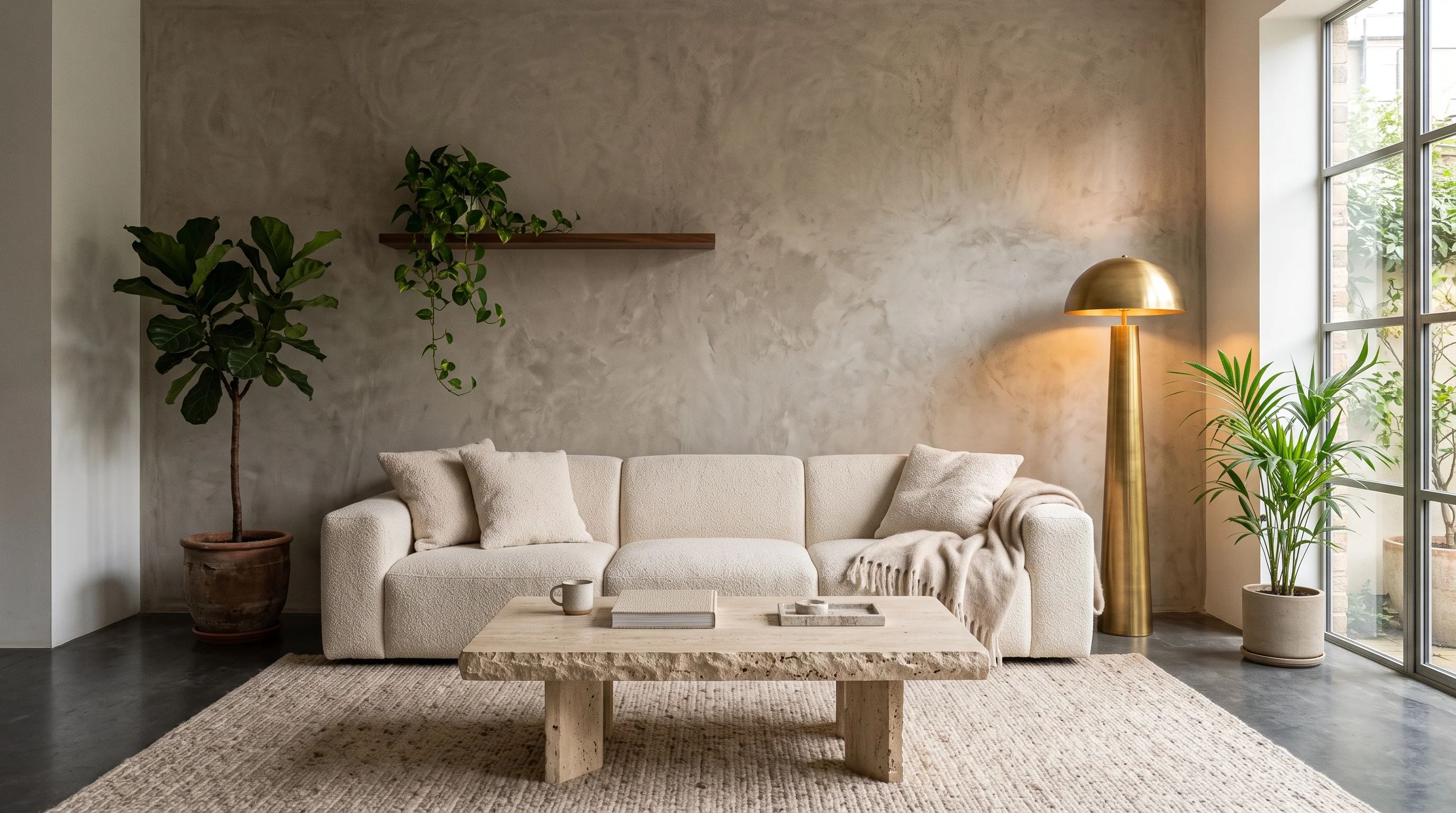
Brutalist design used to mean government buildings and parking garages. In 2026 it means something very different — and very livable. "Brutalist furniture" is one of the fastest-rising search terms in interior design, hitting 6,600 monthly Google searches and climbing. On TikTok, "Brutalist-core" has become its own subculture of people drooling over raw concrete, sculptural furniture, and shadow-casting walls.
But the version entering real homes is not cold or austere. Designers are calling it Soft Brutalism — the raw materials and structural honesty of classic brutalism balanced with warm textiles, natural wood accents, and considered lighting. As Home Designing puts it, Soft Brutalism "keeps the honesty of exposed materials like concrete, stone, and metal but softens them with natural textures, curved forms, and muted tones."
Here is how to bring brutalism into your home without turning it into a bunker.
What is brutalist interior design
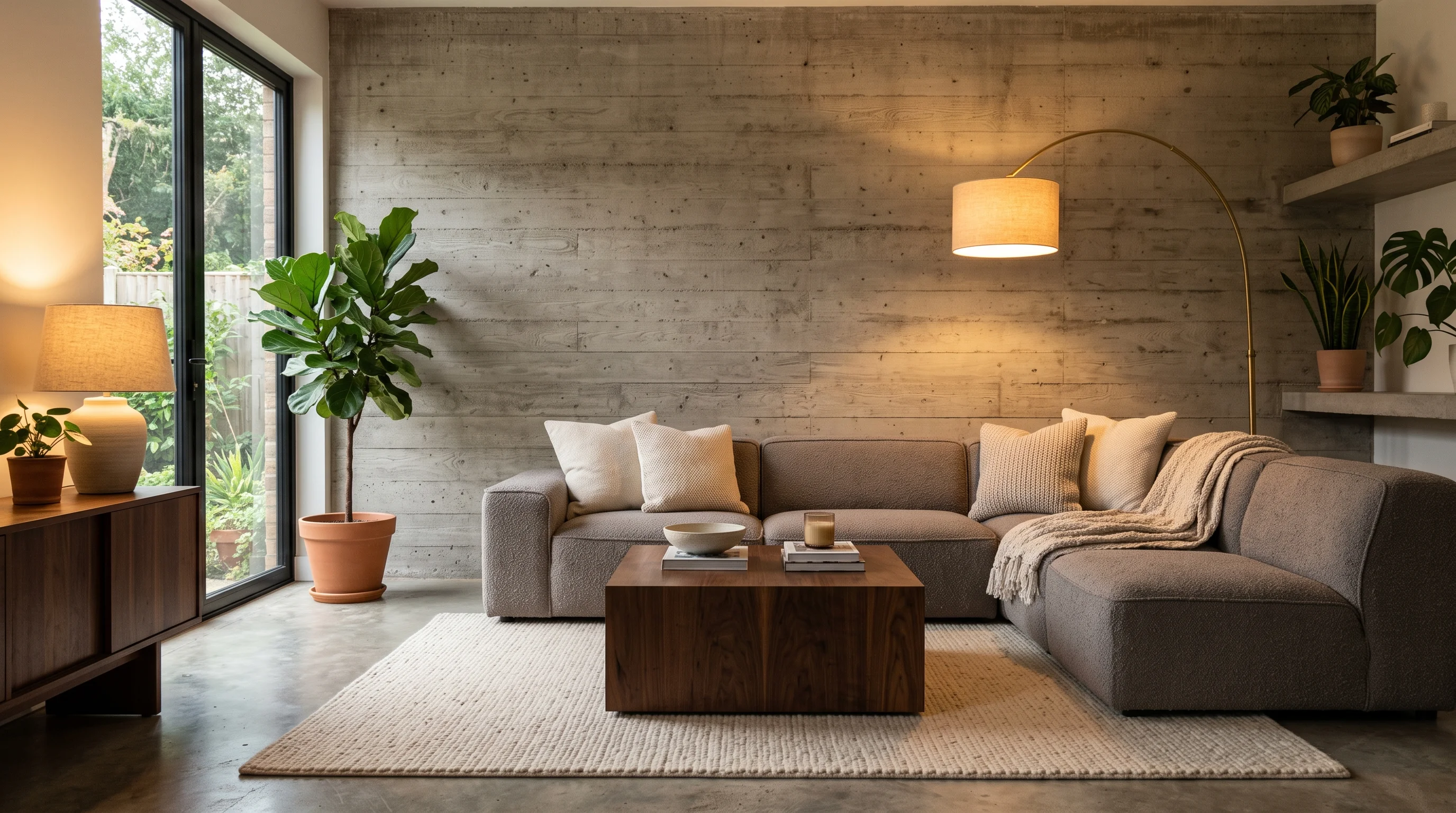
Brutalist interior design is built on five principles:
- Material honesty. Concrete, stone, steel, and solid wood are left exposed — no paint hiding the material, no veneer pretending to be something it is not.
- Monolithic forms. Furniture and architecture use blocky, sculptural, geometric shapes with significant visual weight. Low profiles, wide proportions, clean heavy lines.
- Restrained palette. Concrete gray, charcoal, bone, and earthy neutrals. Color is rare and deliberate when it appears.
- Visible construction. Bolt heads, board-formed texture, dovetail joints — the way something is made is part of the design, not hidden behind a finish.
- Negative space. Brutalist rooms breathe. Every piece is given room to exist as a sculptural object rather than being crowded.
The 2026 evolution — Soft Brutalism — keeps all five principles but adds a sixth: warmth. Warm textiles, warm lighting, warm wood, and plants soften the hard edges without compromising the philosophy.
Soft Brutalism: why it works now
The timing makes sense. After a decade of pale Scandinavian minimalism that often felt weightless, people want rooms with gravity and presence. But nobody wants to live in a cold concrete box.
Soft Brutalism solves both problems. As FAP Ceramiche's design team writes, 2026 brutalism embraces "soft tactility, where concrete appears velvety, stone regains a vibrant porosity, and metal loses its shine in favour of warm, matt surface patinas." The style gives rooms the visual weight that pale minimalism lacks while remaining genuinely comfortable.
It also connects to the broader 2026 movement toward textured walls, warm minimalism, and honest materials like venetian plaster and limewash. Brutalism just takes those ideas further.
Preview Soft Brutalism in Your Space
Upload a photo of your space to test Soft Brutalism instantly with AI — 100% free.
Supports JPG, PNG, WebP up to 10MB
The brutalist material palette
| Material | Role | Budget alternative |
|---|---|---|
| Board-formed concrete | Feature walls, architectural anchors | Microcement or concrete-effect stoneware tile |
| Microcement | Walls, floors, countertops | DIY kits available for ~$8–12/sqft |
| Raw steel | Shelving, table legs, bed frames | Black metal furniture from IKEA or vintage |
| Solid wood (walnut, smoked oak) | Warmth, furniture, softening | Stained pine in similar tones |
| Natural stone (travertine, limestone) | Coffee tables, shelving, basins | Concrete-composite alternatives |
The rule: you do not need a concrete building to do brutalist interiors. A single microcement feature wall — typically the wall behind the sofa or the headboard — anchors the room's brutalist character. One application costs significantly less than treating all surfaces and makes a stronger design statement.
Brutalist living room
This is where the style makes its biggest impact.
The anchor wall. One wall in board-formed concrete texture or microcement. Choose the wall behind the primary seating arrangement. This single surface defines the room's character.
The sofa. Low-profile, deep, wide. A modular sectional in warm gray bouclé, natural linen, or charcoal wool provides the essential soft counterpoint to the hard wall. Look for a seating depth of at least 38 inches — the proportional weight matters.
The coffee table. This is where brutalism shines. A chunky travertine slab, a raw concrete cube, or a solid dark wood block with visible grain. The table should feel like a small architectural object.
Lighting. Layer warm sources — no single overhead. A sculptural floor lamp that grazes the textured wall, a pair of simple table lamps, and perhaps a single oversized brass or concrete pendant. Stick to 2700K warm white bulbs. As one guide emphasizes, "Cool white light on grey concrete turns a home into a parking garage; warm light turns it into a sanctuary."
Softening elements. A large wool rug extending well beyond the seating area. Linen curtains in a warm neutral. A few plants — the green against concrete is one of the most powerful contrasts in interior design.
Brutalist bedroom
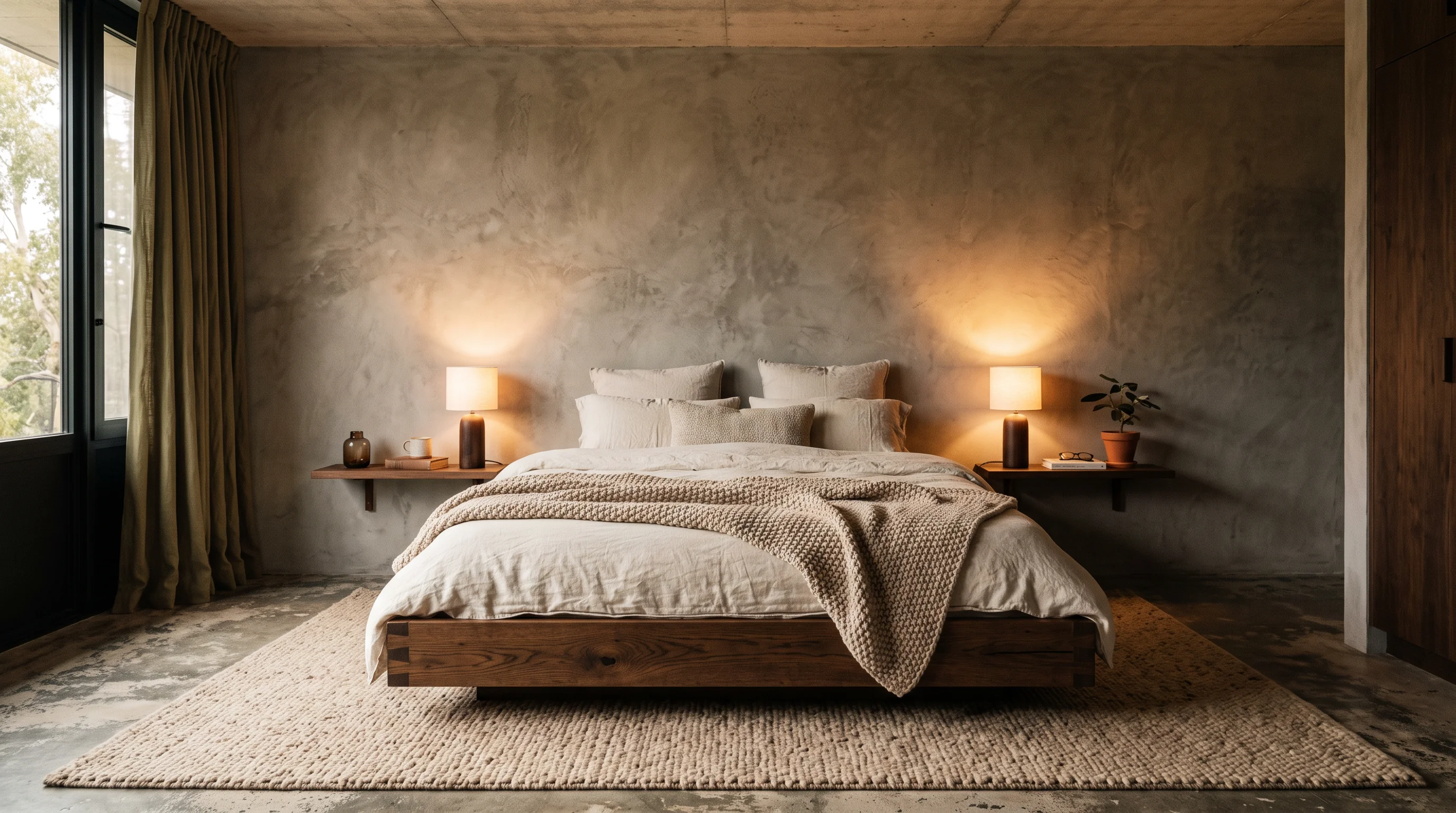
The bedroom is where Soft Brutalism is most important — you need to actually sleep in this room.
One textured wall behind the bed. Board-formed concrete look, microcement, or dark limewash paint. This is the brutalist anchor. Everything else in the room moves toward softness.
Platform bed. Low, horizontal, with visible construction — whether the bolted joints of a steel frame or the dovetailed corners of a timber platform. Dark wood or black metal frames work equally well.
Layer the textiles. Linen bedding in warm white or cream. An oversized chunky wool throw at the foot. Velvet cushions for tactile contrast. The layering of soft textiles against raw materials is the essence of Soft Brutalism.
Minimal furniture. Floating bedside shelves rather than nightstands. A simple wooden or metal chair in the corner. Nothing excessive — every piece should feel like a deliberate object.
Warm bedside lighting. Simple geometric table lamps or wall-mounted sconces. No overhead fixtures in a brutalist bedroom — they flatten the texture you worked to create.
Brutalist kitchen and bathroom
Kitchen. A concrete or microcement island paired with warm wood open shelving creates the brutalist-meets-warm balance. Matte black hardware, honed stone countertops, and a restrained palette of gray, black, and walnut. The result is a kitchen that feels like a workshop — purposeful and honest.
Bathroom. The natural home for brutalism. Microcement walls and floor, a monolithic stone or concrete basin, matte black fixtures, and a frameless mirror create spa-like, gallery calm. Add a wooden bath mat and warm lighting to prevent it from feeling clinical.
The IKEA brutalist hack
Brutalism does not require a luxury budget. The most viral brutalist project of 2026 is an IKEA IVAR cabinet hack: one unfinished pine cabinet, 84 half-round wood spheres glued in a grid pattern, and a walnut stain. Total cost: around $250.
The sphere grid creates genuine sculptural relief. The walnut stain unifies the spheres and the cabinet into a single material language. The result reads as considered brutalist furniture at a fraction of the cost of designer pieces.
This hack captures the core lesson: brutalism is about honesty, repetition, and material weight — not expensive materials.
Five brutalist mistakes to avoid
1. Going all concrete. One feature wall is a statement. Four concrete walls is a basement. Keep concrete to 25 percent or less of your room's surfaces.
2. Using cool lighting. This is the single most common mistake. Cool white light (4000K+) makes concrete feel institutional. Warm light (2700K) makes it feel like sculpture. No exceptions.
3. Forgetting softness. Raw surfaces everywhere creates a space nobody wants to sit in. Every hard surface needs a soft counterpoint — bouclé on the sofa, wool on the floor, linen on the windows.
4. Choosing ornate furniture. Fragile or decorative pieces get swallowed by brutalist architecture. Furniture needs enough visual mass to hold its own against the weight of the materials. Low, chunky, simple.
5. Matching grays too precisely. Brutalist rooms work best with slight tonal variation — a warmer gray wall, a cooler gray sofa, a dark charcoal accent. Matching everything to the exact same gray makes the room feel flat.
Preview brutalist finishes in your room
Not sure if a concrete feature wall or dark microcement floor will work in your space? Upload a photo and test brutalist materials and finishes with AI — see how your room looks with a textured concrete wall, dark wood furniture, and warm lighting before committing to any renovation.
For related styles, explore warm minimalism, cold minimalism, and Japandi interior design.
FAQ
Is brutalist interior design cold? It can be, but it does not have to be. The 2026 approach — Soft Brutalism — balances raw materials like concrete and steel with warm wood, bouclé textiles, layered lighting, and plants. The key is keeping concrete as an accent (one feature wall) rather than covering every surface, and always using warm (2700K) lighting.
How do I start with brutalist design on a budget? Start with a single microcement feature wall ($8–12 per square foot in DIY kits) or concrete-effect paint. Add one sculptural furniture piece — a chunky coffee table or a geometric side table. Use the IKEA IVAR brutalist hack for affordable textured storage. You do not need real poured concrete to achieve the look.
What furniture works with brutalist interiors? Low-profile, blocky, sculptural pieces with visual weight. Think chunky travertine or concrete coffee tables, modular sofas with deep seats, platform beds, and simple geometric shelving. Avoid ornate, delicate, or highly decorative furniture — it gets lost against heavy architectural materials.
Can brutalist design work in a small apartment? Yes. One microcement or concrete-effect accent wall, a few sculptural pieces, and a tight monochrome palette can give a small space architectural presence. The key is restraint — in a small room, one bold brutalist element is enough. Pair it with warm lighting and soft textiles to keep the space feeling inviting.
What is the difference between brutalist and industrial style? Both use raw materials, but brutalism emphasizes sculptural, monolithic forms and architectural weight, while industrial style leans more toward factory aesthetics — exposed brick, metal pipes, Edison bulbs, and vintage machinery. Brutalism is more refined and intentional; industrial is more nostalgic and decorative.
Ready to Transform Your Space?
Try AI room redesign for free - no credit card required.
Start Designing FreeRelated reading
Maximalist Interior Design: The 2026 Guide to Bold, Curated, Personal Spaces
Minimalism had its decade. Pinterest reports eclectic apartment searches up 630% and vintage maximalism up 260%. Here is how to do maximalist interiors with intention — bold color, layered pattern, personal story, zero chaos.
Dark Wood Interior Design: Why Walnut and Rich Tones Are Replacing Pale Oak in 2026
After fifteen years of pale Scandinavian oak, dark wood is back. Houzz reports searches up 187%. Here is how to bring walnut, mahogany, and rich timber into every room without making your home feel heavy.
Plum Bedroom Ideas: 12 Ways to Use 2026's Most Cocooning Color
Pinterest reports Plum Noir searches up 220% with saves up 335%. Deep plum is 2026's answer to the all-white bedroom — cocooning, sophisticated, and surprisingly easy to live with. Here are 12 ways to use it.