Warm Minimalist Bedroom Ideas: How to Create a Calm, Textured Retreat in 2026
A warm minimalist bedroom keeps the clutter-free calm but trades cold whites for cream, oak, and layered linen. Here are the exact steps — palette, bed, lighting, and textures.
 Easy Room AI Team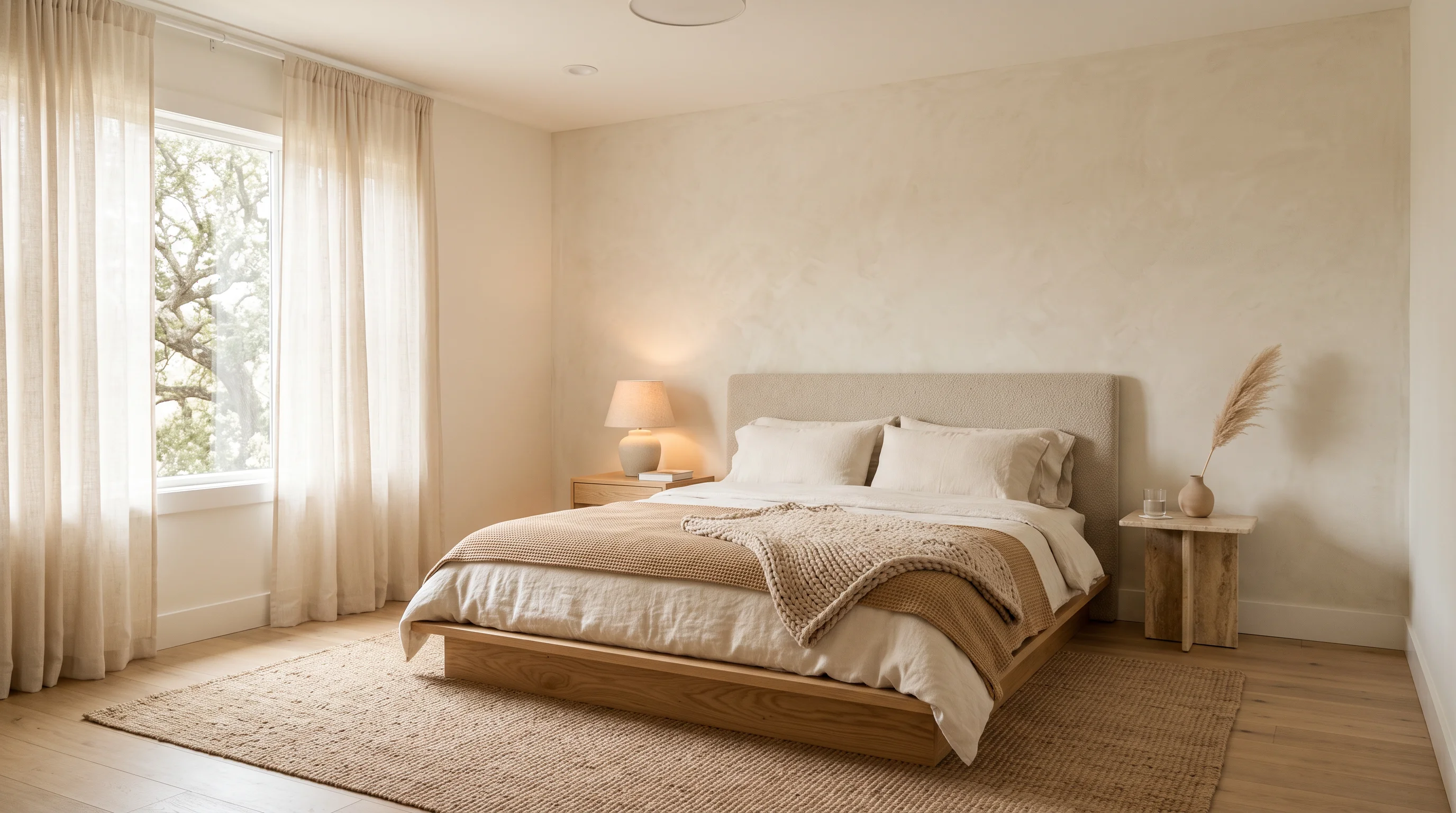
The old minimalist bedroom promised calm but delivered cold. White walls, a single pendant light, and a duvet so flat it looked like no one slept there. The new version — warm minimalism applied specifically to the bedroom — keeps the uncluttered discipline but adds the one thing the old version lacked: the feeling that this room was made for sleeping, not photographing.
The data supports the pivot. Houzz's 2026 Summer Trends Report shows search spikes for the materials that define this look: linen wallpaper up 104%, warm neutrals like mushroom up 69%, taupe up 50%, and cream up 44%. Meanwhile NKBA's 2026 research describes the overarching shift as "calm, balanced, and connected to nature."
Here is the step-by-step formula.
The Warm Minimalist Bedroom Palette
Get the palette wrong and the room either feels cold (too white) or muddy (too many browns). The formula is simple:
Walls (one color, warm)
Pick one warm neutral and commit. Avoid true white — it reads clinical under bedroom lighting.
- Warm cream: Benjamin Moore Simply White (OC-17) or Sherwin-Williams Creamy (SW 7012)
- Oatmeal: Benjamin Moore Pale Oak (OC-20) — the most popular warm-minimalist wall color for a reason
- Mushroom: Benjamin Moore Pashmina (AF-100) — deeper, bridges warm and cool
Textiles and wood (tonal, not matching)
Stay within one tonal family but vary the shade. Cream sheets, camel throw, sand-colored rug, warm oak nightstand — different shades, same warmth. This creates depth without clutter.
The 10% anchor
A single element in matte black or dark bronze — a thin-frame mirror, a bedside sconce, a door handle — gives the soft palette definition. Without this, the room can feel like it has no edges.
The Bed: Platform, Linen, Layered
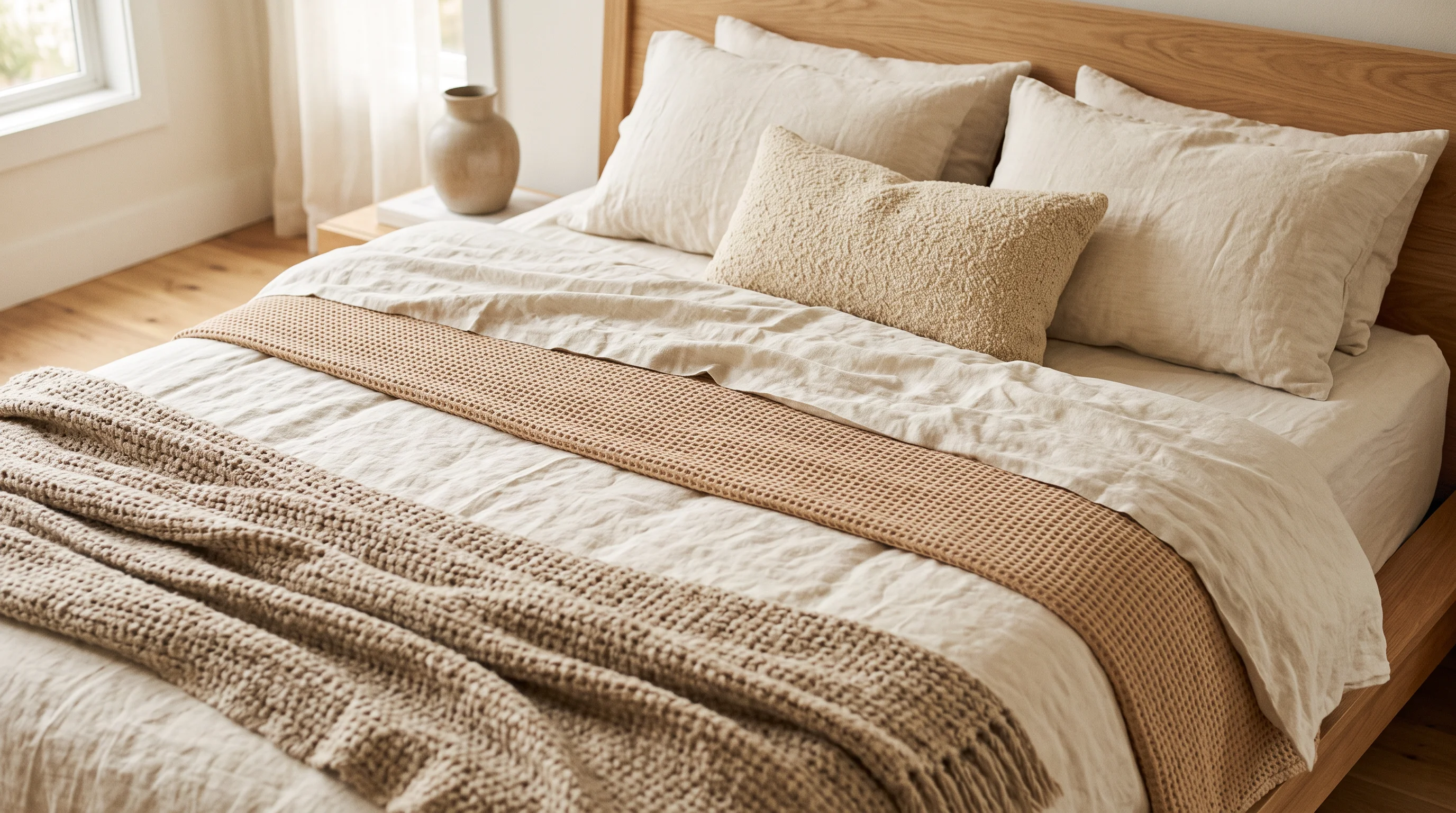
The bed is 80% of a bedroom's visual weight. Get it right and the rest follows.
Frame. A low-profile platform bed in warm oak or walnut. Visible grain is essential — it is the largest dose of natural material in the room. Avoid painted frames, upholstered bases in synthetic fabric, or anything with chrome legs.
Headboard. Two good options:
- Linen or bouclé upholstered: soft, warm, and adds a tactile change from the wood frame
- Woven cane or rattan: lighter, more organic modern in feel
Bedding stack. Layer three textures minimum in the same tonal family:
- Pre-washed linen sheets in cream or oatmeal — the slightly rumpled texture is the point
- Waffle-knit or cotton blanket as the middle layer — adds visual grid pattern
- Chunky wool or cotton throw across the foot — the accent piece
Pillows. Two sleeping pillows in linen cases plus one or two accent cushions in a different texture (bouclé, knit). Do not over-style — three to four total is the warm-minimalist sweet spot.
Try Warm Minimalism in Your Bedroom
Upload a photo of your space to test Warm Minimalism instantly with AI — 100% free.
Supports JPG, PNG, WebP up to 10MB
Nightstands: Warm, Simple, Asymmetric
The warm-minimalist nightstand is where you show restraint. One surface, one lamp, one object. No drawer full of cables and clutter.
Material. Light oak or walnut with visible grain. Travertine or stone for a more organic modern feel. Avoid high-gloss, painted, or mirrored surfaces.
The asymmetry move. Mismatched nightstands — one wood, one stone, or one floating shelf paired with one freestanding piece — feel collected rather than catalog-bought. This is a signature warm-minimalist technique.
What goes on top. A lamp (see below), one small plant or dried botanical, and nothing else. The surface should be at least 50% empty.
Lighting: The Non-Negotiable
Lighting is what separates a warm minimalist bedroom from a cold one. Bad lighting undoes every other decision.
Color temperature. 2700K exclusively. No exceptions. Higher kelvin readings pull the room cold instantly.
Bedside. Two options that both work:
- A ceramic or linen-shade table lamp on the nightstand
- A wall-mounted sconce with a warm brass arm — frees up nightstand space
Ambient. One additional source: either a floor lamp in a corner or a pair of hidden LED strips (2700K) behind the headboard or under a floating shelf. The goal is pools of warm light, not uniform brightness.
What to avoid. Recessed ceiling downlights aimed at the bed (harsh, interrogation-like), cool-white LEDs (defeats the palette), and any exposed bulb that is not warm-filament.
Walls and Accent Textures
The walls do the heavy lifting in a warm minimalist bedroom because there is so little else competing.
The accent wall. Lime wash or micro-cement behind the bed is the single most impactful upgrade. The cloud-like tonal variation adds the depth that flat paint cannot — and it reads as texture without adding clutter. See our full guide on textured walls.
The remaining walls. Flat paint in your chosen warm neutral. Keep them clean — no gallery walls, no shelving, no mirrors on every surface. One framed piece of art (warm tones, abstract or landscape) if the room can support it.
Floor. A natural-fiber rug (jute, wool, or sisal blend) that extends at least 60cm beyond the bed on three sides. This grounds the room and adds warmth underfoot.
Window treatment. Floor-length linen curtains in warm off-white, hung higher and wider than the window to create visual height. Sheer enough to filter daylight softly during the day; add a blackout layer behind if needed for sleep.
Decor: The Three-Object Rule
Warm minimalism earns its "minimalist" label through decor restraint. After the bed, nightstands, and lighting are set, allow three decorative objects maximum in the entire room:
- One plant or dried botanical — a single stem of dried pampas, a small olive tree, or a trailing pothos in a ceramic pot
- One ceramic vessel — unglazed, hand-thrown, asymmetrical. Place it on a dresser or windowsill
- One woven basket — for blanket storage or as a planter cover
If it does not serve a function or bring genuine calm, it does not belong in the room.
Preview Warm Minimalism in Your Bedroom
Upload a photo of your current bedroom, choose warm neutrals and natural materials, and see how cream walls, oak, and linen transform the space — before you spend a dollar.
Redesign your bedroom with AI →
FAQ
What is a warm minimalist bedroom?
A warm minimalist bedroom combines clean, uncluttered design with earthy tones, natural materials, and layered textures. Instead of cool whites and sparse surfaces, it uses cream, oatmeal, and taupe alongside linen, wood, and woven textiles. The goal is a room that feels calm and cozy — not just empty. See our main warm minimalism guide for the full style overview.
What is the best bed for warm minimalism?
A low-profile platform bed in light oak or warm walnut with visible grain. Pair it with a linen or bouclé upholstered headboard for softness. Avoid chrome, high-gloss, or painted frames — they pull the room cold.
What color walls for a warm minimalist bedroom?
Warm cream (Benjamin Moore Simply White OC-17), oatmeal (Benjamin Moore Pale Oak OC-20), or mushroom (Benjamin Moore Pashmina AF-100). Avoid true white, cool gray, and greige — they undermine the warm palette.
How is this different from organic modern?
Organic modern allows more decor, bolder sculptural forms, and a wider color range (rust, olive, chocolate). Warm minimalist bedrooms stay in a tighter cream-to-taupe range with more negative space and fewer objects. Think of organic modern as the expressive sibling and warm minimalism as the quiet one.
Can I do warm minimalism on a budget?
Absolutely. Paint the walls (one can of warm cream, ~$40), switch to linen pillowcases ($20–30), add a jute rug ($50–80), and swap one light fixture for a ceramic lamp with a linen shade ($30–50). Under $200 for a visible transformation.
Ready to Transform Your Space?
Try AI room redesign for free - no credit card required.
Start Designing FreeRelated reading
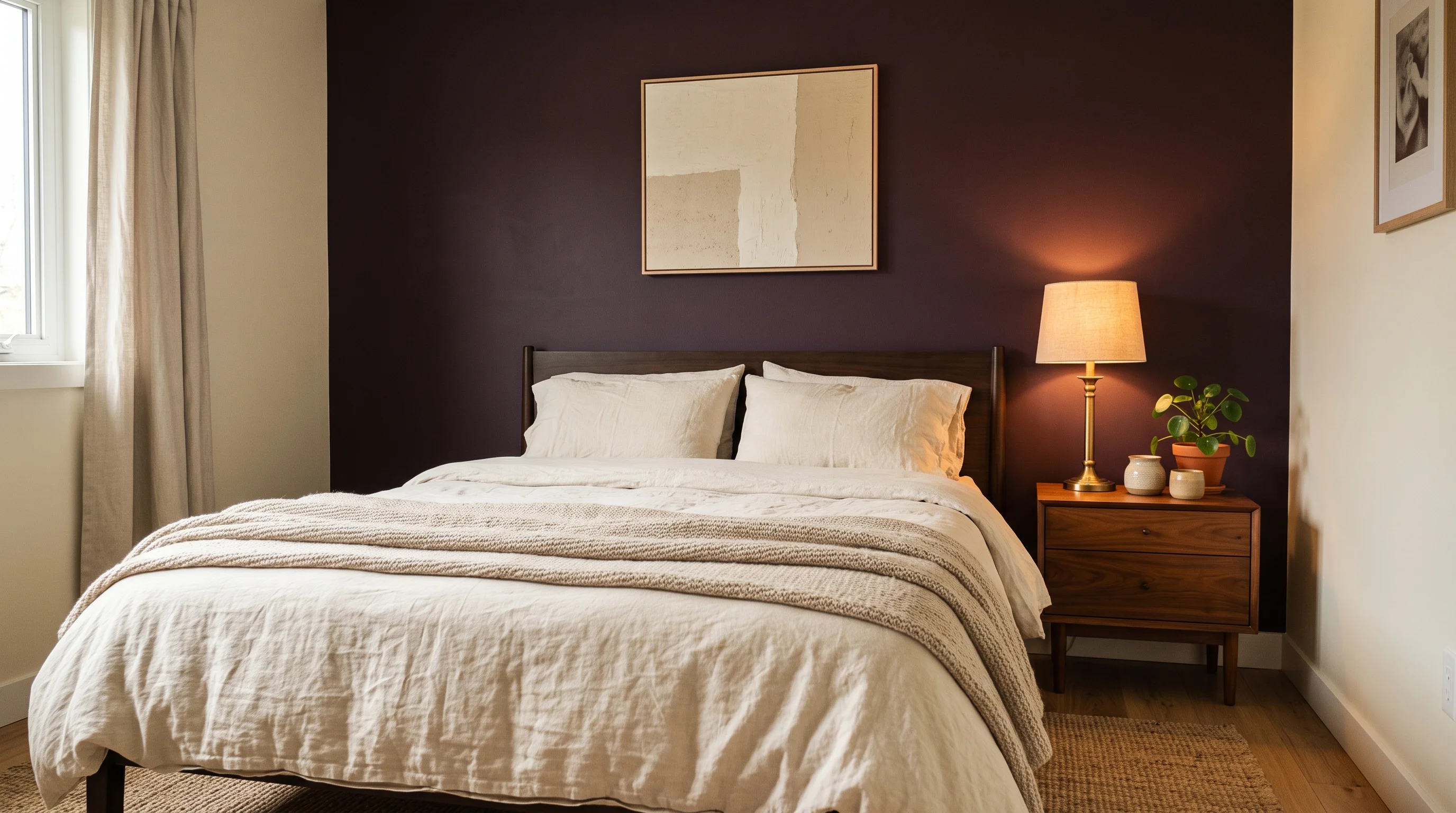
Plum Bedroom Ideas: 12 Ways to Use 2026's Most Cocooning Color
Pinterest reports Plum Noir searches up 220% with saves up 335%. Deep plum is 2026's answer to the all-white bedroom — cocooning, sophisticated, and surprisingly easy to live with. Here are 12 ways to use it.
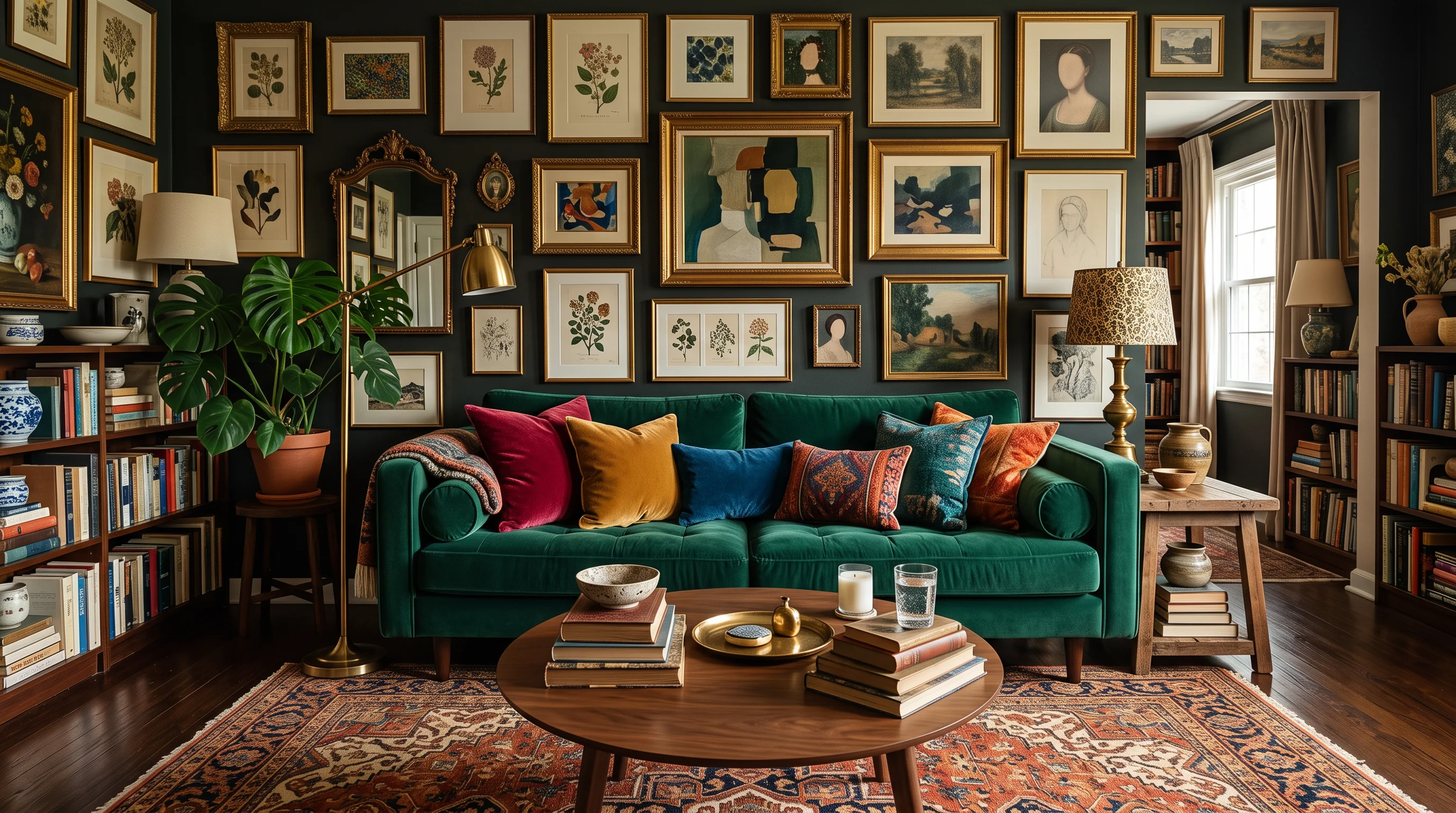
Maximalist Interior Design: The 2026 Guide to Bold, Curated, Personal Spaces
Minimalism had its decade. Pinterest reports eclectic apartment searches up 630% and vintage maximalism up 260%. Here is how to do maximalist interiors with intention — bold color, layered pattern, personal story, zero chaos.
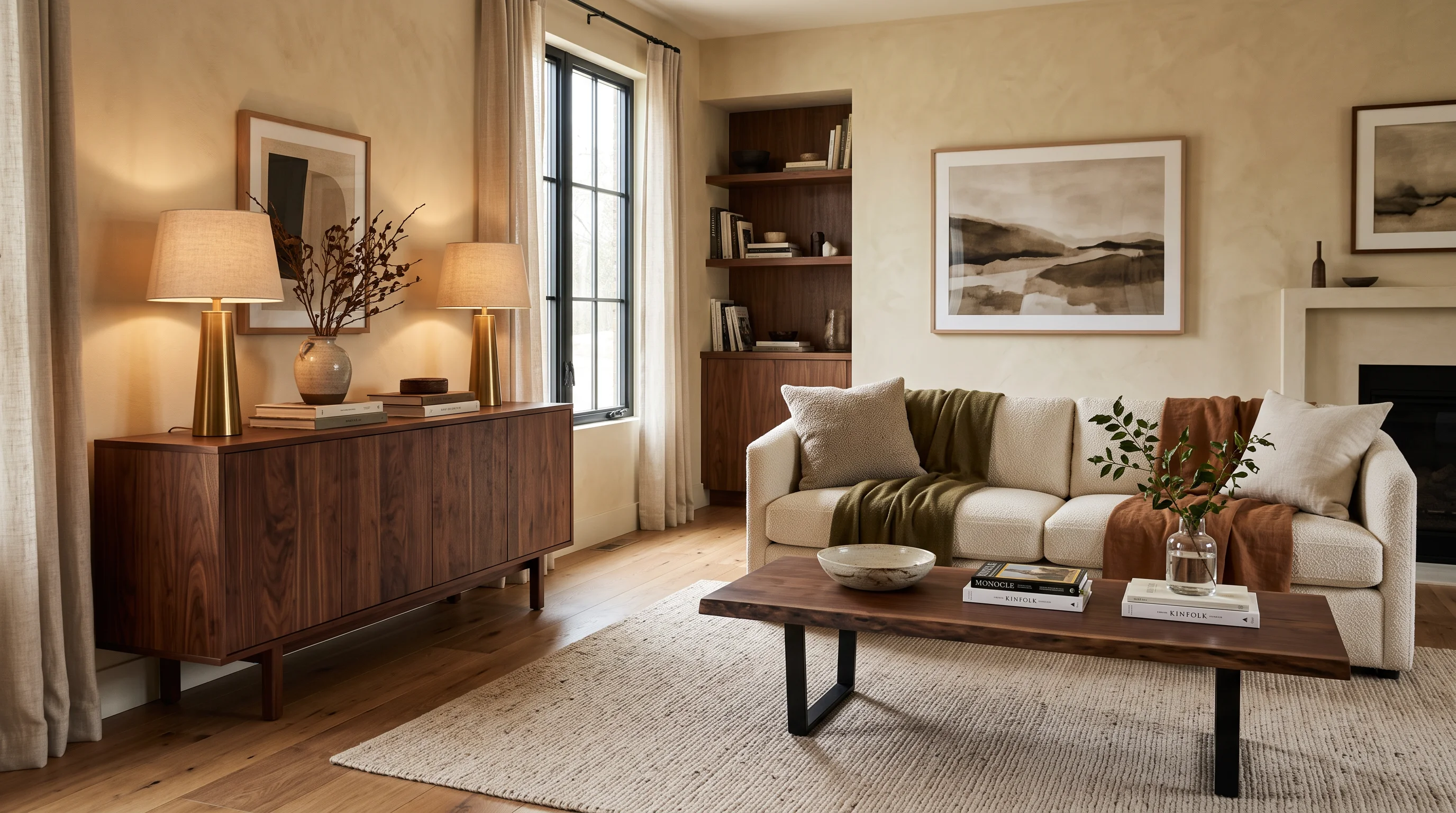
Dark Wood Interior Design: Why Walnut and Rich Tones Are Replacing Pale Oak in 2026
After fifteen years of pale Scandinavian oak, dark wood is back. Houzz reports searches up 187%. Here is how to bring walnut, mahogany, and rich timber into every room without making your home feel heavy.