Maximalist Interior Design: The 2026 Guide to Bold, Curated, Personal Spaces
Minimalism had its decade. Pinterest reports eclectic apartment searches up 630% and vintage maximalism up 260%. Here is how to do maximalist interiors with intention — bold color, layered pattern, personal story, zero chaos.
 Easy Room AI Team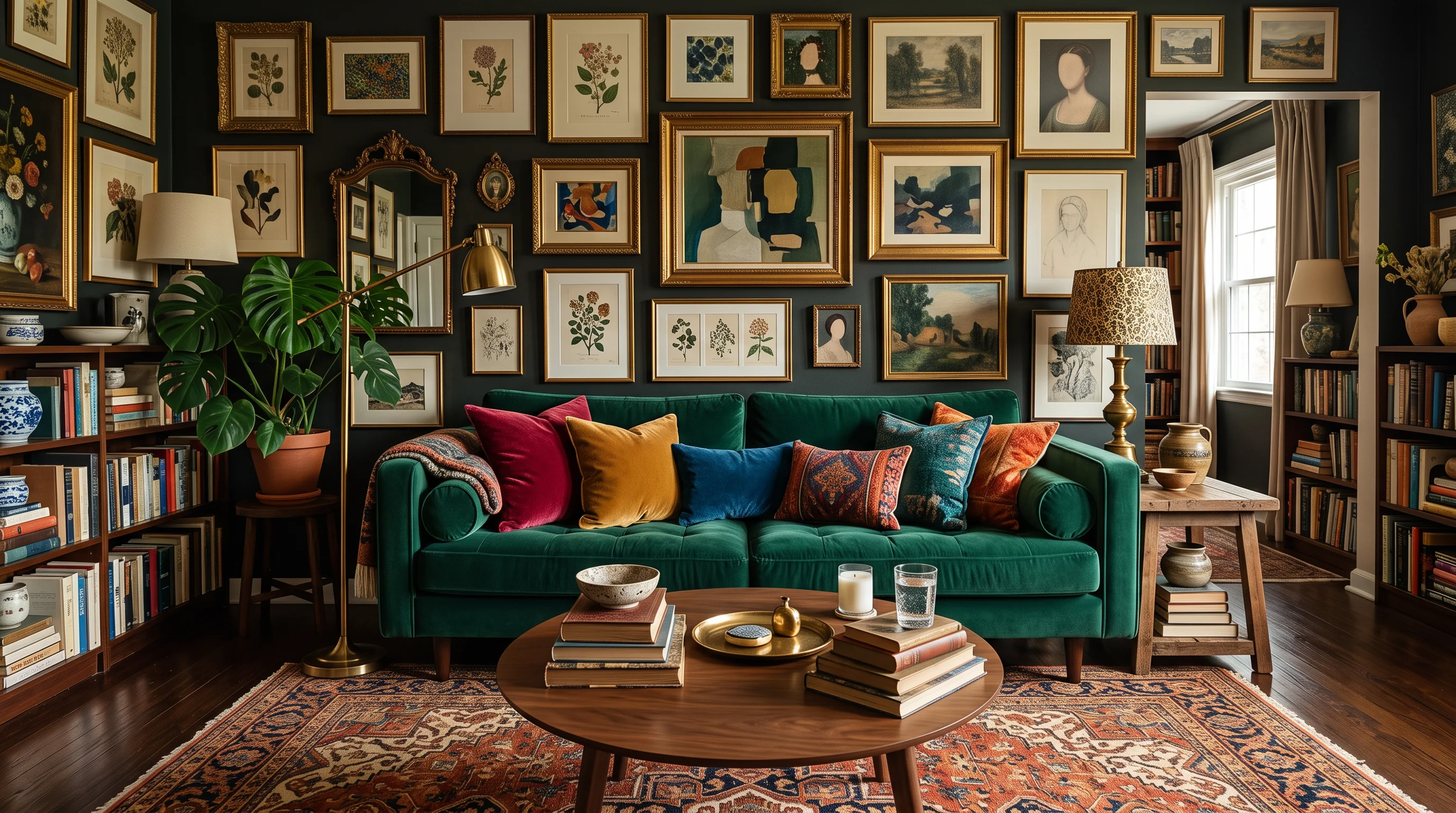
Minimalism had its decade. The white walls, the single statement chair, the curated emptiness — it worked for a while, but it left a lot of people living in rooms that looked like nobody actually lived there. Now the pendulum has swung, and the data is loud. Pinterest reports that searches for "eclectic apartment" jumped 630 percent, "vintage maximalism" is up 260 percent, and "eclectic maximalism" is up 215 percent. In the 1stDibs 2026 designer survey, maximalism was named among the most-requested aesthetics of the year.
But 2026 maximalism is not the same thing as clutter. It is intentional abundance — layered color, rich texture, mixed pattern, and personal history, all arranged with purpose. This guide shows you how to get the look right.
What maximalist interior design actually means
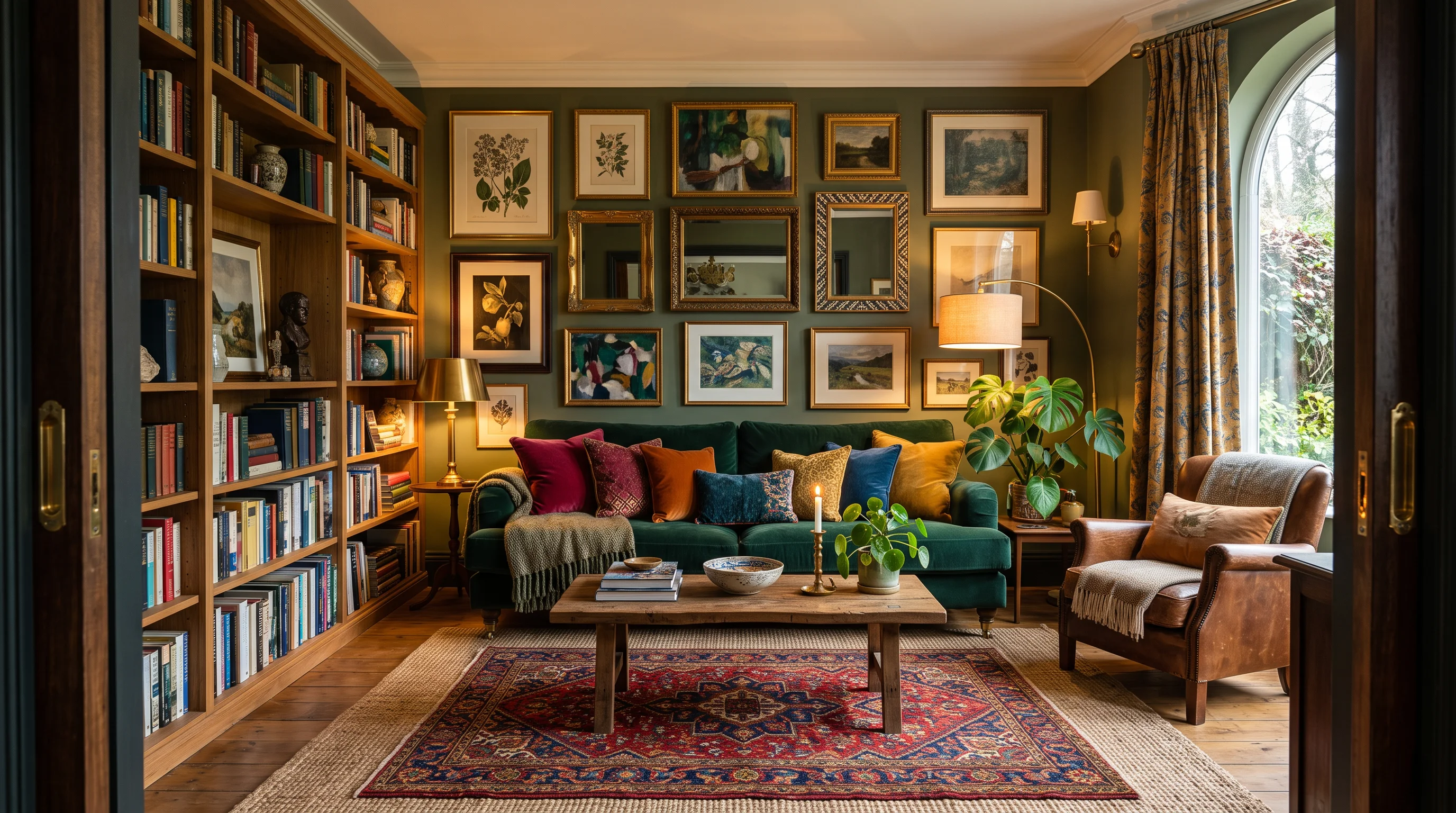
Maximalism is not "put everything you own in one room." It is a design philosophy built on abundance with curation. Every piece earns its place — not because it fills a gap, but because it tells part of a story.
The difference between maximalism and mess comes down to three things:
-
Intentional color. Maximalist rooms use bold, saturated palettes, but the colors are chosen, not random. A jewel-tone living room with emerald, cobalt, and burgundy reads as designed. The same room with every color of the rainbow reads as a garage sale.
-
Pattern with a thread. Florals, stripes, and geometrics can coexist in one room — but they need to share at least one common color running through them. That thread is what makes the mix look like a composition rather than a collision.
-
Personal narrative. The best maximalist rooms tell you something about who lives there. Gallery walls with family photos next to found art. A grandmother's armoire next to a modern sofa. Travel souvenirs mixed with local ceramics. Every object has a reason.
As Veranda noted in its 2026 roundup, maximalism in this era is about "bolder design choices including contrasting and saturated color palettes, a renewed appreciation for traditional craft, hand-dyed textiles, and gallery-worthy furniture" — all woven together by personal intention.
Maximalism vs. dopamine decor vs. grandmillennial
These three terms overlap but are not identical:
| Style | Core idea | Mood |
|---|---|---|
| Maximalism | More is more, curated — layers of color, pattern, texture, history | Bold, personal, sophisticated |
| Dopamine decor | Color as mood boost — bright, joyful, sometimes playful | Energetic, optimistic, youthful |
| Grandmillennial | Old-fashioned patterns (chintz, needlepoint, toile) updated with modern layout | Nostalgic, soft, literary |
Maximalism is the umbrella. Dopamine decor and grandmillennial are two distinct flavors beneath it. A maximalist room can borrow from both, or from neither.
Redesign Your Room in Seconds
Upload a photo of your space to test 16 curated design styles instantly with AI — 100% free.
Supports JPG, PNG, WebP up to 10MB
The maximalist color playbook
Jewel-tone foundation
The dominant 2026 maximalist palette leans toward jewel tones: emerald, sapphire, burgundy, cobalt, and deep amethyst. These are not accent colors anymore — they are wall colors, sofa colors, whole-room-commitment colors. Pair them with warm metallics (brass, gold, copper) for depth.
For a complete jewel-tone guide, see our jewel tone living room ideas.
Earthy maximalism
Not all maximalism is bright. A rich palette of chocolate brown, deep terracotta, forest green, and rust — layered with vintage textiles and dark wood furniture — creates maximalism with warmth and gravity rather than sparkle. This is the version that feels collected over decades.
The four-to-six rule
Limit your palette to four to six colors. That sounds like a lot until you count: wall color, sofa, rug, cushions, curtains, and accents. The point is not to use every color — it is to use enough colors to create visual richness while keeping a thread running through all of them.
How to mix patterns like a designer
Pattern mixing is what separates confident maximalism from cautious decoration. The rules are simpler than they look:
Vary the scale. Combine a large-scale floral (wallpaper or curtains) with a medium-scale geometric (rug or cushion) and a small-scale stripe or dot (throw or accent pillow). Three scales create rhythm. Two of the same scale create competition.
Share a color thread. Every pattern in the room should share at least one color. If your floral wallpaper has sage green in it, your geometric rug should pick up that same sage. That shared thread is what makes five different patterns look like they belong together.
Mix organic with geometric. Florals and nature-inspired prints are organic. Stripes, checks, and geometrics are structured. Combining both creates energy and balance. All organic feels soft and vague. All geometric feels rigid and cold.
Give the eye a rest. Not everything needs a pattern. A solid-color sofa, a plain wood floor, or a single-tone accent wall acts as a visual rest stop — a pause that lets the patterns around it breathe.
Maximalism room by room
Living room
The living room is where maximalism shines brightest. Start with a bold sofa — emerald velvet, rust linen, deep navy — and build outward. Layer a vintage rug over a larger neutral one. Create a gallery wall that mixes frames, sizes, and media. Use multiple light sources at different heights. Let bookcases overflow. Display collections proudly.
The key living room rule: choose one neutral anchor (usually the floor or the largest wall) and let everything else play. Without a neutral rest stop, even the most beautiful maximalist room can feel exhausting.
Bedroom
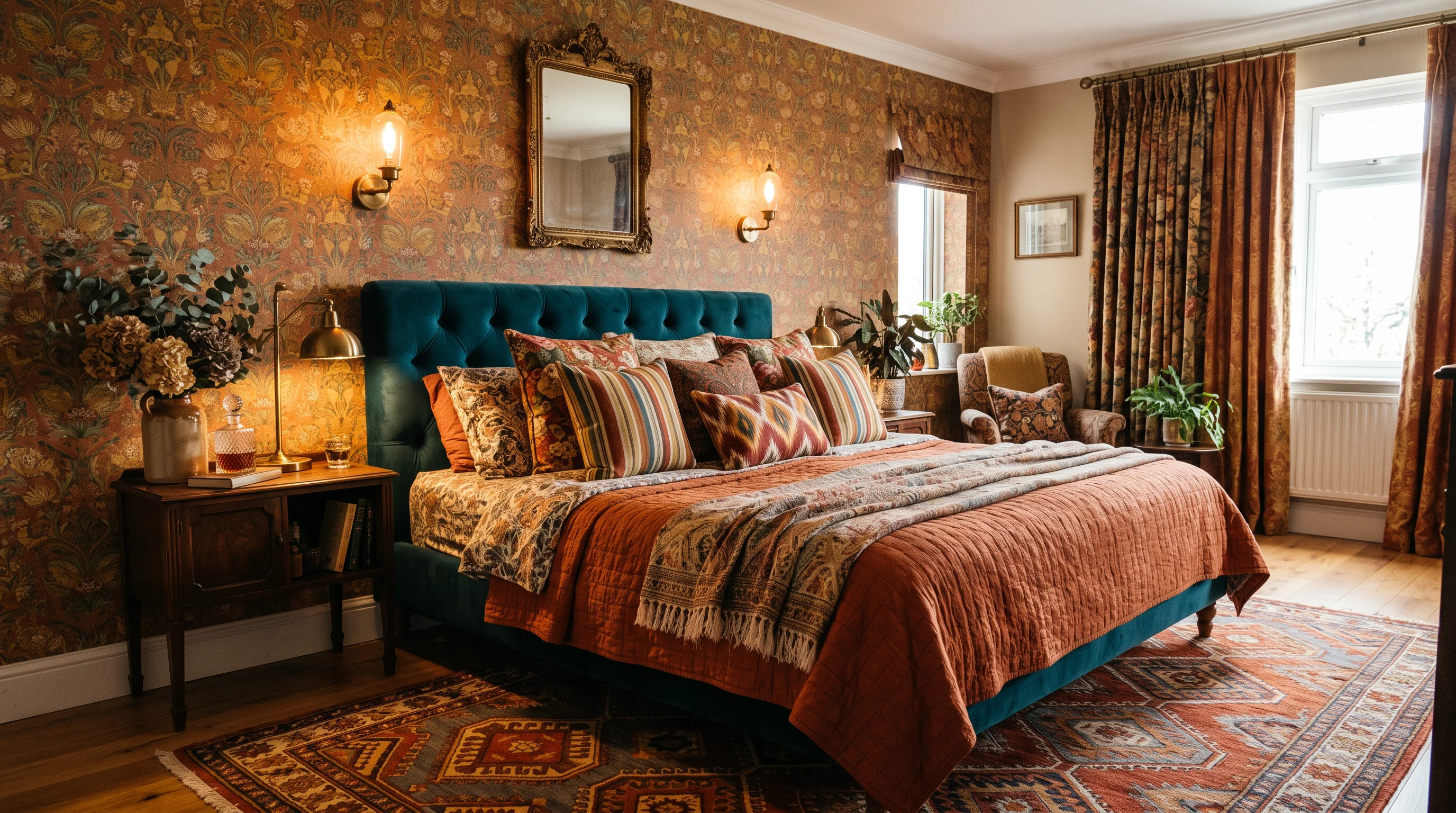
Bedrooms are the best testing ground for maximalism because the door closes. You can go bolder here than anywhere else. Start with patterned wallpaper or a color-drenched wall, layer the bed with mixed textiles (quilts, throws, patterned pillows), and let the nightstand display be personal rather than styled.
Maximalist bedrooms work especially well with the "cocooning" concept — a room that wraps around you in warmth and personality.
Dining room
A maximalist dining room is built for hosting. Think: bold wallpaper, a statement chandelier, mismatched vintage chairs around a single strong table, and a gallery wall or plate display on the facing wall. Fabric walls — up 135 percent in search volume — add both acoustic warmth and visual texture.
Powder room
The ideal entry point if you are maximalism-curious. Small space, low cost, high impact. Bold wallpaper, a statement mirror, a vessel sink, and moody lighting can transform a tiny room into a jewel box. Start here before tackling larger spaces.
The biggest maximalist mistakes
Treating it as an excuse for clutter. Maximalism is edited abundance. Every piece should be there because you chose it, not because you have not gotten around to donating it.
Forgetting grounding elements. Without anchors — a solid-color sofa, a simple wood floor, warm white on at least one large surface — the eye has nowhere to land and the room becomes visually exhausting.
Matching too much. Maximalism is the opposite of a coordinated furniture set from a single store. Mix eras, mix materials, mix sources. A Victorian mirror next to a modern console is the point, not the problem.
Going all-in on day one. The best maximalist rooms look collected, not decorated. Start with your key furniture, add a strong rug and lighting, then layer art, textiles, and accessories over weeks and months. The room should evolve.
How to preview your maximalist room
Committing to bold color and pattern on every surface is a leap. Upload a photo of your room and test maximalist palettes and wallpaper combinations with AI — see how emerald walls look with your existing furniture, try a patterned rug without buying one, and build confidence before you commit.
For more style inspiration, explore our guides to dopamine decor, grandmillennial style, and color drenching.
FAQ
What is maximalist interior design? Maximalist interior design is a "more is more" approach that celebrates bold color, rich texture, layered patterns, and personal narrative. Unlike clutter, maximalism is intentional — every piece is chosen for how it contributes to the room's story. It is the opposite of minimalism, but not the absence of curation.
Is maximalism still in style in 2026? Very much so. Pinterest data shows searches for eclectic and maximalist interiors up 200–630 percent. The 1stDibs 2026 designer survey named maximalism among the most-requested aesthetics. The broader cultural shift toward personal expression and away from algorithm-driven uniformity is driving the trend.
How do I do maximalism without it looking messy? Three rules: limit your palette to four to six coordinated colors, share a color thread across all patterns, and include at least one neutral "rest stop" (a solid sofa, plain floor, or simple wall) where the eye can pause. Maximalism is edited abundance — if you cannot explain why a piece is there, it probably should not be.
What is the difference between maximalism and eclecticism? Eclecticism is a mixing method — combining styles, eras, and origins. Maximalism is a volume philosophy — using more color, more pattern, more texture. You can be eclectic without being maximalist (a few carefully chosen mixed pieces) or maximalist without being eclectic (layers of one consistent style). In practice, 2026 maximalism is almost always eclectic.
What colors work best for maximalist rooms? Jewel tones (emerald, sapphire, burgundy, cobalt) are the current favorite, but earthy maximalism (chocolate, terracotta, forest green, rust) is equally popular. The key is saturation — maximalist palettes use rich, deep colors rather than pastels. Pair bold tones with warm metallics and natural textures to keep the room from feeling flat.
Ready to Transform Your Space?
Try AI room redesign for free - no credit card required.
Start Designing FreeRelated reading
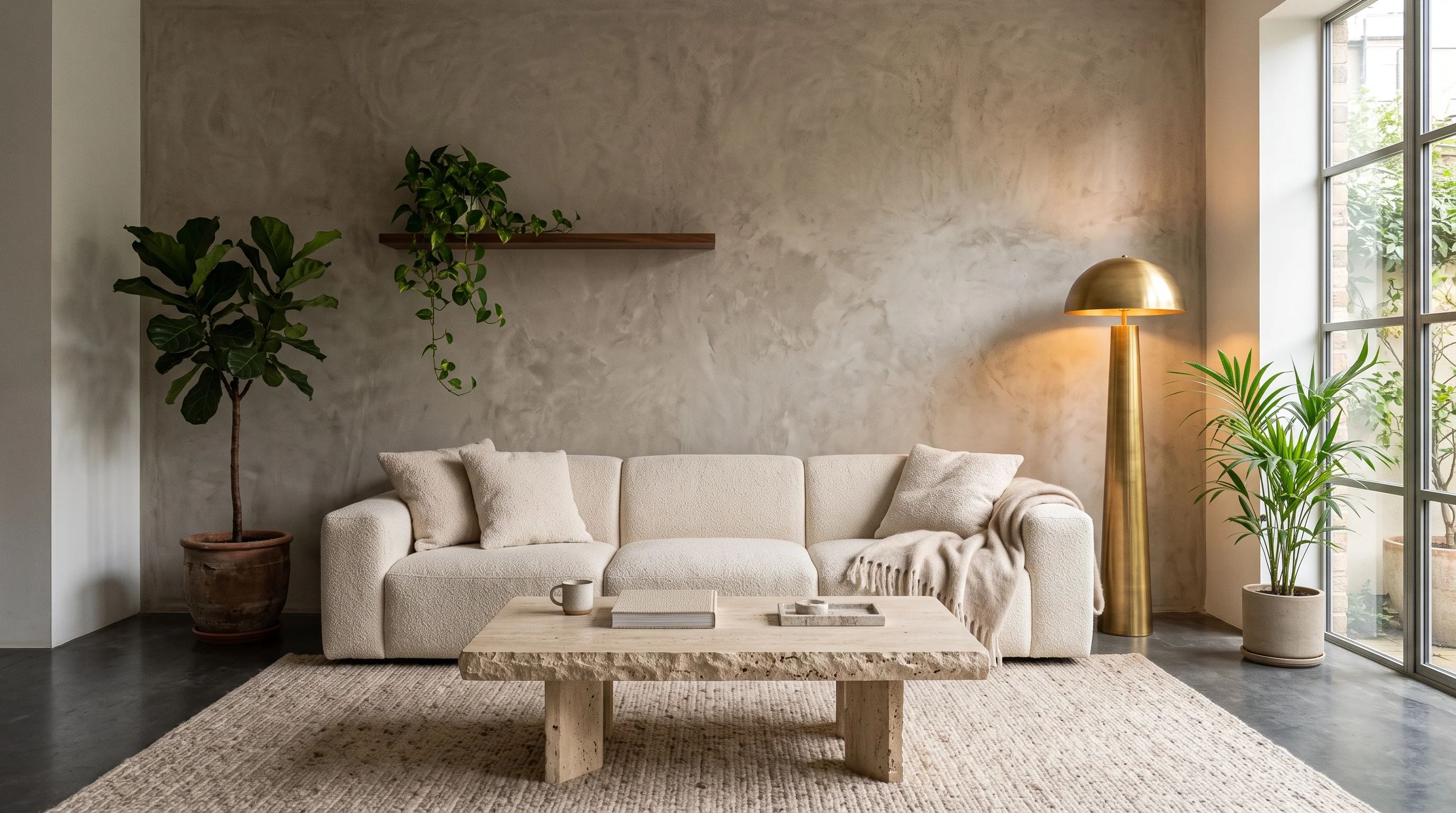
Brutalist Interior Design: The Soft Brutalism Guide for Livable Concrete Spaces in 2026
Brutalist furniture searches hit 6,600/month. But 2026's version is not cold concrete — it is Soft Brutalism: raw materials balanced with bouclé, warm wood, and layered lighting. Here is how to get the look without living in a bunker.
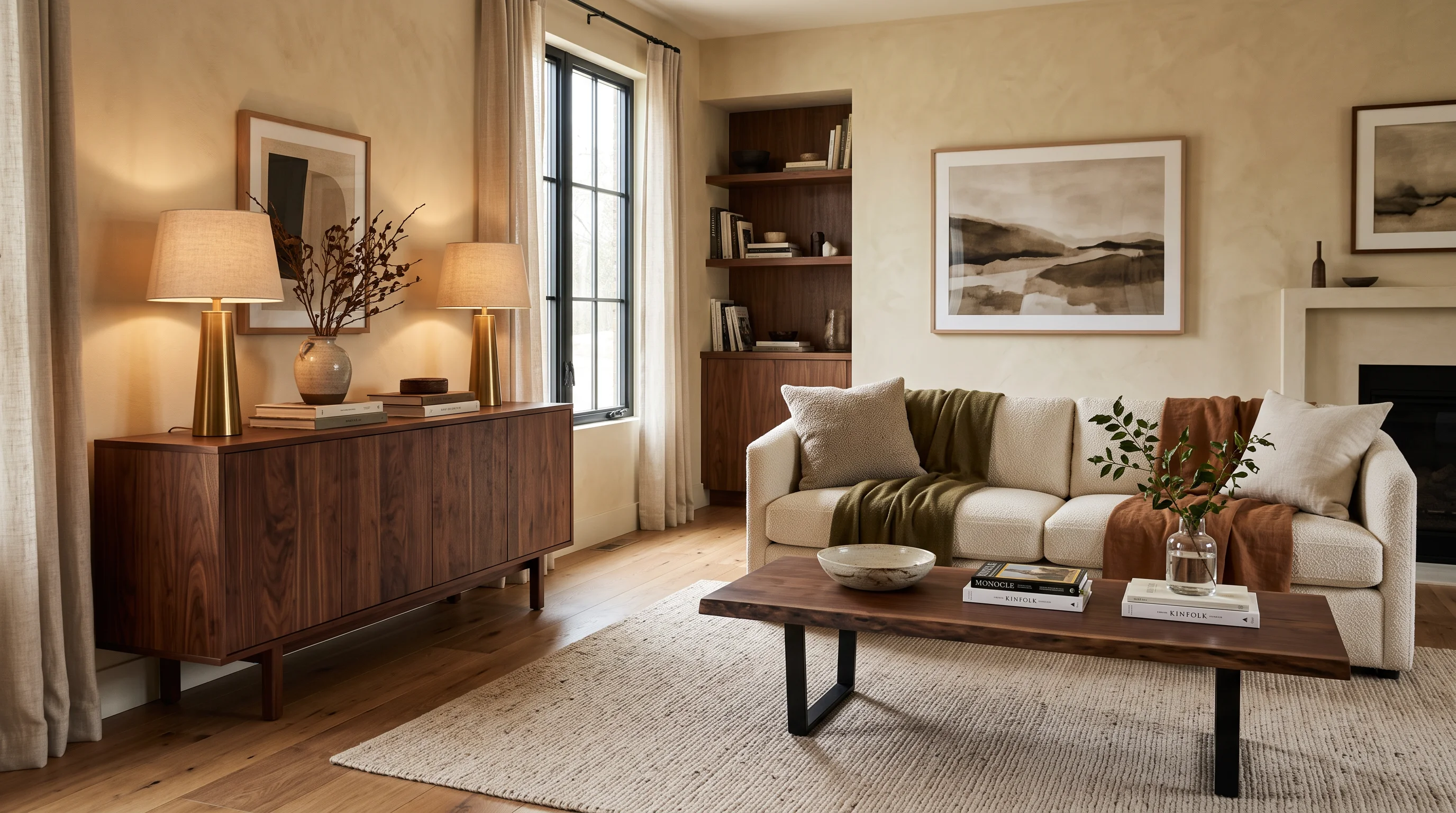
Dark Wood Interior Design: Why Walnut and Rich Tones Are Replacing Pale Oak in 2026
After fifteen years of pale Scandinavian oak, dark wood is back. Houzz reports searches up 187%. Here is how to bring walnut, mahogany, and rich timber into every room without making your home feel heavy.
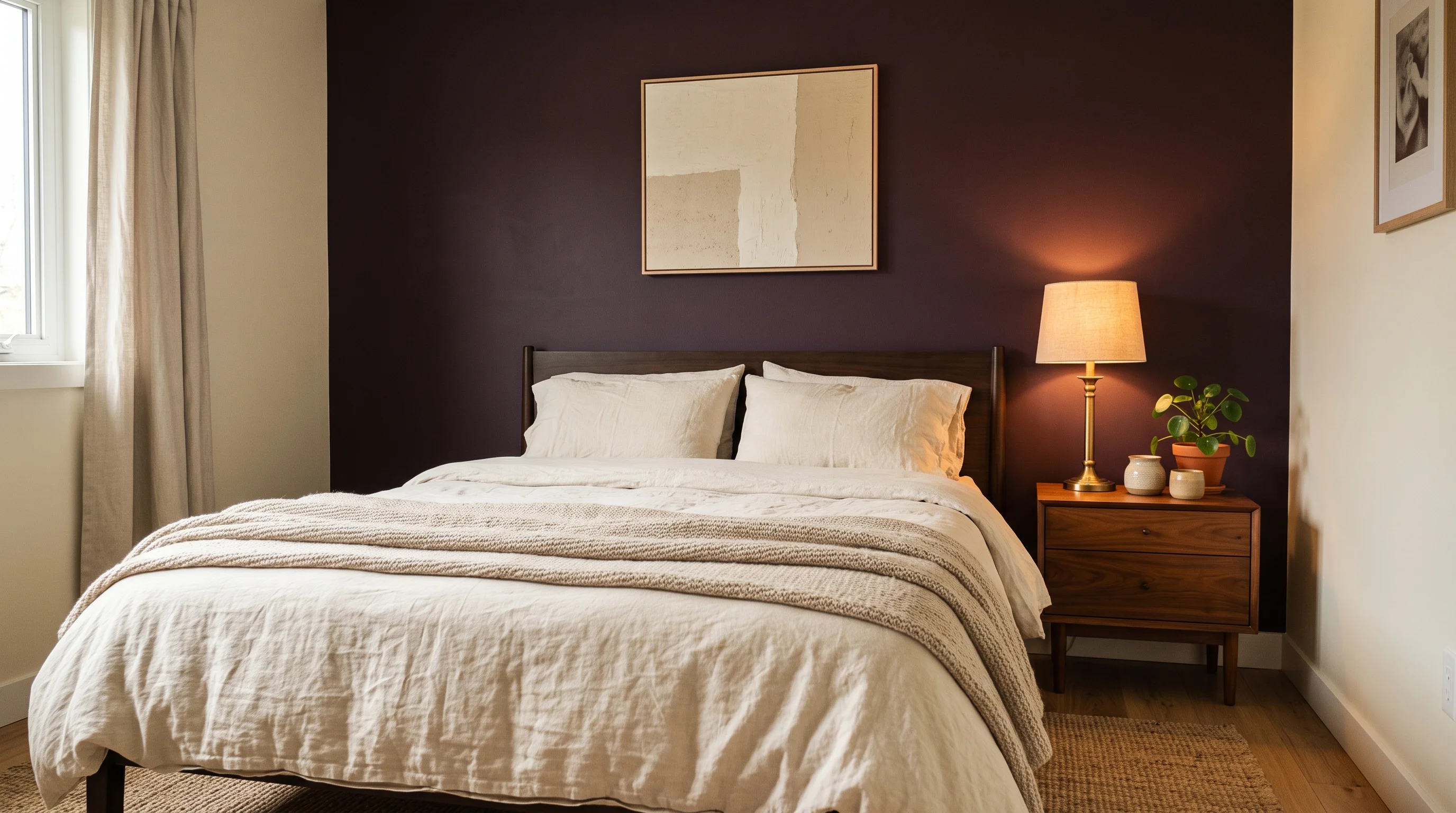
Plum Bedroom Ideas: 12 Ways to Use 2026's Most Cocooning Color
Pinterest reports Plum Noir searches up 220% with saves up 335%. Deep plum is 2026's answer to the all-white bedroom — cocooning, sophisticated, and surprisingly easy to live with. Here are 12 ways to use it.