Terracotta Living Room: 23 Warm, Earthy Ideas for 2026
Terracotta is the warm, earthy color anchoring 2026 living rooms. Here are 23 terracotta living room ideas — how it differs from rust and clay, walls vs accents, the best pairings (cream, olive, wood, rattan), small-room tips, and a before-and-after.
 Easy Room AI Team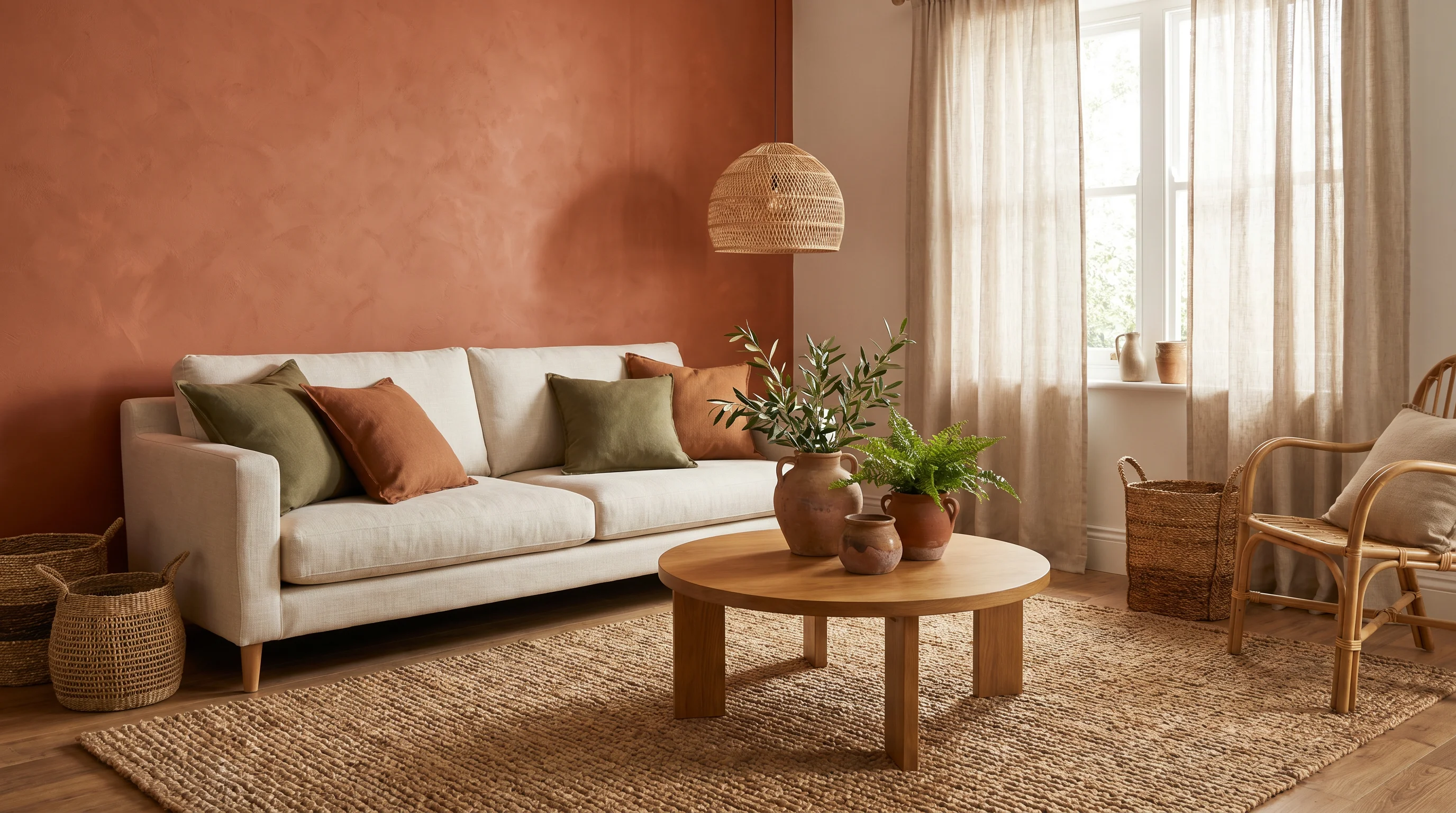
Terracotta is having a moment — and it makes sense. After years of cool grays, interiors have turned decisively warm and earthy, and terracotta sits right at the heart of that shift. The 1stDibs 2026 trends survey points to warm, earthy tones and rich browns leading the year, and terracotta is the most livable, sun-baked member of that family.
In a living room, terracotta brings instant warmth without the heaviness of a true brown. This guide rounds up 23 terracotta living room ideas for 2026 — how to use the color, what to pair it with, and how to keep it feeling current rather than dated.
In this guide you will learn:
- The difference between terracotta, rust, and clay
- When to use terracotta on walls versus accents
- The pairings that make terracotta look expensive
- How to use terracotta in a small living room
- Styling with textiles and pottery
- A before-and-after transformation
1. Terracotta vs rust vs clay
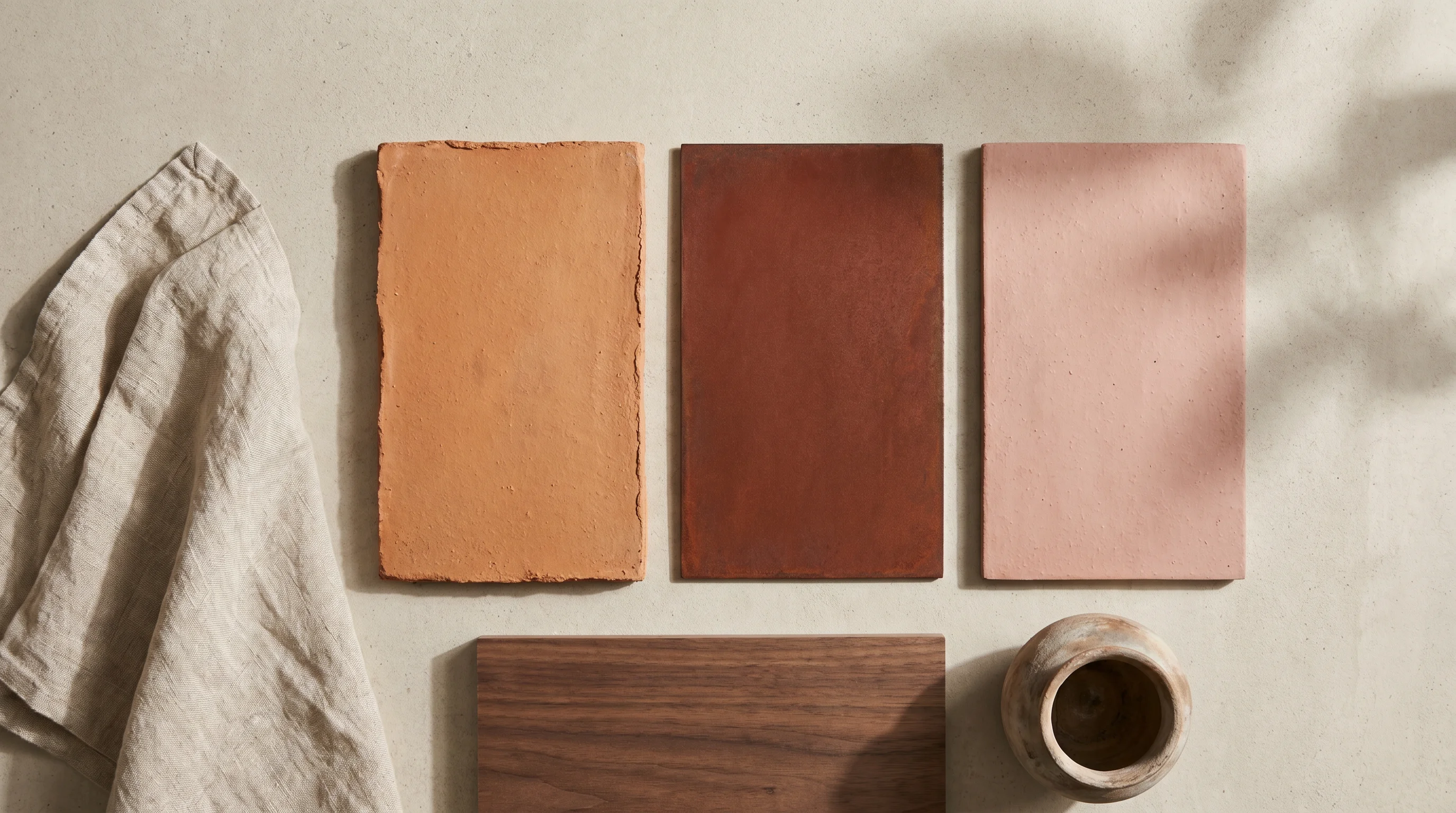
These three get used interchangeably, but they behave differently on a wall:
- Terracotta: a warm orange-brown, the color of sun-baked clay pots. The most balanced and livable of the three.
- Rust: deeper and redder, with a slightly metallic, oxidized edge. More dramatic, best as an accent.
- Clay: softer, pinker, and more muted — almost a dusty blush-brown. The gentlest, easiest to live with in big doses.
The takeaway: choose terracotta for everyday warmth, rust for drama, clay when you want the tone barely-there. Knowing which you're after stops you from accidentally landing on a 1970s orange.
2. Terracotta walls vs accents
You can go bold or ease in:
- Terracotta walls: a painted feature wall or a fully color-drenched room wraps the space in warmth and feels enveloping and modern. Best in rooms with decent natural light, which keeps the tone glowing rather than muddy.
- Terracotta accents: cushions, a throw, a rug, ceramics, or art deliver the color in small, swappable doses — ideal for renters or the commitment-averse.
If you love the color but aren't sure, start with a large terracotta rug or sofa and build around it. For full-room technique, see our color drenching guide.
Redesign Your Living Room with AI
Upload a photo of your space to test 16 curated design styles instantly with AI — 100% free.
Supports JPG, PNG, WebP up to 10MB
3. Pairings that make terracotta look expensive
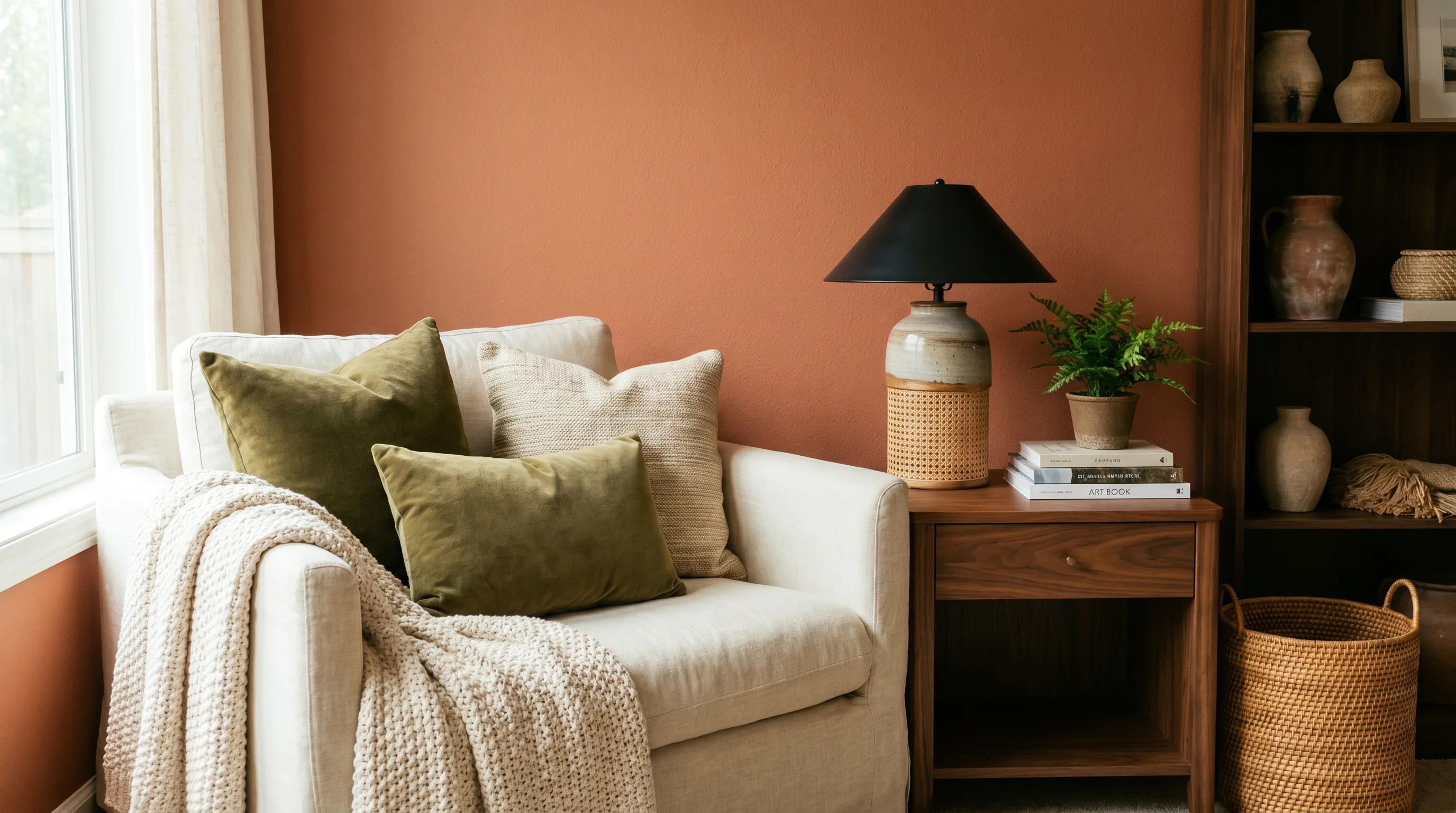
Terracotta is a team player. The combinations that elevate it:
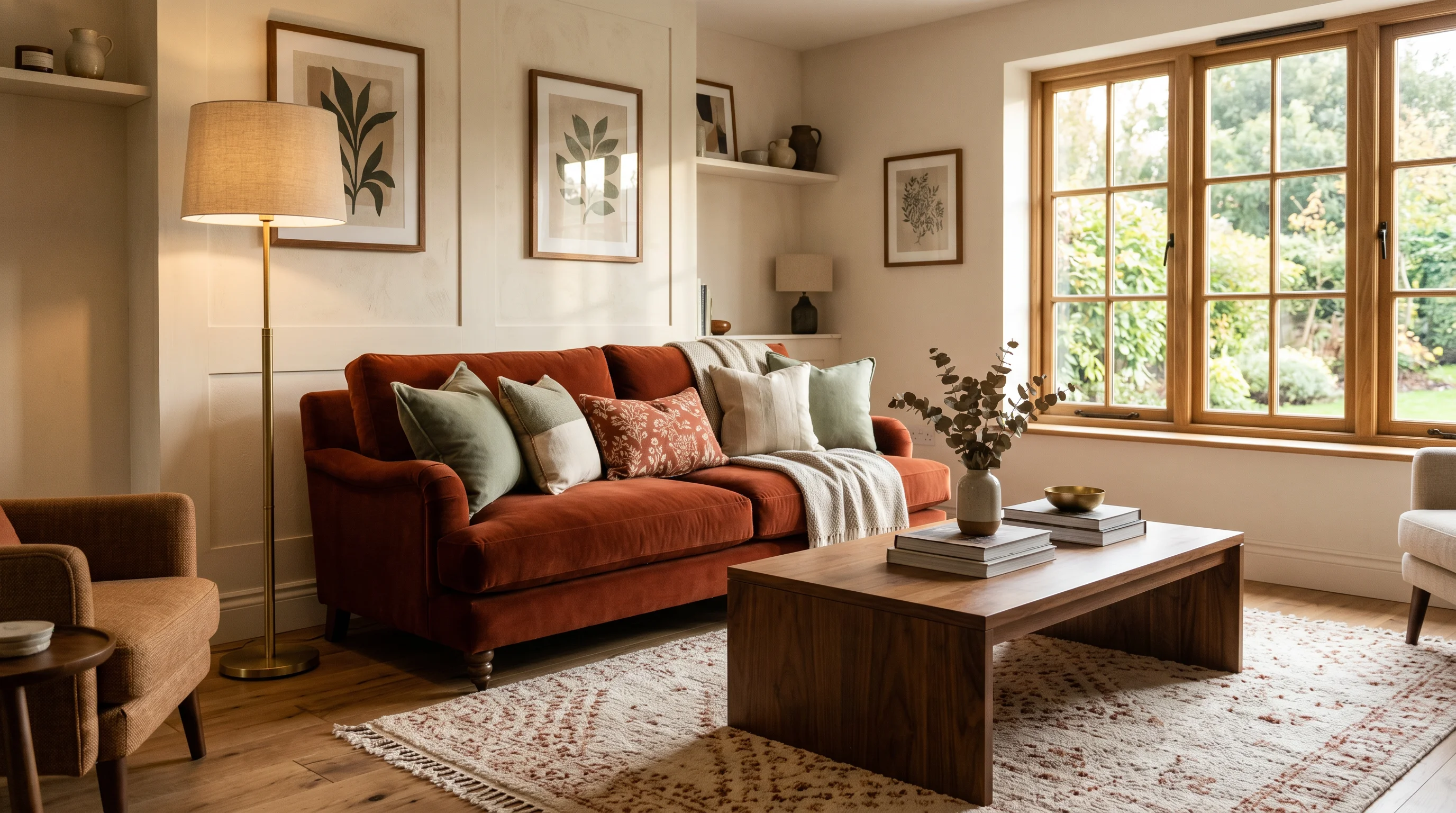
- Cream and off-white: the classic foil — keeps terracotta warm without letting it overwhelm.
- Olive and sage green: earthy green is terracotta's best friend, echoing a natural, Mediterranean palette.
- Warm wood and rattan: oak, walnut, and cane reinforce the organic, sun-baked feel.
- Black, in small doses: a lamp or frame for grounding contrast.
Avoid pairing terracotta with cool grays or stark blue-whites, which fight its warmth. For a fuller earthy scheme, our Mediterranean interior design guide leans on the same palette, and terracotta sits beautifully alongside the browns in our chocolate brown and cream ideas.
4. Terracotta in a small living room
In a small living room, terracotta can actually help — warm colors make a space feel cozy and intimate rather than cramped. The trick is balance: use terracotta on one wall or through a sofa and textiles, then keep the rest light (cream walls, pale wood) so the room still breathes.
A terracotta accent draws the eye and adds depth, making a small room feel considered rather than boxy. Keep large furniture lighter and let the color do the talking in smaller, layered pieces.
5. Textiles and pottery styling
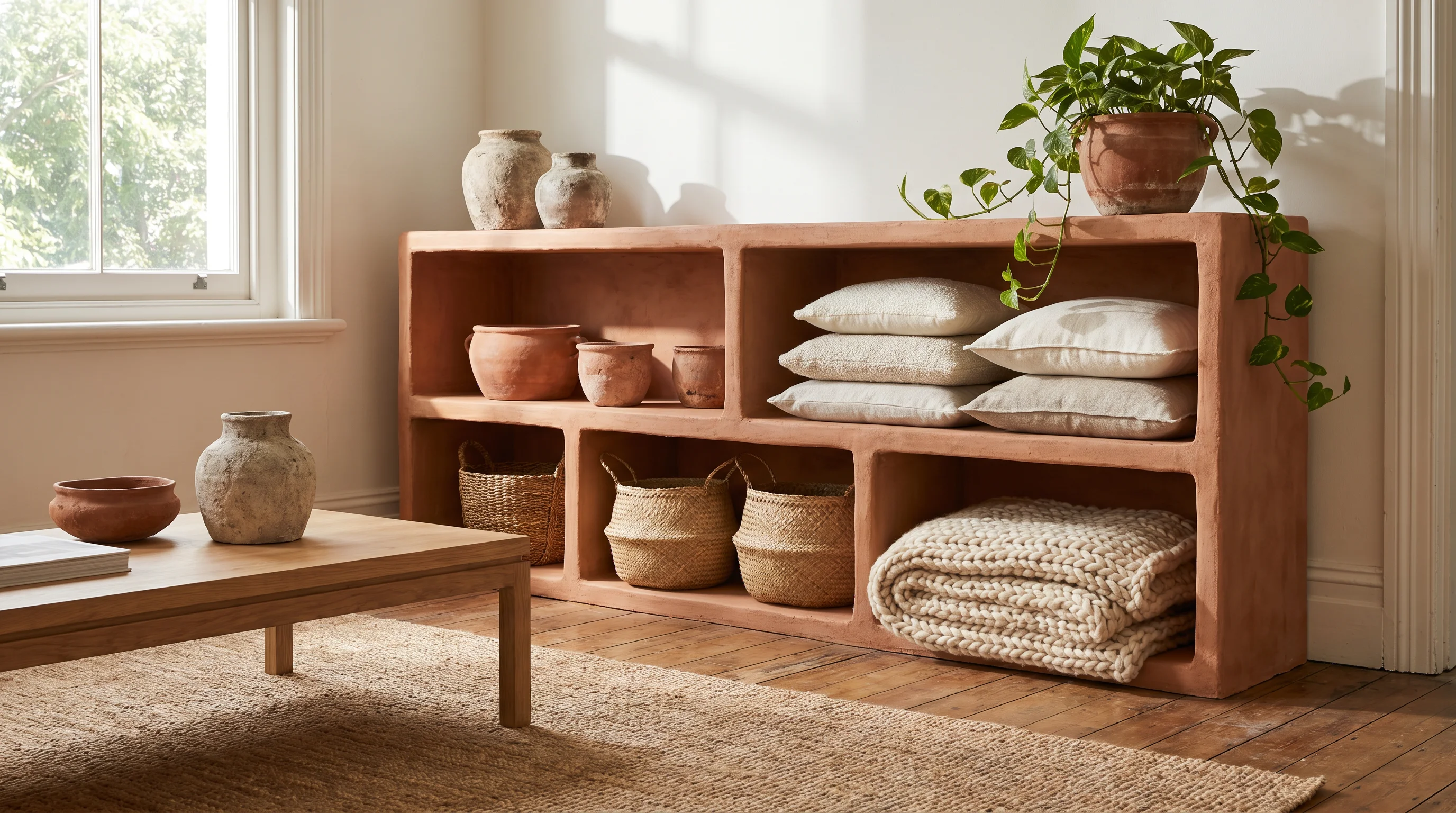
Terracotta loves natural texture, so style it with handmade, organic pieces. Layer linen and boucle cushions, a chunky knit throw, and a jute or wool rug. Then lean into the obvious-but-perfect move: actual terracotta pottery — clay pots, vases, and bowls — which ties the accent color to tangible objects.
A few trailing plants in clay pots complete the warm, lived-in, slightly Mediterranean feel. The takeaway: terracotta is a material as much as a color, so bring in the real thing.
6. Before and after
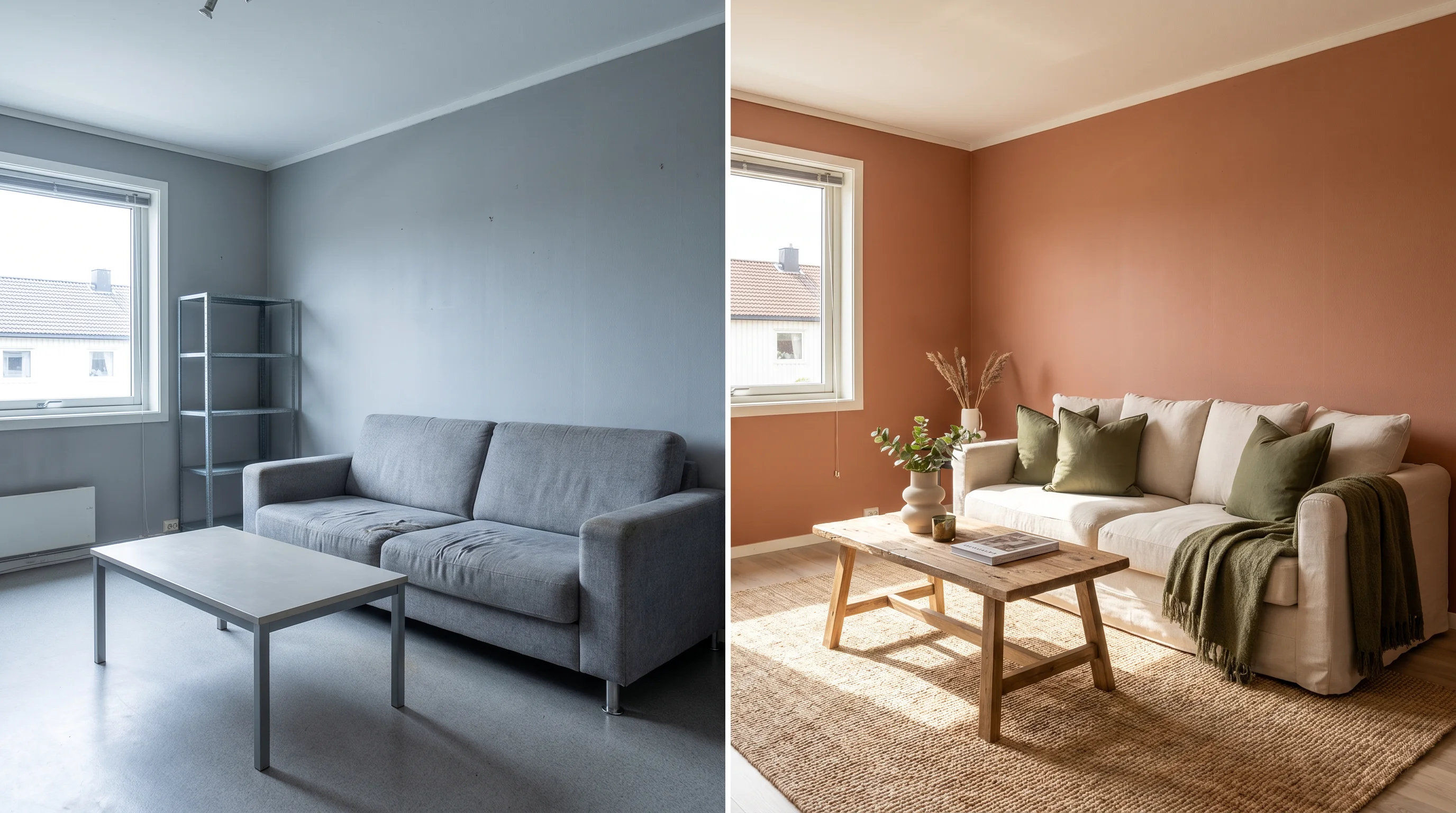
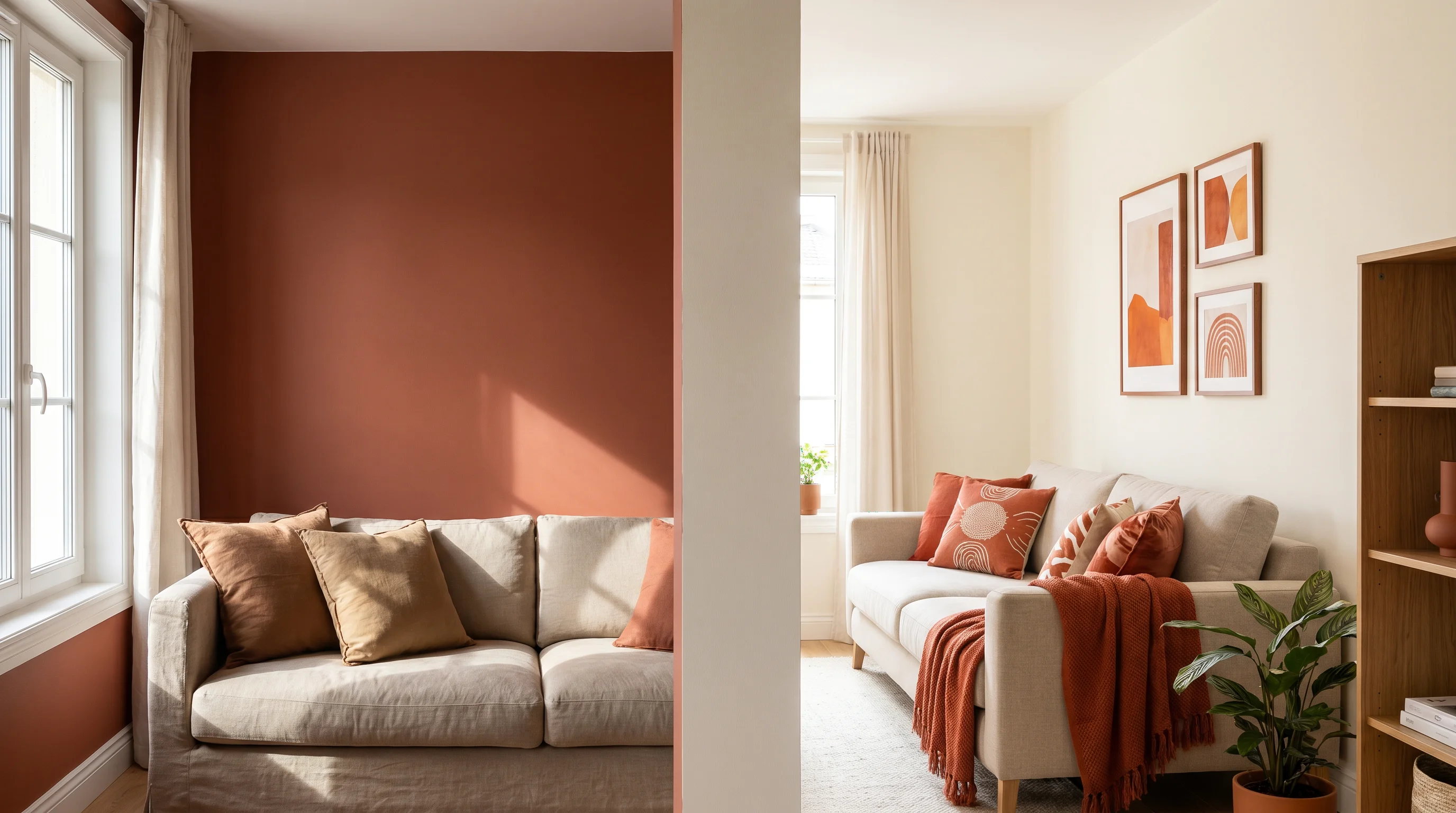
The fastest way to understand terracotta's effect is to see it replace gray. A cool, flat gray living room reads as dated and a little cold; swapping the wall color to terracotta and layering in cream, wood, and olive instantly warms the whole space — same furniture, completely different mood.
That's the appeal of terracotta for 2026: it's a relatively small change with an outsized, cozy payoff. The takeaway: you don't need new furniture, just a warmer envelope.
How to try terracotta in your own living room
Color is hard to judge from a paint chip, and terracotta shifts a lot with your room's light. Photograph your living room and redesign it with EasyRoomAI — test a full terracotta wall against a few accents, try different pairings, and see how the tone reads in your actual light before you buy paint or a sofa.
- Try a free room redesign — anonymous previews are free, no signup needed.
- For more color direction, see our rust living room ideas, 2026 interior color trends guide, and browse living room ideas.
Frequently asked questions
What colors go with a terracotta living room? Terracotta pairs best with cream and off-white (to keep it warm but balanced), olive or sage green (its natural earthy partner), and warm wood or rattan. Use black sparingly for contrast. Avoid cool grays and stark blue-whites, which clash with terracotta's warmth.
Is terracotta a good color for a living room in 2026? Yes. Interiors have shifted warm and earthy, with 2026 trend reports highlighting rich, sun-baked tones, and terracotta is the most livable of them. It adds instant warmth and a Mediterranean feel without the heaviness of a full brown, making it a strong, current choice.
What is the difference between terracotta, rust, and clay? Terracotta is a warm orange-brown like baked clay; rust is deeper and redder with an oxidized edge; clay is softer, pinker, and more muted. Terracotta is the most balanced for everyday use, rust works best as a bold accent, and clay is the gentlest for large areas.
Does terracotta work in a small living room? Yes — warm tones make small rooms feel cozy and intimate. Use terracotta on one wall or through a sofa and textiles, and keep the rest of the room light (cream walls, pale wood) so it stays balanced and doesn't feel closed in.
How do I add terracotta without painting the walls? Bring it in through accents: a terracotta rug or sofa, cushions, a throw, art, and real clay pottery. These swappable pieces deliver the warm color and let you test the look — ideal for renters or anyone not ready to commit to paint.
Terracotta earns its 2026 popularity by doing one thing brilliantly: warming a room instantly. Pick your exact tone, pair it with cream, green, and natural wood, layer in real clay and texture — then preview it in your own light before you commit.
Terracotta is one piece of the broader warm-palette revolution in living rooms. For all 22 trends shaping the space in 2026: living room ideas 2026.
Ready to Transform Your Space?
Try AI room redesign for free - no credit card required.
Start Designing FreeRelated reading
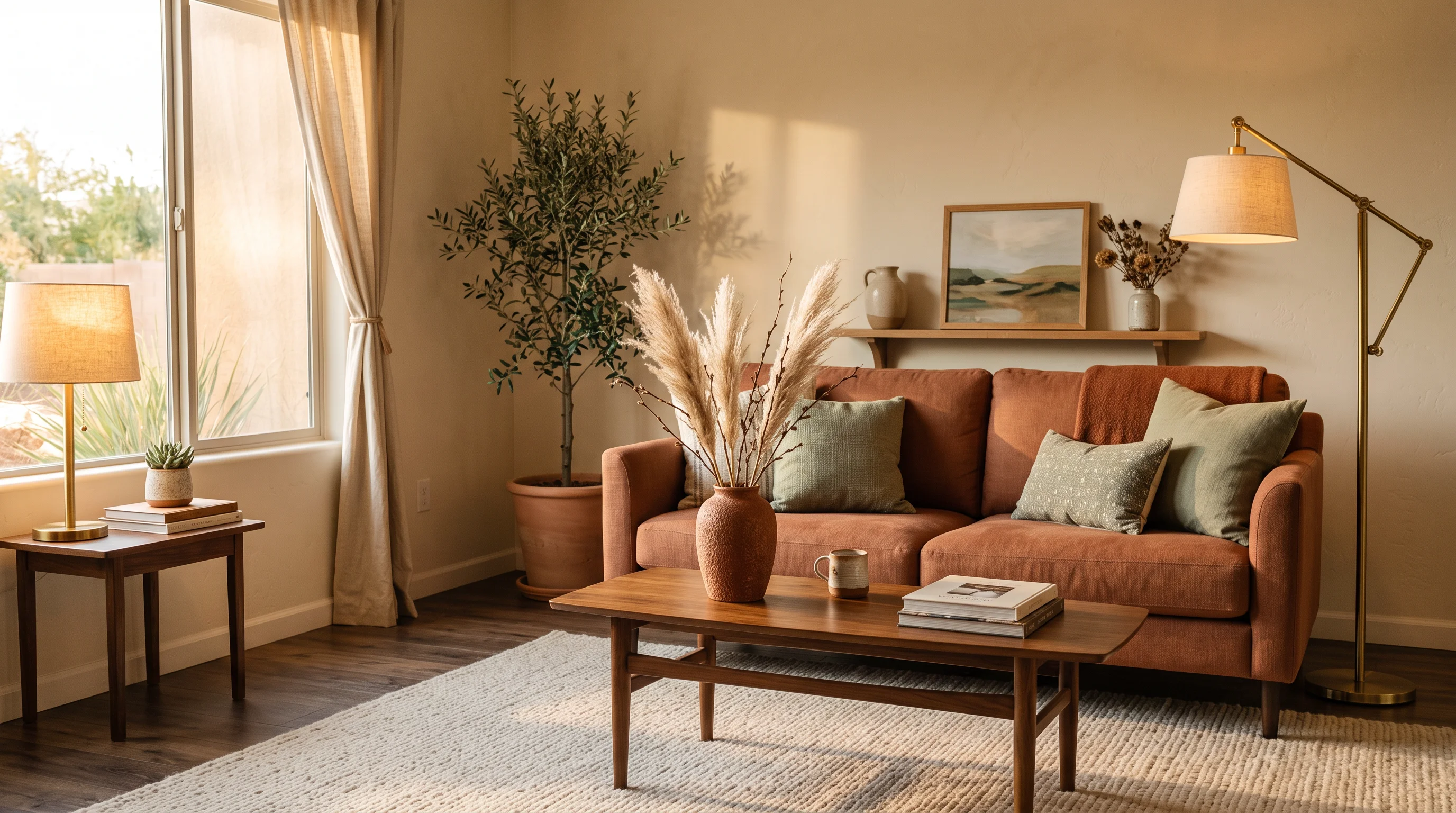
Earth Tone Living Room Ideas: 15 Warm Palettes Designers Are Using in 2026
Searches for earthy living rooms jumped 220% since 2023. Terracotta, sage, rust, and warm neutrals are replacing cool grays everywhere. Here are 15 earth-tone palettes that actually work — with styling rules to keep them warm without heavy.
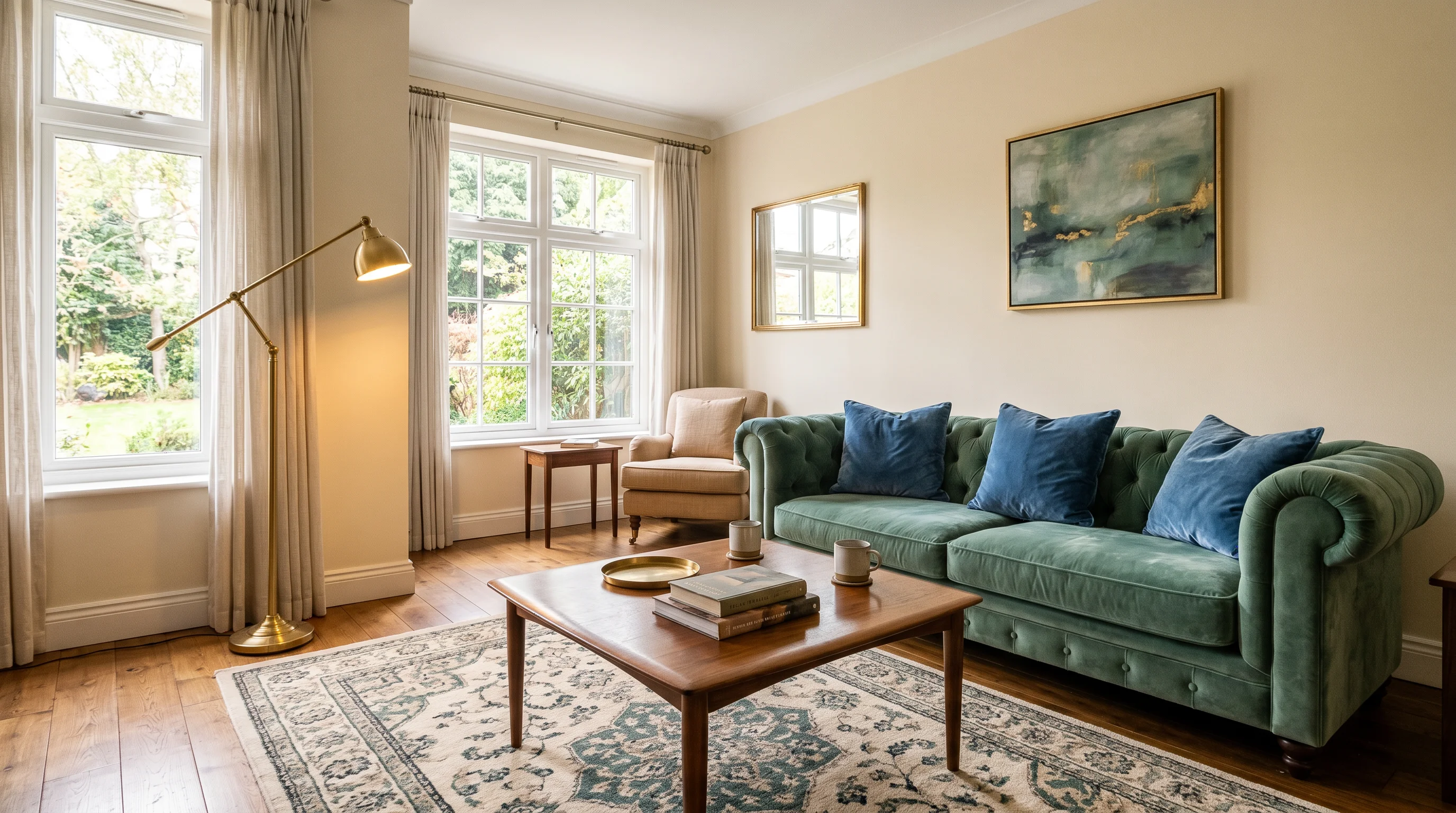
20 Jewel Tone Living Room Ideas — Dusty Emerald, Sapphire, and Ruby Done Right (2026)
Jewel tones are back — but dustier, moodier, and more wearable than the bold versions of a decade ago. Here are 20 jewel tone living room ideas for 2026: emerald sofas, sapphire accent walls, ruby accents, and the warm neutral pairings that keep rich color feeling expensive.
20 Rust Living Room Ideas — 2026's Warmest Color Trend, Styled Right
Rust is the fastest-growing color in home design — Houzz searches jumped 178% this year. Here are 20 rust living room ideas for 2026: sofa, accent wall, and rug ideas, plus the cream-charcoal-sage-navy pairings that keep rust warm without going overwhelming.