Burrowcore: The 2026 Design Trend That Makes Canceling Plans Feel Justified
Discover the burrowcore interior design trend in 2026: replacing cottagecore with cocooning warmth, layered vintage textiles, amber lamplight, and zero overhead lighting.
 Easy Room AI Team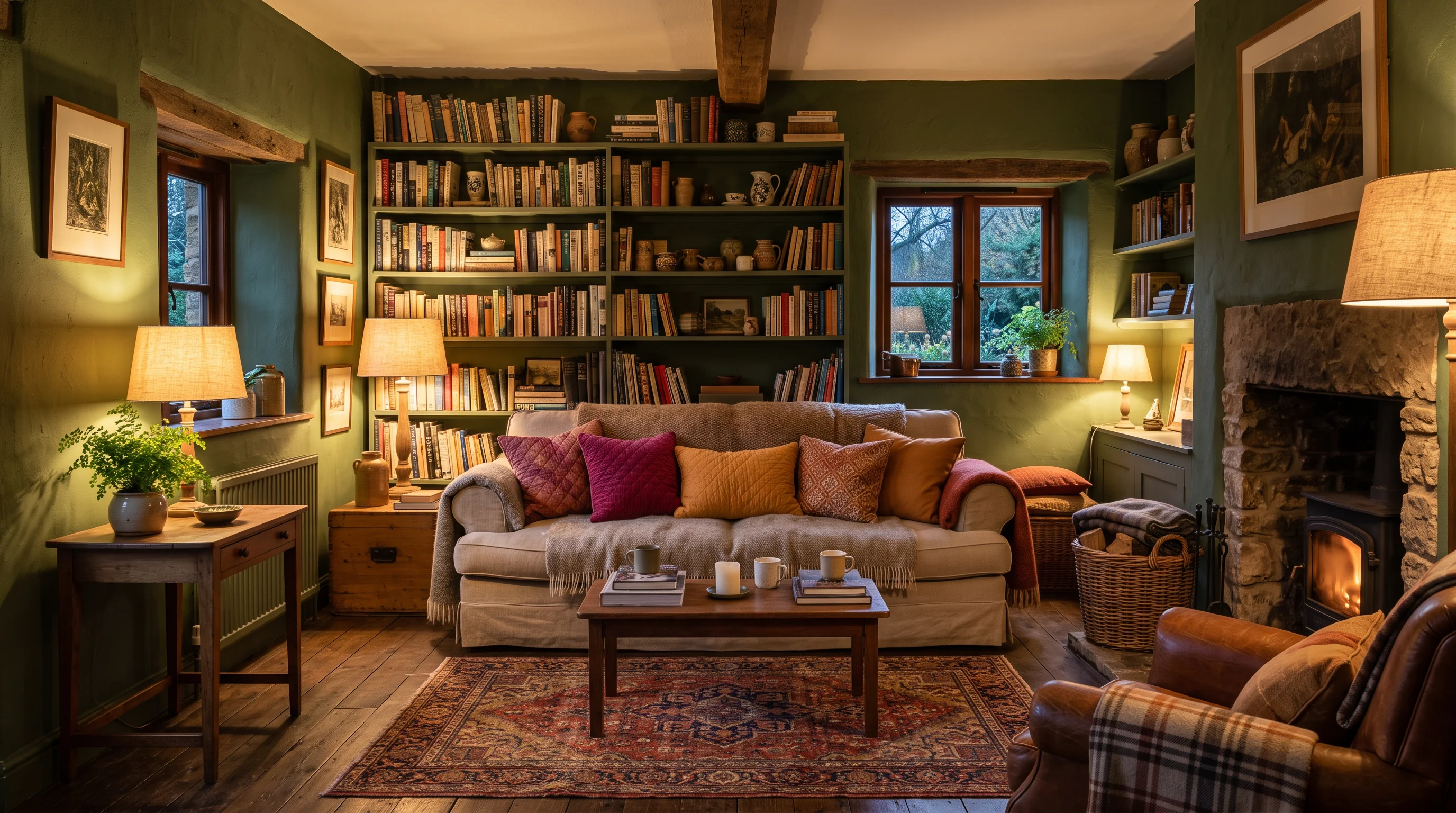
Cottagecore wanted your home to look like a period film. Burrowcore wants it to feel like Badger's house in The Wind in the Willows — low-ceilinged, lamplit, stacked with books, and impossible to leave.
The trend has been covered by House & Garden, House Beautiful, and Vogue Adria — all arriving at the same conclusion: 2026's defining shift is from homes that look good to homes that feel like shelter. As therapist Colette Hallows, one of the early voices to define burrowcore on social media, explains: "It turns away from the controlled, often slightly contrived elements of cottagecore and instead embraces the lived-in warmth of burrow-like homes — the kind inhabited by animals in storybooks."
Here is how to bring that sheltering warmth into your actual home.
What Is Burrowcore?
Burrowcore is the interior design response to a world that asks too much of us. It prioritizes comfort, personal meaning, and the feeling of being held — over aesthetics, symmetry, or photogenic perfection.
Five things define it:
-
Lamplight, not overhead light. Table lamps, floor lamps, and wall sconces only. No harsh overhead fixtures. The glow should be warm (2700K), diffused through linen or paper shades, and cast gentle pools rather than flooding the room.
-
Layered textiles everywhere. Throws on sofas, throws on armchairs, quilts on beds, cushions on window seats. The texture should feel like a nest — wool, linen, knit, velvet — not a catalog.
-
Vintage and inherited pieces. Bookshelves with actual books. A side table from a charity shop. A rug with patina. As design expert Kemp tells House Beautiful: "Old furniture, antique textiles, or artwork discovered in a charity shop add depth and character in a way new items can't."
-
Natural, weathered materials. Worn floorboards, wool blankets, wicker baskets, ceramic pots. Nothing polished, nothing chrome, nothing high-gloss.
-
A rich, warm palette. Moss green, berry red, marigold, indigo, warm brown, terracotta — colors that feel like autumn woodland and lamplight rather than a showroom.
Burrowcore vs Cottagecore vs Warm Minimalism
| Burrowcore | Cottagecore | Warm Minimalism | |
|---|---|---|---|
| Mood | Sheltering, cocooned, storybook | Pastoral, romantic, idealized | Calm, edited, serene |
| Density | High — layered, full, collected | Medium-High — curated prettiness | Low — intentional negative space |
| Color | Rich: moss, berry, indigo, gold | Soft: florals, pastels, white | Restrained: cream, sand, taupe |
| Lighting | Exclusively lamplight | Natural + lamplight | Layered ambient, 2700K |
| Key texture | Wool, quilt, worn wood, linen | Floral cotton, lace, painted wood | Plaster, bouclé, smooth linen |
| Philosophy | Shelter from the world | Escape to the countryside | Peace through reduction |
The simple test: if the room makes you want to curl up with a blanket and a book, it is burrowcore. If it makes you want to bake scones and arrange wildflowers, it is cottagecore. If it makes you want to breathe deeply and do nothing, it is warm minimalism.
Redesign Your Room in Seconds
Upload a photo of your space to test 16 curated design styles instantly with AI — 100% free.
Supports JPG, PNG, WebP up to 10MB
The Burrowcore Color Palette
This is one of the few 2026 trends where color is not restrained. The palette draws from nature's richest tones:
- Moss green / Forest green: walls, upholstery, or both. This is the signature burrowcore wall color — pair with warm wood and brass.
- Berry red / Deep plum: accent cushions, vintage rugs, book spines. Not neon — think wine, not lipstick.
- Marigold / Amber: lamplight warmth in physical form. Use in throws, pottery, or a single accent chair.
- Indigo / Deep navy: textile accents, particularly in woven or printed patterns.
- Warm brown / Chocolate: leather, wood, and layered neutrals. Connects to the broader 2026 chocolate brown trend (33% of designers' top color pick).
- Warm cream / Parchment: the breathing room. Used on ceilings and lighter textiles to prevent the rich palette from feeling heavy.
Burrowcore Living Room Ideas
The living room is burrowcore's natural home. Think "the room you cancel plans to stay in."
Seating. An overstuffed sofa — not a sleek modern one — in linen or velvet. Deep seats, soft arms, visible cushion squish. Add a wing chair or a vintage armchair in a complementary fabric.
Bookshelves. Real ones. Full ones. Not color-coded or styled with ornamental objects, but filled with books you have actually read, interspersed with candleholders, small framed photos, and the odd ceramic piece.
Fireplace area. If you have one, make it the anchor. Stack firewood visibly. Add a woven basket of blankets beside it. Place a reading lamp within arm's reach.
Rug. A vintage or antique rug with visible wear. The imperfection is the point — it signals time and life, not a trip to a department store.
Lighting. Multiple table lamps with fabric shades in warm cream or amber. One floor lamp by the reading chair. Zero overhead lights on. The room should feel like candlelight even when it is not.
Burrowcore Bedroom Ideas
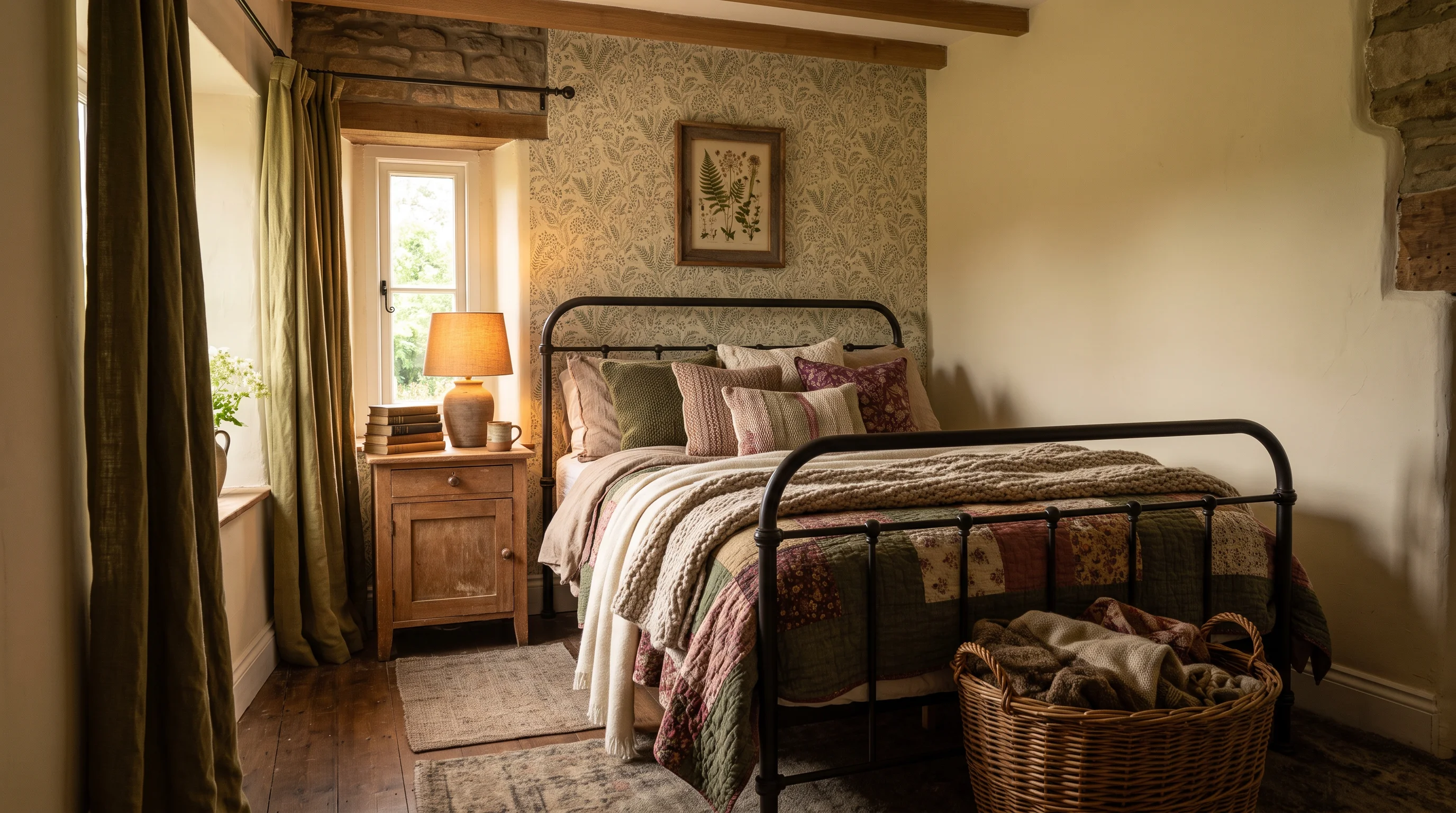
The bedroom is the inner sanctum of the burrow.
Bedding. Layer aggressively: quilt + throw + knit blanket + at least four cushions in mixed textures. Florals are welcome here (unlike in organic modern, where they are not). The bed should look like you want to fall into it.
Walls. Moss green or deep warm cream. If you are bold, wallpaper — a muted botanical or a William Morris-style pattern. The walls should close in slightly, creating the "burrow" effect.
Nightstand. A secondhand wooden stool or a vintage side table with a stack of books and a table lamp with a linen shade. No minimalist floating shelves — that is a different aesthetic.
Window treatment. Heavy curtains in a warm fabric. The point is enclosure. Sheer curtains belong to airy minimalism; burrowcore wants weight and warmth.
Burrowcore Kitchen Ideas
The kitchen burrow feels settled and used.
Open shelving. Display your actual crockery — mismatched is fine. Stack bowls, hang mugs from hooks, lean cutting boards against the backsplash. The kitchen should look like someone cooks here every day.
Color. Deep green cabinetry or warm wood fronts. A mushroom-toned wall behind open shelves works beautifully.
Textiles. A woven runner, linen tea towels, and a cushioned bench or window seat if space allows.
Lighting. Pendant lights with warm-toned shades over the table. Under-cabinet lighting for the work area. No clinical downlights.
How to Start Without a Renovation
Burrowcore is one of the most budget-friendly trends because it actively encourages secondhand and imperfect.
-
Kill the overhead light. Buy two table lamps with fabric shades ($30–60 each). Plug them in. Turn the ceiling light off forever. This single change transforms any room.
-
Layer the sofa. Add a wool throw and two mismatched cushions in warm tones. Total cost: $40–80.
-
Add a real rug. Check secondhand shops or online marketplaces for vintage wool rugs. Imperfections and fading are positives, not deal-breakers.
-
Fill a bookshelf. If you have one, fill it. If you do not, stack books on a side table or windowsill. Books are the cheapest and most effective burrowcore accessory.
-
Bring in one vintage piece. A stool, a ceramic pot, a framed print from a charity shop. Under $20, and it immediately adds the "collected" quality that new furniture cannot replicate.
Preview Burrowcore in Your Room
Curious whether moss-green walls and layered textiles would work in your space? Upload a photo, select warm earthy tones and cozy textures, and see the transformation before you buy a single lamp.
FAQ
What is the difference between burrowcore and cottagecore?
Cottagecore is aspirational — it imagines an idealized rural life with floral patterns, pastel colors, and pretty arrangements. Burrowcore is about shelter — it creates a cocoon of warmth, layered textiles, lamplight, and personal objects that make you feel held. Cottagecore is a photograph; burrowcore is a feeling.
What colors are burrowcore?
Rich, warm, and nature-derived: moss green, berry red, marigold, indigo, warm brown, terracotta, and amber. Unlike warm minimalism (which stays in cream-to-taupe), burrowcore embraces color freely — but always in warm, saturated tones rather than cool or pastel.
Is burrowcore expensive to achieve?
The opposite. Burrowcore actively encourages secondhand finds, charity-shop art, inherited textiles, and books you already own. The most impactful change — replacing overhead lighting with table lamps — costs under $60. It is one of the few design trends where "imperfect and pre-owned" is the aesthetic, not the compromise.
Can I mix burrowcore with other styles?
Burrowcore layers naturally with warm minimalism (shared warmth and natural materials), Japandi (wabi-sabi imperfection), and grandmillennial style (love of pattern and vintage). It clashes with cold minimalism, high-gloss modern, and anything chrome-heavy.
Ready to Transform Your Space?
Try AI room redesign for free - no credit card required.
Start Designing FreeRelated reading
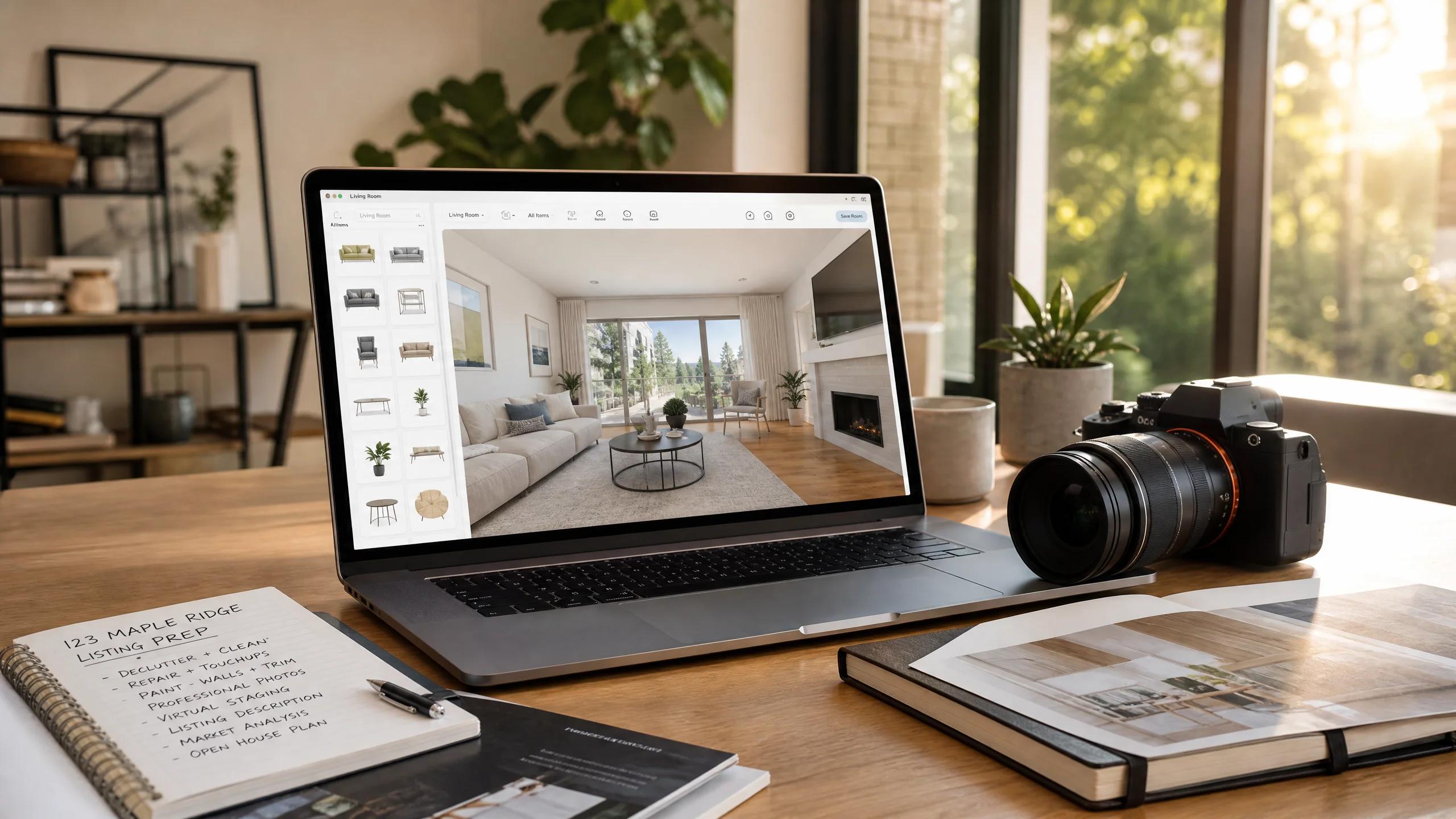
DIY Virtual Staging Software: How to Stage Listings Yourself in 2026 (Tools, Costs & Step-by-Step Guide)
Stop paying $24–$35 per photo to outsourcing agencies. Compare the top DIY virtual staging software in 2026, master the 5-step realtor staging workflow, and avoid costly MLS disclosure and perspective mistakes.
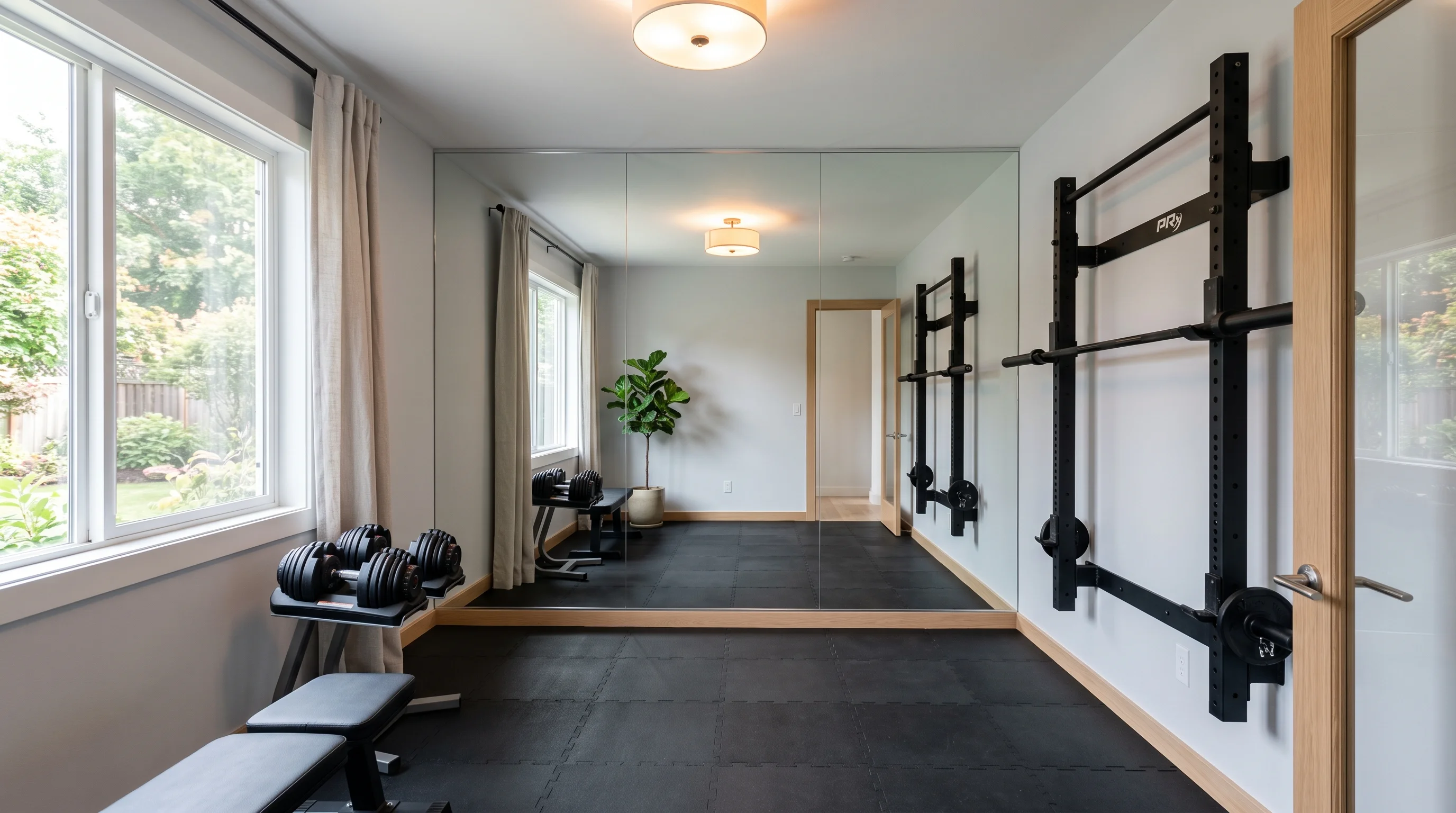
Small Home Gym Ideas 2026: How to Fit a Serious Gym in Under 100 Sq Ft
Discover clever small home gym layout ideas for 50 to 100 sq ft. Learn how to combine folding wall-mounted racks, selectorized dumbbells, vertical storage, and dual-purpose office zoning to build a studio-grade gym without sacrificing square footage.
Floor Virtual Staging: How to Replace Flooring in Real Estate Photos – Without Renovating (2026 Guide)
Discover how AI floor virtual staging replaces worn carpet and dated vinyl with luxury white oak hardwood in seconds. Recover 147% resale ROI while staying 100% MLS compliant.