Cold Minimalism: The Cool-Toned Look (and How to Warm It Up) — 2026
Cold minimalism is the crisp, cool-toned cousin of warm minimalism — all greys, whites, steel and glass. Here's what it actually is, why pure cold can feel sterile, and how to keep the clean look while adding just enough warmth.
 Easy Room AI Team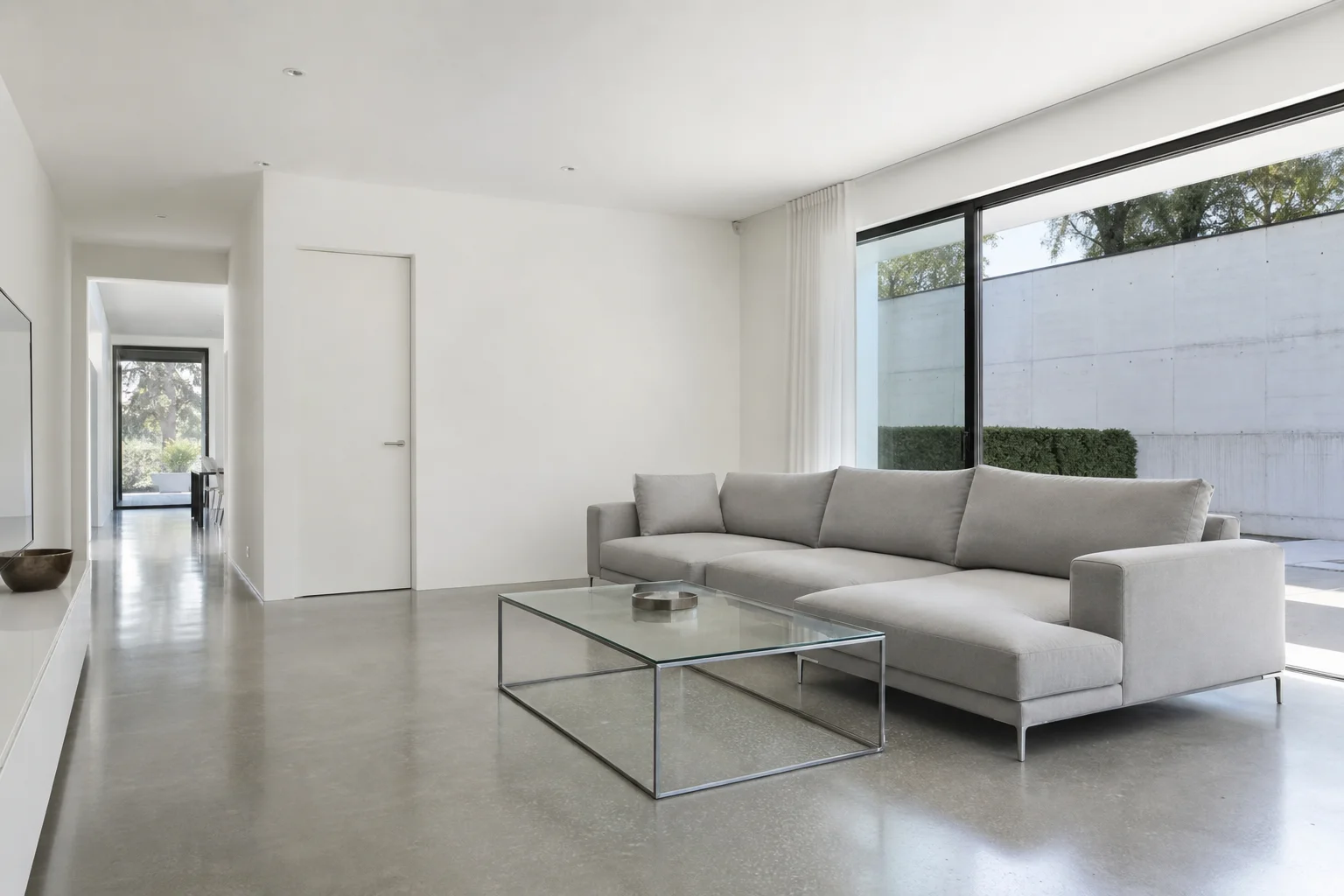
Cold minimalism is the look you picture when you think "minimalist": crisp white walls, cool grays, polished concrete, glass, and steel, stripped back to almost nothing. It's calm, gallery-clean, and undeniably striking in photos.
It's also the look design is actively moving away from. As The Spruce reports, designers say homeowners are craving warmth again after years of cool grays and crisp whites, calling out the "sterile look that dominated design for decades." The 1stDibs 2026 survey backs it up, with maximalism (39%) now the most-requested aesthetic. So why write about cold minimalism? Because the cool-toned, pared-back look still has real appeal — you just need to know how to keep its clean discipline without the chill. This guide shows you how.
In this guide you will learn:
- What "cold minimalism" actually means
- Cold vs. warm minimalism, side by side
- The cool palette that defines the look
- Why pure cold minimalism can feel sterile
- How to add warmth without losing the clean aesthetic
- Room-by-room examples
What "cold minimalism" actually means
Cold minimalism combines two ideas: minimalism (few objects, clean lines, lots of negative space) and a cool color temperature (whites, grays, blue-greys, and cool-toned materials like steel, chrome, glass, and polished concrete).
The result is sharp and serene — but because both the palette and the clutter are stripped out, there's little to make it feel lived-in. The takeaway: cold minimalism is a discipline of restraint, and its biggest risk is feeling more like a showroom than a home.
Cold vs. warm minimalism, side by side
The easiest way to understand cold minimalism is against its warmer sibling, warm minimalism, which keeps the simplicity but swaps in earthy, cozy tones.
| Cold minimalism | Warm minimalism | |
|---|---|---|
| Palette | White, grey, blue-grey | Cream, beige, taupe, terracotta |
| Materials | Steel, glass, concrete, chrome | Oak, linen, wool, clay, rattan |
| Metals | Chrome, polished nickel | Brass, bronze, aged gold |
| Mood | Crisp, gallery-like, cool | Cozy, grounded, inviting |
| Risk | Can feel sterile | Can feel too soft if overdone |
Neither is "wrong" — and the most current 2026 rooms borrow from both: the restraint of cold minimalism with a few warm materials mixed in.
Preview Warm Minimalism in Your Space
Upload a photo of your space to test Warm Minimalism instantly with AI — 100% free.
Supports JPG, PNG, WebP up to 10MB
The cool palette that defines the look
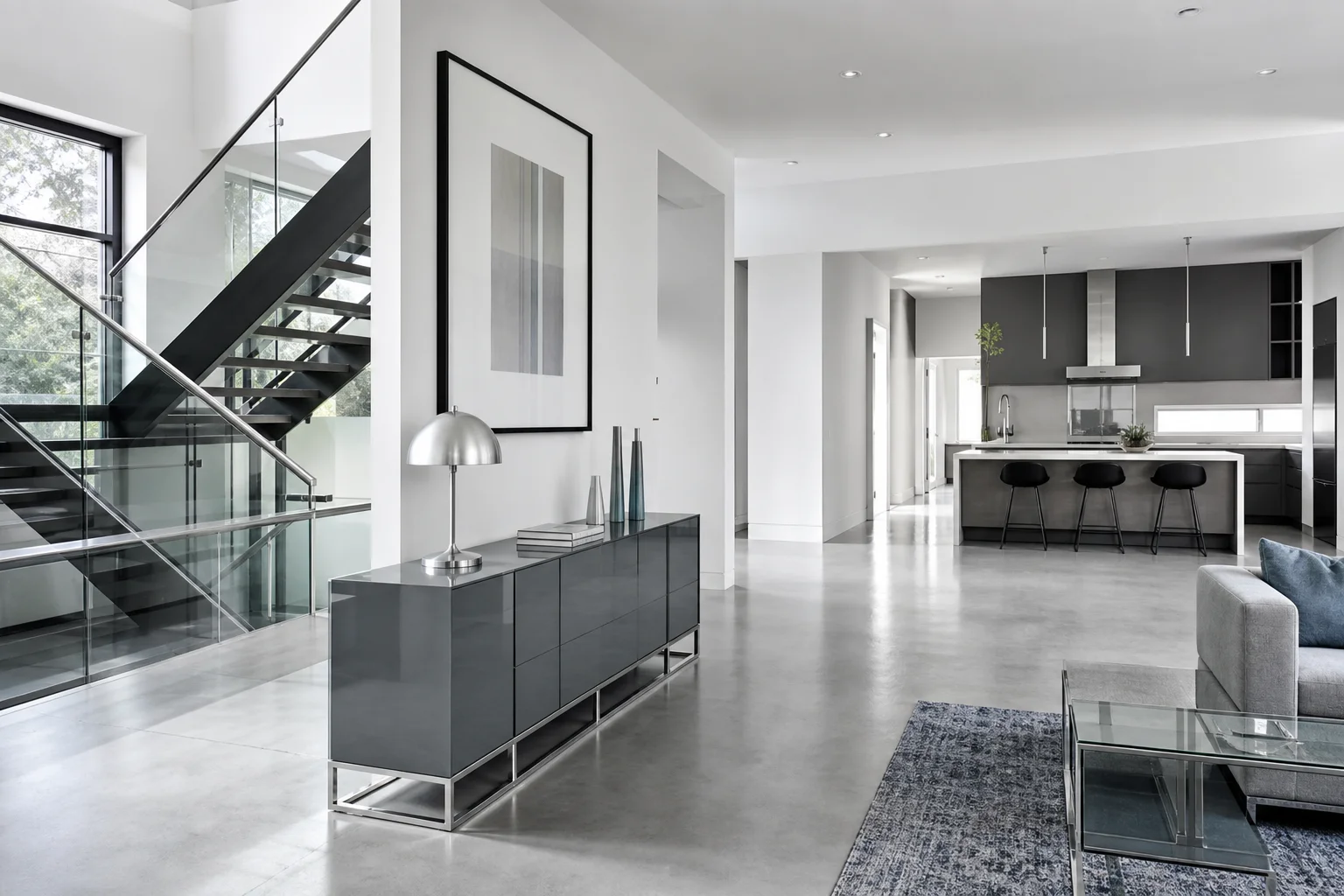
If you want the cold-minimalist look, the palette is deliberately narrow:
- Walls: bright white or a cool greige.
- Floors: polished concrete, pale gray tile, or whitewashed wood.
- Materials: glass, steel, chrome, and high-gloss surfaces.
- Accents: charcoal, black, and blue-grey for contrast.
Keep surfaces clear, lines straight, and the object count low — the empty space is the point.
Why pure cold minimalism can feel sterile
Here's the honest part. Strip a room down to cool tones and hard surfaces and it can tip from "serene" into "cold and unwelcoming." Cool, blue-white light makes it worse, especially in the evening. Designers describe the all-gray, all-white interiors of the last decade as flat — which is exactly why the trend is correcting toward warmth.
The takeaway: cold minimalism works as an aesthetic, but a home you actually relax in usually needs at least a few degrees of warmth added back.
How to add warmth without losing the clean look
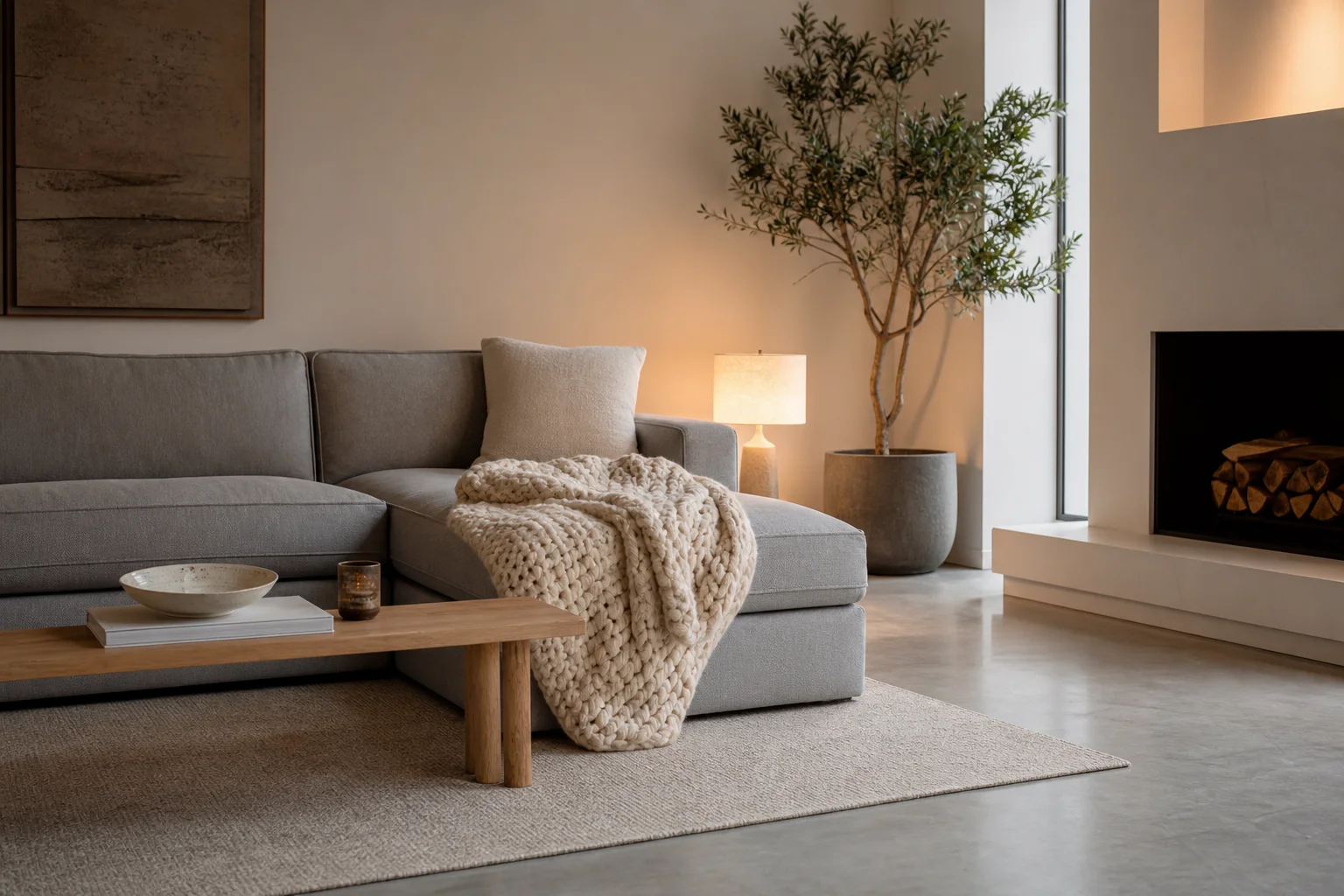
You can keep the discipline of cold minimalism and lose the chill. The fixes are small and deliberate:
- Add one warm wood. A single light oak bench, stool, or floating shelf instantly grounds a cool room.
- Layer soft texture. A chunky wool throw, a linen cushion, or a tactile rug — like the textured surfaces trending in 2026 — softens hard lines.
- Warm the lighting. Swap cool 4000K bulbs for warm-white 2700K. This is the cheapest, highest-impact change.
- Introduce greenery. One large architectural plant adds life without adding clutter.
- Mix in a warm metal. A touch of brass against all that chrome bridges cool and warm.
This is essentially the path from cold minimalism toward warm minimalism — and you control how far you go.
Room-by-room examples
- Living room: keep the cool gray sofa and concrete floor, but add an oak coffee table, a wool throw, and warm lamps.
- Bedroom: cool white walls stay, but layer linen bedding and a wood headboard so it feels restful, not clinical.
- Kitchen: white cabinets and steel appliances read cold alone — warm them with wood open shelving and brass hardware.
- Bathroom: concrete and glass get warmth from a teak stool, a stone tray, and warm sconce lighting.
See your room both ways before you commit
Not sure whether cool-and-crisp or warmed-up is right for your space? Upload a photo of your room to EasyRoomAI and generate both a cold-minimalist version and a warmed-up one to compare side by side — before you buy furniture or repaint.
- Try a free room redesign — anonymous previews are free, no signup needed.
- Compare the two looks directly with our warm minimalism guide and the wider 2026 color trends.
Frequently asked questions
What is cold minimalism? Cold minimalism is a minimalist style built on a cool color palette — whites, grays, and blue-greys — with cool-toned materials like steel, glass, chrome, and polished concrete. It pairs clean lines and empty space with a crisp, gallery-like, cool atmosphere.
What's the difference between cold and warm minimalism? Both keep minimalism's clean lines and clutter-free simplicity. Cold minimalism uses cool tones (grey, white, steel, glass) for a crisp, sharp feel, while warm minimalism uses earthy tones (cream, beige, oak, linen) for a cozy, grounded feel. The most current rooms blend the restraint of one with a few warm materials from the other.
Is cold minimalism out of style for 2026? The strictly cold, all-gray look is on the decline — designers report homeowners craving warmth after years of cool grays and whites, and maximalism is now the most-requested aesthetic. But the pared-back, cool-toned look still has appeal when softened with warm wood, texture, and warm lighting.
Why does cold minimalism feel cold? Because it removes both color warmth and visual texture: cool tones, hard reflective surfaces, and few objects give the eye nothing soft to land on. Cool blue-white lighting amplifies the effect. Adding wood, textiles, plants, and warm 2700K lighting fixes it.
How do I make a minimalist room feel warmer? Add one warm wood element, layer soft textures (wool, linen), switch to warm-white 2700K bulbs, introduce a large plant, and mix in a brass accent. These small changes keep the clean minimalist look while removing the chill.
Cold minimalism is striking, but a home needs warmth to feel like one. Keep the clean lines and the calm, then add a few warm woods, soft textures, and warmer light — and preview both versions of your room before you commit.
Ready to Transform Your Space?
Try AI room redesign for free - no credit card required.
Start Designing FreeRelated reading
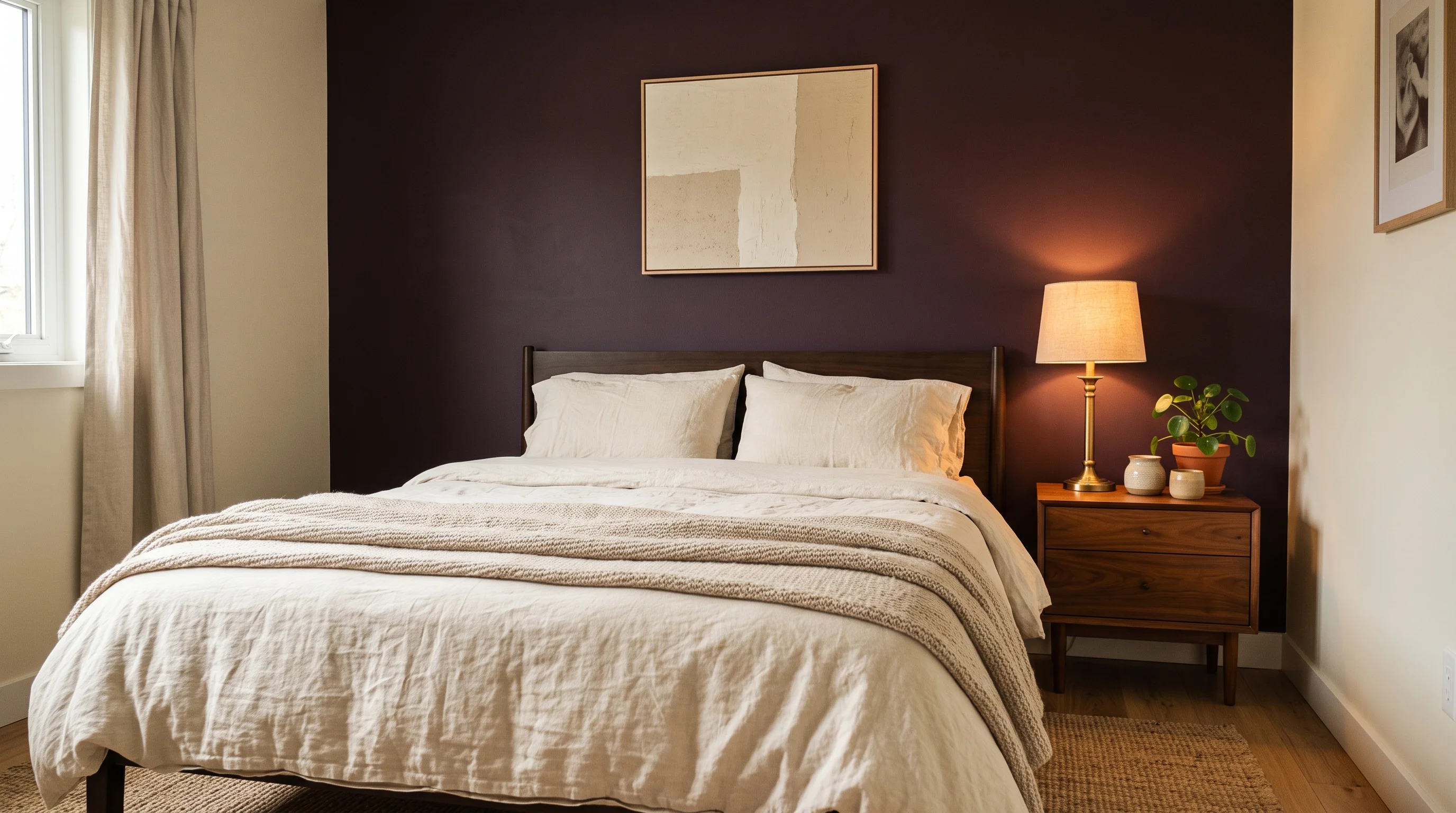
Plum Bedroom Ideas: 12 Ways to Use 2026's Most Cocooning Color
Pinterest reports Plum Noir searches up 220% with saves up 335%. Deep plum is 2026's answer to the all-white bedroom — cocooning, sophisticated, and surprisingly easy to live with. Here are 12 ways to use it.
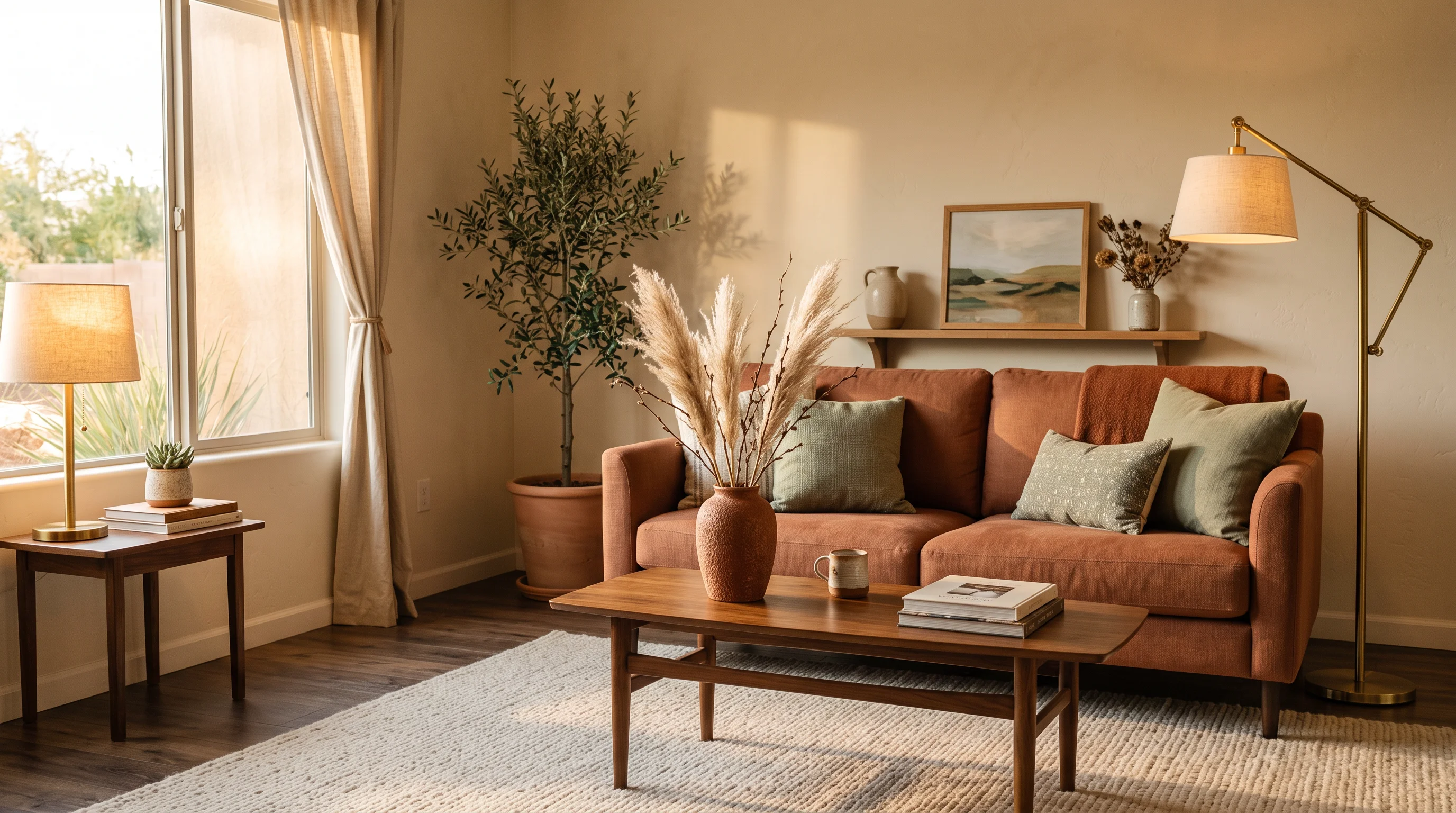
Earth Tone Living Room Ideas: 15 Warm Palettes Designers Are Using in 2026
Searches for earthy living rooms jumped 220% since 2023. Terracotta, sage, rust, and warm neutrals are replacing cool grays everywhere. Here are 15 earth-tone palettes that actually work — with styling rules to keep them warm without heavy.
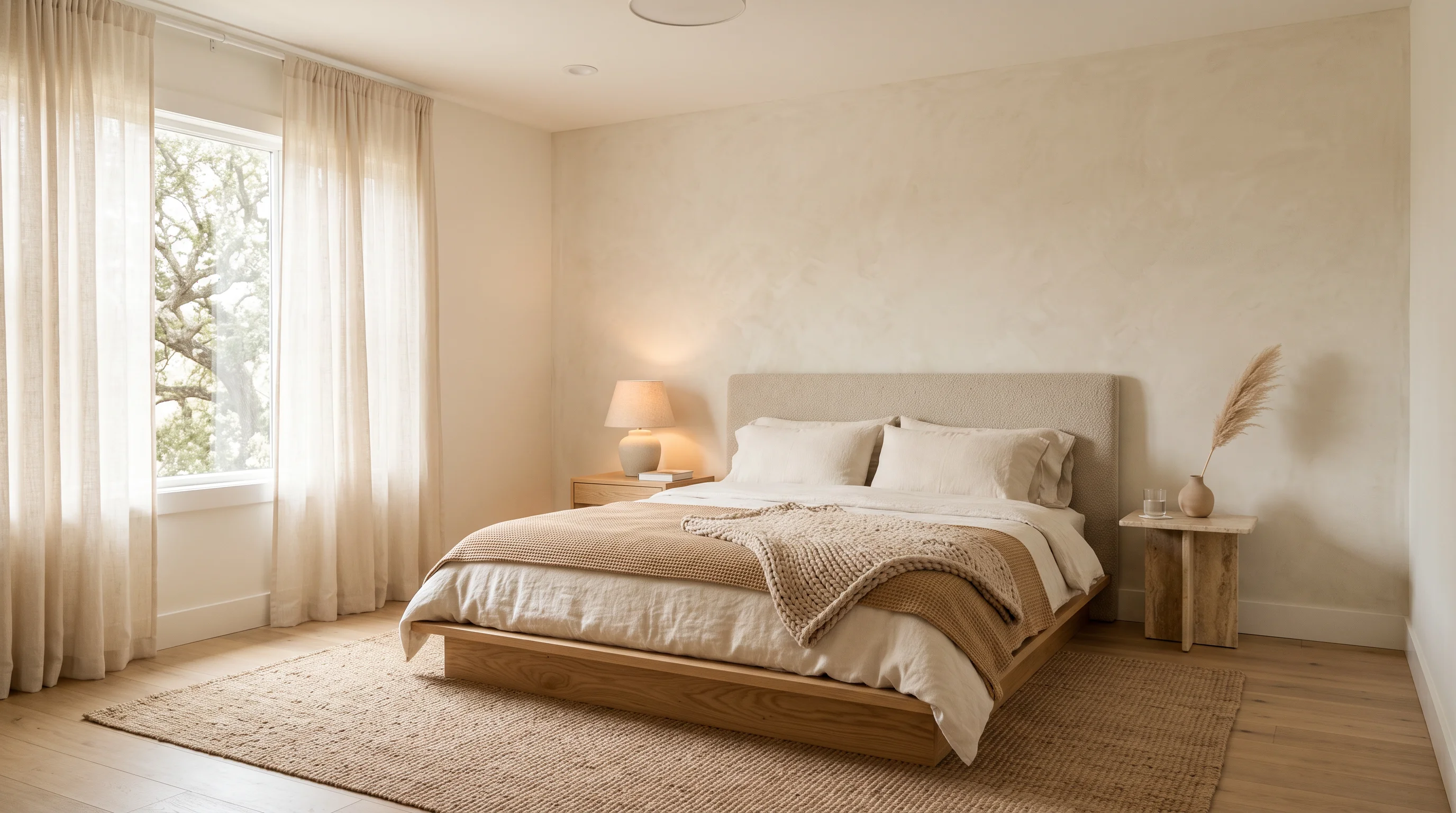
Warm Minimalist Bedroom Ideas: How to Create a Calm, Textured Retreat in 2026
A warm minimalist bedroom keeps the clutter-free calm but trades cold whites for cream, oak, and layered linen. Here are the exact steps — palette, bed, lighting, and textures.