Japandi Interior Design: 20 Ideas for a Calmer, More Intentional Home in 2026
Japandi is the fastest-growing design style of the decade — up 340% on Pinterest, named #1 by 140 designers in Apartment Therapy's 2026 survey. Here's how to bring it into every room.
 Easy Room AI Team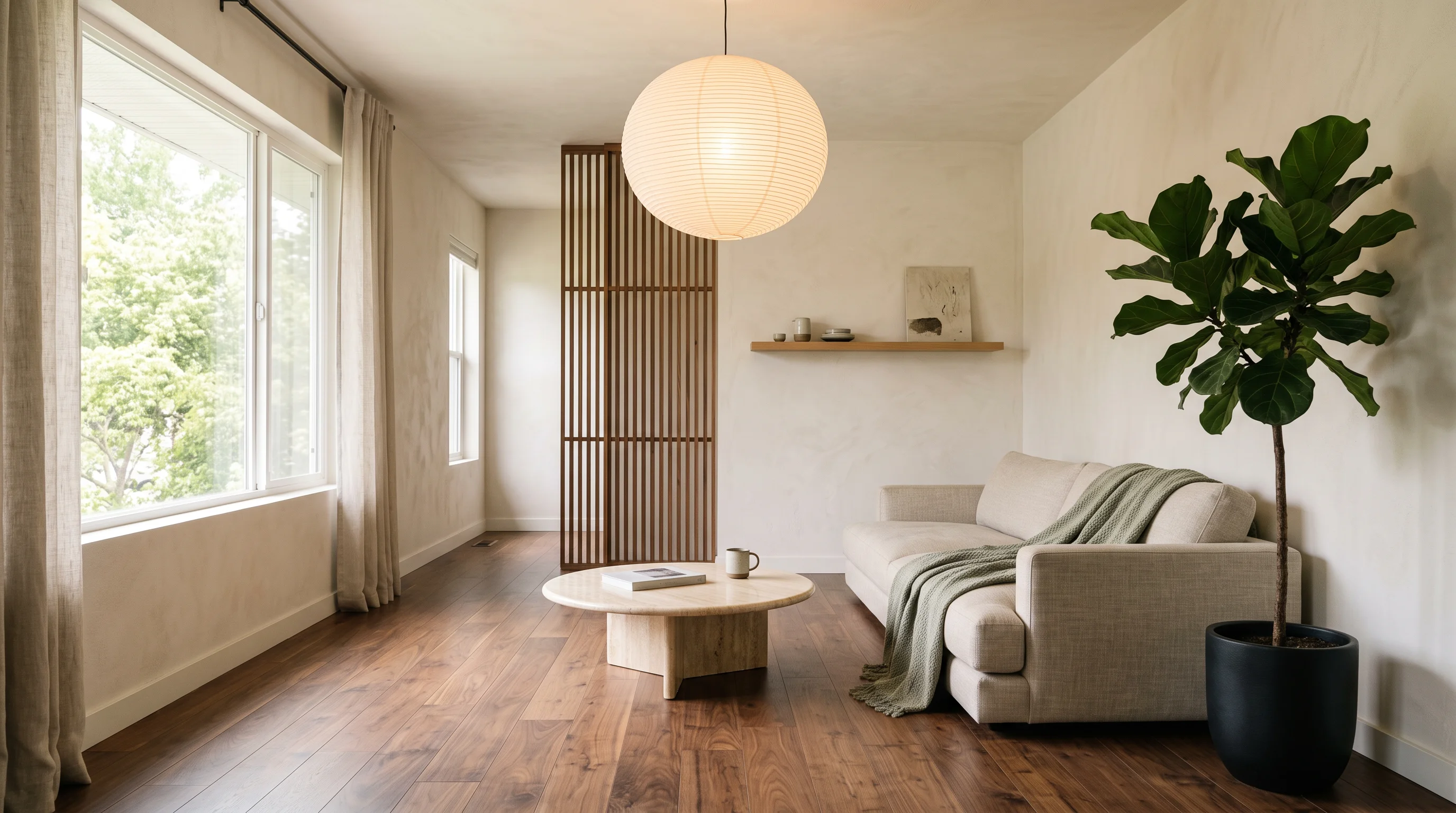
Japandi — the hybrid of Japanese restraint and Scandinavian warmth — is no longer a niche Pinterest board. It is the dominant residential design language of 2026, growing 340% in user requests on Deqor's platform and identified as the top aesthetic by 140 interior designers in Apartment Therapy's annual State of Home Design survey.
But the Japandi you see today looks nothing like the blonde-oak-and-white-walls version that went mainstream in 2020. The style is maturing. It is getting darker, more textured, more personal — and that evolution is exactly what makes it worth exploring now.
This guide covers what Japandi actually means in 2026, the three sub-tracks shaping its future, and 20 actionable ideas you can implement room by room — whether you are starting from scratch or layering Japandi elements into an existing space.
What Japandi actually is (and isn't)
Japandi merges two design philosophies that share more DNA than you might expect. From Japan: wabi-sabi (finding beauty in imperfection), ma (intentional negative space), and functional restraint. From Scandinavia: hygge (warmth and coziness), democratic design, and a deep connection to natural light.
The result is spaces that feel calm without feeling cold. Minimal without feeling empty. Crafted without feeling precious.
What it is not: an excuse for a bare room with one plant and a beige sofa. The best Japandi interiors are layered, textured, and deeply considered — every object earned its place.
The 2026 evolution: three sub-tracks reshaping the style
According to Decorquarter's analysis of Pinterest save data, 200+ design accounts, and Q1 2026 launches from Article, Castlery, West Elm, and Pottery Barn, Japandi is now splintering into three distinct directions:
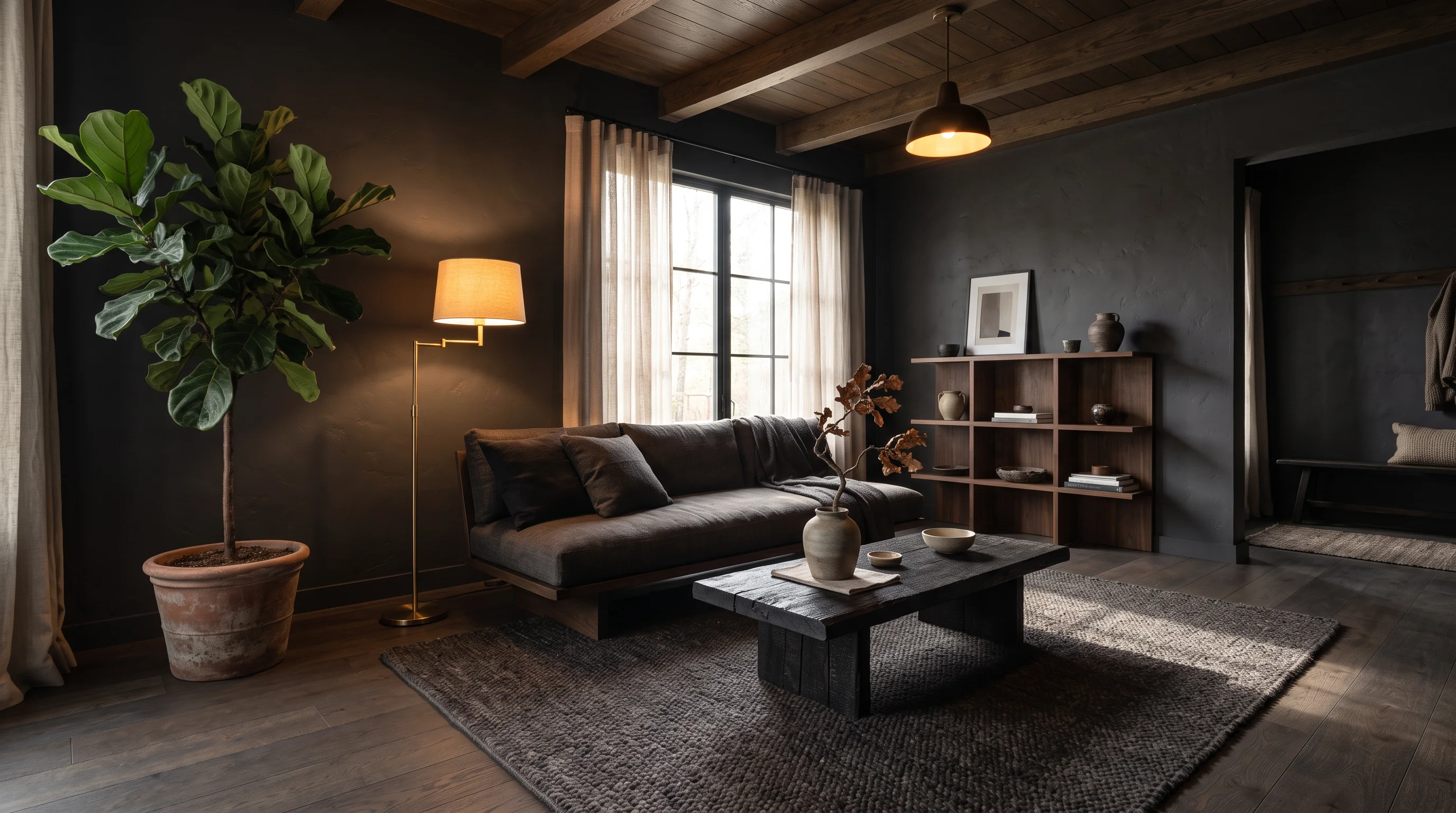
1. Dark Japandi
The most significant shift. All-white Japandi is out; grounded, moody interiors using charcoal, deep olive, and warm black are in. Farrow & Ball's "Studio Green" and Benjamin Moore's "Wrought Iron" both saw strong Q1 2026 restocking data from independent retailers. Wood tones have shifted from blonde oak to walnut, smoked oak, and Shou Sugi Ban (the Japanese technique of charring timber to preserve and darken it).
Dark Japandi works especially well in bedrooms and media rooms — spaces where a cocooning, cave-like atmosphere aids relaxation.
2. Wabi Japandi
This sub-track leans harder into wabi-sabi's acceptance of imperfection. Think visible age on wood, ceramic glazes that pool and crack, linen that creases and stays creased. Smooth drywall is replaced by lime wash, clay plaster, and raw stone. The mass-produced, editorial cleanliness of early Japandi gives way to surfaces that show their history.
Pinterest saves tagged "handmade pottery japandi" increased approximately 73% between Q3 2025 and Q1 2026 (Decorquarter).
3. Biophilic Japandi
Both Japanese and Nordic traditions have deep connections to nature, and the 2026 interpretation amplifies this. Forget small succulents on a shelf — current Japandi uses large indoor trees in substantial pots, architectural connections to outdoor spaces, and natural stone features. The line between inside and outside blurs intentionally.
Preview Japandi in Your Space
Upload a photo of your space to test Japandi instantly with AI — 100% free.
Supports JPG, PNG, WebP up to 10MB
The Japandi color palette in 2026
The 2026 Japandi palette has shifted warmer and deeper than the cool greige of previous years:
Base tones: Warm off-white (Benjamin Moore White Dove), creamy beige, soft mushroom, light greige Mid tones: Dusty sage, warm sand, camel, natural oak Dark anchors: Charcoal, deep olive, walnut brown, soft black Accent moments (used sparingly): Terracotta, burnt rust, deep indigo
The critical rule: all colors carry warm undertones. No stark whites, no cool grays, no blues that compete for attention. The palette should recede — you notice the space and the objects, not the color on the walls.
Deqor's platform data shows a 128% increase in "Japandi with color" requests — terracotta accent walls and deeper indigo ceramics are the most common additions to the traditionally neutral palette.
20 Japandi ideas by room
Living room (Ideas 1–6)
1. Low-profile sofa in warm linen. Seat height 35–40 cm (14–16 inches) — lower than standard Western sofas. Japanese interiors sit low; this shifts the visual center of gravity and makes rooms feel more spacious. Choose a clean-lined frame in white oak or walnut with linen upholstery in warm gray, oatmeal, or sage.
2. Round coffee table in natural material. Soft shapes echo the Japanese concept of marumi (roundness) and Scandinavian love of organic forms. Light oak or travertine, 80–100 cm diameter, low to the ground (30–35 cm).
3. One dark accent wall. Apply Benjamin Moore Wrought Iron or Farrow & Ball Studio Green to a single wall behind the sofa. Keep remaining walls in warm off-white. This creates depth without overwhelming the room — and connects to the Dark Japandi sub-track. For a richer texture, consider color drenching the wall, trim, and adjacent surfaces in the same deep tone.
4. Layered texture in one color family. A linen sofa, wool throw, jute rug, and cotton curtains — all in the warm neutral range. The variety keeps the eye moving while the warmth keeps everything cohesive.
5. Paper pendant light. Replace harsh overhead fixtures with a large rice-paper pendant or a sculptural paper lantern. The diffused, warm glow (2700K bulbs) is essential to the Japandi atmosphere.
6. Intentional negative space. Leave at least 30% of any surface — shelf, wall, side table — unoccupied. This ma (空間) is not empty; it is the silence that lets the room breathe.
Bedroom (Ideas 7–11)
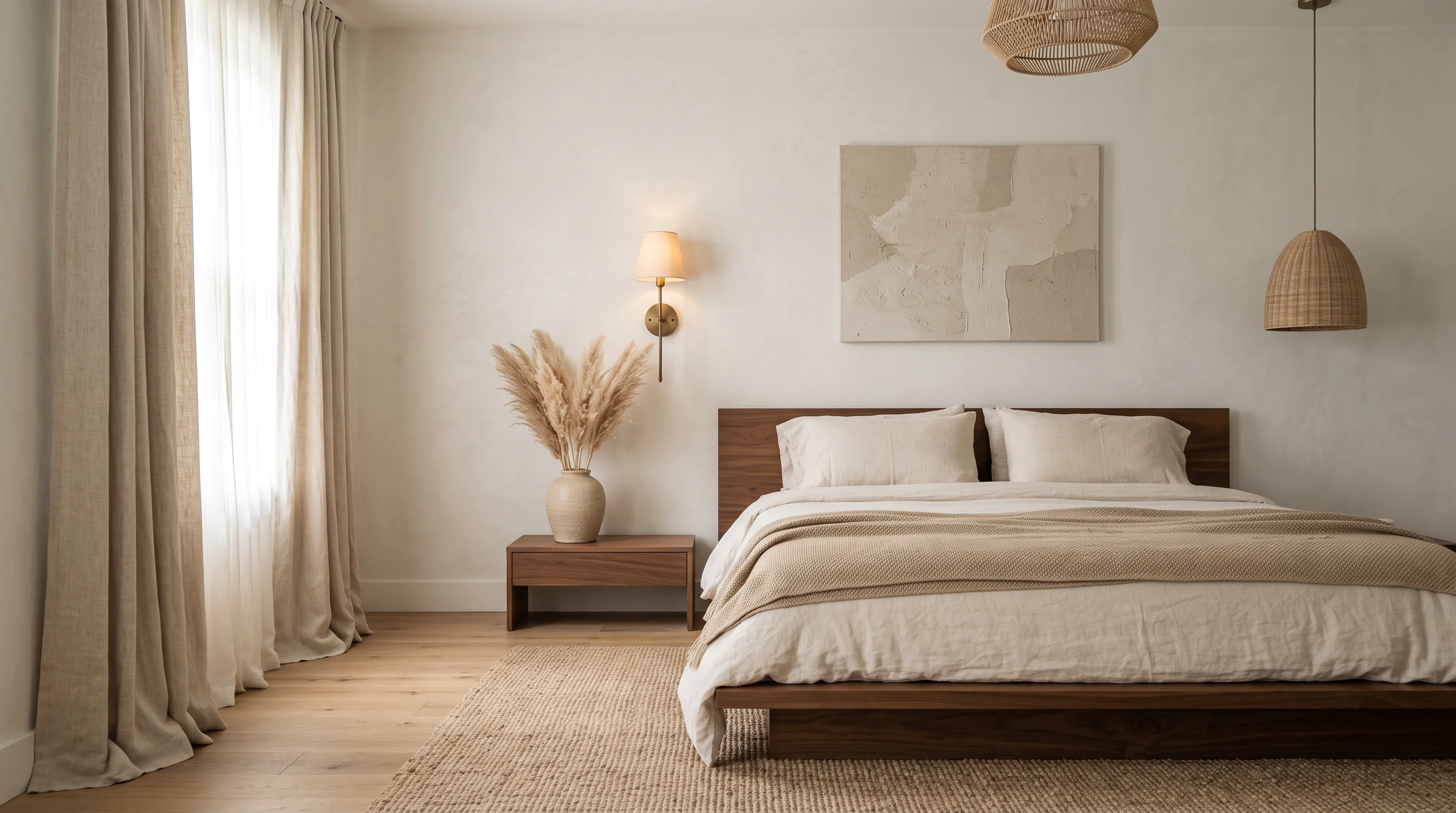
7. Platform bed in solid wood. No ornate headboard, no upholstered frame. A simple platform in walnut or smoked oak, low to the floor, with clean lines. Built-in storage drawers underneath maintain the uncluttered look.
8. Linen bedding in a single tonal family. Layer three to four different textures — linen duvet, knit throw, woven cushion — all in cream, sand, and warm white. No competing colors. Just varying textures.
9. Bedside lighting at eye level. A single matte-black or aged-brass wall sconce positioned at eye level when sitting in bed. Never harsh overhead light in a Japandi bedroom.
10. One sculptural object. A single handmade ceramic vase or a dried branch arrangement on the nightstand. The wabi-sabi principle: one imperfect, beautiful thing is more powerful than ten decorative objects competing for attention.
11. Floor-to-ceiling linen curtains. Puddle slightly on the floor for softness. The textural weight of heavy linen filters light gently while maintaining the room's warm, enveloping atmosphere.
Kitchen (Ideas 12–15)
12. Flat-front cabinets in natural wood. Slab-style doors in white oak or walnut with integrated (recessed or touch-latch) handles. No visible hardware competing for attention. The wood grain IS the decoration.
13. Concealed everything. Appliance garages, pocket doors hiding the pantry, closed upper cabinets instead of open shelving. A Japandi kitchen can be as chaotic inside as any other kitchen — but the surfaces and fronts are calm.
14. One or two functional objects on display. A wooden chopping board, a ceramic vessel for utensils, a quality knife block. These earn their visible place by being both beautiful and used daily.
15. Warm stone countertop. Honed (not polished) natural stone with soft movement — avoid overly busy, high-contrast veining. The countertop should support the cabinetry, not fight it.
Bathroom (Ideas 16–18)
16. Lime-washed or clay-plastered walls. The texture of these materials adds depth that flat paint cannot achieve — and connects directly to the Wabi Japandi sub-track. See our full guide to limewash wall ideas for application techniques. Combine with warm neutral porcelain tile on the floor for practicality.
17. Freestanding stone or timber vanity. A solid piece that reads as furniture rather than built-in cabinetry. This brings the Japanese ofuro (bath) philosophy into a Western bathroom — honest materials, clear function.
18. Large indoor plant. A substantial fern or a slender indoor tree in a terracotta or matte-black pot. The Biophilic Japandi influence turns the bathroom into a restorative, nature-connected space.
Entry and utility spaces (Ideas 19–20)
19. Genkan-inspired entry. Borrow from Japanese homes: a clear threshold where shoes come off, with a low bench in solid wood and concealed storage for footwear beneath. A single hook for today's coat. Nothing more.
20. Natural fiber runner in a hallway. A jute or sisal runner in a warm, undyed tone transforms a transitional space into something intentional. Pair with a single piece of art — a woodblock print or an abstract ceramic — and warm sconce lighting.
Materials that define Japandi
| Material | Japandi Use | 2026 Direction |
|---|---|---|
| Wood | Flooring, furniture, cabinetry | Shifting from blonde oak → walnut, smoked oak, Shou Sugi Ban |
| Linen | Upholstery, curtains, bedding | Always natural or plant-dyed (oat, stone, sage) |
| Stone | Countertops, bathroom, decorative | Honed finishes, travertine, warm limestone |
| Ceramics | Decorative, tableware | Handmade, imperfect glazes — the wabi-sabi signature |
| Paper | Lighting | Rice-paper pendants, washi panel doors |
| Rattan/bamboo | Seating, storage, accessories | Gaining scale — substantial pieces, not accents |
Japandi vs warm minimalism vs Scandinavian
These styles share family DNA but differ in emphasis:
| Japandi | Warm Minimalism | Scandinavian | |
|---|---|---|---|
| Origin | Japan × Scandinavia | Broad modern movement | Nordic countries |
| Key philosophy | Wabi-sabi + hygge | Less but better | Democratic, functional |
| Color temp | Warm neutrals + dark anchors | Warm neutrals | Brighter, cooler whites |
| Imperfection | Celebrated (cracks, age, patina) | Tolerated | Less present |
| Furniture height | Low to ground | Standard | Standard |
| Negative space | Deliberate (ma) | Valued | Less emphasized |
All three overlap significantly. Warm minimalism is the broadest umbrella; Japandi is warm minimalism with a specific Japanese wabi-sabi edge.
See Japandi in your own space
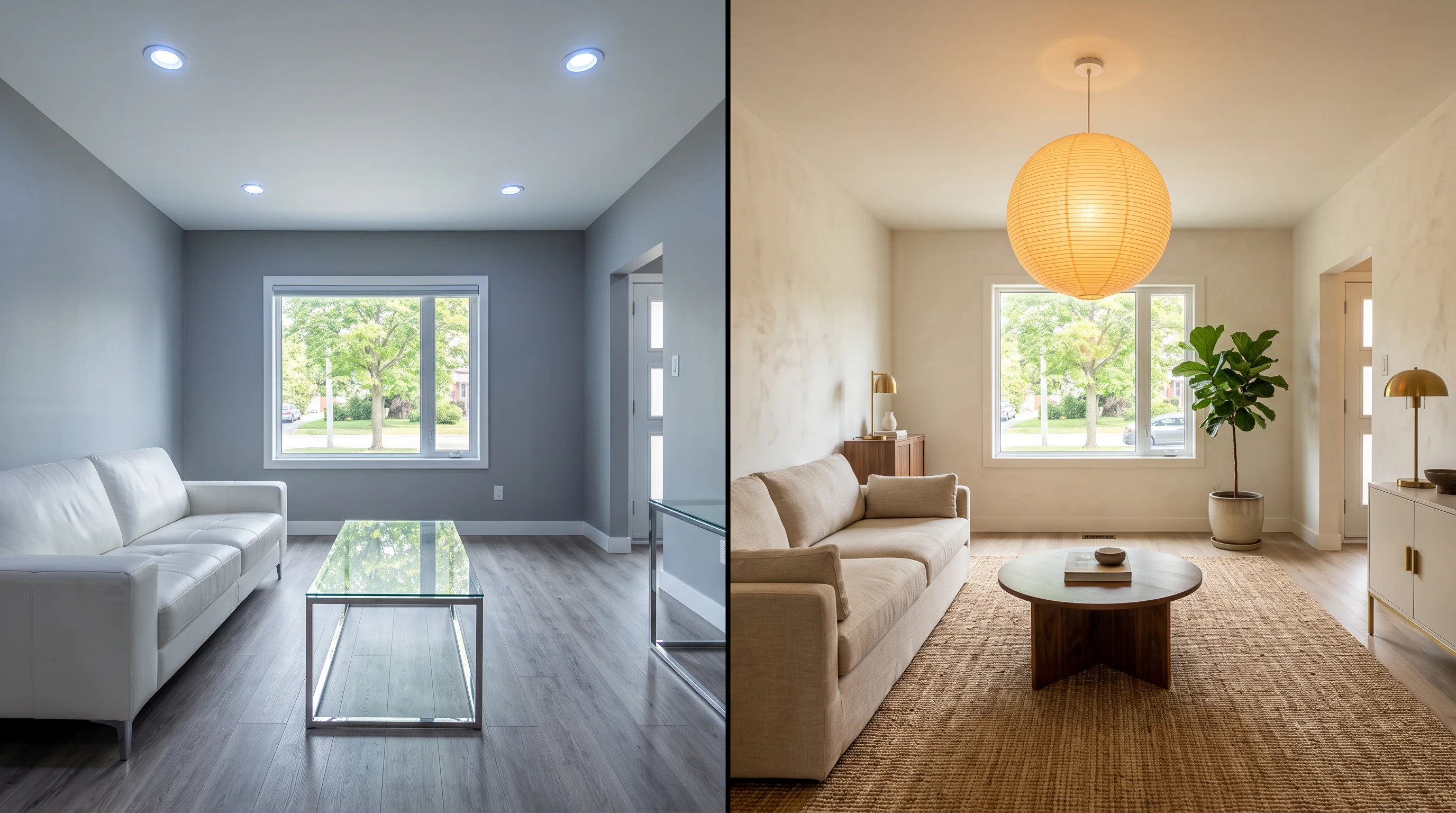
The challenge with any design style is imagining it on your actual walls, with your actual furniture and natural light. That is exactly what EasyRoomAI solves: upload one photo of any room and preview it redesigned in Japandi — your real layout preserved, only the materials, colors, and atmosphere transformed.
Try it with your living room or bedroom. The result shows you what works in your specific space before you commit to a single purchase.
FAQ
Is Japandi still trending in 2026? Strongly. Apartment Therapy's 2026 survey of 140 designers named it the #1 aesthetic. Pinterest saves grew 240% between 2023 and 2025. Rather than fading, the style is evolving — Dark Japandi, Wabi Japandi, and Biophilic Japandi are the three 2026 sub-tracks gaining momentum.
What colors are Japandi? Warm off-whites, mushroom, sage, sand, and camel form the base. Dark anchors (charcoal, deep olive, walnut) add depth. In 2026, terracotta and deep indigo are emerging as accent additions — "Japandi with color" requests grew 128% on Deqor's platform.
Is Japandi the same as minimalism? No. Traditional minimalism can feel cold and sterile. Japandi specifically rejects that by layering warm materials (wood, linen, stone), embracing imperfection (wabi-sabi), and prioritizing comfort (hygge). Every object in a Japandi room is chosen for both beauty and function — it is curated fullness, not emptiness.
What is the difference between Japandi and Scandinavian? Scandinavian design leans brighter, cooler, and more democratic (think IKEA). Japandi adds the Japanese layer: lower furniture, deliberate negative space (ma), celebration of imperfection, and a warmer, deeper color palette. Both value natural materials, but Japandi uses them more dramatically.
Can I do Japandi on a budget? Yes. Start with three moves: (1) declutter surfaces to 70% empty, (2) add one warm linen throw or jute rug, (3) replace one cool-toned object with a handmade ceramic or natural-wood piece. The style rewards editing over spending.
What rooms work best for Japandi? Living rooms and bedrooms are the natural starting points — both benefit from the calm, low-furniture, warm-material approach. Kitchens and bathrooms work beautifully with concealed storage and natural stone finishes. Even entries and hallways can adopt the genkan concept.
Ready to Transform Your Space?
Try AI room redesign for free - no credit card required.
Start Designing FreeRelated reading
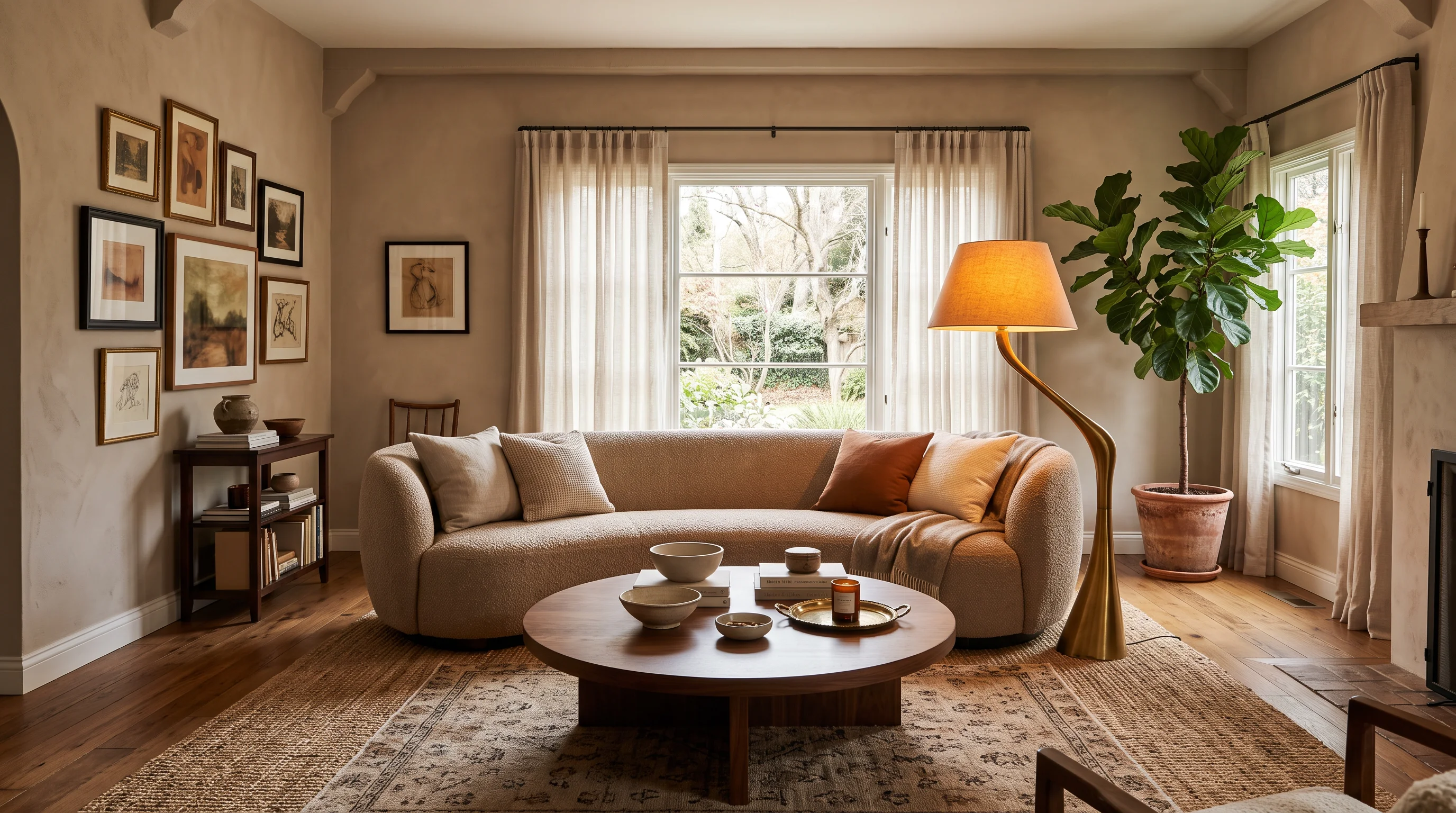
Living Room Ideas 2026: 22 Trends That Prove 'Instagram Interiors' Are Over
The staged, scroll-friendly living room is dead. In 2026, designers are building spaces that feel personal, warm, and intentionally imperfect. Here are 22 living room ideas — from earthy palettes to curved furniture to conversation layouts — shaping the year.
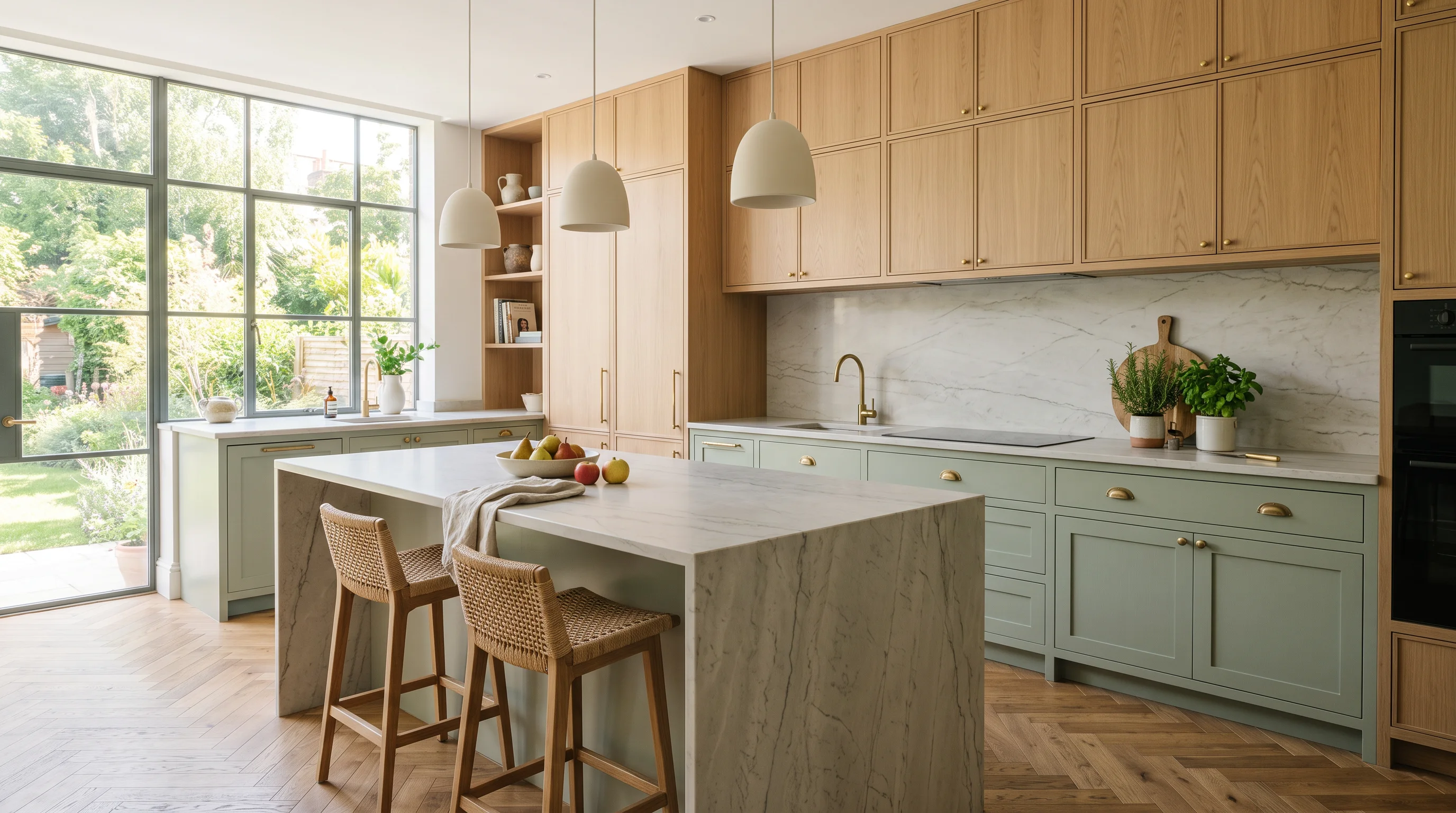
Kitchen Design Ideas 2026: 25 Trends Designers Are Actually Using This Year
The all-white kitchen is officially over. From warm wood cabinets to concealed everything, here are 25 kitchen design ideas shaping 2026 — backed by NKBA data and real designer projects.
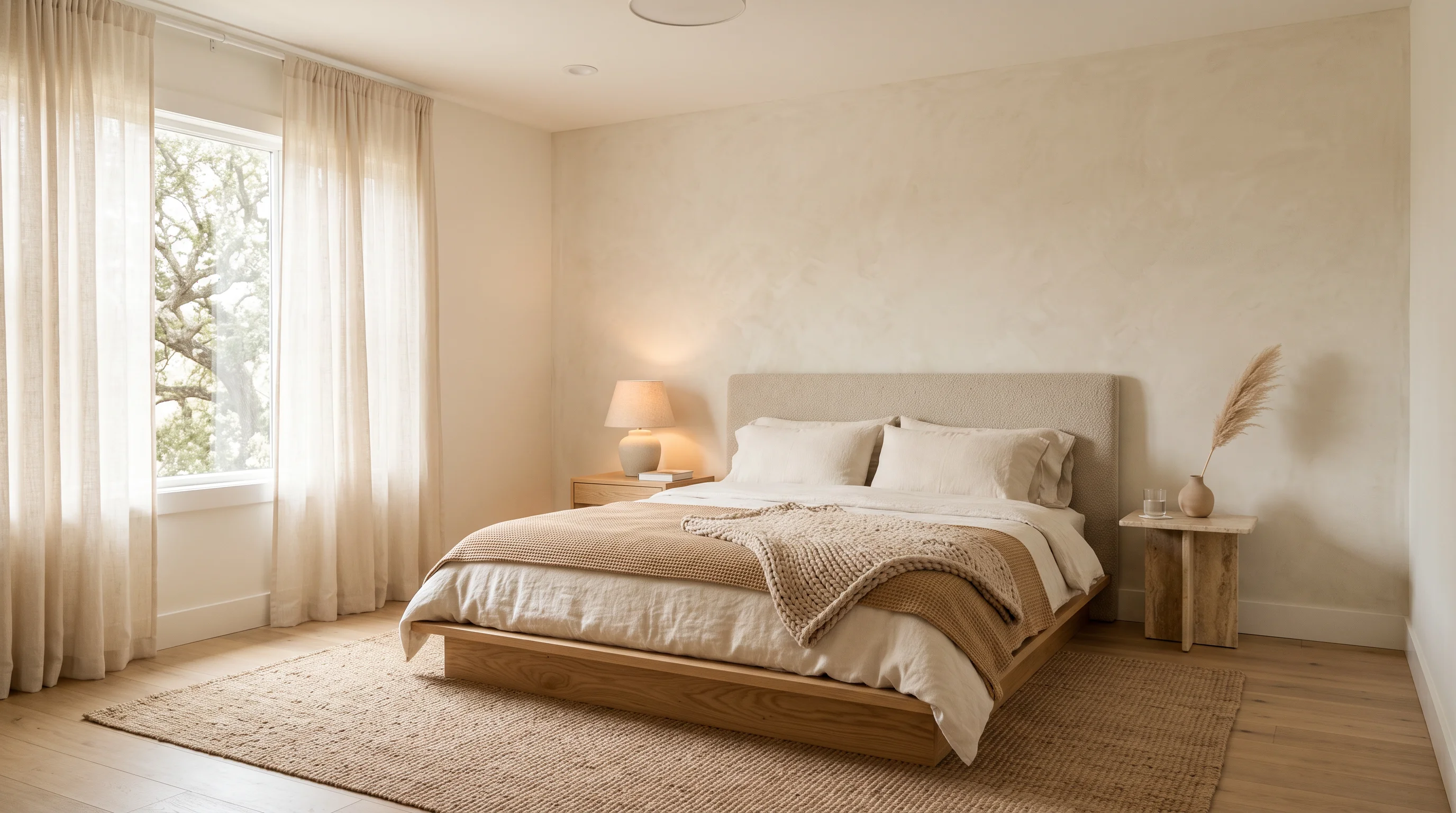
Warm Minimalist Bedroom Ideas: How to Create a Calm, Textured Retreat in 2026
A warm minimalist bedroom keeps the clutter-free calm but trades cold whites for cream, oak, and layered linen. Here are the exact steps — palette, bed, lighting, and textures.