20 Scalloped Tile Ideas — The Soft-Geometry Shape Taking Over Kitchens and Bathrooms (2026)
Houzz reports scalloped tile searches surged 210% in 2026 as homeowners swap rigid subway tile for softer, curvier shapes. Here are 20 scalloped tile ideas for kitchens, bathrooms, showers, and backsplashes — with layout tips, color palettes, and grout strategies.
 Easy Room AI Team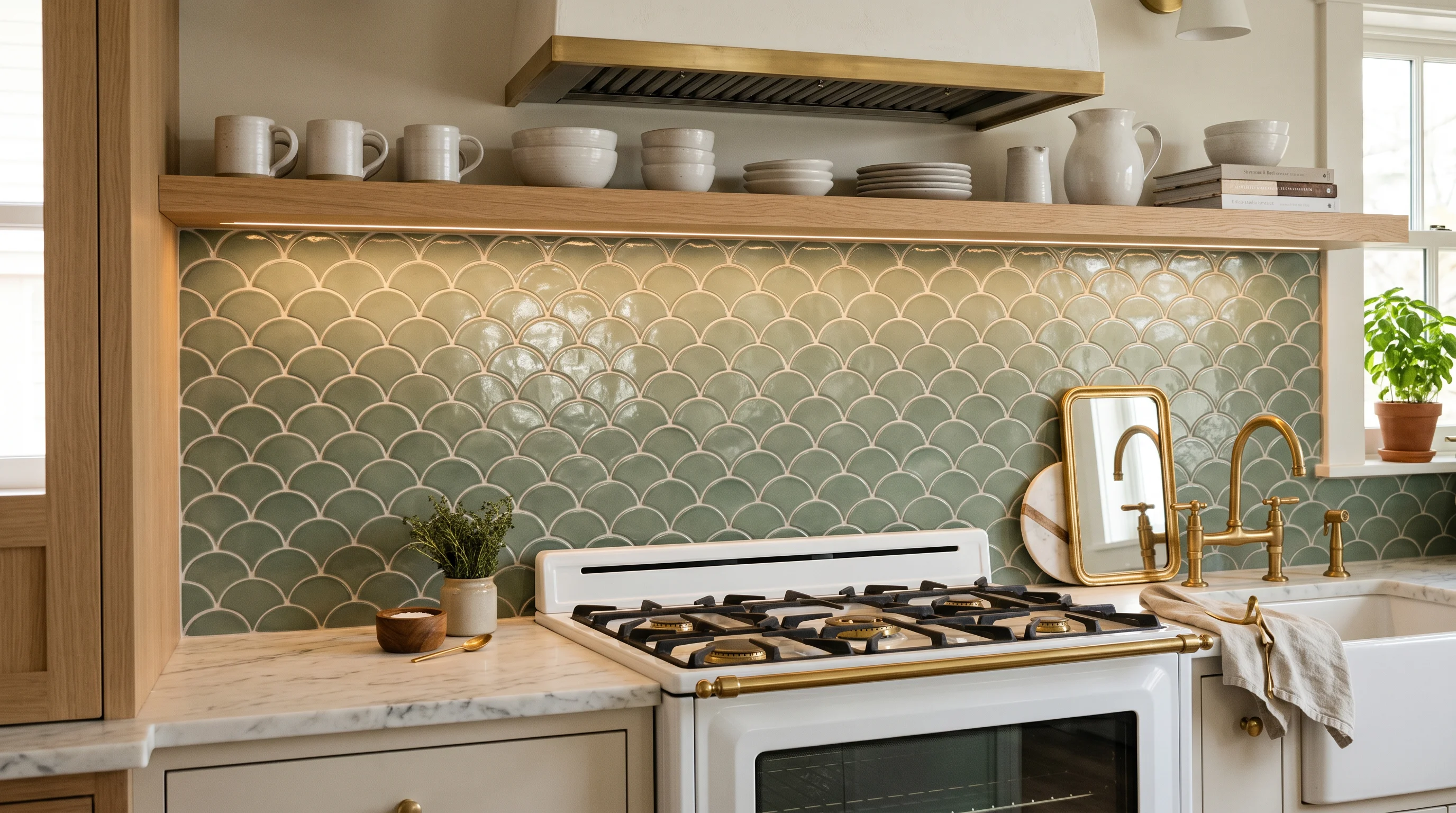
Subway tile had a twenty-year run. It is not dead, but it is no longer the default — and the shape replacing it has curves. Houzz's 2026 Summer Trends Report puts searches for "scalloped tile" up 210% (more than 3x), part of a broader shift toward curves and soft geometry that includes arched range hoods (+177%), rounded kitchen islands (+123%), and wave tile (+38%). The message is clear: homeowners are tired of rigid lines and are choosing shapes that add movement, texture, and a sense of play.
Scalloped tiles — also called fish scale, fan, or mermaid tiles — have a fan-shaped or half-circle silhouette that creates a repeating pattern of interlocking curves. They can feel Art Deco, Mediterranean, or completely modern depending on the color, grout, and orientation you choose. Here are 20 ways to use them.
In this guide you will learn:
- Kitchen backsplash ideas with scalloped tile
- Bathroom and shower ideas
- Layout orientations (fan-up, fan-down, vertical)
- Color and grout strategies
- How to preview tile choices in your room before ordering
Kitchen backsplash ideas
1. Glossy sage green scalloped tiles behind the range. The range wall is the kitchen's focal point, and a scalloped backsplash in a glossy sage glaze transforms it into a statement. The curved shapes soften the hard edges of the range and countertop, and the gloss reflects light in a way matte subway tile never could. Pair with brushed brass or unlacquered brass hardware for a warm, organic kitchen.
2. White scalloped tiles as a modern twist on subway tile. Same clean, neutral backdrop — completely different energy. White scalloped tiles in a matte or satin finish give you the versatility of white tile with far more visual interest. Use a matching white grout for a seamless, textural look, or a slightly contrasting warm gray grout to define each scale.
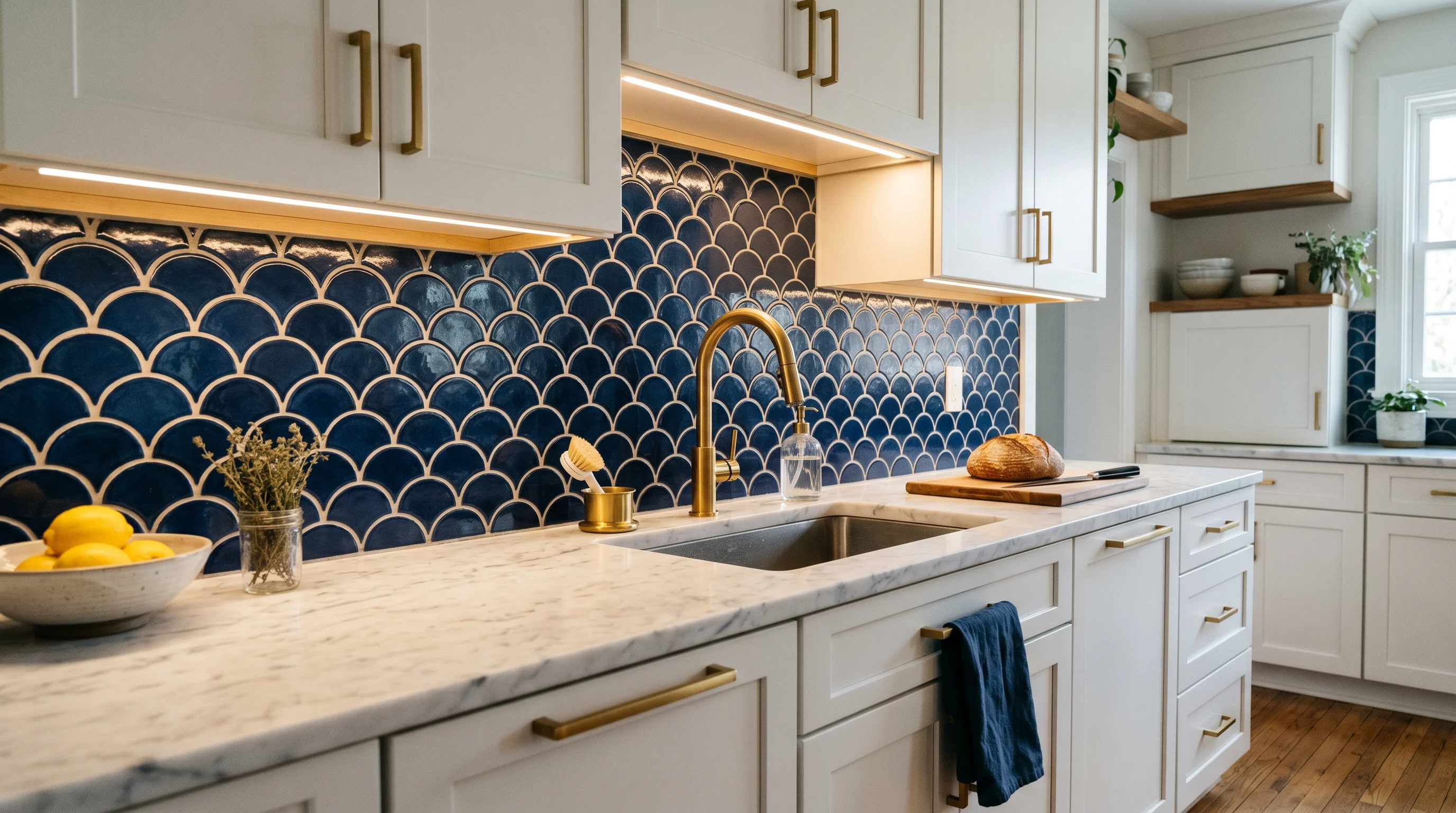
3. Navy blue scalloped backsplash with white cabinets. Deep navy scalloped tiles against white cabinetry create a high-contrast, coastal-meets-Art-Deco look. The navy reads sophisticated — not nautical — especially in a glossy glaze. This is one of the most dramatic backsplash statements you can make without overwhelming the kitchen. See our navy blue bedroom ideas for carrying this color into the rest of the home.
4. Terracotta or warm clay scalloped tiles for a Mediterranean kitchen. Warm clay or terracotta-toned scalloped tiles bring an instant Mediterranean quality — the curved shapes reinforce the archway and organic geometry that define Mediterranean design. Pair with a plaster range hood and open wood shelving.
Bathroom ideas
5. A full shower wall in scalloped tile. Floor-to-ceiling scalloped tile in a shower creates one of the most visually striking bathroom features in 2026. The curved shapes catch water and light, creating a surface that looks different when wet versus dry. Choose a color from the spa palette — soft seafoam, warm white, pale blue — for a calming shower experience. See our spa bathroom ideas for more.
6. A scalloped tile accent wall behind the vanity. Instead of tiling the entire bathroom, use scalloped tiles only on the wall behind the vanity mirror. It creates a focal point without overwhelming the room and draws the eye to the mirror and lighting. Pair with a simple floor tile in a complementary neutral.
7. A half-wall of scalloped tile with painted upper walls. Tile the lower half of the bathroom wall (to wainscot height) in scalloped tile and paint the upper half in a matching or complementary tone. This approach works especially well in small bathrooms — it adds texture and protection where you need it (splash zone) without making the room feel busy.
8. A niche shelf framed in scalloped tile. A recessed shower niche lined with scalloped tile in a contrasting color or finish becomes a design detail that elevates the entire shower. It is a small surface area but a high-impact application — the curves of the tile against the rectangular niche create beautiful tension.
Redesign Your Room in Seconds
Upload a photo of your space to test 16 curated design styles instantly with AI — 100% free.
Supports JPG, PNG, WebP up to 10MB
Layout and orientation
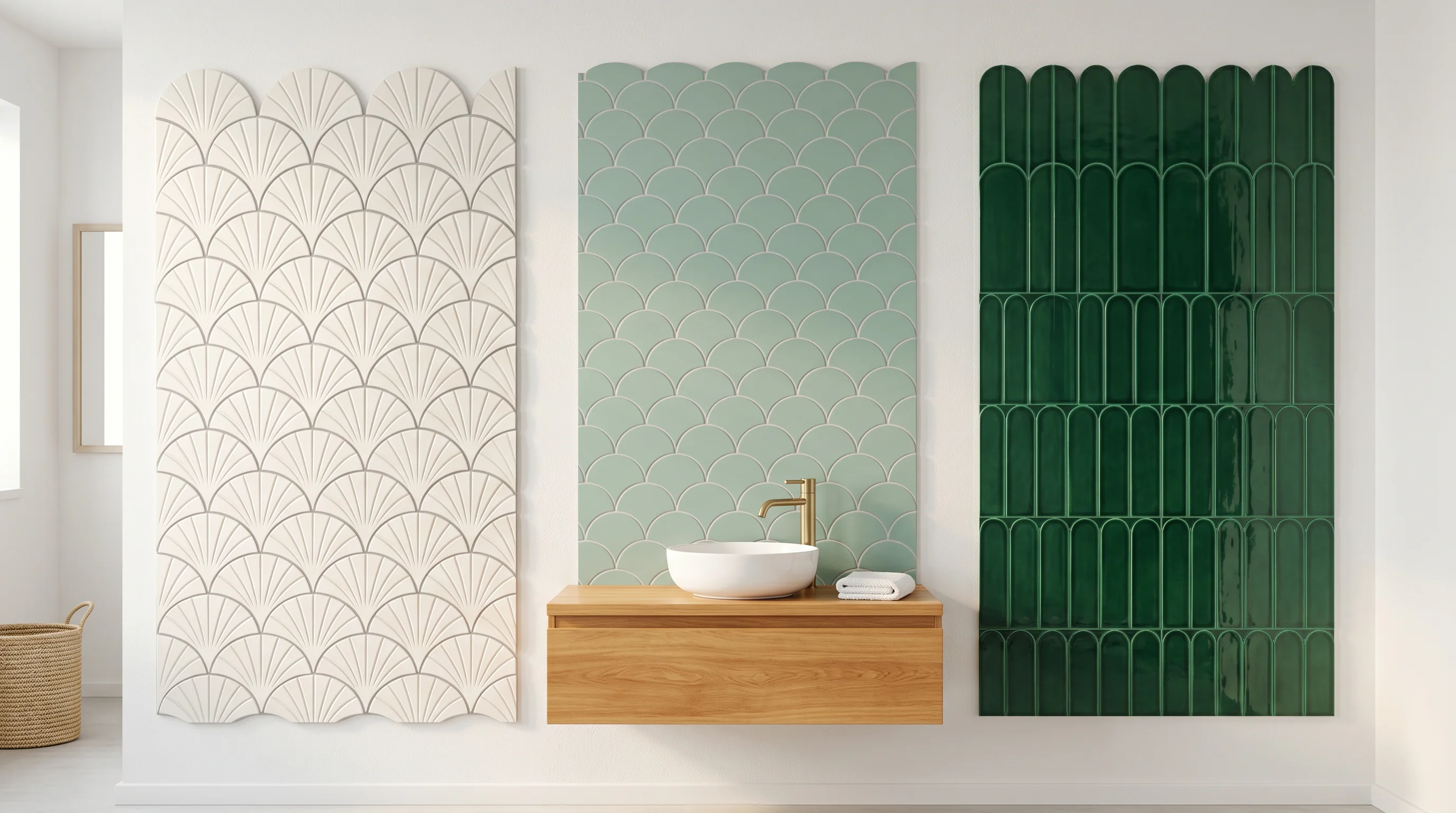
9. Fan-up orientation for an Art Deco feel. Install scalloped tiles with the curved edge pointing up and the flat edge at the bottom. This creates a repeating fan or sunrise pattern that reads as distinctly Art Deco. It is the most decorative orientation and works best when you want the tile to be the star.
10. Fan-down orientation for a classic fish scale look. The curved edge points down, creating the traditional mermaid or fish scale pattern. This is the more organic, underwater-inspired orientation and tends to feel softer and more natural than fan-up.
11. Vertical installation to draw the eye upward. Install scalloped tiles in vertical columns rather than horizontal rows. This contemporary layout adds height to a room and creates a fresh, unexpected look that differentiates your tile from the standard horizontal application. It works particularly well in narrow spaces like shower walls and powder rooms.
12. Alternating rows of contrasting colors. Use two complementary colors — sage and cream, navy and white, blush and charcoal — in alternating rows. The scalloped shape creates a natural visual rhythm that makes the color transition feel organic rather than jarring.
Color and grout strategies
13. Matching grout for a seamless, textural surface. When you want the shape of the tile to speak without the grid lines, match the grout to the tile color. The result is a wall of pure texture and movement — you see the curves and shadows, not individual tiles. This is the most sophisticated approach for neutral and light-toned tiles.
14. Contrasting grout to emphasize each scale. Dark grout with light tile (or light grout with dark tile) defines each individual scale shape, turning the wall into a bold graphic pattern. This is the more dramatic approach and works best when you want the tile to be the statement.
15. Emerald green and deep blue as statement colors. Fish scale tiles in deep jewel tones are trending hard in 2026. Emerald green in a glossy glaze creates a luxurious, garden-inspired surface. Deep sapphire blue reads as both nautical and regal. Both colors activate beautifully in the curved scallop shape. See our jewel tone living room for how these colors work beyond the bathroom.
16. Black scalloped tiles for modern drama. Matte or satin black scalloped tiles create a bold, contemporary surface that reads as sculptural rather than decorative. Use in a powder room, a kitchen backsplash, or a shower feature wall. Pair with warm brass fixtures to prevent the black from feeling cold.
Beyond backsplashes and showers
17. A scalloped tile fireplace surround. The fireplace surround is a natural canvas for decorative tile, and scalloped shapes add movement and texture that standard tile or stone does not. A single color in a glossy finish catches firelight beautifully.
18. Scalloped floor tile in a small entryway or powder room. Scalloped tile is not just for walls. Used on the floor of a small entryway, powder room, or mudroom, it creates an unexpected and memorable surface. Choose a durable porcelain in a matte finish for slip resistance. See our mudroom ideas and small hallway ideas for more entry flooring and layout inspiration.
19. A scalloped tile outdoor shower or garden wall. Frost-rated porcelain scalloped tiles on an outdoor shower wall or garden feature wall bring the organic shape into the landscape. The curves complement natural plantings, and a glossy glaze in seafoam or white looks fresh against greenery.
20. Mix scalloped tiles with flat tiles for a balanced design. You don't have to commit to all-scallop everything. Use scalloped tile as a feature band or accent row within a field of flat subway or square tile. This approach adds visual interest without overwhelming — particularly useful in larger kitchens or bathrooms where full-wall scallop might feel like too much.
Preview your tile choice before ordering
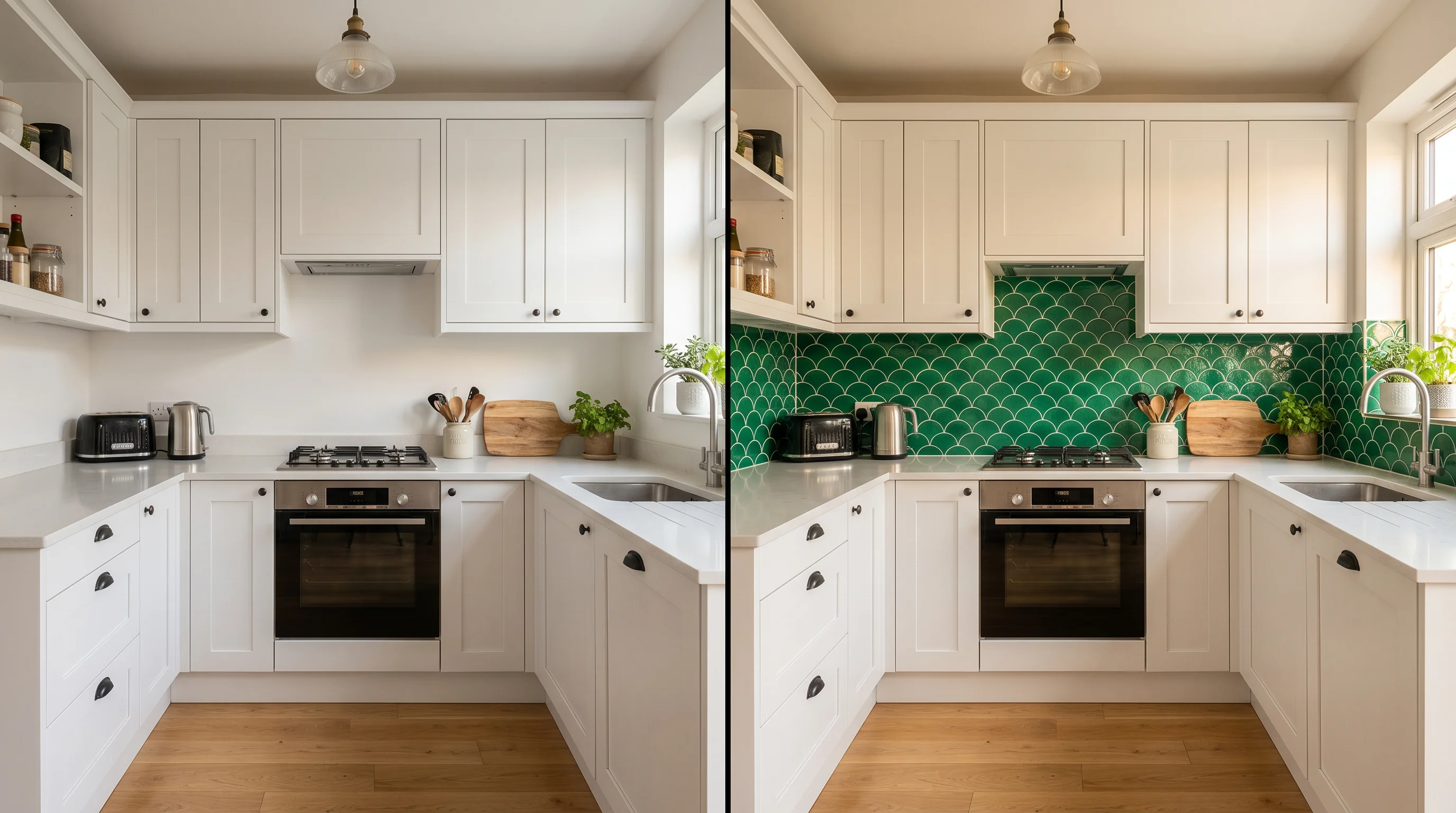
Tile is one of the hardest materials to visualize from a sample. A 4-inch sample chip tells you the color but not how the pattern reads at scale. Upload a photo of your kitchen or bathroom to EasyRoomAI and generate versions with different tile shapes, colors, and layouts to see the full effect before placing an order.
- Try a free room redesign — anonymous previews are free, no signup needed.
- For more kitchen ideas, see our muted kitchen colors guide and browse kitchen ideas.
Frequently asked questions
Are scalloped tiles still in style in 2026? Very much so. Houzz reports 210% growth in scalloped tile searches in 2026, making it one of the fastest-growing tile trends. The broader shift toward curves and soft geometry suggests this is a sustained movement, not a passing fad.
Where do scalloped tiles work best? Kitchen backsplashes, bathroom shower walls, vanity accent walls, fireplace surrounds, and small floor areas (entryways, powder rooms). They are most impactful as a feature rather than a full-room surface.
What grout color should I use with scalloped tiles? Matching grout creates a seamless, textural surface; contrasting grout emphasizes each scale shape. Matching is more subtle and sophisticated; contrasting is more graphic and bold. Both are valid — it depends on how much you want the tile shape to dominate.
Can I install scalloped tiles myself? Yes, though the curved shape requires more cuts and more attention to spacing than rectangular tile. A quality tile saw with a curve-cutting blade is essential. Budget extra time for the first few rows until you establish the rhythm.
How do scalloped tiles compare to subway tile? Subway tile is the safe, versatile default. Scalloped tile adds significantly more visual interest, movement, and personality — but it's harder to install and more expensive per square foot. If you want your backsplash or shower to be a design moment rather than a background, scalloped is the stronger choice.
The reason scalloped tile resonates in 2026 is the same reason curved furniture, arched doorways, and rounded islands are trending: people are tired of right angles. A wall of interlocking curves adds warmth and movement to a space in a way that no amount of perfectly straight grout lines can.
Ready to Transform Your Space?
Try AI room redesign for free - no credit card required.
Start Designing FreeRelated reading
Unfitted Kitchen Ideas: The Budget-Friendly Trend Replacing Built-In Cabinets in 2026
Built-in cabinetry costs are surging 50% in 2026. Unfitted kitchens use freestanding furniture instead — saving thousands while creating a space with more character than any showroom kitchen.
Dark Wood Interior Design: Why Walnut and Rich Tones Are Replacing Pale Oak in 2026
After fifteen years of pale Scandinavian oak, dark wood is back. Houzz reports searches up 187%. Here is how to bring walnut, mahogany, and rich timber into every room without making your home feel heavy.
20 Spa Bathroom Ideas That Turn Your Daily Routine Into a Retreat (2026)
The bathroom-as-sanctuary trend is real — Houzz spa searches rose 68% this year. Here are 20 spa bathroom ideas for 2026: walk-in showers, soaking tubs, warm materials, layered lighting, and budget-friendly upgrades that make even a small bathroom feel like a private retreat.