20 90s Interior Design Ideas That Are Back — and Better This Time (2026)
The 90s are back — but smarter. Curved sofas, glass blocks, blonde wood, bold botanicals, and checkerboard tile are all returning with better materials and more restraint. Here are 20 90s interior design ideas worth reviving in 2026.
 Easy Room AI Team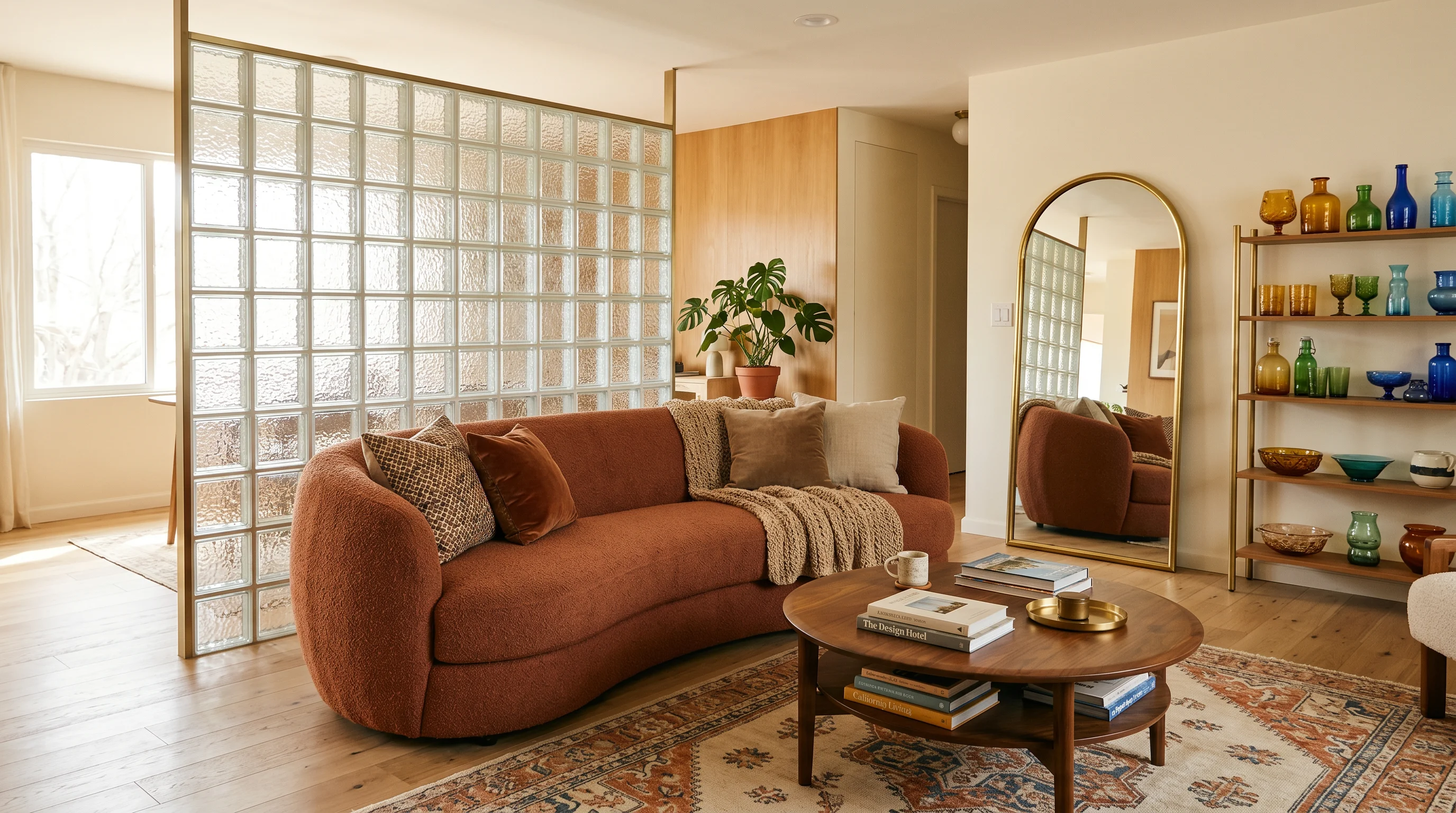
Every 25–30 years, a decade comes back around. Right now it is the 1990s — and the timing is not random. After a decade of cool gray walls, white-on-white kitchens, and deliberately empty rooms, people want warmth, personality, and furniture you can actually sit in. The 90s delivered all three.
Elle Decor describes it as a "rebound from the era of excess" — the 90s pivoted from 80s gloss to something more relaxed, eclectic, and personal: "velvet beside rattan, jewel tones flirting with pastels, and oversized sofas anchoring rooms that didn't mind a little chaos." Designer Christopher Boutlier adds: "Deep-seated sofas, oversized lounge chairs, and exaggerated forms are showing up again, but we're reworking them with better proportions and more thoughtful materials." And as Bobby Berk bluntly puts it: "The neutral palette, the gray everything, the one beige sofa on white floors with no art on the walls — that was a millennial home design era, and it's over."
Here are 20 90s interior design ideas making a comeback in 2026 — and the ones that should stay in the time capsule.
In this guide you will learn:
- Furniture and silhouettes from the 90s that work now
- Materials and textures making a return
- Colors and patterns from the 90s revival
- What to keep and what to leave behind
- How to preview a 90s-inspired redesign in your room
Furniture and silhouettes
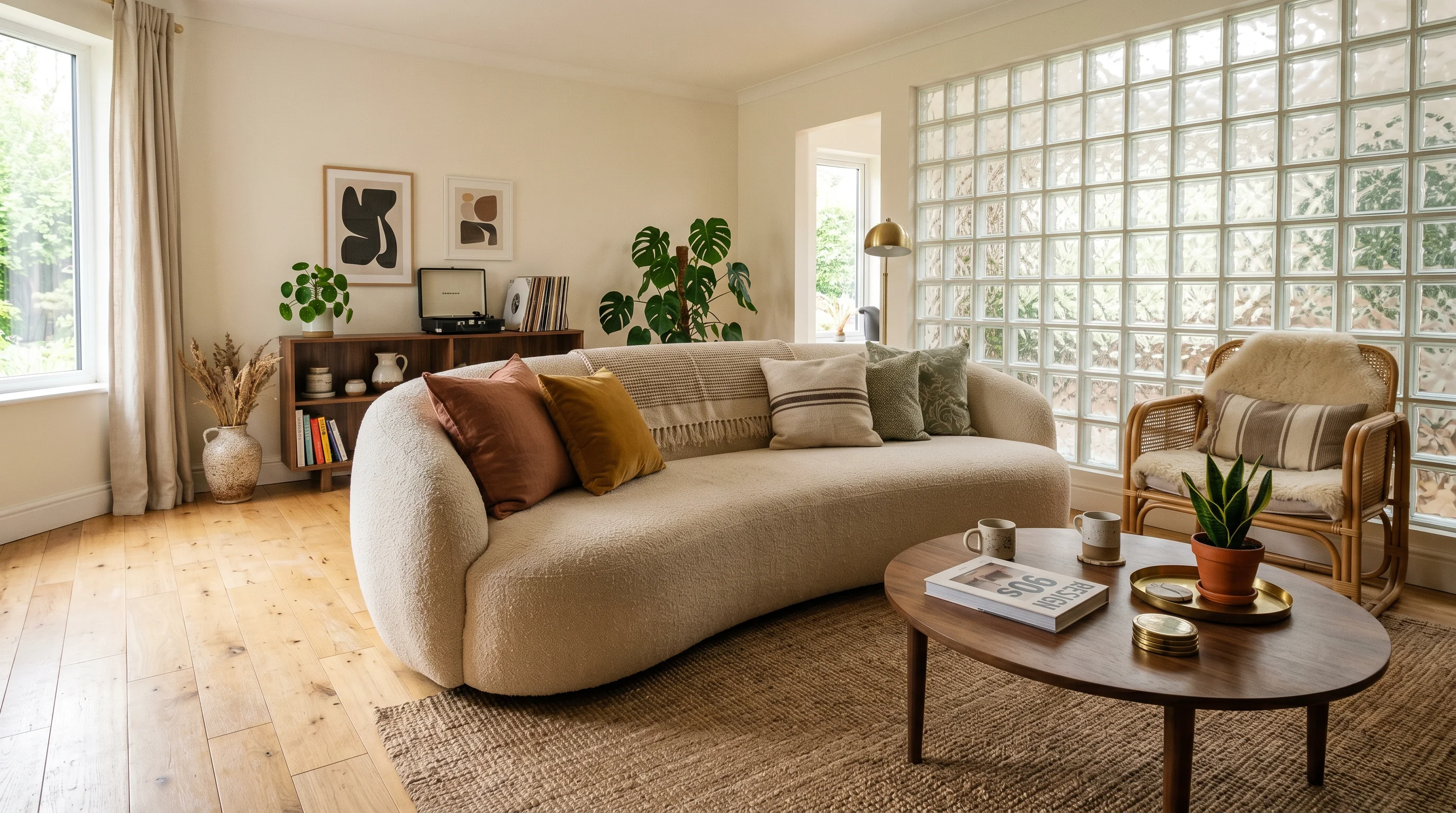
1. The oversized, deep-seated sofa. The defining 90s furniture piece: a sofa you sink into, not perch on. "I'm seeing a growing interest in the chunkier silhouettes from that era," says designer Christopher Boutlier. The 2026 version uses better foam (high-resilience, not the saggy cushions of the original) and more considered upholstery — bouclé, slubby linen, washed velvet — instead of the microfiber suede that defined the 90s original.
2. Curved and rounded furniture everywhere. Rounded sofas, kidney-shaped coffee tables, arched mirrors, and circular accent chairs. Houzz reports curved furniture searches continue to surge alongside arched interiors and scalloped tile. The difference from the 90s original: today's curves are deliberate compositions, not just what happened to be at Ethan Allen.
3. The platform bed in blonde wood. The low-profile platform bed in light maple or ash is back — part of the broader return to blonde wood after a decade of dark walnut and reclaimed barnwood. The Scandinavian-meets-90s crossover works because both eras valued simplicity and natural materials.
4. Rattan and wicker indoors, properly. Rattan chairs, wicker baskets, and cane-backed seating were everywhere in the 90s. They went away when everything went gray and industrial. Now they are returning as warm, textural accents — a rattan accent chair, a cane-front sideboard, wicker pendant lights — that break up rooms dominated by hard surfaces.
Materials and textures
5. Glass blocks as room dividers and shower walls. Glass blocks — the material that defined 90s bathrooms — are making a genuine comeback. The 2026 version uses them more sparingly: a glass block partition instead of a solid wall, a glass block window in a shower, or a glass block room divider that allows light while creating separation. The light-transmitting quality that made them appealing in the 90s is exactly what makes them relevant again.
6. Checkerboard tile — on floors, backsplashes, and entryways. Black-and-white checkerboard tile is cyclical, and it is cycling back. Bobby Berk endorses "decorative tile with roots — Zellige, encaustic cement tile, classic subway with a modern grout color, or checkerboard. Classic patterns cycle back. Trendy graphic ones just become dated." Use it in an entryway, a kitchen floor, or a powder room for maximum impact.
7. Bouclé, chenille, and chunky textiles. "Tactile textiles such as bouclé, chenille, and chunky linen are returning, especially on curvy furniture," notes designer Lauren Conner. The 90s loved texture; the 2010s stripped it out. Now texture is back as the primary way to add warmth without adding color — see the same movement in Venetian plaster walls and textured walls.
8. Blonde wood finishes replacing gray. Light maple, white oak, and ash are replacing the gray-washed and dark wood finishes that dominated the last decade. This is a direct 90s callback — the decade ran on light wood kitchens, Ikea birch, and maple floors. The 2026 version uses better species (white oak, European beech) and more refined joinery.
Preview Mid-Century Modern in Your Space
Upload a photo of your space to test Mid-Century Modern instantly with AI — 100% free.
Supports JPG, PNG, WebP up to 10MB
Colors and patterns
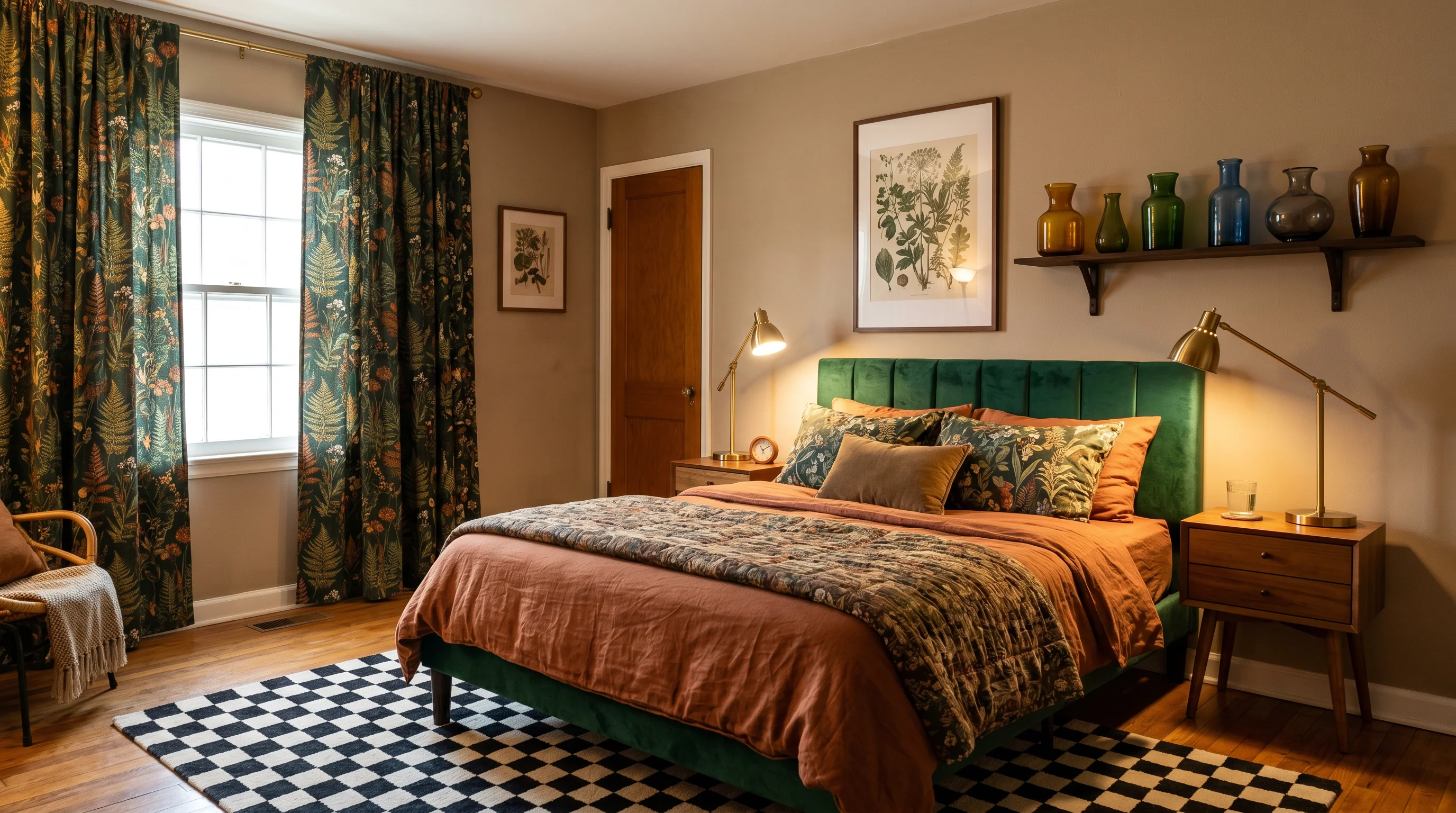
9. Jewel tones — emerald, sapphire, ruby — instead of gray. The 90s ran on saturated, moody color. After a decade of gray, white, and greige, jewel tones are returning — but dustier and more nuanced than the originals. The shift is specifically from cool neutrals to warm, saturated accents.
10. Bold botanical and tropical prints. Oversized leaf prints, tropical wallpaper, and botanical upholstery were 90s staples. They are returning through accent pillows, statement wallpaper (one wall, not four), and large-scale botanical art. The key difference: edited, not everywhere.
11. Warm neutrals replacing cool gray. Mushroom, chocolate brown, caramel, and warm cream are the new neutrals. The 90s understood that brown is a color — the 2010s forgot. Now brown-based neutrals are everywhere, from terracotta living rooms to mushroom paint.
12. Colored and vintage glassware on display. Bobby Berk calls this "one of the most joyful design moves happening in 2026." Depression-era glass, colored glass vases, and vintage barware displayed on open shelves, in glass-front cabinets, and on dining tables. The key: curate by color palette and silhouette. Hit estate sales and antique markets — the best pieces are never at a big-box store.
Spaces and concepts
13. The conversation pit revival. A sunken seating area — or its modern equivalent, a lower-level lounge zone defined by a rug, floor cushions, and a round coffee table — is the ultimate 90s living room concept. The 2026 version uses the principle (lowered, centered, intimate seating) without necessarily cutting into the floor.
14. The home bar or cocktail corner. A bar cart or built-in bar nook stocked with curated glassware and a few good bottles. The 90s had the wet bar; 2026 has the speakeasy room and the styled bar cart. Both serve the same impulse: a dedicated space for drinks and conversation.
15. Open shelving and displayed collections. The minimalist era hid everything behind cabinet doors. The 90s (and the current revival) celebrate displayed objects: books, pottery, vintage finds, travel mementos. Open shelving in the kitchen, a home library wall in the living room, or a display shelf in the hallway — designed clutter is back.
What to leave behind
16. Formica — but only as an accent. Designer Niki Cheng says clients are "loving it in lamp shades, serving trays, and home accessories" — small, intentional applications. Full Formica countertops in a 2026 kitchen? That stays in the time capsule. Use it as a conversation piece, not a surface.
17. Y2K chrome — one piece, not a theme. Chrome is the signature of the late-90s/Y2K aesthetic, and it's having a moment. Bobby Berk's advice: "One chrome side table or a mirrored console in an otherwise warm and organic room creates an interesting contrast. An entire room of metallic surfaces in 2026 will look exactly like it looked in 2003: like a lot."
18. The sponge-painted wall: done, permanently. Some 90s techniques deserve to stay dead. Sponge painting, rag rolling, and faux finishes from the hardware store are not what anyone means by "textured walls" in 2026. If you want wall texture, use actual plaster — Venetian plaster or limewash — not a sponge and glaze.
How to do the 90s revival right
19. Mix one or two 90s elements into a modern room. The 90s revival works best as accents within a contemporary framework. A curved sofa in a clean-lined room. A glass block partition in an otherwise minimal bathroom. Checkerboard tile in a modern kitchen. Go full 90s and it looks like a themed recreation; go selective and it looks like a curated home with personality.
20. Thrift and vintage shop for the right pieces. The best 90s furniture is the original stuff — solid wood, real joinery, heavy frames — not new reproductions. Estate sales, thrift stores, and online vintage markets have a surplus of well-built 90s pieces at a fraction of the cost of new furniture. Reupholster a 90s sofa frame in modern fabric and you have something more interesting than anything at a showroom.
Preview your 90s-inspired redesign
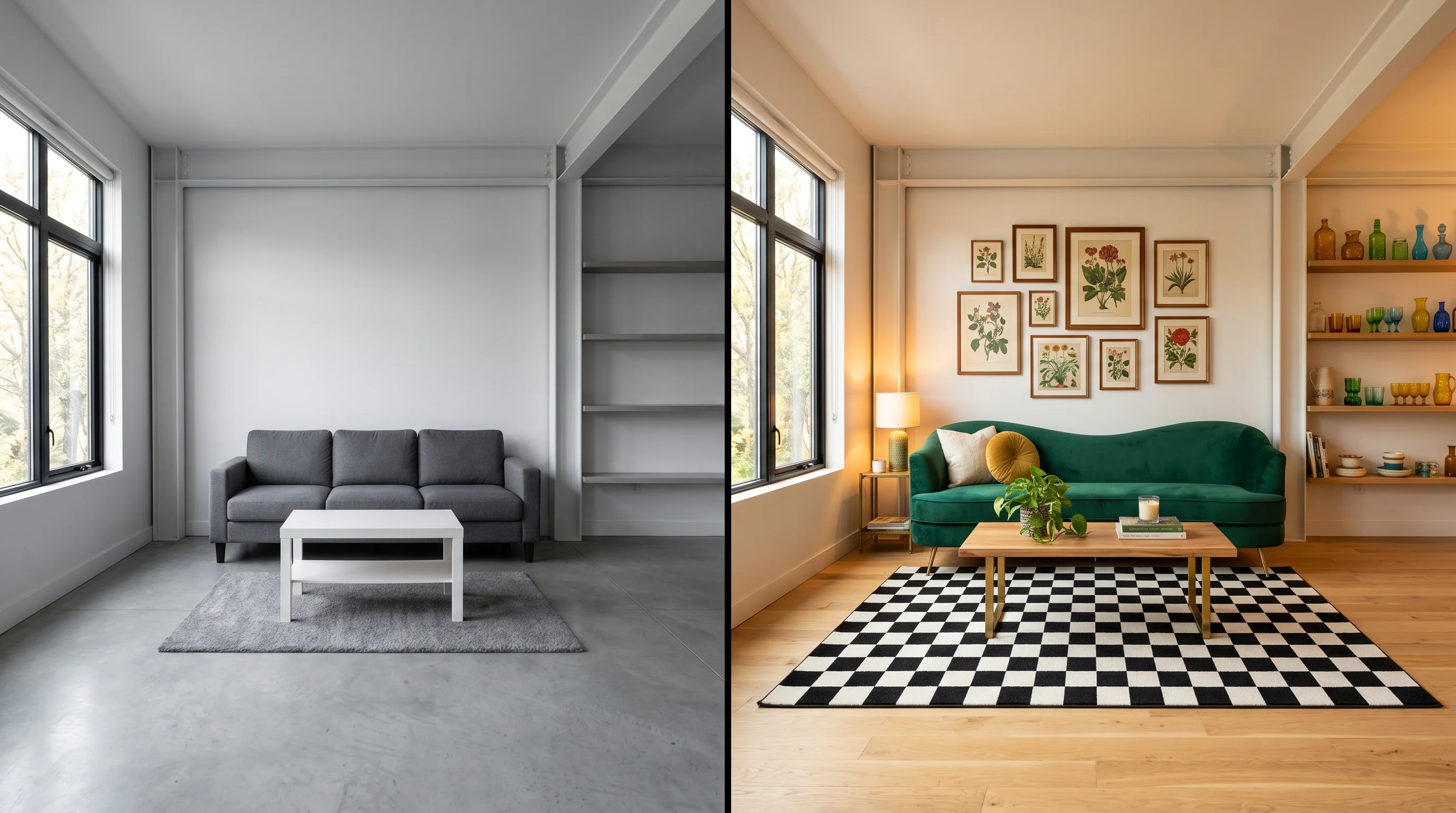
Wondering whether a 90s element would work in your space? Upload a photo of your room to EasyRoomAI and generate versions with different color palettes, furniture styles, and materials to see how vintage-inspired elements interact with your existing layout.
- Try a free room redesign — anonymous previews are free, no signup needed.
- For more style inspiration, browse our grandmillennial style guide and interior design styles.
Frequently asked questions
Is 90s interior design coming back? Yes. The 20–30-year design cycle has brought 90s elements — curved furniture, blonde wood, glass blocks, jewel tones, and displayed collections — back into mainstream interiors. The revival is selective: the best parts are returning with better materials and more restraint.
What defined 90s interior design? Comfort-first furniture (deep sofas, rounded shapes), warm natural materials (rattan, blonde wood, wicker), saturated color (jewel tones, botanicals), and displayed personality (open shelves, eclectic objects). It was a reaction against 80s excess and a precursor to 2000s minimalism.
What 90s trends should stay in the past? Sponge-painted walls, full Formica countertops, inflatable furniture, matching furniture suites, and head-to-toe floral. The revival is about extracting the warmth and personality of the decade, not recreating it wholesale.
How do I add 90s style without going overboard? Pick one or two elements — a curved sofa, checkerboard tile, a glass block feature, vintage glassware on display — and integrate them into a modern room. The tension between 90s warmth and contemporary restraint is where the style works best.
Where can I find 90s furniture? Estate sales, thrift stores, Facebook Marketplace, and online vintage dealers (Chairish, 1stDibs for higher-end). Look for solid wood frames, good joinery, and interesting silhouettes — then reupholster in modern fabric if the original covering is dated.
The 90s revival is not about nostalgia for its own sake. It is a correction. After a decade of rooms that looked like they were styled for Instagram rather than lived in, people want homes with warmth, texture, and objects that mean something. The 90s — for all its aesthetic chaos — understood that a home should feel like it belongs to someone.
Ready to Transform Your Space?
Try AI room redesign for free - no credit card required.
Start Designing FreeRelated reading

DIY Virtual Staging Software: How to Stage Listings Yourself in 2026 (Tools, Costs & Step-by-Step Guide)
Stop paying $24–$35 per photo to outsourcing agencies. Compare the top DIY virtual staging software in 2026, master the 5-step realtor staging workflow, and avoid costly MLS disclosure and perspective mistakes.
Small Home Gym Ideas 2026: How to Fit a Serious Gym in Under 100 Sq Ft
Discover clever small home gym layout ideas for 50 to 100 sq ft. Learn how to combine folding wall-mounted racks, selectorized dumbbells, vertical storage, and dual-purpose office zoning to build a studio-grade gym without sacrificing square footage.
Floor Virtual Staging: How to Replace Flooring in Real Estate Photos – Without Renovating (2026 Guide)
Discover how AI floor virtual staging replaces worn carpet and dated vinyl with luxury white oak hardwood in seconds. Recover 147% resale ROI while staying 100% MLS compliant.