Small Hallway Ideas: 9 Designer Tricks to Make a Narrow Entryway Feel Bigger (2026)
A narrow hallway is the first thing guests see — and the easiest room to fix cheaply. Nine designer tricks for lighting, paint colour, slim storage, and mirrors that make a small entryway feel twice as wide, without knocking down a wall.
 Easy Room AI Team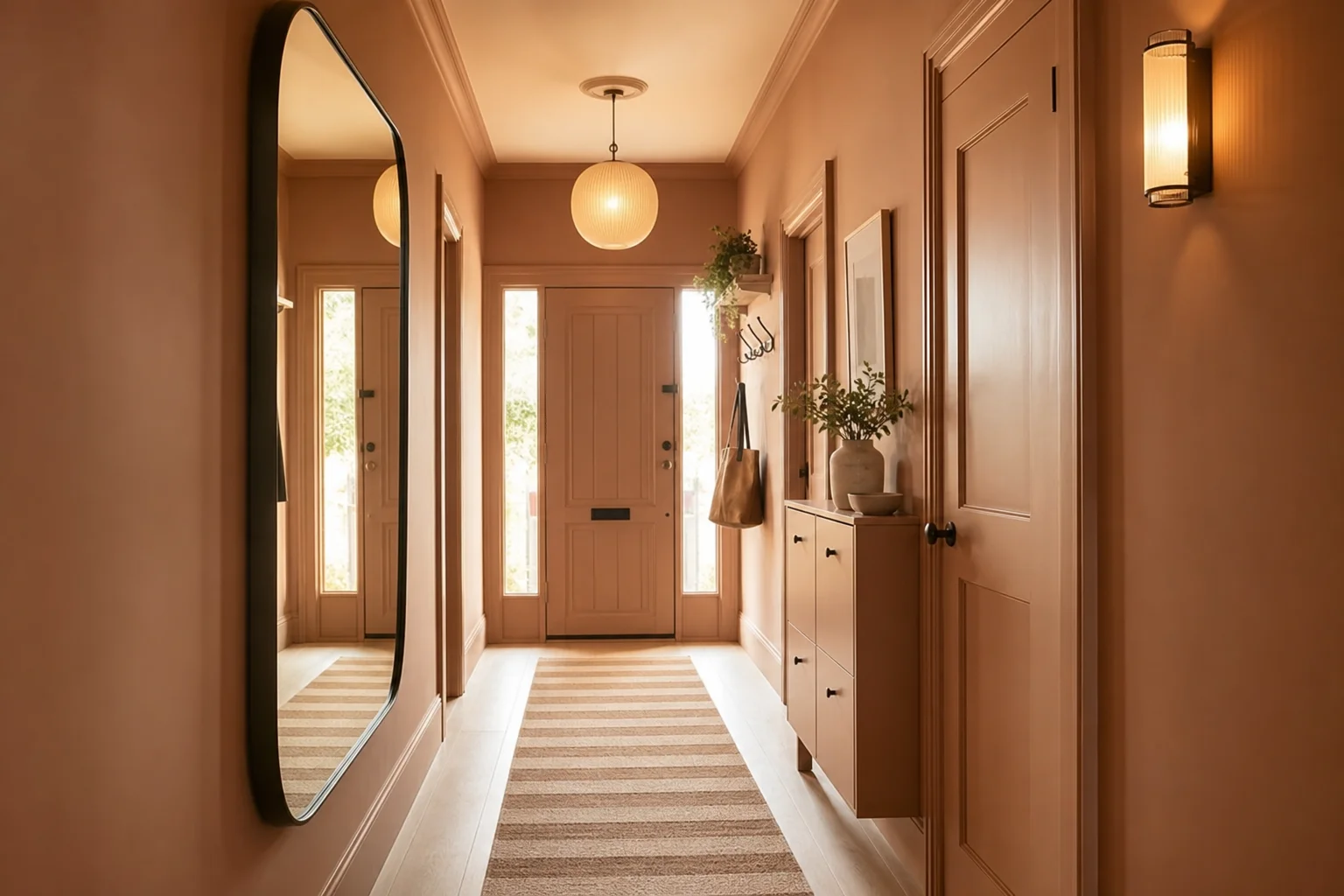
The hallway is the hardest-working, least-loved room in the house. It is the first thing guests see, the place every coat and shoe ends up, and almost always too narrow to do anything with. The good news: it is also the room where small, low-cost changes go the furthest — and in 2026, that is exactly where attention is going. Pinterest's spring 2026 search data shows people favouring mini upgrades over full remodels, with searches for small-space and cosy-corner ideas climbing sharply.
A hallway rarely needs more square footage — it needs better light, fewer visual obstructions, and storage that earns its width. This guide is nine designer tricks to make a small or narrow hallway feel bigger and work harder, plus the mistakes that quietly make it feel tighter.
In this guide you will learn:
- Why hallways feel narrower than they are (and the fix)
- The lighting and colour moves that open up a corridor
- Slim storage that holds coats and shoes without blocking the path
- How mirrors and flooring direction trick the eye
- How to test it all on your own hallway before you buy
Why your hallway feels narrower than it is
A hallway feels tight for two reasons: it is genuinely thin, and it is usually dark. Most hallways have no window of their own, so they inherit the cool, flat light of a north-facing room — which drains colour and shrinks the space visually.
The takeaway: before adding anything, subtract. Clear the floor, get everything off the walls below shoulder height, and the corridor instantly reads wider.
1. Keep the floor clear — storage goes vertical
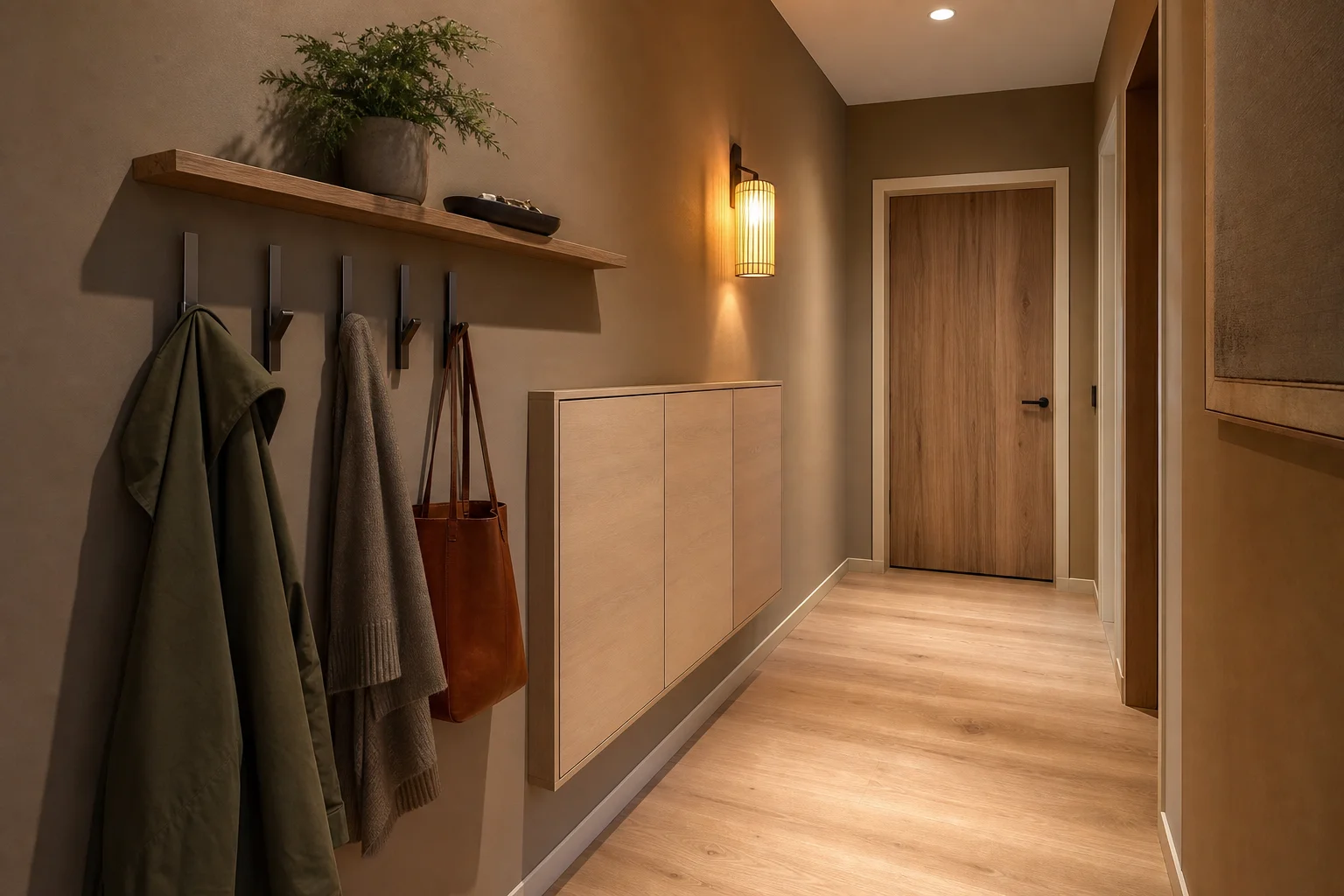
The single biggest win in a narrow hallway is an unbroken floor. Anything standing on the ground at ankle height makes the run feel like an obstacle course. Wall-mount the storage: a row of hooks, a slim shelf, and a shallow shoe cabinet (look for ones under 20 cm / 8 in deep) keep coats and shoes contained without stealing walking width.
Redesign Your Hallway / Entryway with AI
Upload a photo of your space to test 16 curated design styles instantly with AI — 100% free.
Supports JPG, PNG, WebP up to 10MB
2. Paint the trim and doors the same colour as the walls
Picking out skirting, architraves, and doors in a contrasting white chops a small hallway into busy segments. Painting everything — walls, trim, and doors — in one tone lets the eye glide along the corridor uninterrupted. It is the colour drenching trick, and it works even better in a hallway than a main room because there is so little furniture to fight it.
3. Go dark on purpose
Counterintuitive, but a deep, moody hallway often feels bigger, not smaller. With no daylight to preserve, a dark hallway loses its boundaries and reads as a dramatic, intentional moment — and it makes the rooms leading off it feel brighter by contrast. If you would rather stay light, choose a warm off-white over a cool brilliant white, which goes flat in low light.
4. Hang a large mirror on the long wall
A mirror is the highest-ROI move in any small space, and a hallway is the best place for one. Hung on the long wall, it visually doubles the width; positioned to catch light from an adjoining room or the front door's glass, it borrows brightness the hallway does not have. One big mirror beats several small ones.
5. Run flooring lengthways
The direction of floorboards, planks, or a runner changes how long and wide a hallway reads. Run boards or a striped runner along the length to draw the eye forward and stretch the space; a runner also softens noise in a hard, echoey corridor.
Before and after: a narrow hallway, opened up
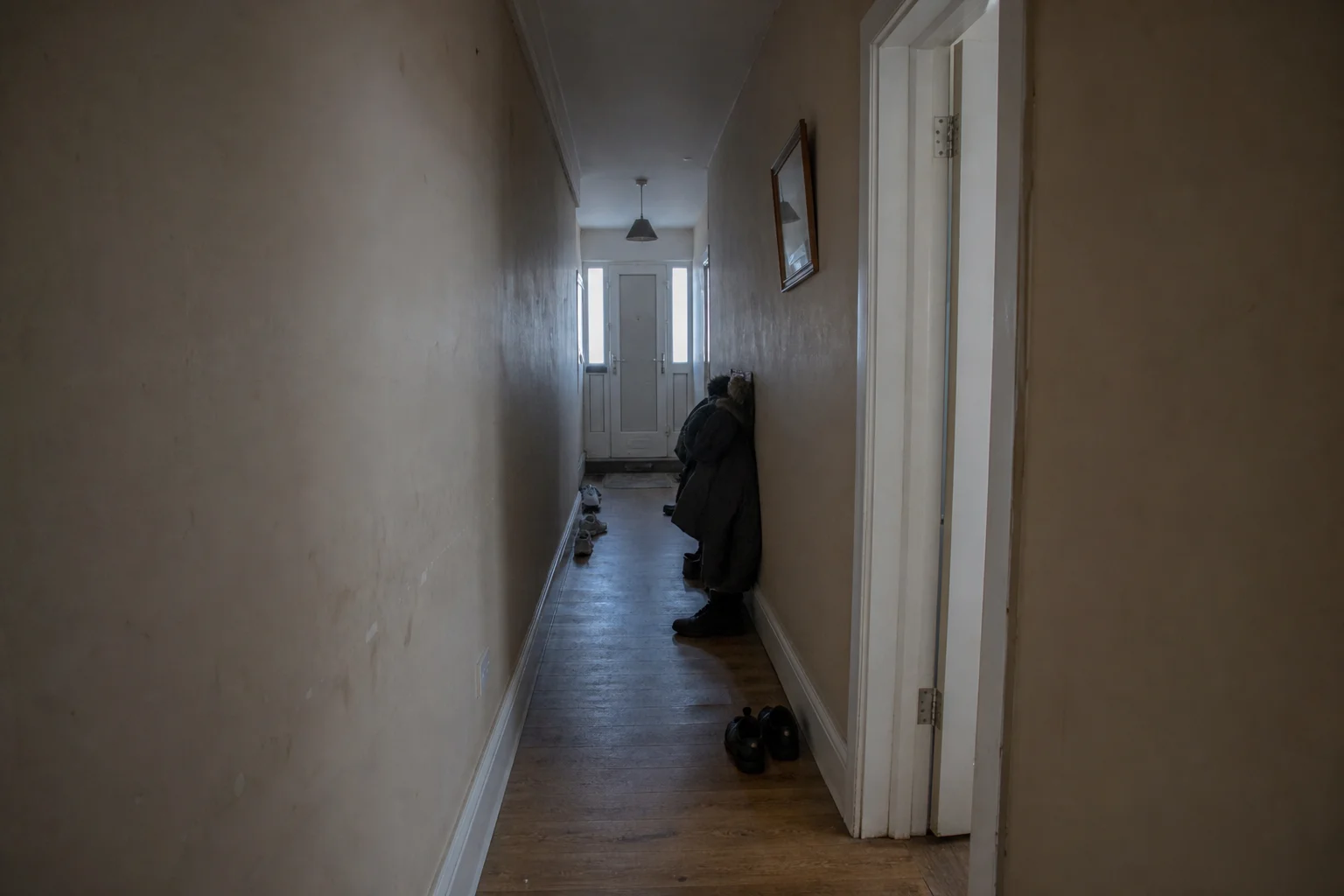
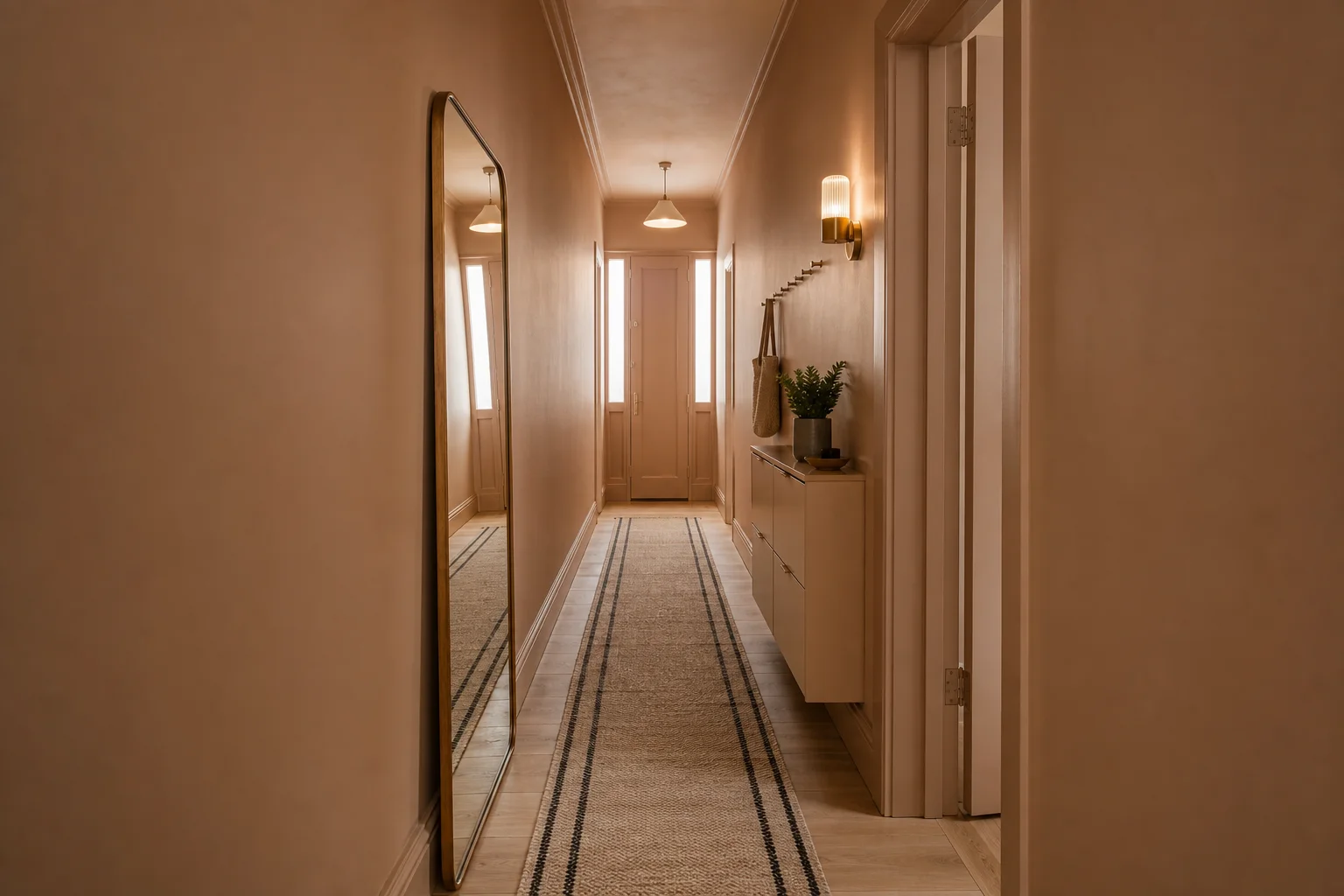
Same hallway, same width — but clearing the floor, drenching the walls and trim in one tone, adding a long-wall mirror and a lengthways runner makes it read noticeably wider and calmer. None of it moved a wall.
6–9. Four faster hallway wins
- 6. Light at two heights: add a wall sconce or two alongside the ceiling light so the corridor is lit evenly, not in pools of shadow.
- 7. One slim console (only if you have the width): a shallow console under 30 cm deep gives you a drop-zone for keys without narrowing the path.
- 8. Lead the eye to a focal point: a piece of art or a painted door at the end of the hallway gives the corridor a destination and makes it feel purposeful.
- 9. Repeat one accent: a single colour repeated in the runner, a frame, and the door pull ties a tiny space together instead of cluttering it.
Preview your small hallway before you commit
Hallways are deceptively easy to get wrong — the wrong white goes grey, a console you loved blocks the path, a bold colour overwhelms. The cheapest way to avoid all of it is to see the change first.
Upload a photo of your hallway to EasyRoomAI and generate it with a drenched colour, a clear floor, or a darker scheme to see which actually opens up your space before you lift a paintbrush.
- Try a free hallway redesign — anonymous previews are free, no signup needed.
- For the underlying rules, read small space design, and browse hallway and entryway ideas.
Frequently asked questions
How do I make a small hallway look bigger? Clear the floor and move storage to the walls, use one continuous wall-and-trim colour, hang a large mirror on the long wall, and run flooring lengthways. Keeping sightlines unbroken matters more than square footage.
What colour is best for a small, dark hallway? Either a warm off-white (avoid cool brilliant white, which goes flat in low light) or, surprisingly, a deep moody shade. A dark hallway loses its visible boundaries and feels intentional, while making adjoining rooms seem brighter.
How do I store coats and shoes in a narrow hallway? Go vertical and shallow: wall hooks, a slim wall-mounted shelf, and a shoe cabinet under 20 cm / 8 in deep. Keep the floor completely clear so the corridor does not feel like an obstacle course.
Should hallway flooring run lengthways or across? Lengthways. Running boards or a striped runner along the hallway draws the eye forward and makes the space read longer and wider; running them across emphasises how narrow it is.
Can I see colour changes in my hallway before painting? Yes — upload a photo of your hallway to EasyRoomAI and generate drenched, light, or dark versions to compare against your real space and light before buying paint.
A small hallway does not need more room — it needs less clutter, better light, and one or two confident moves. Clear the floor, drench it in a single tone, add a mirror, then preview it on your own space before the first coat goes on.
Ready to Transform Your Space?
Try AI room redesign for free - no credit card required.
Start Designing FreeRelated reading
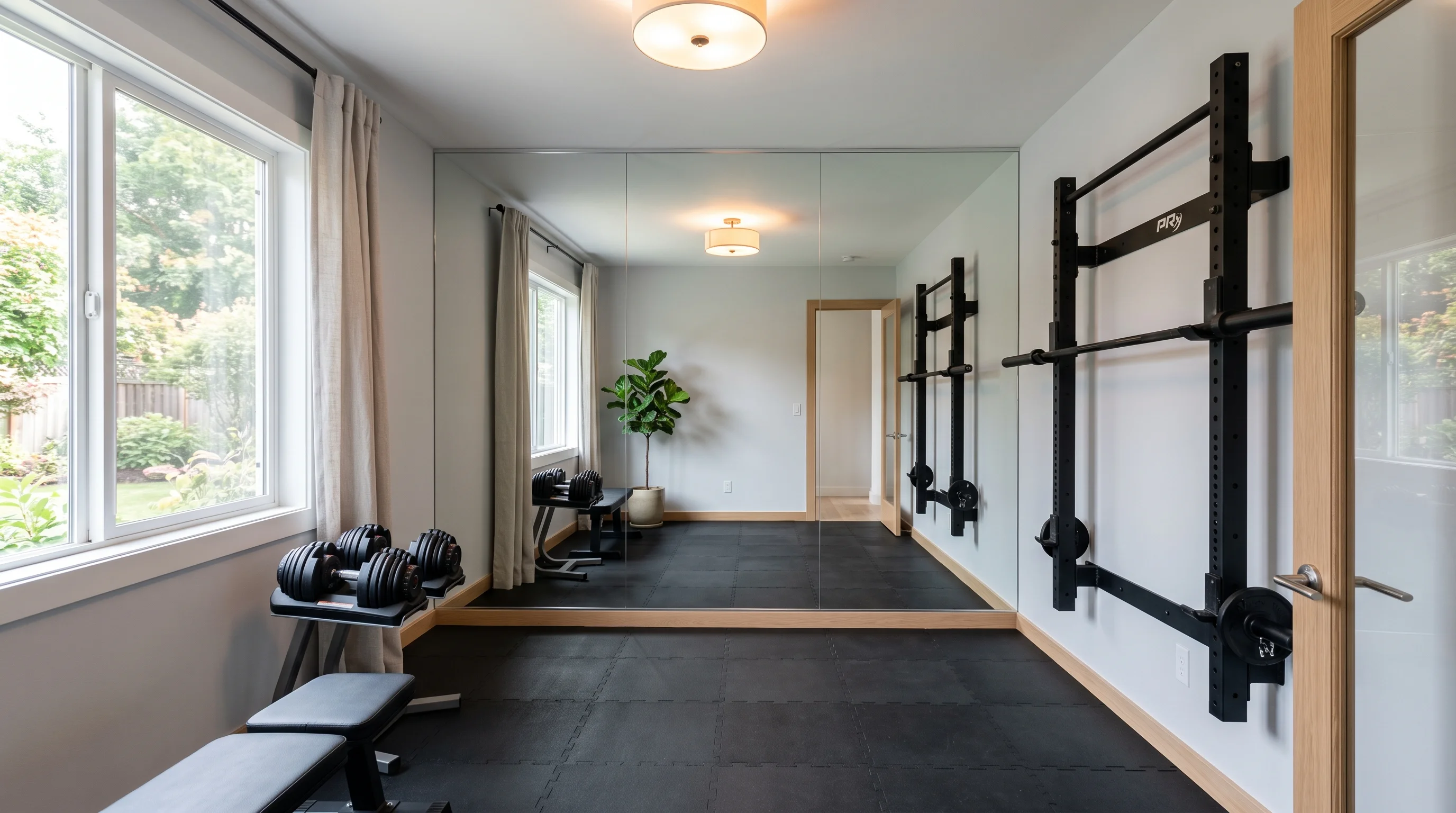
Small Home Gym Ideas 2026: How to Fit a Serious Gym in Under 100 Sq Ft
Discover clever small home gym layout ideas for 50 to 100 sq ft. Learn how to combine folding wall-mounted racks, selectorized dumbbells, vertical storage, and dual-purpose office zoning to build a studio-grade gym without sacrificing square footage.
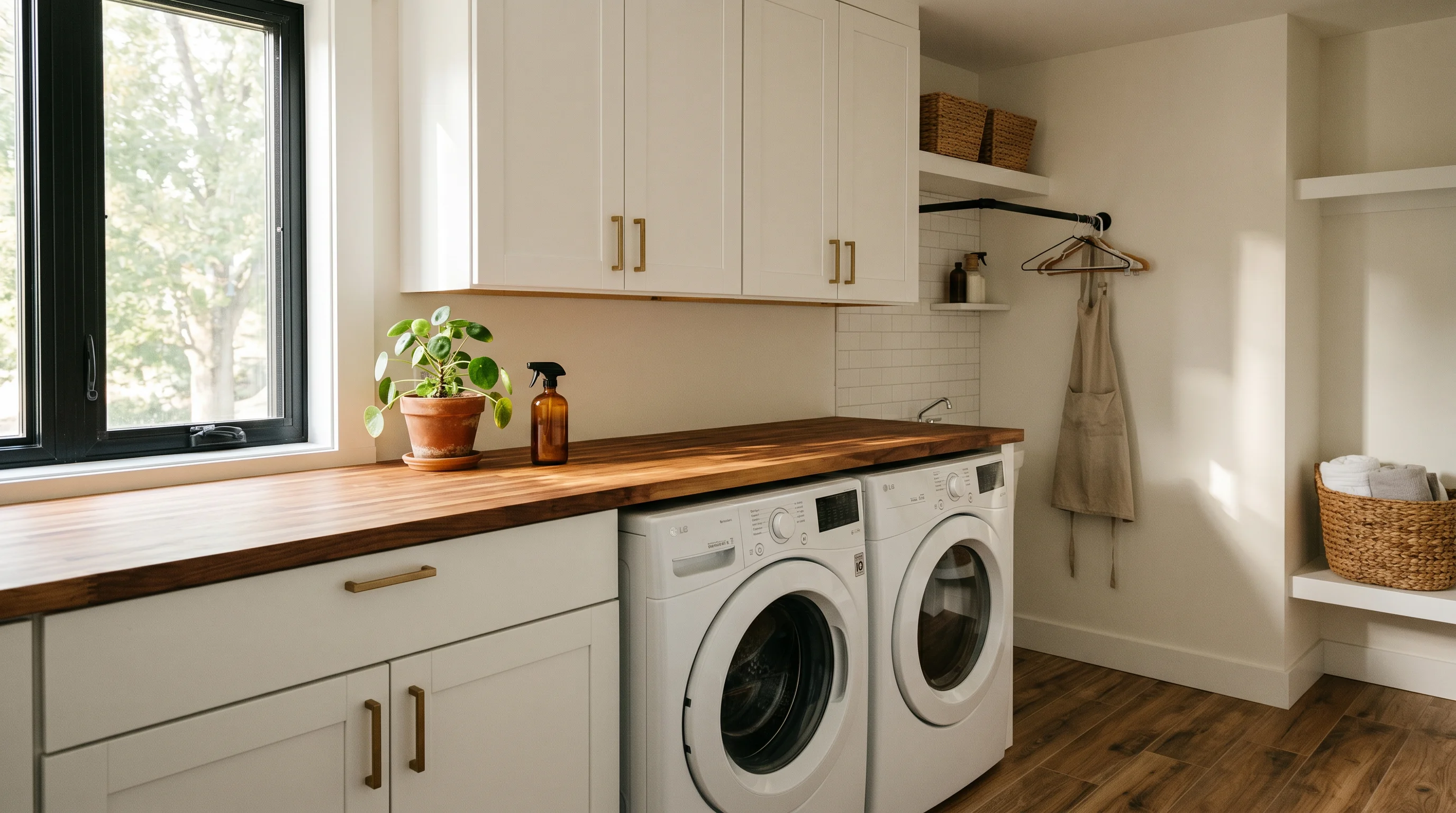
24 Laundry Room Ideas That Make This Hardworking Space Worth Designing (2026)
The laundry room is no longer a room you hide. Here are 24 laundry room ideas for 2026 — smart storage, small closet conversions, wallpaper that works, mudroom combos, and the finishes that turn a utility room into something you actually enjoy walking into.
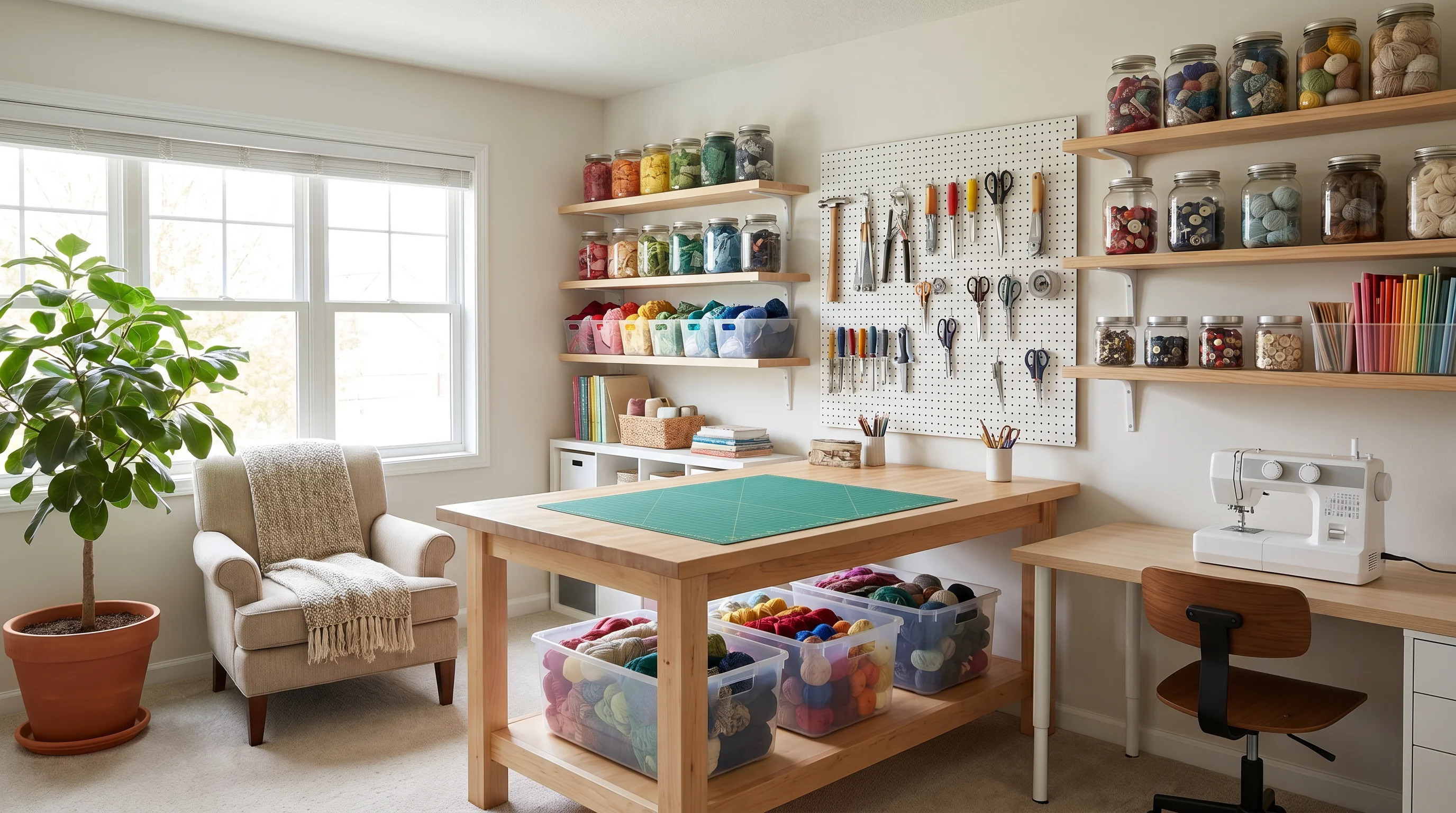
24 Craft Room & Hobby Room Ideas for a Tidy Creative Space (2026)
A good craft room turns 'someday' supplies into an actual practice. Here are 24 craft room and hobby room ideas for 2026 — workflow zones, visible vs hidden storage, small closet-to-craftroom nooks, craft-plus-office and guest combos, color-true task lighting, and pegboard-and-cart systems.