24 Craft Room & Hobby Room Ideas for a Tidy Creative Space (2026)
A good craft room turns 'someday' supplies into an actual practice. Here are 24 craft room and hobby room ideas for 2026 — workflow zones, visible vs hidden storage, small closet-to-craftroom nooks, craft-plus-office and guest combos, color-true task lighting, and pegboard-and-cart systems.
 Easy Room AI Team
A dedicated craft room is the difference between a hobby you keep meaning to get to and one you actually sit down and do. When supplies have a home and the desk stays clear, starting a project stops feeling like a chore — and crafting is having a genuine resurgence. Michaels' 2026 Creativity Trend Report declared this "the Year of Creative Living," reporting that searches for analog hobbies like knitting, embroidery, and painting surged 136% in six months as people trade screens for something tactile.
This guide rounds up 24 craft room and hobby room ideas for 2026, organized so a spare room, a shared office, or even a closet can become a space you love to create in.
In this guide you will learn:
- How to design a craft room around workflow zones
- When to show supplies and when to hide them
- Small-space and closet-to-craftroom setups
- How to combine a craft room with an office or guest room
- The right lighting for color-critical work
- Pegboard, cart, and label systems that keep it tidy
1. Design around workflow zones, not furniture
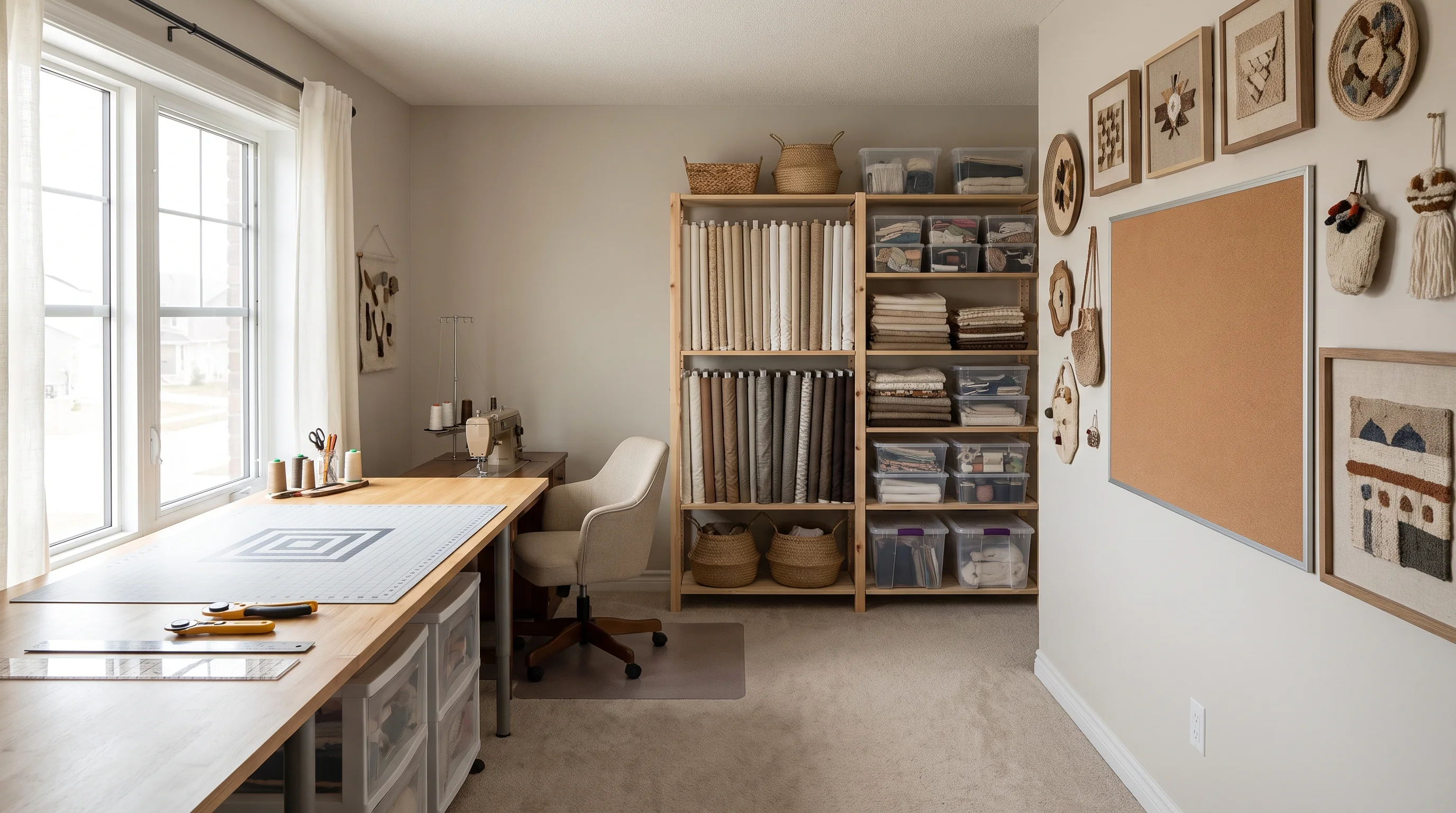
The single best thing you can do before buying a stick of furniture is map your workflow into zones. Most crafts move through the same stages, and a good room lets you move between them without hunting for anything:
- Prep/cut zone: a sturdy, well-lit surface — ideally counter height so you can stand — for cutting mats, rotary cutters, and die-cutting machines.
- Make zone: your seated station for the main activity (the sewing machine, the easel, the workbench), with the tools you reach for constantly within arm's length.
- Store zone: bulk supplies sorted by type, off the work surfaces.
- Display/inspiration zone: finished pieces, a mood board, and the pretty supplies worth seeing.
The takeaway: design around the path a project actually takes — pull, prep, make, finish, store — and the room works because moving between steps takes zero searching.
2. Visible vs hidden supply storage
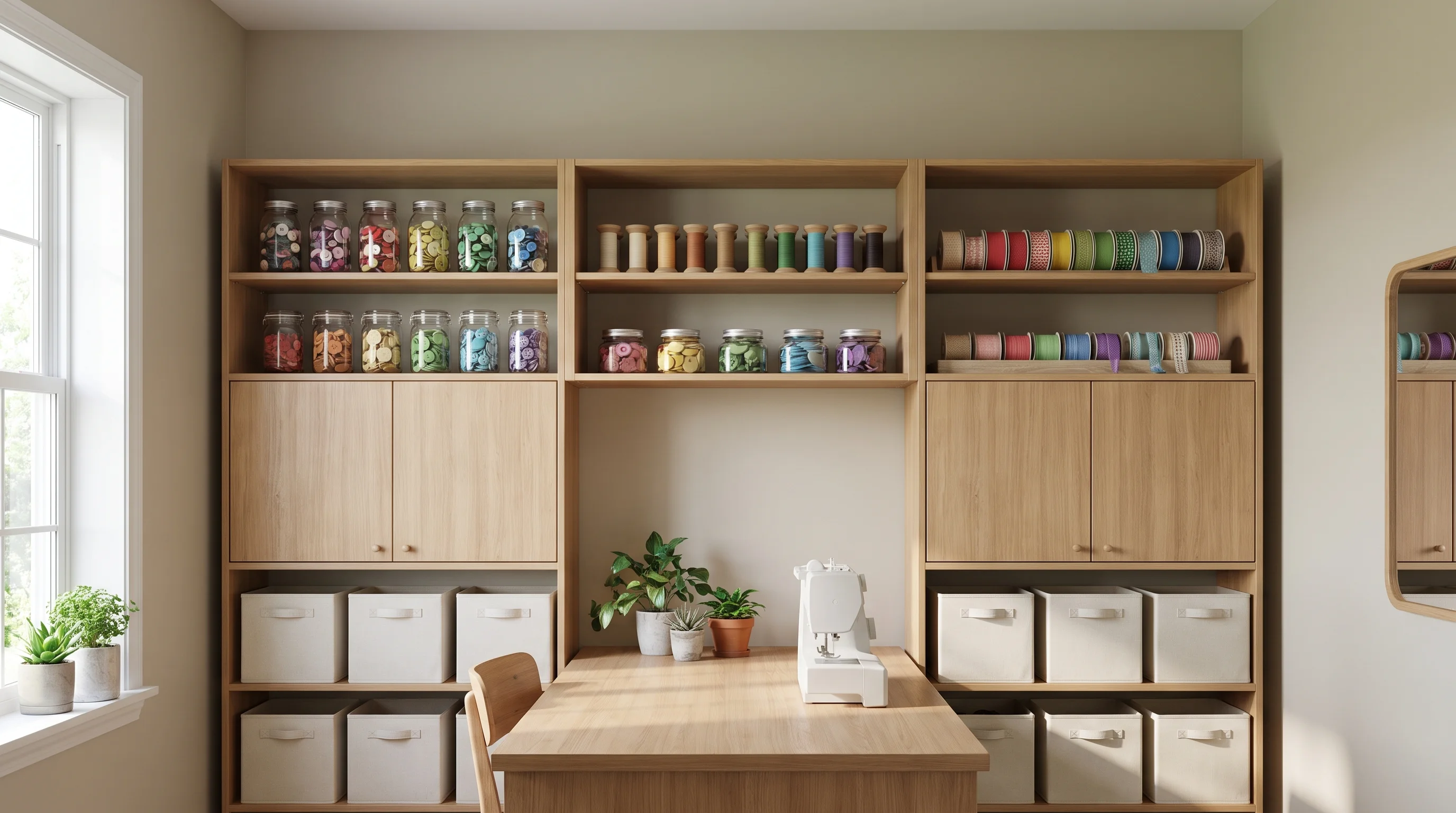
Craft supplies are colorful, which means they can be your best decor or your biggest eyesore — the trick is deciding which get shown:
- Visible storage — pegboards, glass jars, open shelves, thread and ribbon racks — is perfect for supplies that are both used often and nice to look at. Seeing them also keeps projects top of mind.
- Hidden storage — cabinets, drawers, and labeled bins — is where the ugly bulk goes: backstock, half-used packaging, cardboard, and the seasonal stuff you only need twice a year.
The designer move is to display a curated 20% and hide the messy 80%. Whatever you do store in the open, keep it in clear or clearly labeled containers so finding things stays effortless.
The takeaway: show the supplies that are both pretty and used often, and hide everything else behind closed doors — so the room reads calm instead of chaotic.
Redesign Your Room in Seconds
Upload a photo of your space to test 16 curated design styles instantly with AI — 100% free.
Supports JPG, PNG, WebP up to 10MB
3. Small craft nook and closet-to-craftroom setups
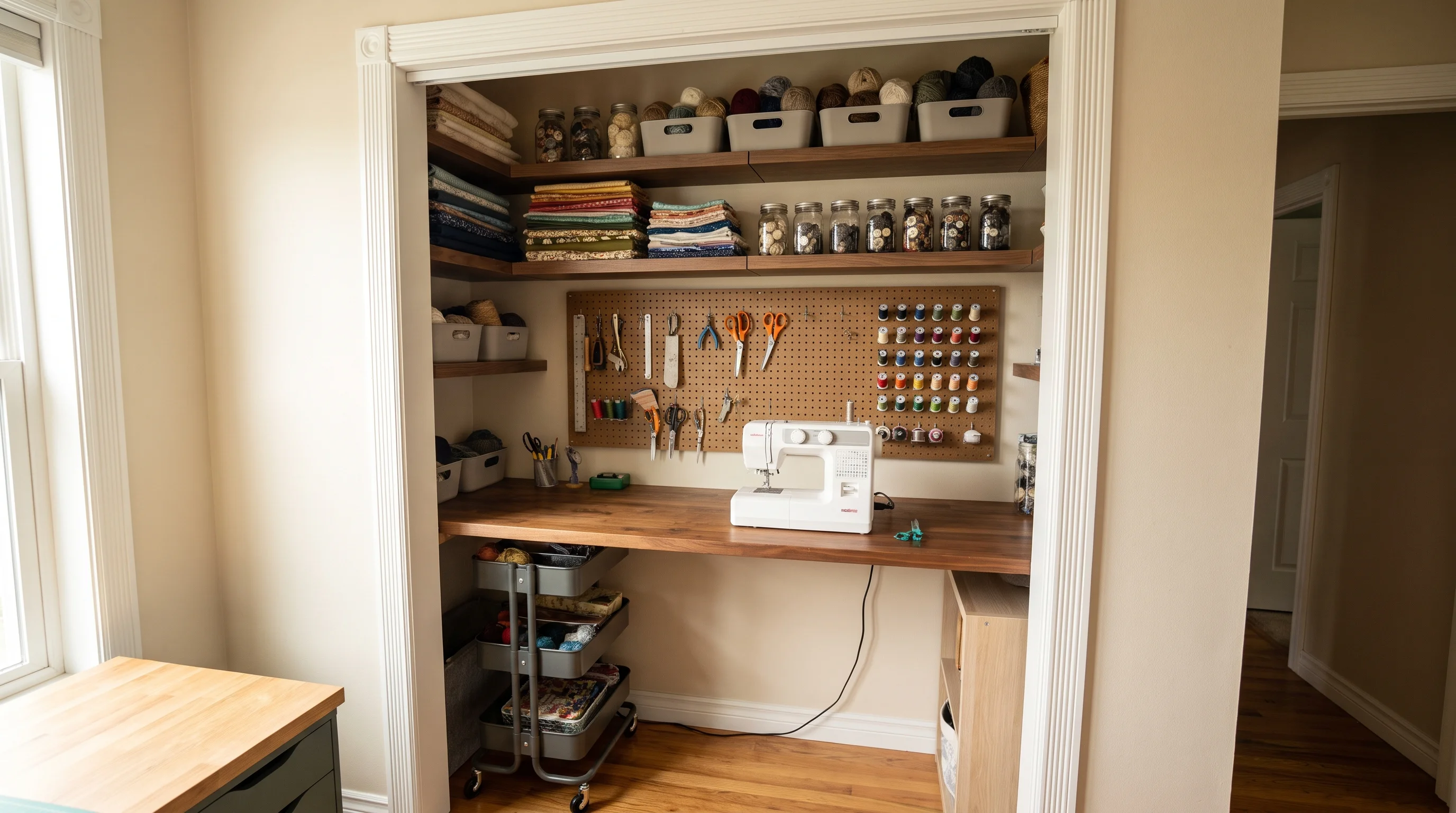
You don't need a whole room. Some of the best craft spaces are carved out of leftover square footage:
- Closet conversion: remove the doors (or keep them to hide the mess), add a counter, shelves, and a pegboard. A "craft closet" you can close is the ultimate tidy trick.
- Fold-down wall desk: a Murphy-style drop desk in a corner or shared room gives you a real work surface that disappears when you're done.
- Rolling cart + a section of wall: the whole setup lives on a cart and a pegboard, then tucks away.
- Under-stairs or a spare-wall station for a compact but permanent spot.
The takeaway: a small craft space wins on being tidy-in-five-minutes, not on square footage — a closet or fold-down setup you can physically close hides the mess instantly.
4. Craft room + office or guest room combos
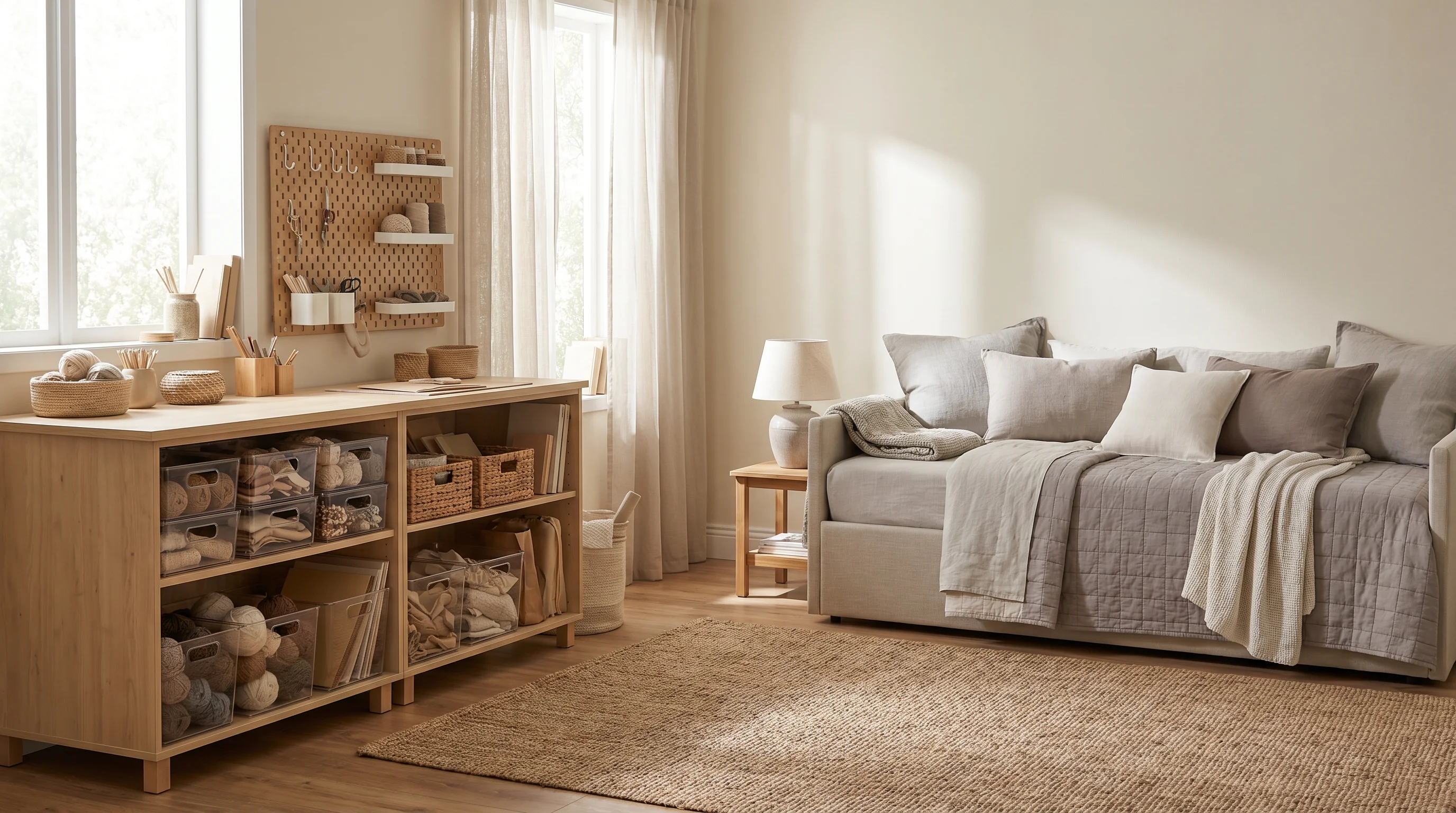
Most craft rooms have to share. The two most common combos both work if you keep the functions in separate zones:
- Craft + office: one desk that flips between laptop work and projects. Keep craft supplies in closed storage so the room can switch to "work mode" in seconds without a colorful mess in the background of video calls.
- Craft + guest room: a daybed or sofa bed paired with a craft counter; a Murphy bed frees the whole floor for a work table and folds up when company arrives. Our guest room ideas cover the dual-use bedding side, and for a family creative space see our playroom ideas.
The takeaway: in a shared room, give each function its own zone and closed storage, so you can reset from craft chaos to guest-ready or work-ready in minutes.
5. Get the task lighting right
Crafting is close, detailed, and color-critical work — cutting fabric, matching paint, pairing yarn — and bad lighting causes both eye strain and wrong-color mistakes. Overhead light alone almost never cuts it. Layer three sources:
- Ambient: a general overhead fixture so the whole room is comfortable.
- Task: a bright, adjustable light right on the work surface — an arm lamp, under-shelf LED strip, or clamp light — positioned so it doesn't cast a shadow from your dominant hand.
- Daylight: work near a window when you can; natural light is the truest for color.
Choose daylight-temperature bulbs (around 5000K) with a high color-rendering index so your fabric, paint, and yarn read their true colors — warm bulbs will lie to you.
The takeaway: put a bright, daylight-temperature task light directly over the work surface — overhead light alone strains your eyes and misrepresents color.
6. Pegboards, carts, and label systems
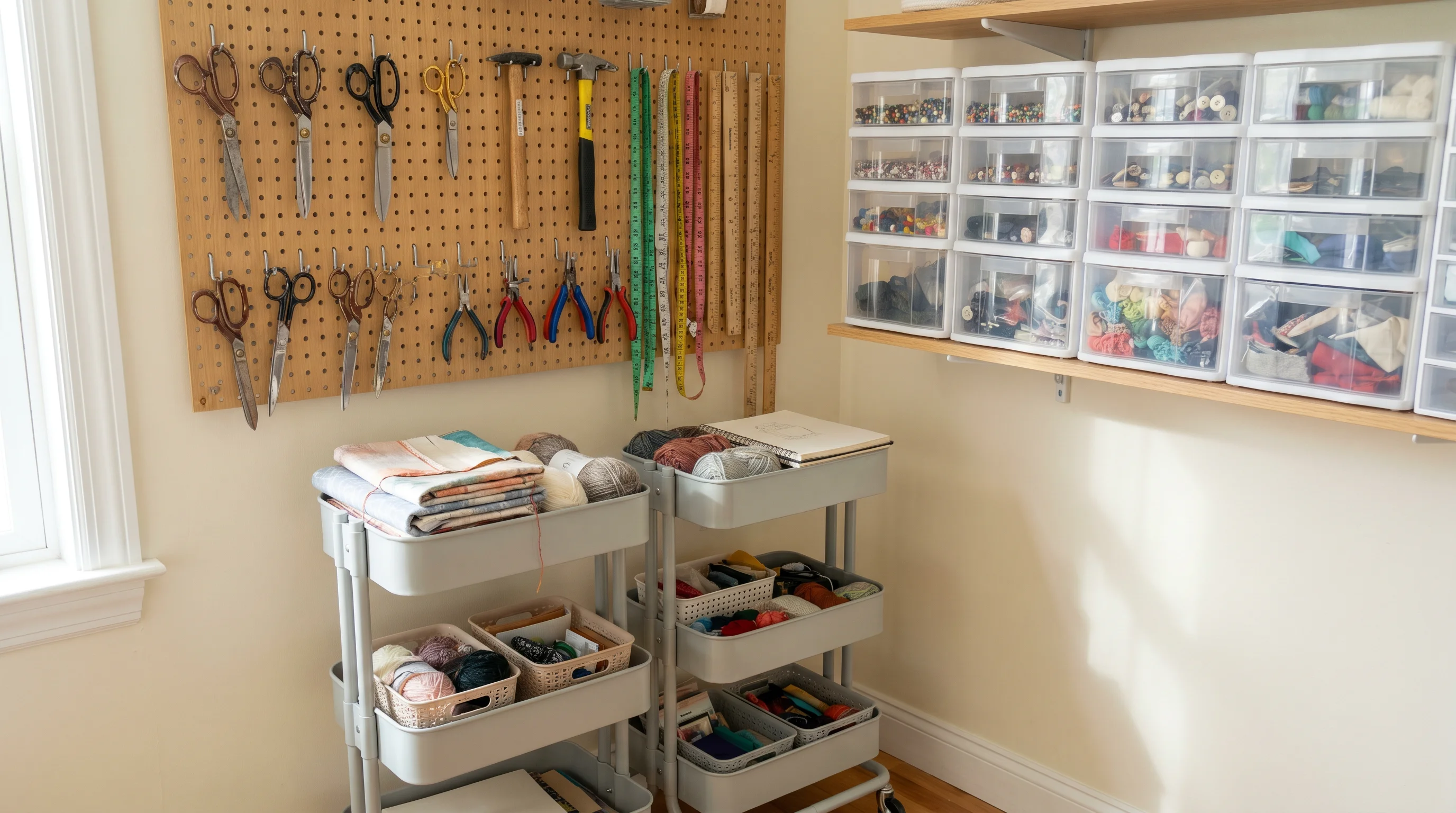
Three workhorses keep a craft room tidy long after setup day:
- Pegboard: vertical storage for scissors, tools, tapes, and rulers gets them off the desk and in plain sight. Add small shelves and cups for the fiddly bits.
- Rolling cart: the famous three-tier cart holds your current project and rolls to wherever you're working, then tucks back against the wall.
- Label system: bins and drawers sorted by category — paper, vinyl, notions, paint — so every supply has a home. Add clear stackable bins, a thread or ribbon rack, and a magnetic strip for metal tools.
The takeaway: pegboard for tools, a rolling cart for the active project, and labeled bins for everything else — when every supply has a labeled home, tidying takes five minutes instead of an afternoon.
How to design your craft room before you commit
A craft room is one of those spaces that's hard to picture — especially when you're staring at an empty spare room or a cluttered closet. Upload a photo to EasyRoomAI and see it redesigned: test a closet conversion versus a full room, a wall of pegboard versus built-in cabinetry, and different layouts before you buy a single bin.
- Try a free room redesign — anonymous previews are free, no signup needed.
- Planning a whole set of purposeful rooms? See our specialty room ideas roundup.
Frequently asked questions
How do I organize a small craft room? Start by mapping your workflow into zones — prep, make, and store — then use vertical and hidden storage to fit them into a small footprint. A pegboard gets tools off the desk, a rolling cart holds your current project, and labeled bins in a closet or cabinet handle the bulk. A closet conversion or fold-down wall desk lets the whole setup close up when you're done, which is what actually keeps a small space usable.
What should a craft room have? At minimum: a sturdy, well-lit work surface, storage sorted by supply type (a mix of open and closed), and good task lighting. From there, the tidiest craft rooms add a pegboard for tools, a rolling cart for the active project, a label system so everything has a home, and a small display or inspiration area to keep you motivated.
How do I combine a craft room with a guest room or office? Keep the two functions in separate zones and put craft supplies in closed storage so the room can switch modes fast. For a guest combo, use a daybed, sofa bed, or Murphy bed so the floor and work surface stay usable day to day. For an office combo, choose one desk that flips between laptop work and projects, and hide the colorful supplies behind cabinet doors so the room reads professional on video calls.
What is the best lighting for a craft room? Layered lighting with a bright task light on the work surface. Use daylight-temperature bulbs (around 5000K) with a high color-rendering index so colors read true — critical for matching fabric, paint, and yarn. Position the task light so it doesn't cast a shadow from your working hand, and add ambient overhead light plus natural daylight where possible.
How do I store craft supplies so I can actually find them? Sort by category (paper, fabric, notions, paint) and give each category a labeled, clear container. Display the supplies that are pretty and used often on open shelves or a pegboard, and hide the bulk backstock behind closed doors. The goal is that every item has one obvious home, so putting things away and finding them again both take seconds.
A craft room doesn't need to be big — it needs a plan. Map your workflow into zones, show the pretty supplies and hide the rest, get a color-true task light over your desk, and give everything a labeled home. Then preview the whole setup in your own space before you commit to the build.
Ready to Transform Your Space?
Try AI room redesign for free - no credit card required.
Start Designing FreeRelated reading
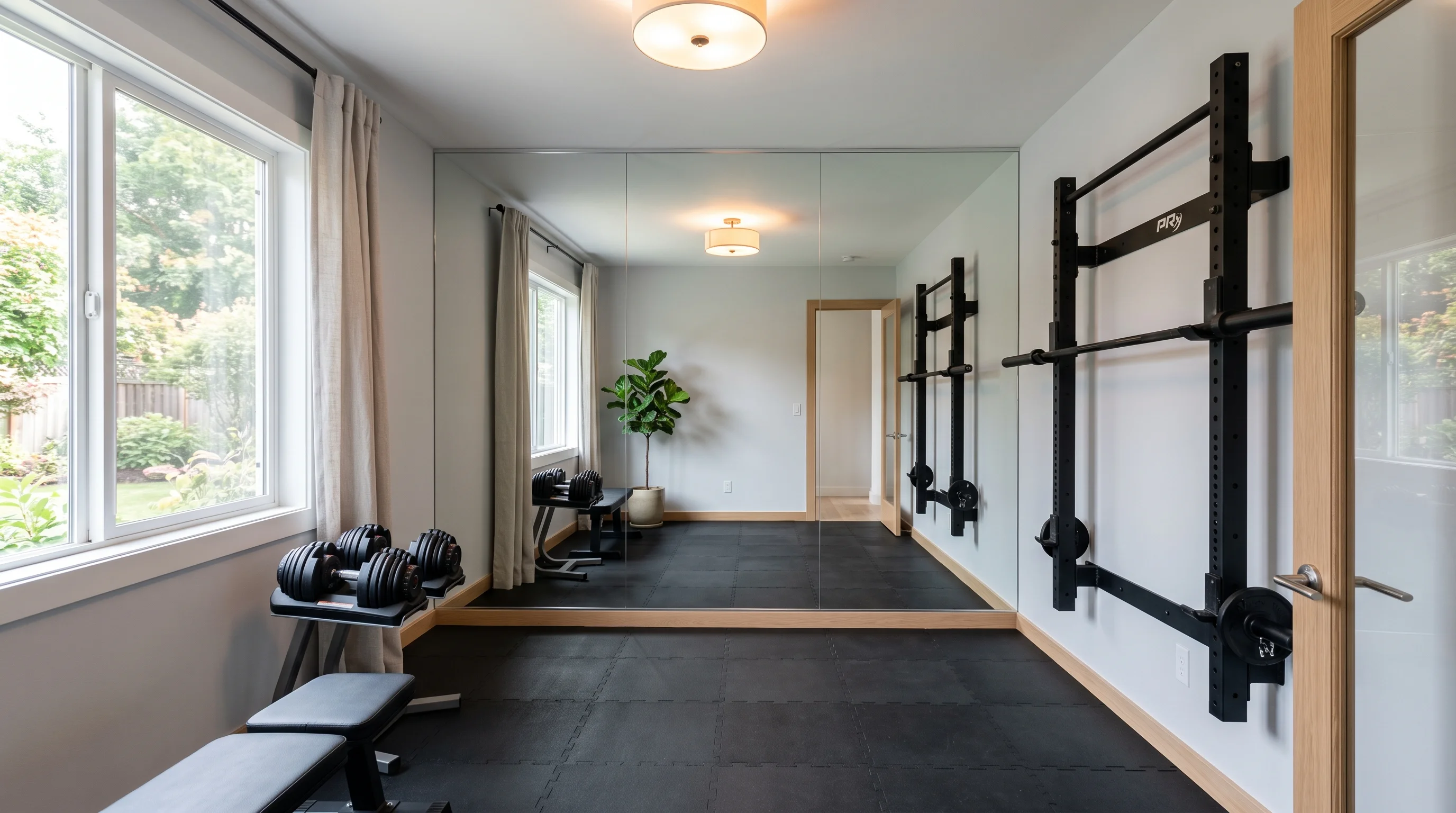
Small Home Gym Ideas 2026: How to Fit a Serious Gym in Under 100 Sq Ft
Discover clever small home gym layout ideas for 50 to 100 sq ft. Learn how to combine folding wall-mounted racks, selectorized dumbbells, vertical storage, and dual-purpose office zoning to build a studio-grade gym without sacrificing square footage.
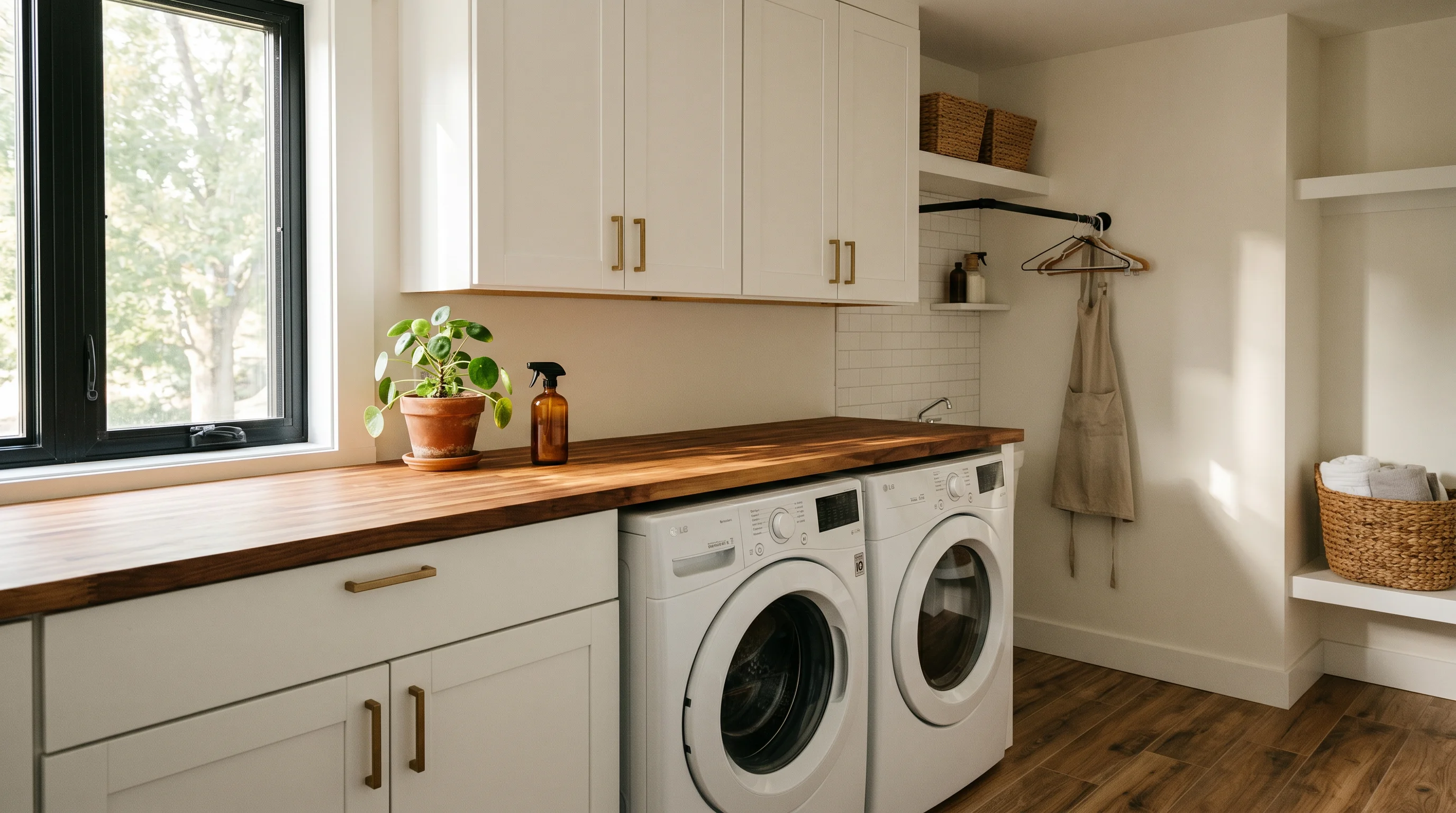
24 Laundry Room Ideas That Make This Hardworking Space Worth Designing (2026)
The laundry room is no longer a room you hide. Here are 24 laundry room ideas for 2026 — smart storage, small closet conversions, wallpaper that works, mudroom combos, and the finishes that turn a utility room into something you actually enjoy walking into.
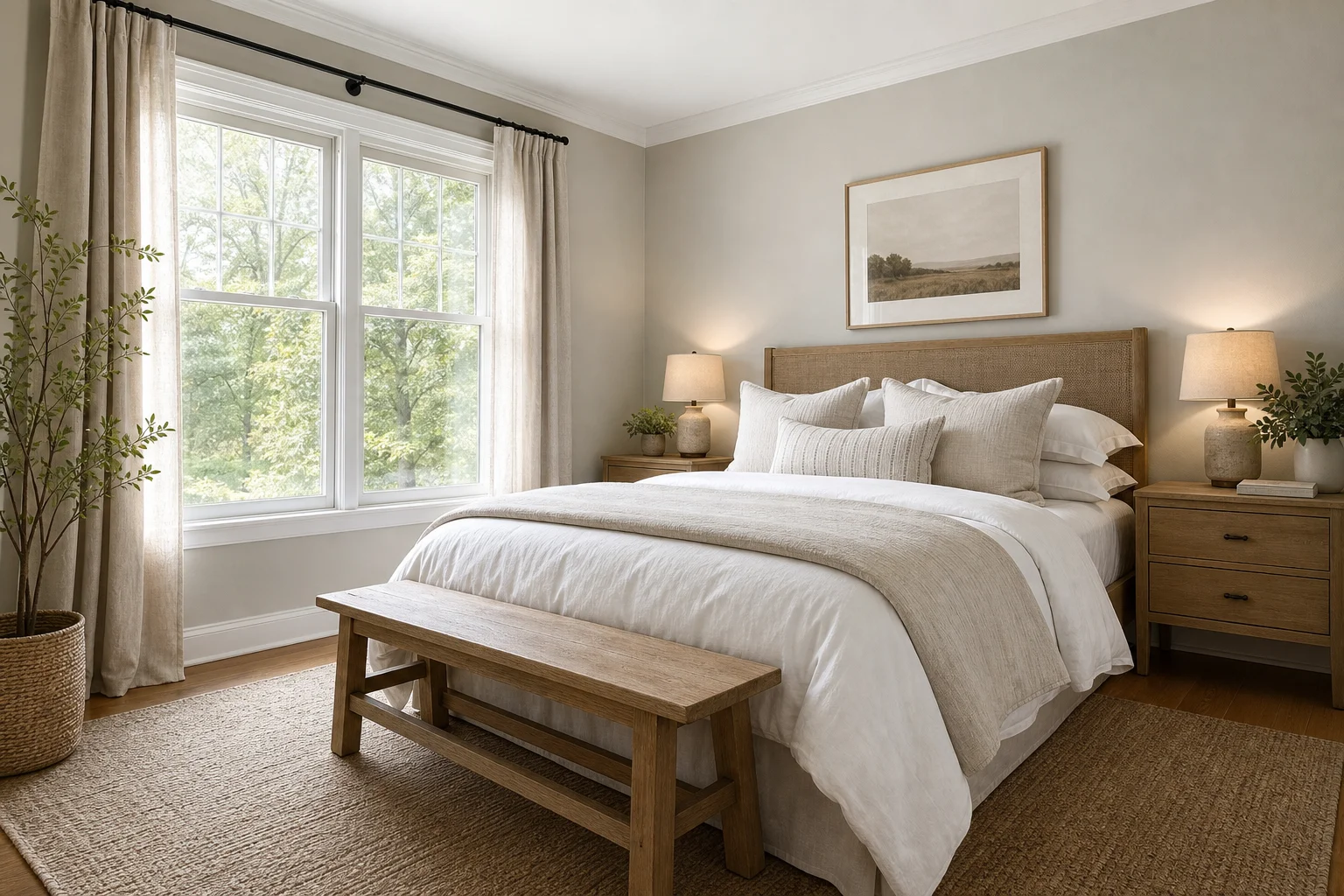
24 Guest Room Ideas (Even If It's Also Your Office or Spare Room) — 2026
Most guest rooms sit empty 350 days a year — so the best ones do double duty. Here are 24 guest room ideas for 2026: hotel-feel basics on a budget, small spare-room layouts, office and hobby dual-use setups, calming palettes, and a 10-minute pre-guest reset.