28 Playroom Ideas Kids Love (and Parents Can Live With) — 2026
A great playroom is fun for kids and calm for adults. Here are 28 playroom ideas for 2026 — smart zoning, toy storage that actually works, small and shared-room solutions, budget makeovers, and the safety rules every parent should know.
 Easy Room AI Team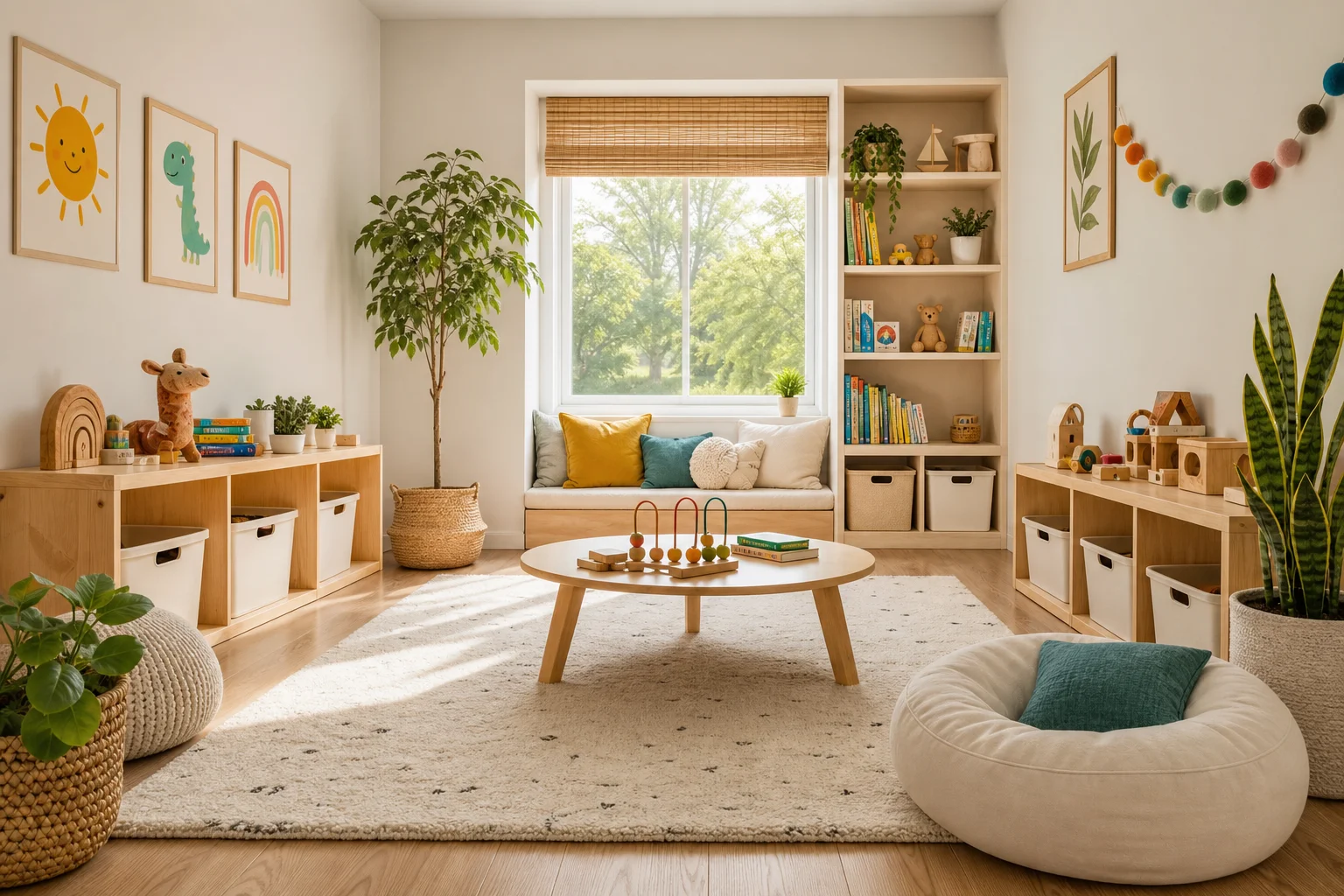
A playroom has two customers with opposite priorities: the kids want somewhere fun and theirs, and you want somewhere that isn't a daily disaster zone. The good news is you can have both — the trick is zoning, storage, and a palette that doesn't fight the rest of your home.
This guide rounds up 28 playroom ideas for 2026, from full dedicated rooms to a corner of a shared bedroom, with budget makeovers throughout. And because a playroom is a kids' space, we've built in the safety essentials — including the single most important one most people skip: anchoring furniture to the wall.
In this guide you will learn:
- How to zone a playroom for play, craft, and quiet time
- Toy storage that kids will actually use
- Small playroom and shared-bedroom-corner solutions
- Budget playroom makeovers
- Palettes that grow with your kids
- The easy-clean materials and safety rules that matter
1. Zone the playroom into clear areas
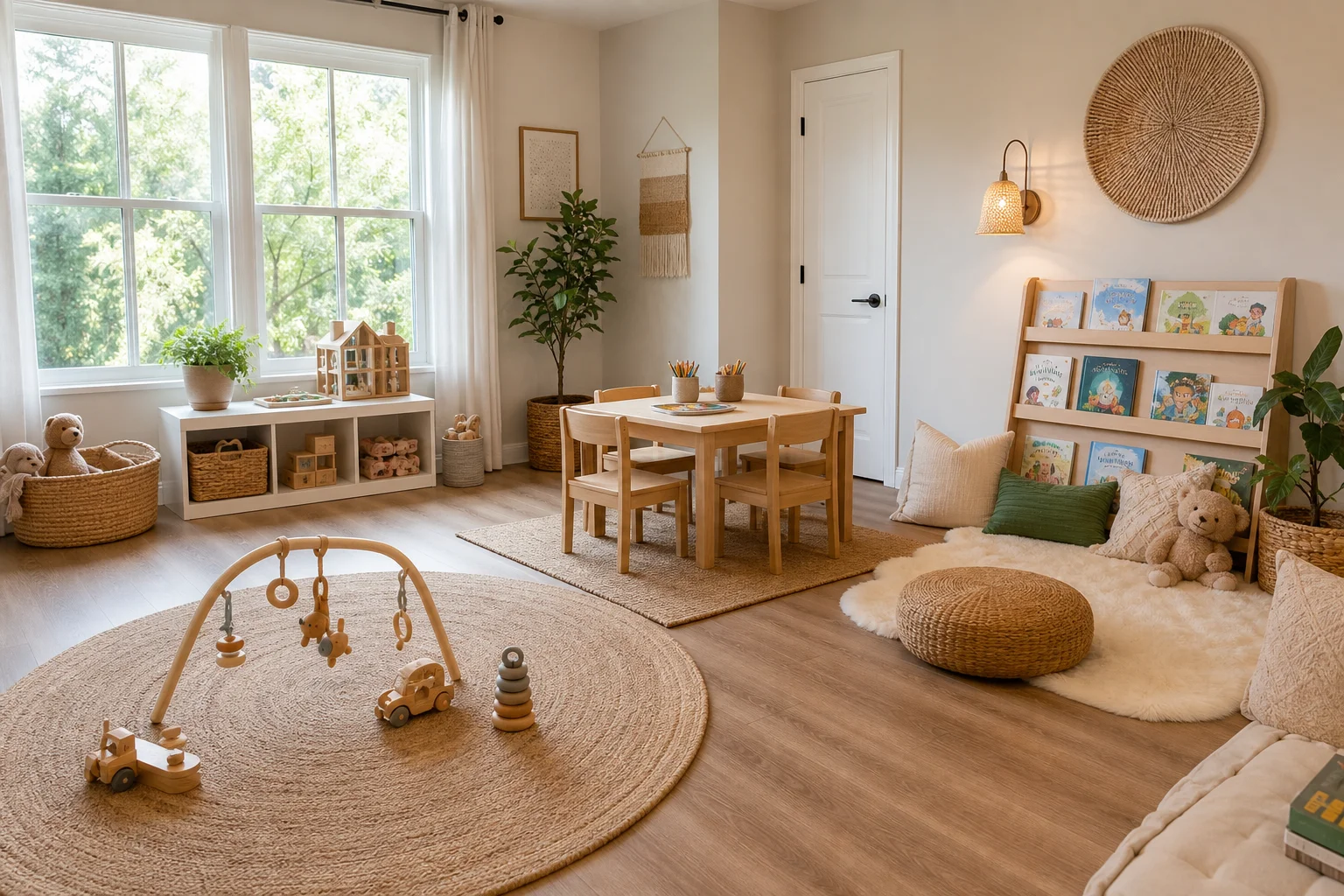
The single best thing you can do for a playroom is give it zones. Most rooms work with three: an active play zone (open floor and a soft rug), a craft/table zone (a low table for drawing, building, and snacks), and a quiet/reading zone (a cozy corner with cushions and books).
Defined zones make the room feel calmer, help kids understand where things happen, and make tidying obvious. The takeaway: decide the zones first, then buy furniture to fit them — not the other way around.
2. Toy storage kids will actually use
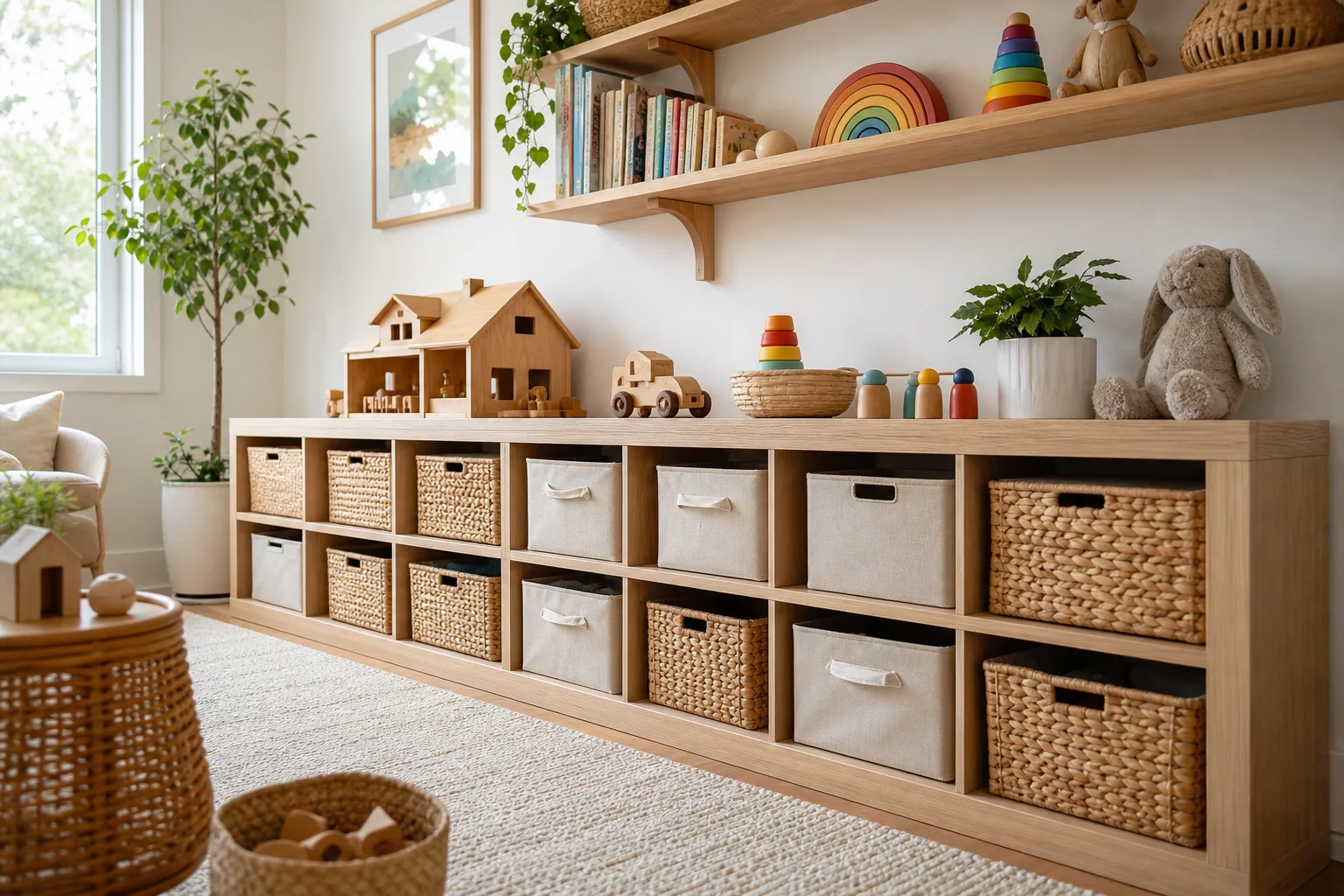
Storage only works if kids can reach it and understand it. Borrow from the Montessori approach: keep everyday toys on low, open shelving in labeled bins and baskets, so a child can both take out and put away independently. Reserve higher shelves for display and rotation.
A few proven moves:
- Rotate toys. Store half out of sight and swap monthly — fewer toys out means less mess and more focused play.
- Bins by category, with picture labels for pre-readers.
- A book display with covers facing out (kids choose books they can see).
Redesign Your Room in Seconds
Upload a photo of your space to test 16 curated design styles instantly with AI — 100% free.
Supports JPG, PNG, WebP up to 10MB
3. Small playrooms and shared-bedroom corners
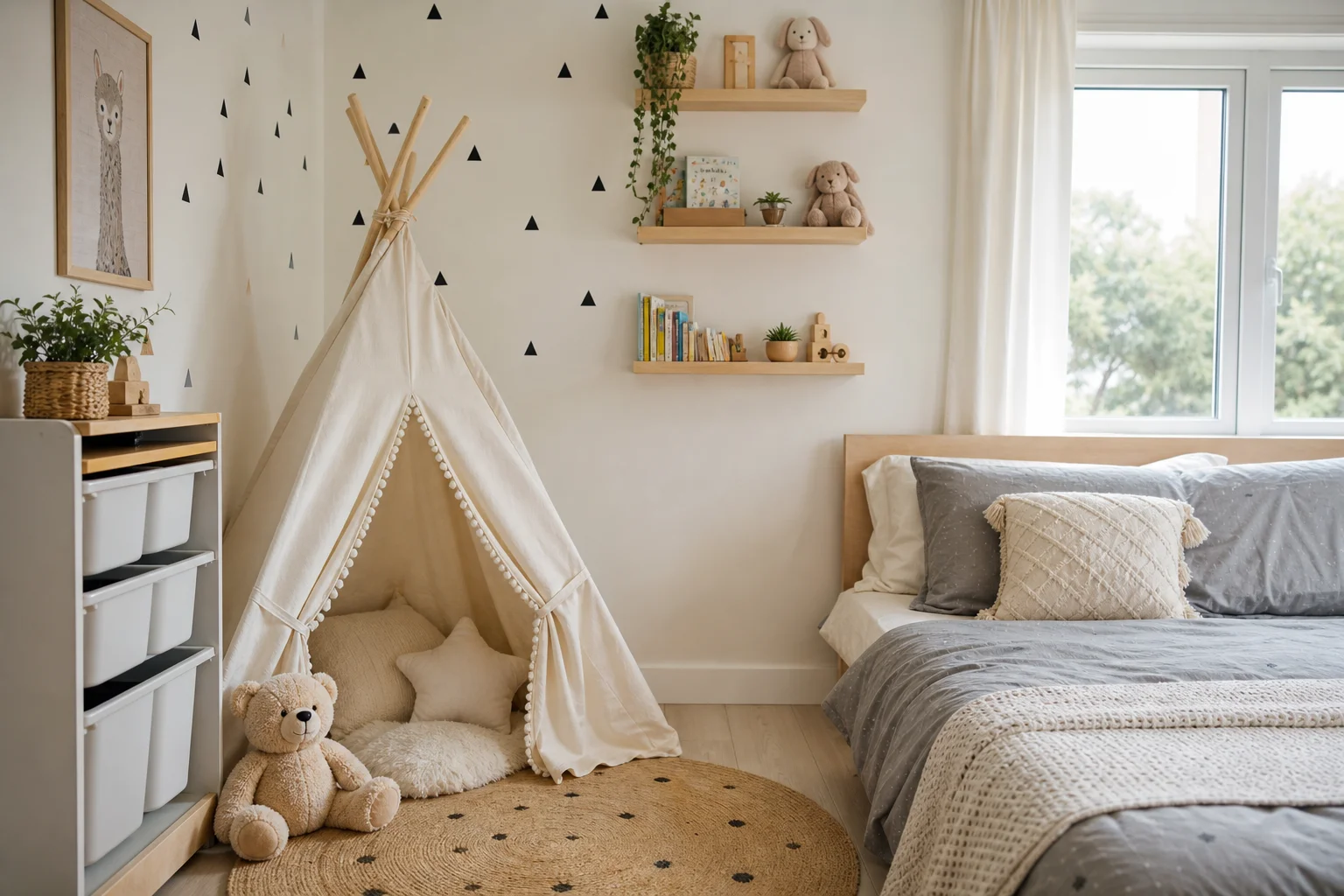
No spare room? A playroom can be a corner. In a shared or small bedroom, carve out a play zone with a rug, a teepee or canopy to define it, and vertical wall-mounted storage to keep the floor clear. The same small-space design rules apply: go up the walls, choose dual-purpose furniture, and keep the palette light so the corner doesn't overwhelm the room.
4. Budget playroom makeovers
You don't need a big budget — you need organization. The highest-impact, lowest-cost moves: a large washable rug to anchor the play zone, modular cube shelving with bins, a coat of durable paint, and peel-and-stick wall decals instead of a mural. Shop your own home first: a coffee table becomes a craft table, and baskets you already own become toy storage.
5. Palettes that grow with your kids
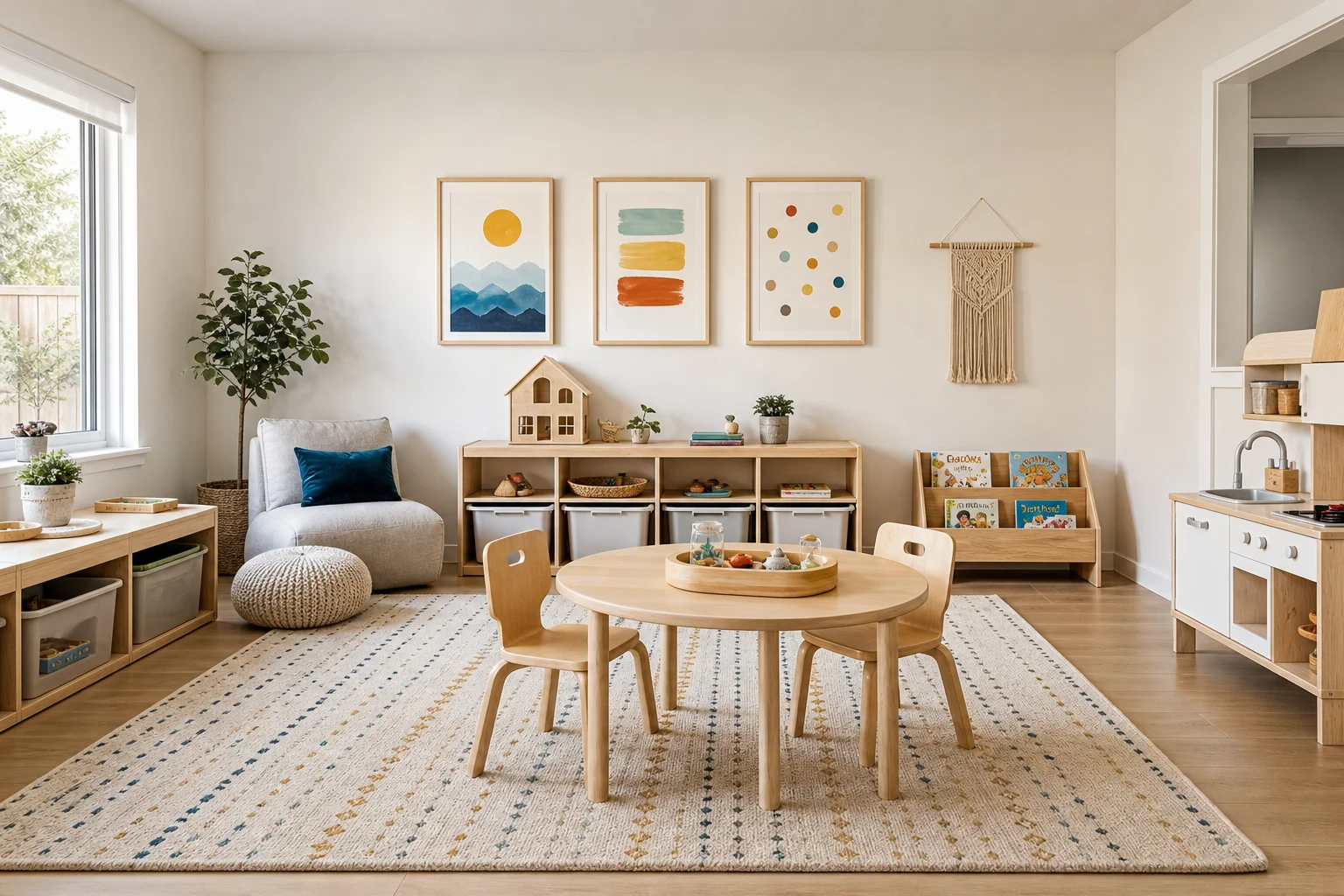
Themed rooms (a specific cartoon, primary-color overload) date fast and get expensive to redo. The 2026 approach is a calm, neutral base — warm white or soft sage walls, natural wood furniture — with color and personality added through the cheap, swappable things: art, cushions, bins, and decals. Your toddler's room grows into a big-kid room without a full repaint.
6. Easy-clean materials and the safety rules that matter
A kids' room takes a beating, so choose washable, wipeable surfaces: scrubbable matte paint, a low-pile washable rug, and sealed or laminate flooring over carpet.
But the most important part of a playroom isn't a finish — it's stability. Furniture tip-overs are a serious, underrated hazard: the U.S. Consumer Product Safety Commission reports that children make up nearly half of all tip-over injuries treated in emergency rooms, and most tip-over fatalities involve young children. Non-negotiables for any playroom:
- Anchor every tall item — bookcases, shelving, and dressers — to a wall stud with an anti-tip kit (CPSC's "Anchor It!" rule). New dressers must now meet the STURDY Act stability standard, but older furniture still needs anchoring.
- Mount the TV to the wall, never on top of a low unit.
- Choose rounded corners on tables and shelving, and avoid blinds with looped cords.
The takeaway: design for fun, but anchor for safety first.
How to design your playroom before you buy
It's hard to picture a spare room as a playroom when it's full of boxes. Upload a photo of the room to EasyRoomAI and generate it as a zoned, styled playroom — different layouts, palettes, and storage walls — so you can plan the space before spending on furniture.
- Try a free room redesign — anonymous previews are free, no signup needed.
- Planning the whole house? See our specialty room ideas and browse bedroom ideas.
Frequently asked questions
How do I organize a playroom so it stays tidy? Zone the room (play, craft, quiet), store everyday toys in labeled bins on low open shelving kids can reach, and rotate toys monthly so fewer are out at once. Tidying is easiest when every item has an obvious, reachable home.
What is the best flooring for a playroom? Durable, easy-clean surfaces: sealed hardwood, laminate, or cork, topped with a large washable low-pile rug to soften the play zone. Avoid high-pile carpet, which traps crumbs and is hard to clean.
How do I create a playroom in a small space or shared bedroom? Define a play corner with a rug and a teepee or canopy, use vertical wall-mounted storage to keep the floor clear, and pick dual-purpose, light-colored furniture. A playroom doesn't need its own room — just a clearly defined zone.
How do I make a playroom safe? Anchor all tall furniture (bookcases, dressers, shelving) to wall studs with anti-tip kits, mount TVs to the wall, choose furniture with rounded corners, and avoid corded blinds. Furniture tip-overs send thousands of children to emergency rooms each year, so anchoring is the most important safety step.
What colors are best for a playroom? A calm neutral base (warm white, soft sage, or a gentle blue) that won't date, with color added through swappable art, cushions, and bins. This "grow-with-them" approach keeps the room age-appropriate for years without a full redo.
How can I design a playroom on a budget? Reuse furniture you own, add a washable rug and modular cube storage with bins, repaint in durable paint, and use removable decals instead of murals. Preview the layout digitally first with EasyRoomAI so you only buy what works.
A playroom that works for everyone comes down to three things: clear zones, reachable storage, and rock-solid safety. Get those right, add a grow-with-them palette, and preview it in your own space first — then let the kids loose.
Ready to Transform Your Space?
Try AI room redesign for free - no credit card required.
Start Designing FreeRelated reading
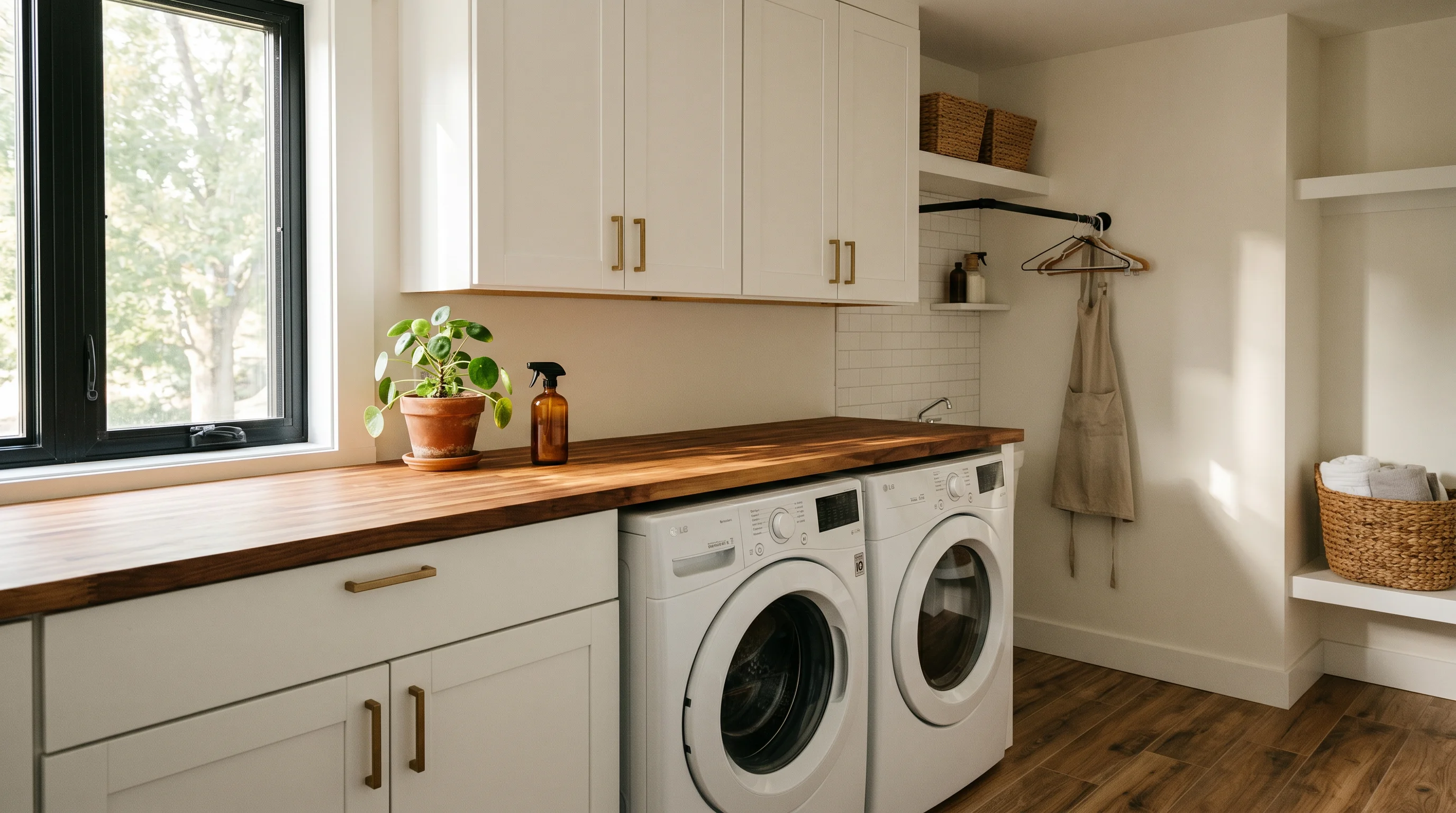
24 Laundry Room Ideas That Make This Hardworking Space Worth Designing (2026)
The laundry room is no longer a room you hide. Here are 24 laundry room ideas for 2026 — smart storage, small closet conversions, wallpaper that works, mudroom combos, and the finishes that turn a utility room into something you actually enjoy walking into.
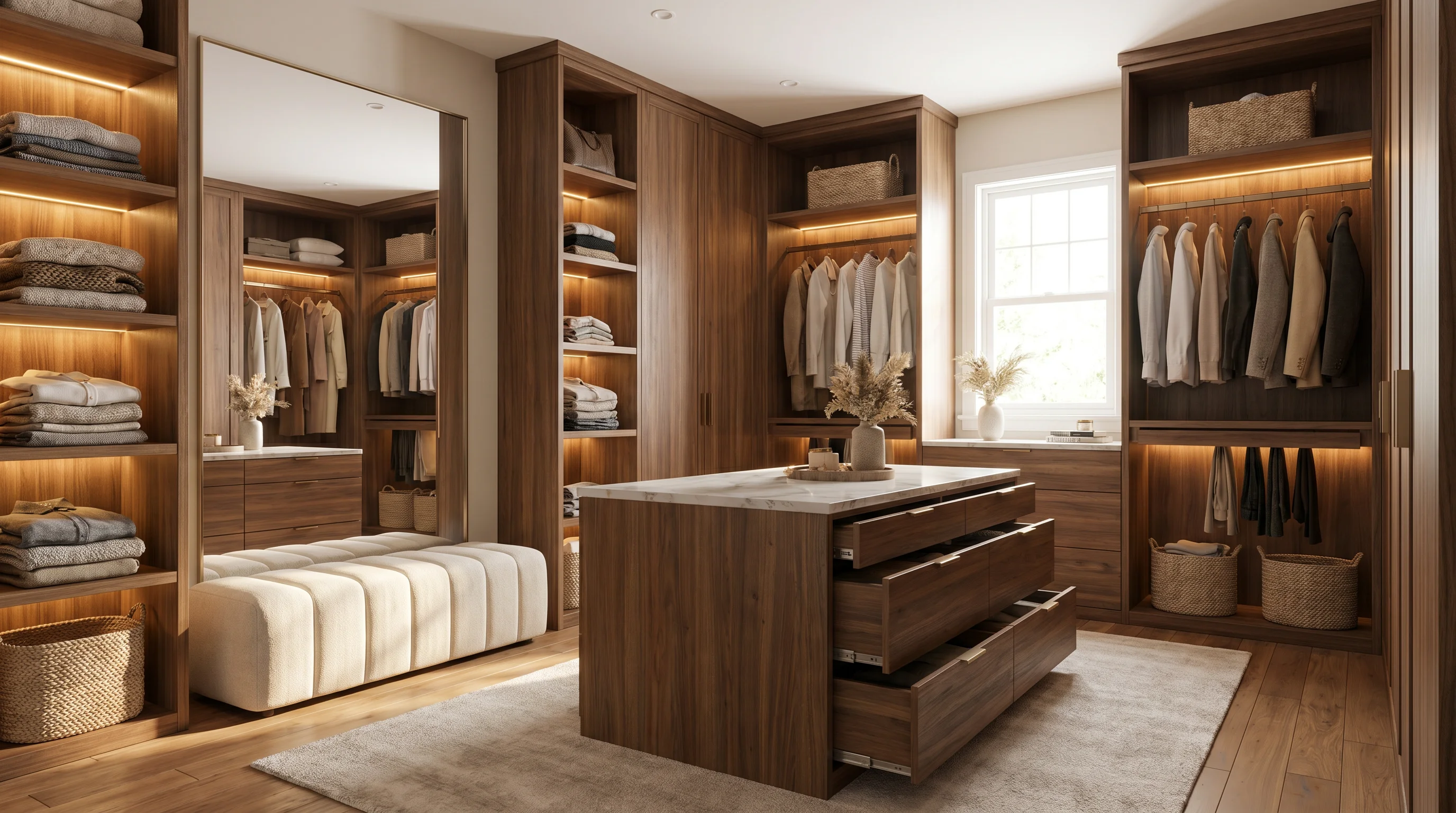
27 Walk-In Closet Ideas for Smart, Stylish Storage (2026)
A walk-in closet is one of the few spaces buyers refuse to shrink. Here are 27 walk-in closet ideas for 2026 — layouts from single-wall to island, spare-room conversions, open vs closed storage, lighting and mirrors, boutique-style finishes, and closet islands and seating.
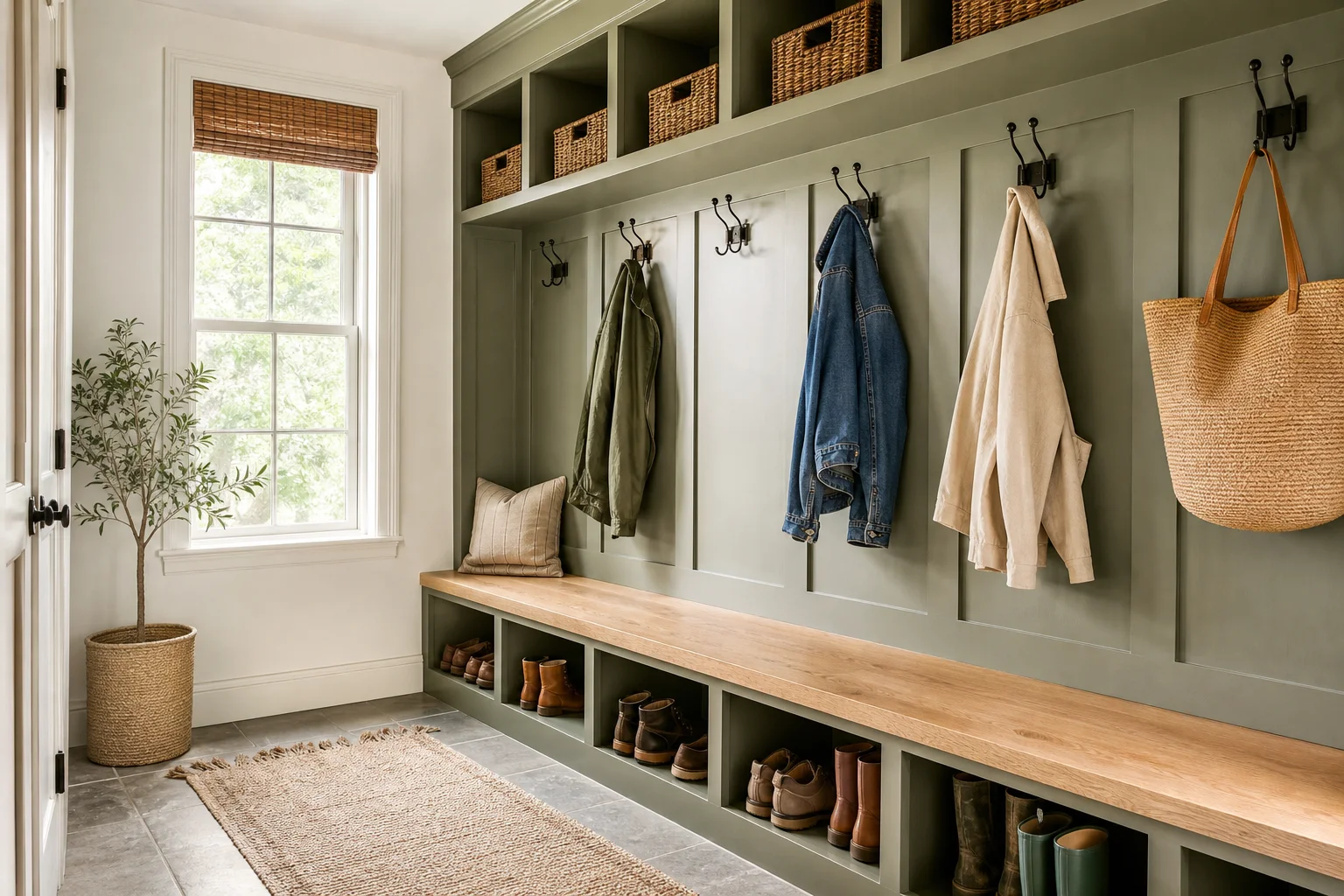
25 Mudroom Ideas for an Organized, Mess-Free Entry (2026)
A good mudroom stops mess at the door. Here are 25 mudroom ideas for 2026 — the bench-hooks-cubbies formula that always works, small hallway nooks, mudroom-laundry combos, garage-entry drop zones, dirt-hiding materials, and farmhouse vs modern looks.