Small Space Design: 7 Designer Tricks to Make Any Room Feel Bigger (2026)
Square footage is fixed; how big a room feels is not. Seven designer tricks — with the exact measurements for mirrors, curtains, rugs, and furniture — that make a small space feel up to 40% larger without moving a wall.
 Easy Room AI Team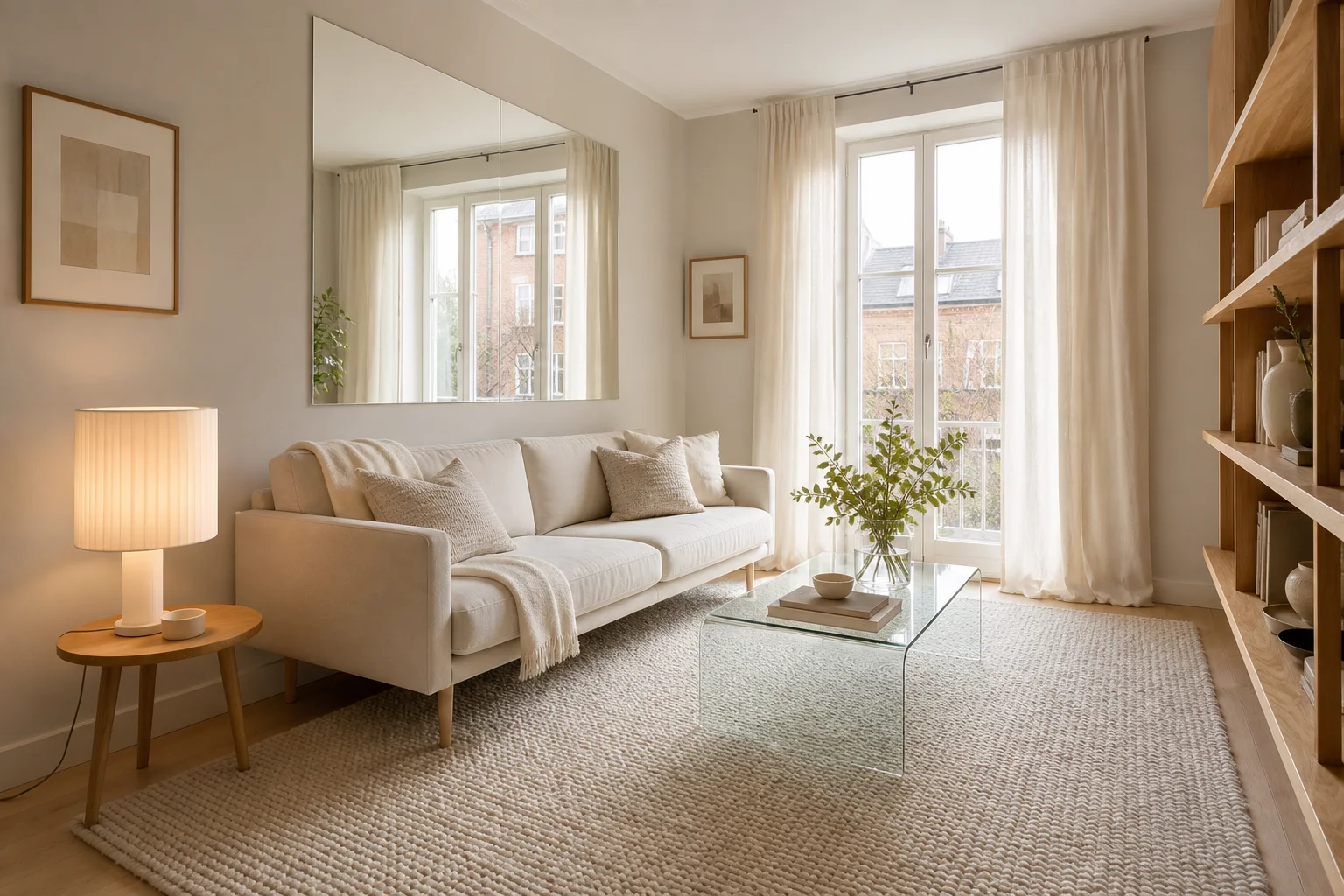
The average new U.S. apartment is just 908 square feet, and a studio averages a mere 457 — and the fastest-growing slice of the market is shrinking: micro-apartments under 500 sq ft grew 34% year over year in 2025–2026, according to CoStar data summarized here. Studios and one-bedrooms now make up 52.7% of all new rentals, per RentCafe's annual analysis.
Translation: more of us than ever are designing rooms that are genuinely small. The good news is that feeling bigger has almost nothing to do with square footage — and almost everything to do with light, sightlines, and visual noise. Designers can make a 200 sq ft room read 30–40% larger without moving a single wall.
This guide is the part that actually works: 7 designer tricks, each with the specific number that makes it land, plus the mistakes that quietly make small rooms feel smaller.
In this guide you will learn:
- The 4 levers that actually change how big a room feels
- The single highest-ROI trick (it costs less than a set of throw pillows)
- Exact measurements for curtains, mirrors, rugs, and furniture spacing
- Why "just paint it white" is the wrong advice in 2026
- The small-space mistakes that backfire
- How to test all of it on your own room before you buy anything
The 4 levers that actually make a room feel bigger
Square footage is fixed. Perceived size is not. Every trick below pulls on one of four levers:
| Lever | What it does | Example moves |
|---|---|---|
| Reflect light | More bounced light = more apparent volume | Mirror opposite a window, pale ceiling, glossy surfaces |
| Extend sightlines | The further your eye travels, the bigger the room reads | Float furniture off walls, low profiles, clear pathways |
| Go vertical | Drawing the eye up makes ceilings feel higher | Ceiling-height curtains and shelving, tall narrow decor |
| Cut visual noise | Fewer competing objects = calmer, more spacious | One large piece over five small ones, monochrome palette |
Keep these four in mind and every decision gets easier. You are not "decorating" — you are managing light and attention.
Trick 1 — Hang a big mirror opposite your window
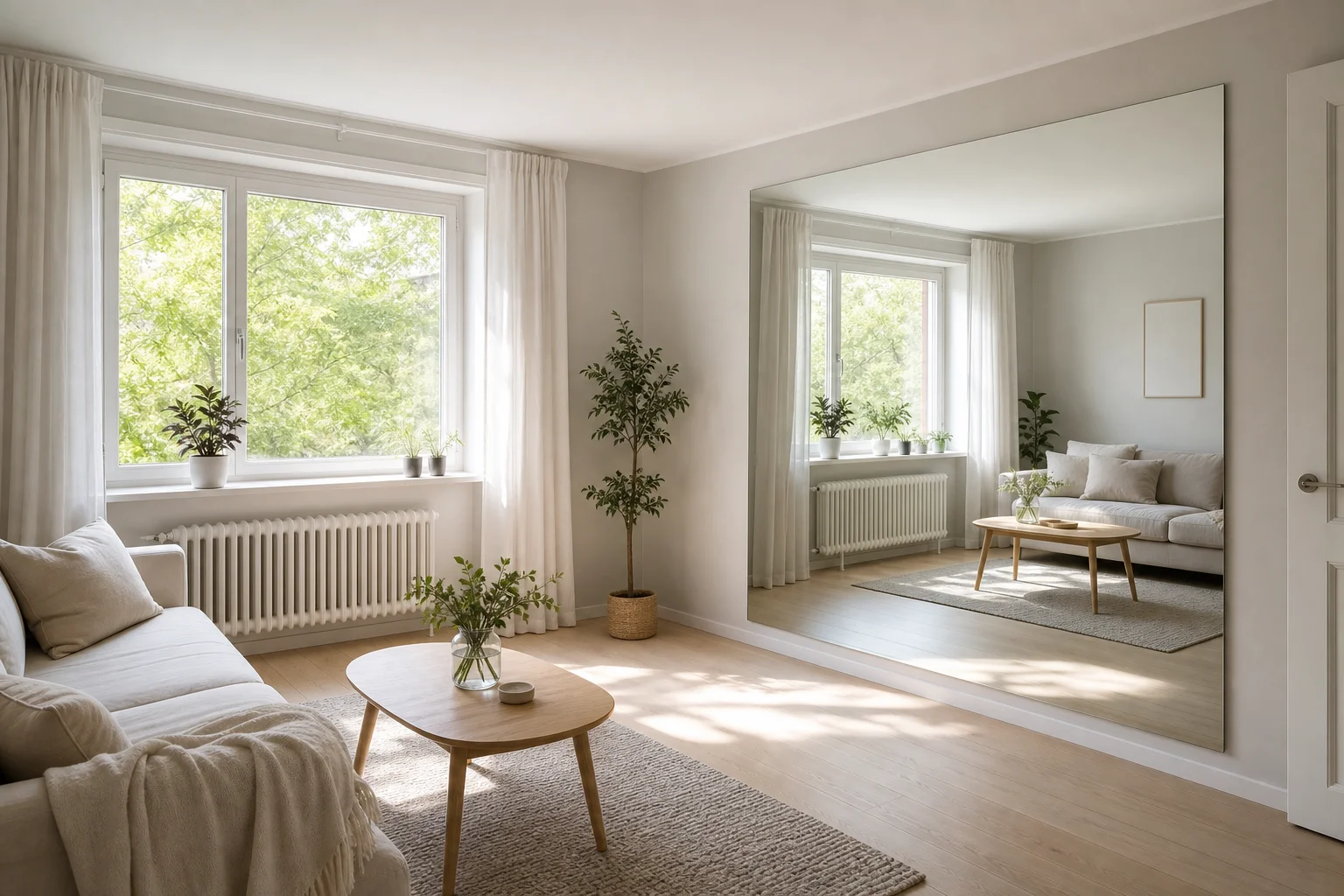
This is the single highest-impact change you can make, and it is cheap. A mirror placed directly opposite your main window reads like a second window: it reflects the daylight back into the room and visually doubles the depth of the sightline. As Architectural Digest notes, mirrored surfaces "reflect light and create the illusion of a larger space."
Get it right:
- Go big. Aim for a mirror at least 24 inches wide — larger is better. A full-length leaning mirror reflects floor-to-ceiling and adds depth in two directions at once.
- Point it at light, not clutter. A mirror reflecting a messy console just doubles the mess. Reflect the window, a plant, or open floor.
- Keep the frame quiet. Frameless or slim-framed mirrors blend into the wall, so the reflection — not the object — does the work.
Redesign Your Room in Seconds
Upload a photo of your space to test 16 curated design styles instantly with AI — 100% free.
Supports JPG, PNG, WebP up to 10MB
Trick 2 — Take your curtains to the ceiling
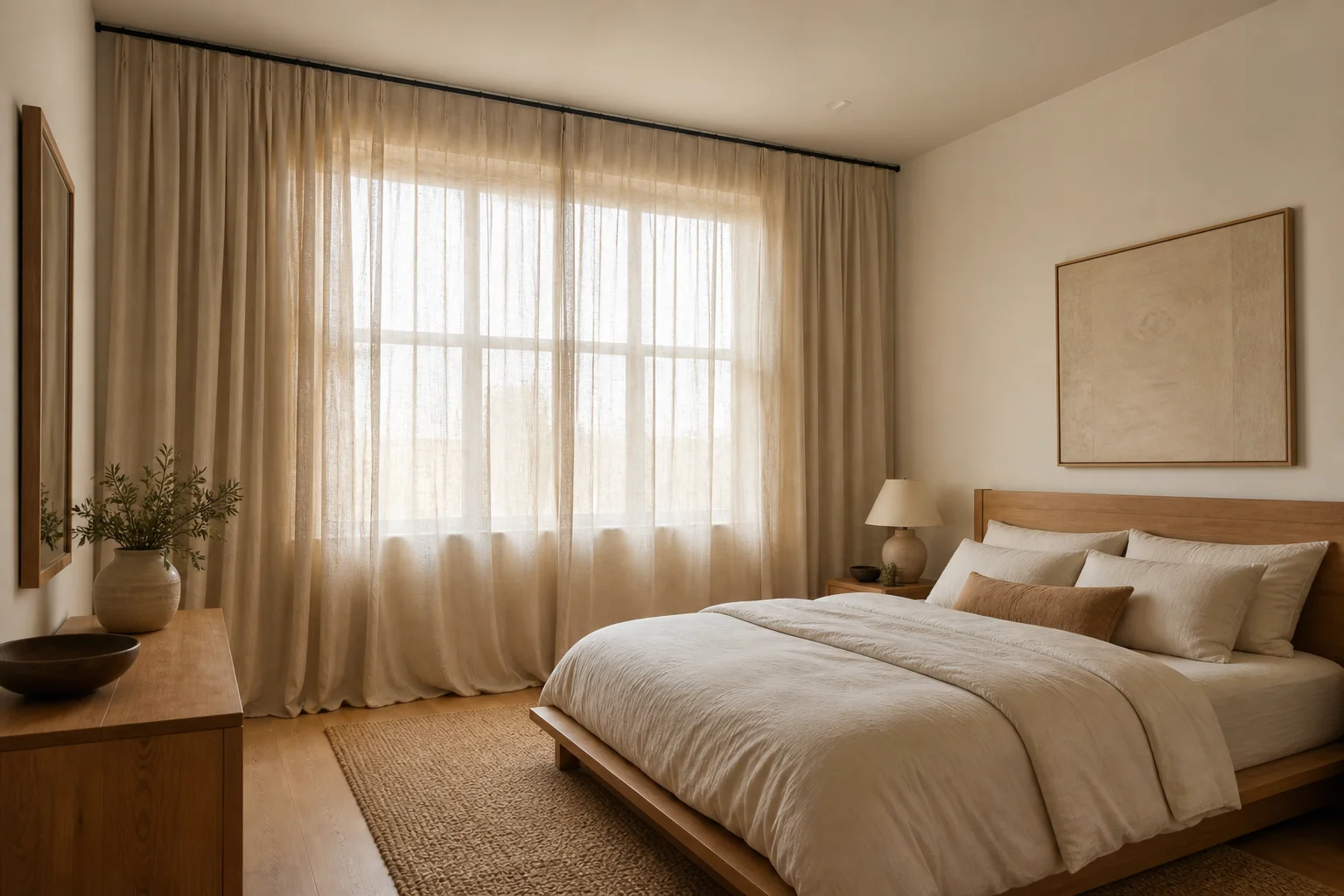
Most people hang curtains just above the window frame. In a small room, that quietly chops the wall in half and announces exactly how short your windows are. Do the opposite.
- Mount the rod 3–4 inches below the ceiling, not above the frame.
- Extend it 6–12 inches past each side of the window, so the open panels reveal more glass and the window reads wider.
- Let panels skim the floor — touching, or no more than an inch above.
The eye follows the fabric all the way up, the ceiling feels taller, and the window feels twice its size. Same window, completely different room.
Trick 3 — Float your furniture, then get the rug right
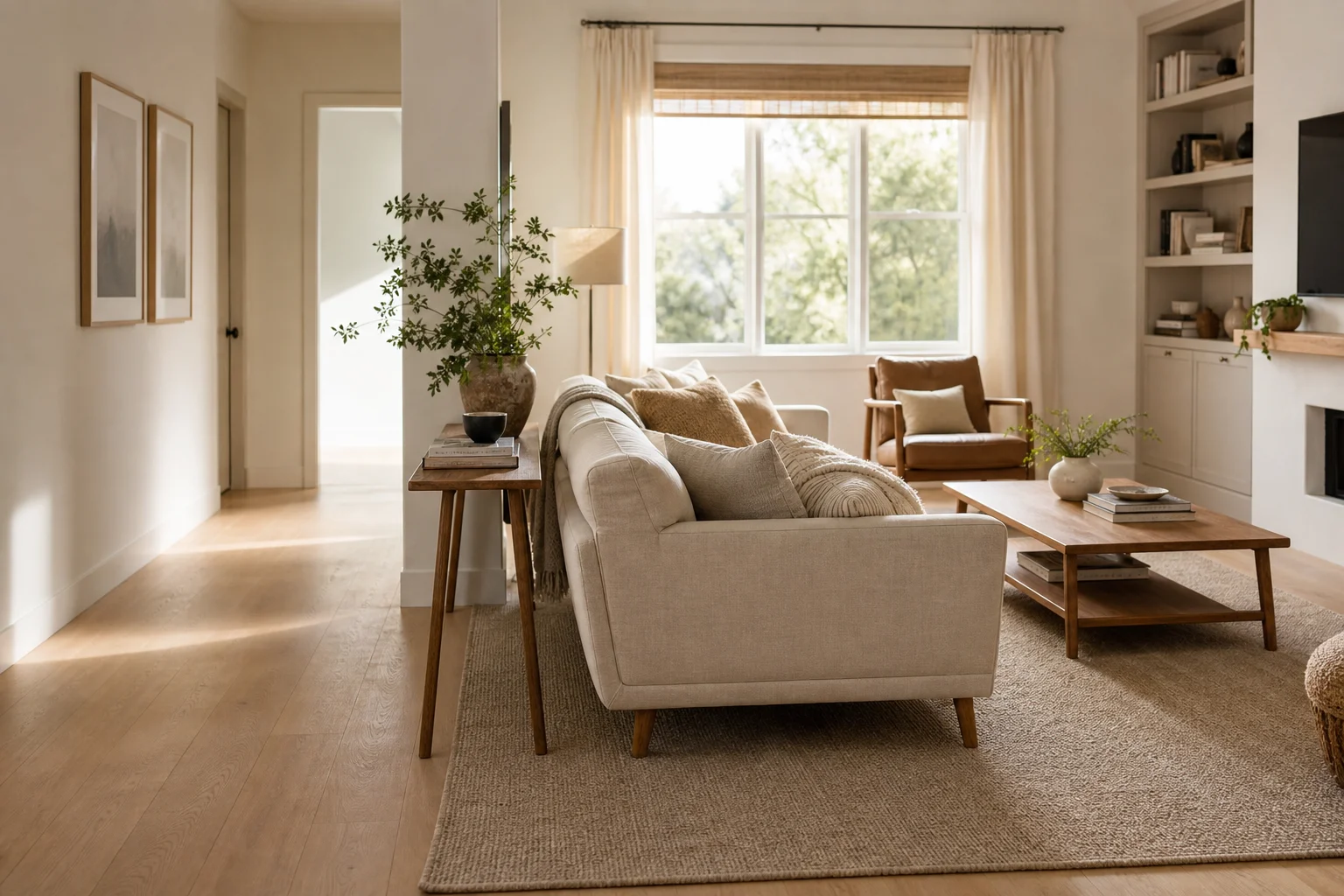
The instinct in a small room is to shove everything against the walls to "save space." It backfires — it makes the room read as a tight ring of furniture around an empty middle.
Instead:
- Float key pieces 12–18 inches off the wall. A sofa pulled forward with a slim console behind it adds depth and looks intentional rather than crammed. Keep at least 30 inches of clearance for walkways.
- Size the rug correctly. This is the one most people get wrong. The front legs of every main piece should sit on the rug — a too-small rug (a 5×7 floating in a 12×14 room) chops the floor into segments and makes the space feel smaller. A larger rug that unifies the seating instantly expands it.
Designers like JJones Design Co. put scale first for exactly this reason: undersized furniture and rugs emphasize the limited proportions instead of hiding them.
Trick 4 — Choose leggy, see-through furniture
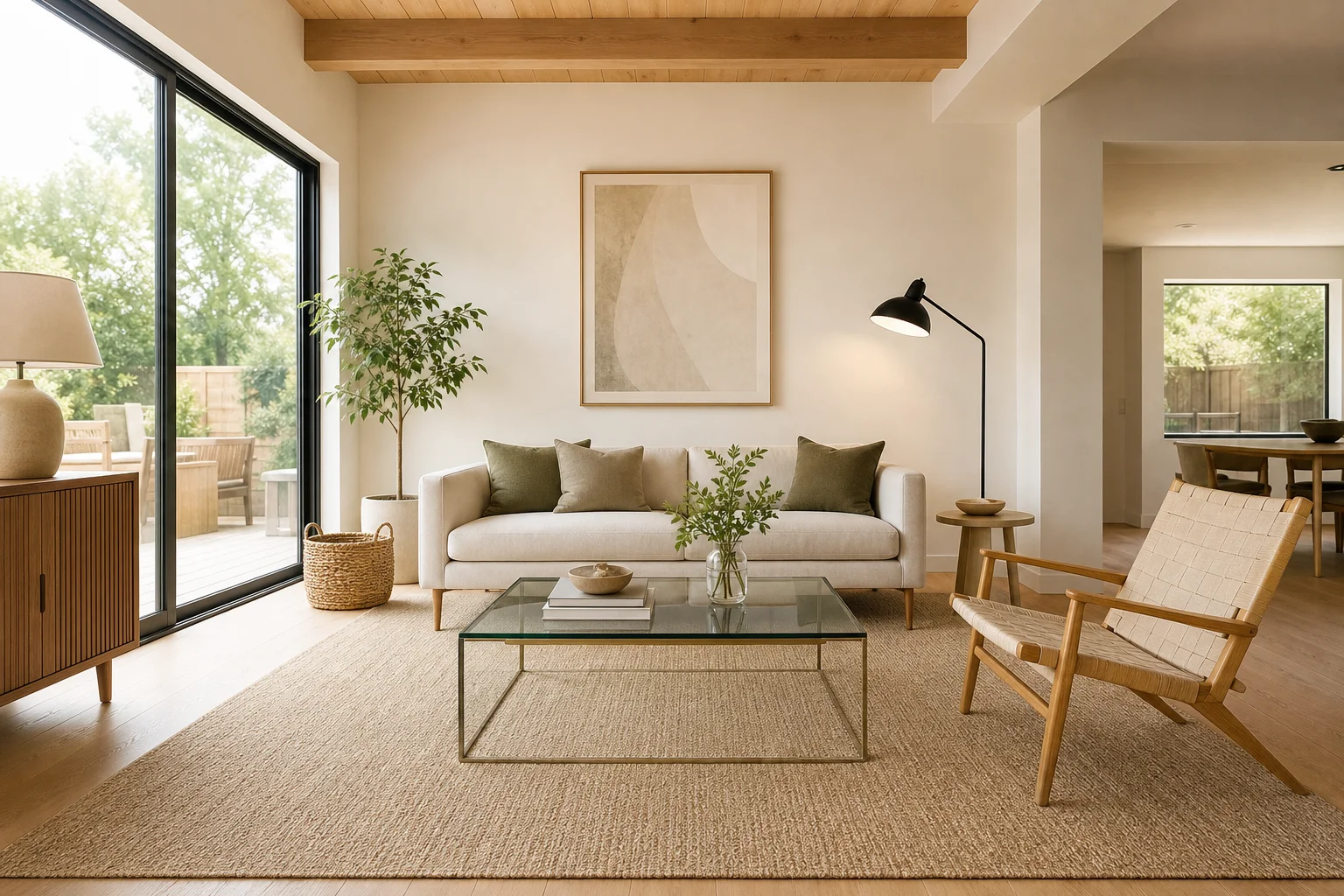
How much floor you can see is a direct proxy for how big a room feels. Bulky, skirted pieces that sit flush to the ground swallow the floor and the light. Raised, slim-profile pieces let both flow underneath.
- Pick furniture with exposed legs — sofas, chairs, and beds raised a few inches off the floor keep sightlines open.
- Use visually light materials where you can: a glass or acrylic coffee table, an open-frame chair, a console you can see through.
- Avoid oversized, overstuffed pieces. One correctly scaled sofa beats a sectional that eats the whole room.
The goal is "light visual weight" — the room breathes because your eye doesn't keep hitting solid blocks.
Trick 5 — Use every inch above eye level
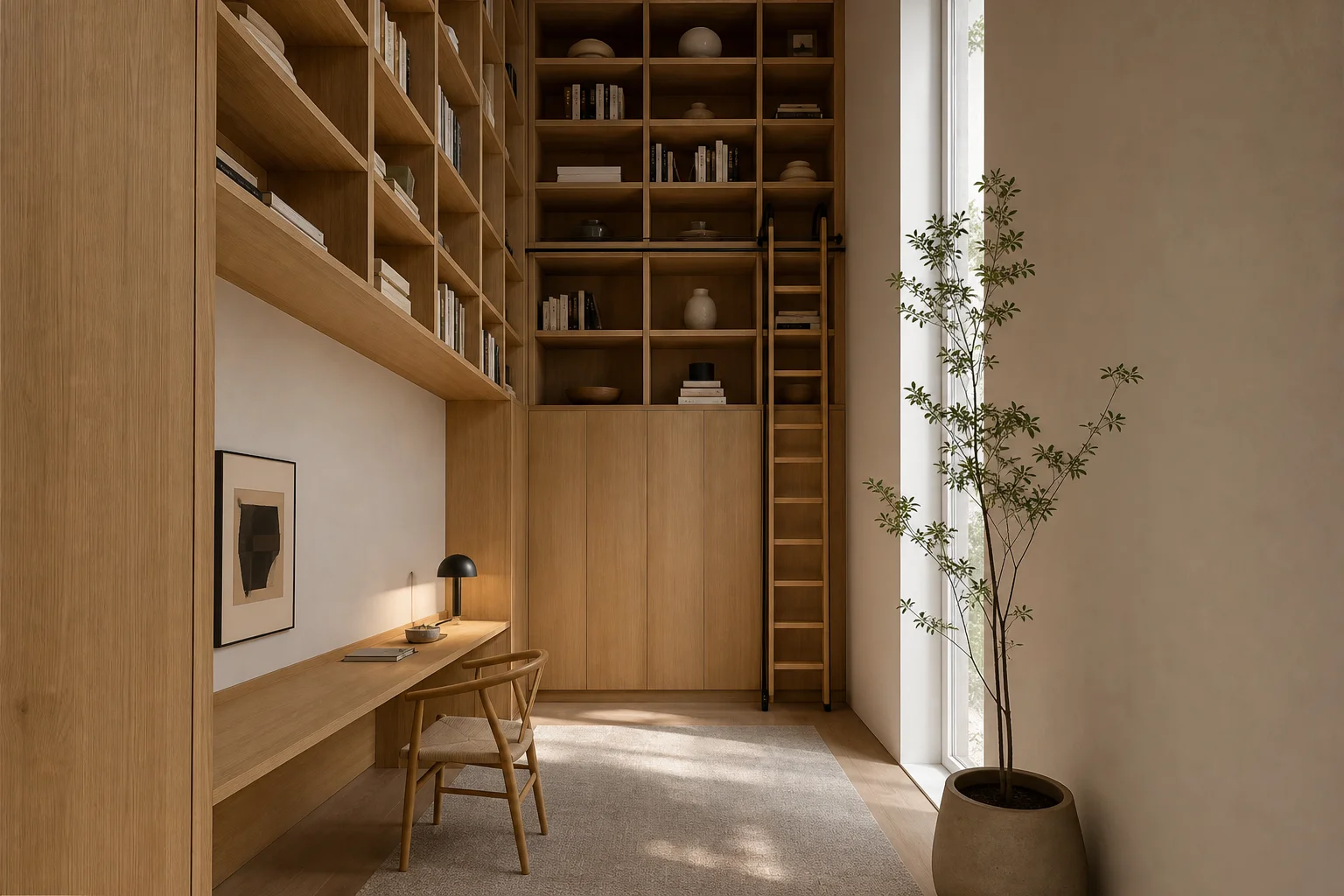
In a small room, the most underused real estate is everything above 170 cm (about 5'7"). Push storage and the eye upward and the footprint feels bigger without losing a square foot.
- Run shelving and cabinetry floor-to-ceiling. It draws the eye up, makes ceilings feel higher, and consolidates clutter into one tall plane instead of scattering it.
- Favor tall, narrow elements over wide, low ones — a slim bookshelf or a tall plant beats a long, squat credenza.
- Keep the lower walls calmer so the vertical lines have room to read.
This is also the core move in micro-apartment design, where, per the trend data, designers treat everything above head height as prime storage to keep floors and surfaces clear.
Trick 6 — Layer your lighting and kill the single ceiling bulb
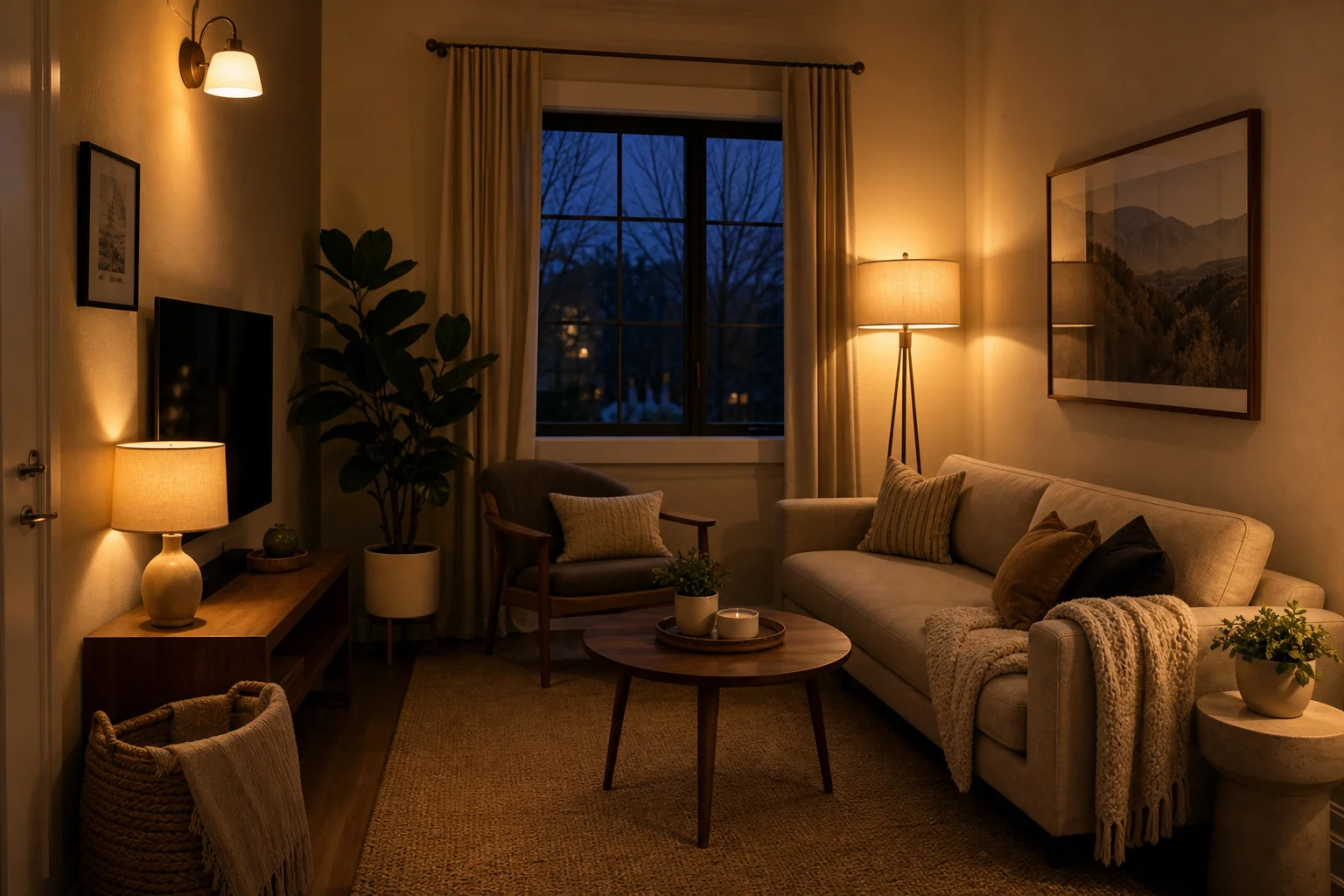
A single overhead light flattens a room and pushes every shadow into the corners — which makes a small space feel like a cave. Depth comes from layered light.
- Use at least three sources: ambient (overhead or uplight), task (reading/desk), and accent (a sconce, a small lamp).
- Brighten the corners. Dark corners shrink a room; a floor lamp in the far corner pushes the walls back.
- Go warm — around 2700K. Warm light reads cozy and expands; harsh cool light flattens.
Mirrors and lighting compound each other: a sconce beside a mirror, or a lamp reflected in one, multiplies the perceived brightness.
Trick 7 — Swap stark white for warm neutrals
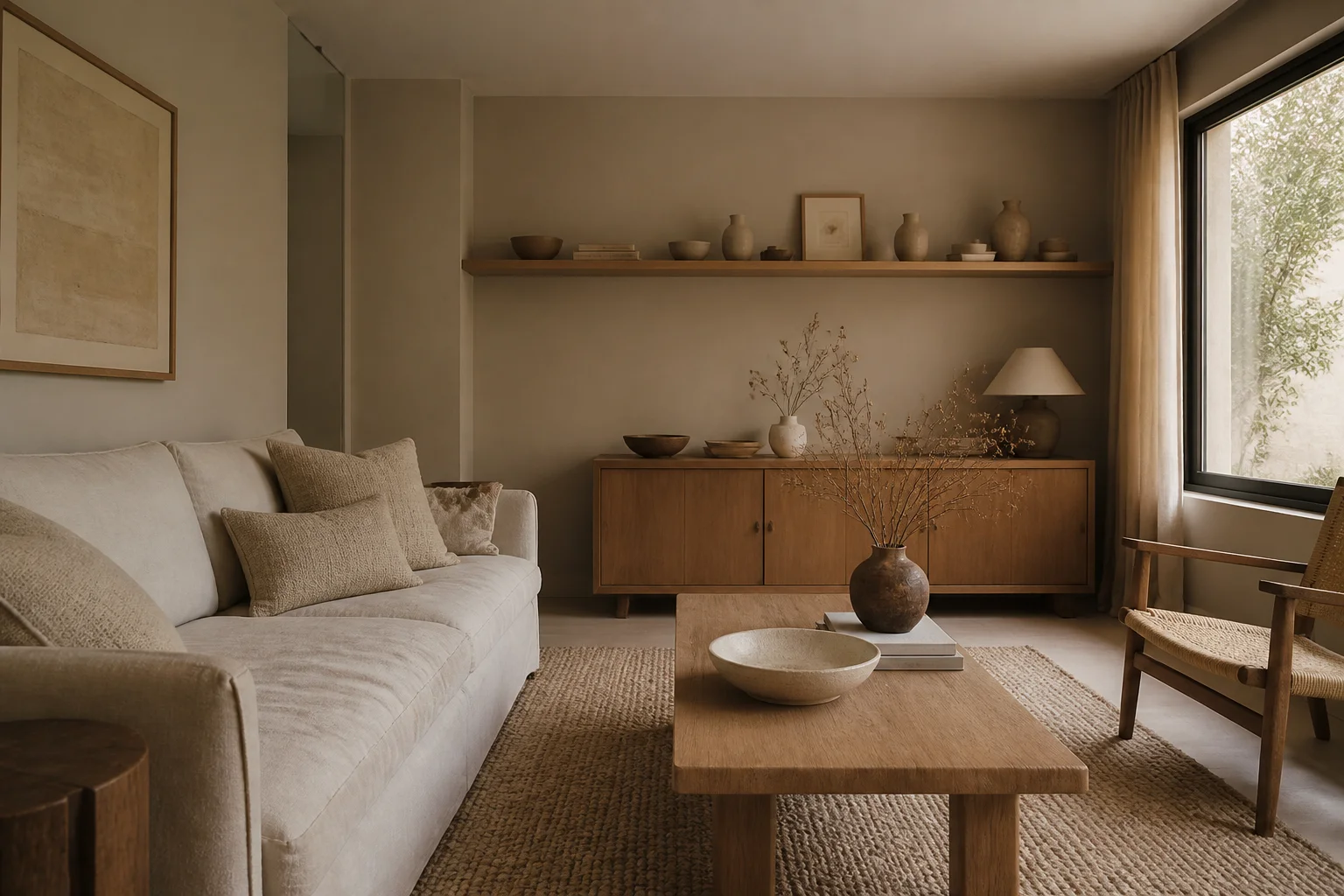
"Paint it white to make it look bigger" is the most repeated small-space advice — and in 2026 it is outdated. Pure white can feel clinical, highlights every wall imperfection, and reads cold under artificial light. The current move is warm, light neutrals that still bounce plenty of light but add depth and calm.
- Reach for greige and warm whites (think soft off-whites and warm beiges) over bright white.
- Go monochromatic. Keeping walls, trim, and large furniture in a tight tonal range blurs the boundaries of the room, so the eye doesn't stop at every edge — and the space reads larger and more cohesive.
- Add warmth through texture, not contrast: linen, oak, raw ceramics, a nubby rug. Depth without visual noise.
This is the backbone of the Warm Minimalism and Japandi looks dominating small-space design right now — light enough to feel open, warm enough to feel like home.
Small-space mistakes that backfire
- A too-small rug. The most common error — it fragments the floor and shrinks the room. Size up.
- Tiny furniture everywhere. Lots of small pieces read as clutter. One well-scaled piece is calmer and bigger-feeling.
- Pure white walls + one cool ceiling light. Clinical and flat. Warm it up and layer the light.
- Blocking the window. Heavy drapes or a tall piece in front of the glass kills your best free asset: daylight.
- Mirrors reflecting mess. A mirror only helps when it reflects light or open space — not a cluttered surface.
See it on your own room first
The hard part of any small-space plan is picturing it on your room before you spend on paint, a rug, or a new sofa. That is exactly what EasyRoomAI is for: upload one photo and see your room redesigned in space-expanding styles like Japandi, Scandinavian, Modern, and Warm Minimalism — your real layout kept, only the finishes, furniture, and light reimagined.
- Start a free redesign — anonymous previews are free and need no signup.
- Browse bedroom design ideas across 16 styles and living room ideas for small-space inspiration.
- Riding the warmer-design wave? See the 2026 trends already dating out and the rise of curved, softer forms.
Frequently asked questions
What is the single best way to make a small room look bigger? Hang a large mirror directly opposite your main window. It reflects daylight back into the room and visually doubles the depth, and it is the cheapest high-impact change you can make — a 24-inch-or-wider mirror does more than most furniture swaps.
Should I paint a small room white to make it feel bigger? Not pure white. It can feel clinical and cold and highlights wall flaws. In 2026, warm light neutrals — greige and soft off-whites — bounce nearly as much light while adding depth. A tight, monochromatic palette blurs the room's edges and reads larger.
How do I arrange furniture in a small living room? Float key pieces 12–18 inches off the wall instead of lining them up against it, keep at least 30 inches clear for walkways, and choose leggy, light-visual-weight pieces so you can see the floor underneath. Then anchor it all with a rug big enough that the front legs of each main piece rest on it.
What size rug should I use in a small room? Bigger than you think. A rug where the front legs of your sofa and chairs sit on it unifies the seating and expands the space. A small rug stranded in the middle of the floor fragments it and makes the room feel smaller.
How should I light a small space? Skip the single overhead bulb. Use at least three layered sources — ambient, task, and accent — to fill in shadows and add depth, brighten the far corners to push the walls back, and choose warm ~2700K bulbs so the room feels cozy rather than flat.
Can I make my small room look bigger without renovating? Yes — every trick here is non-structural: a mirror, higher curtains, smarter furniture placement, the right rug, layered lighting, and a warm-neutral palette. To see the combined effect before you buy anything, upload a photo to EasyRoomAI and preview your room restyled instantly.
Small rooms don't have to feel small. Reflect the light, lift the eye, open the sightlines, and quiet the clutter — and a 450-square-foot studio can feel like somewhere you actually want to spend time.
Ready to Transform Your Space?
Try AI room redesign for free - no credit card required.
Start Designing FreeRelated reading
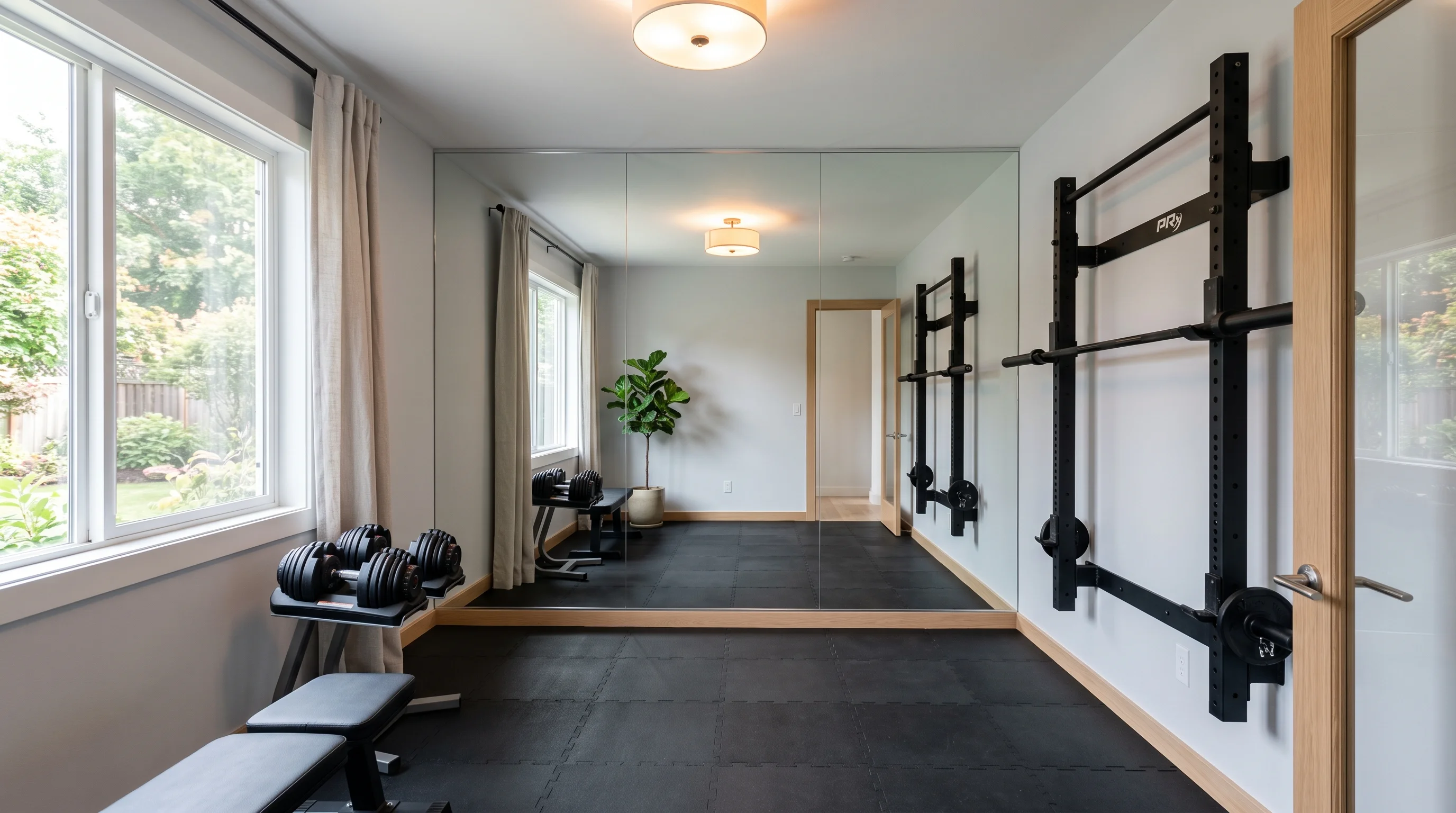
Small Home Gym Ideas 2026: How to Fit a Serious Gym in Under 100 Sq Ft
Discover clever small home gym layout ideas for 50 to 100 sq ft. Learn how to combine folding wall-mounted racks, selectorized dumbbells, vertical storage, and dual-purpose office zoning to build a studio-grade gym without sacrificing square footage.
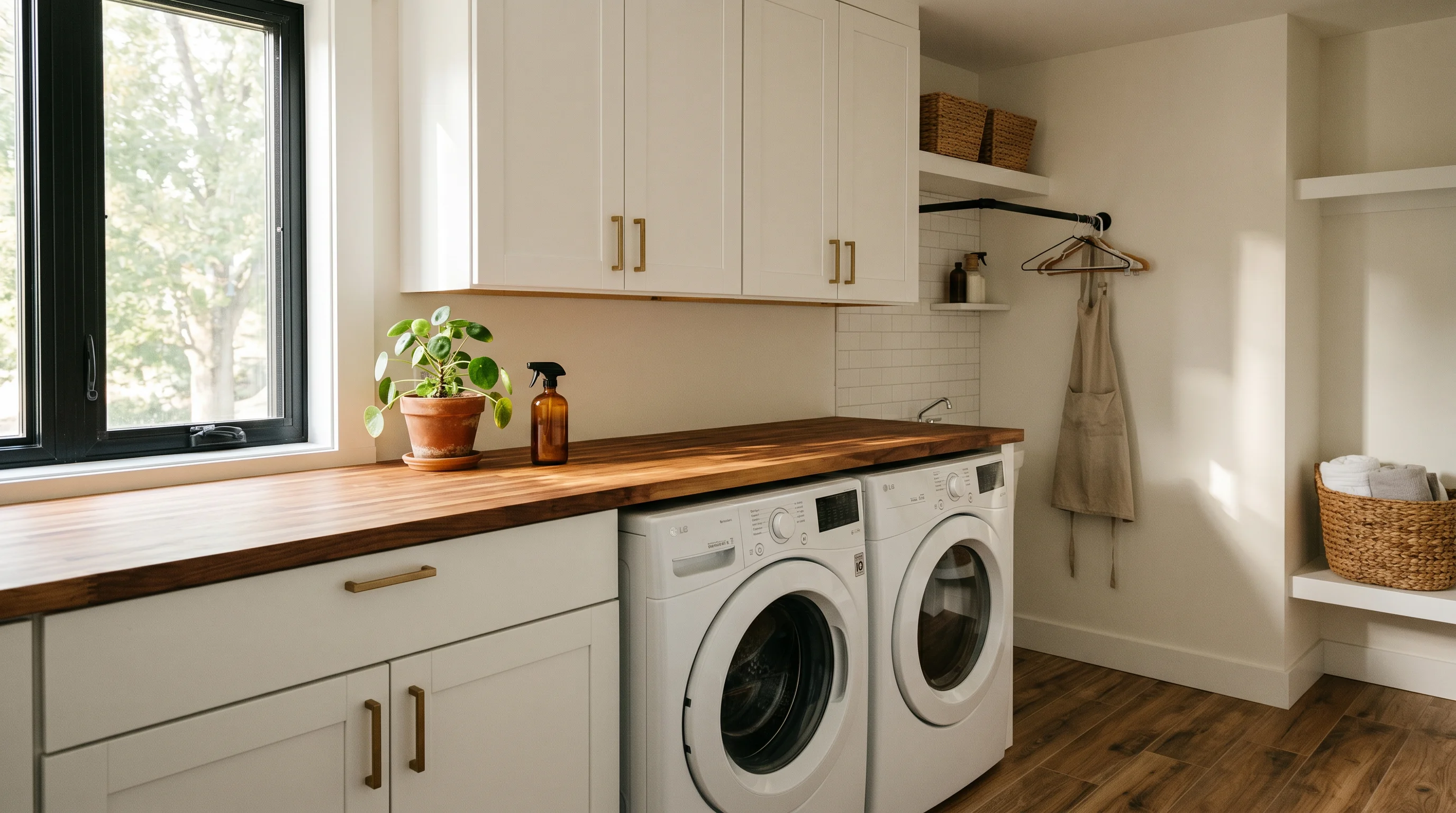
24 Laundry Room Ideas That Make This Hardworking Space Worth Designing (2026)
The laundry room is no longer a room you hide. Here are 24 laundry room ideas for 2026 — smart storage, small closet conversions, wallpaper that works, mudroom combos, and the finishes that turn a utility room into something you actually enjoy walking into.
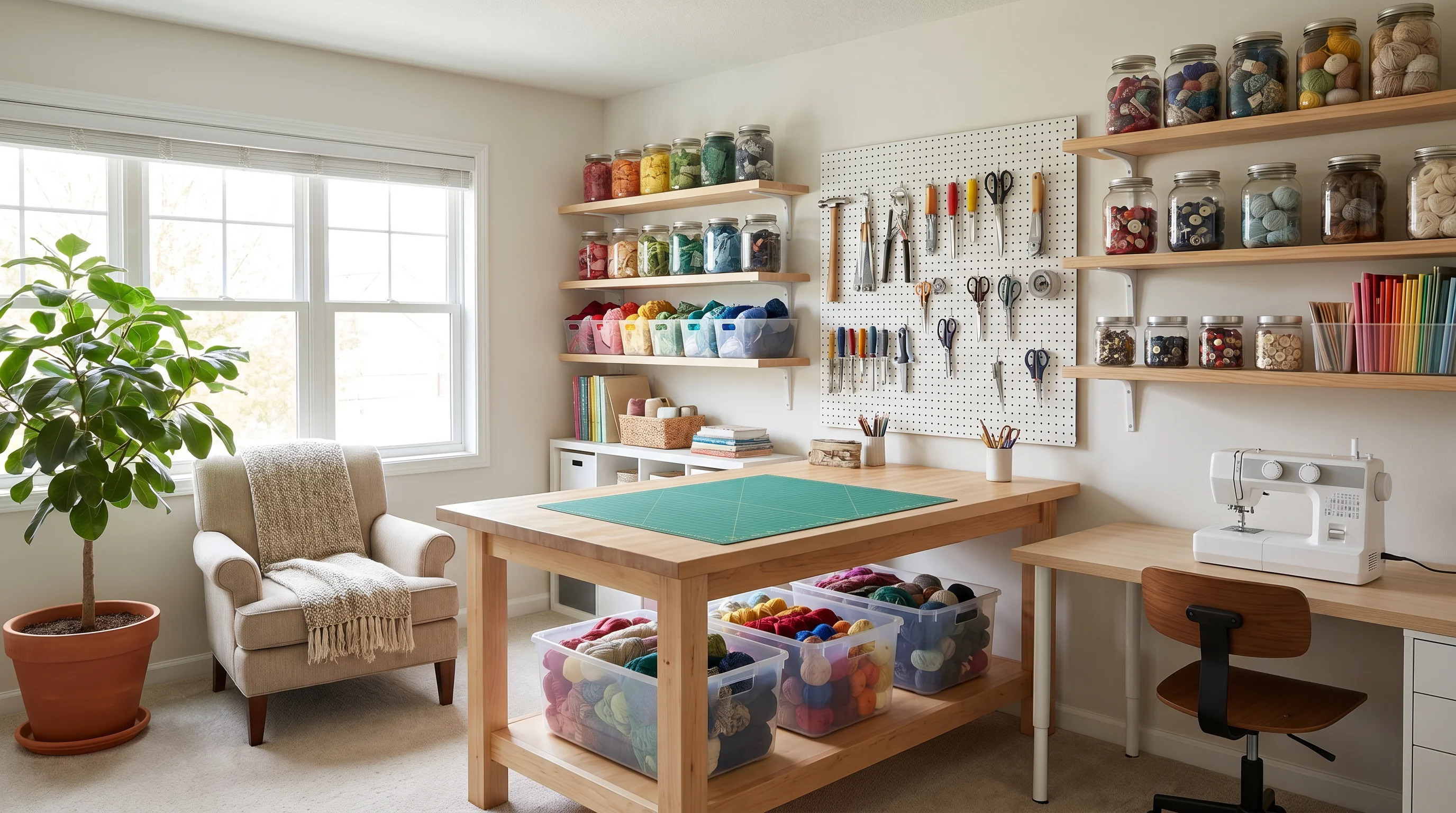
24 Craft Room & Hobby Room Ideas for a Tidy Creative Space (2026)
A good craft room turns 'someday' supplies into an actual practice. Here are 24 craft room and hobby room ideas for 2026 — workflow zones, visible vs hidden storage, small closet-to-craftroom nooks, craft-plus-office and guest combos, color-true task lighting, and pegboard-and-cart systems.