27 Walk-In Closet Ideas for Smart, Stylish Storage (2026)
A walk-in closet is one of the few spaces buyers refuse to shrink. Here are 27 walk-in closet ideas for 2026 — layouts from single-wall to island, spare-room conversions, open vs closed storage, lighting and mirrors, boutique-style finishes, and closet islands and seating.
 Easy Room AI Team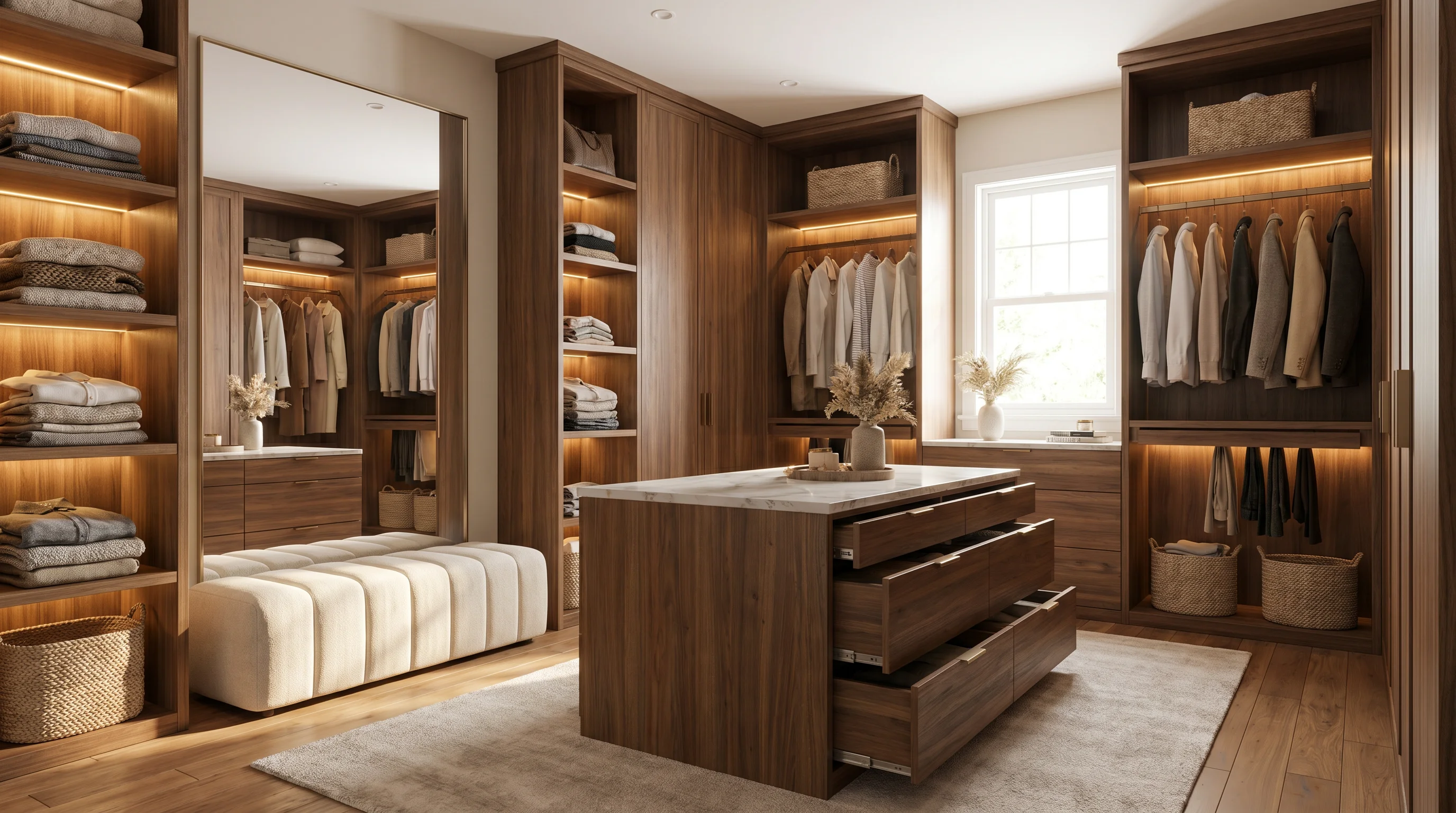
Homes are getting smaller, but closets aren't. As buyers trade square footage for affordability, the National Association of Home Builders finds they're willing to give up space in the home office and dining room — but "they're not willing to give up square footage in the kitchen and the closets." More than 80% of buyers want spaces that help them stay organized. And the closet itself is going boutique: the Closets State of the Industry 2026 report found accent lighting requested in nearly half of all projects, with glass doors and valet rods turning walk-ins into a "boutique retail experience within the home."
Here are 27 walk-in closet ideas for 2026 — from picking the right layout to the finishes that make a closet feel like a dressing room instead of a storage unit.
Pick the right layout
1. Single-wall for narrow spaces. One run of storage along a wall, with walking space beside it — works in closets as narrow as 4–5 feet and is the simplest system to install.
2. L-shape for medium rooms. Storage along two adjacent walls is the sweet spot for medium rooms, keeping a corner usable for a mirror or bench.
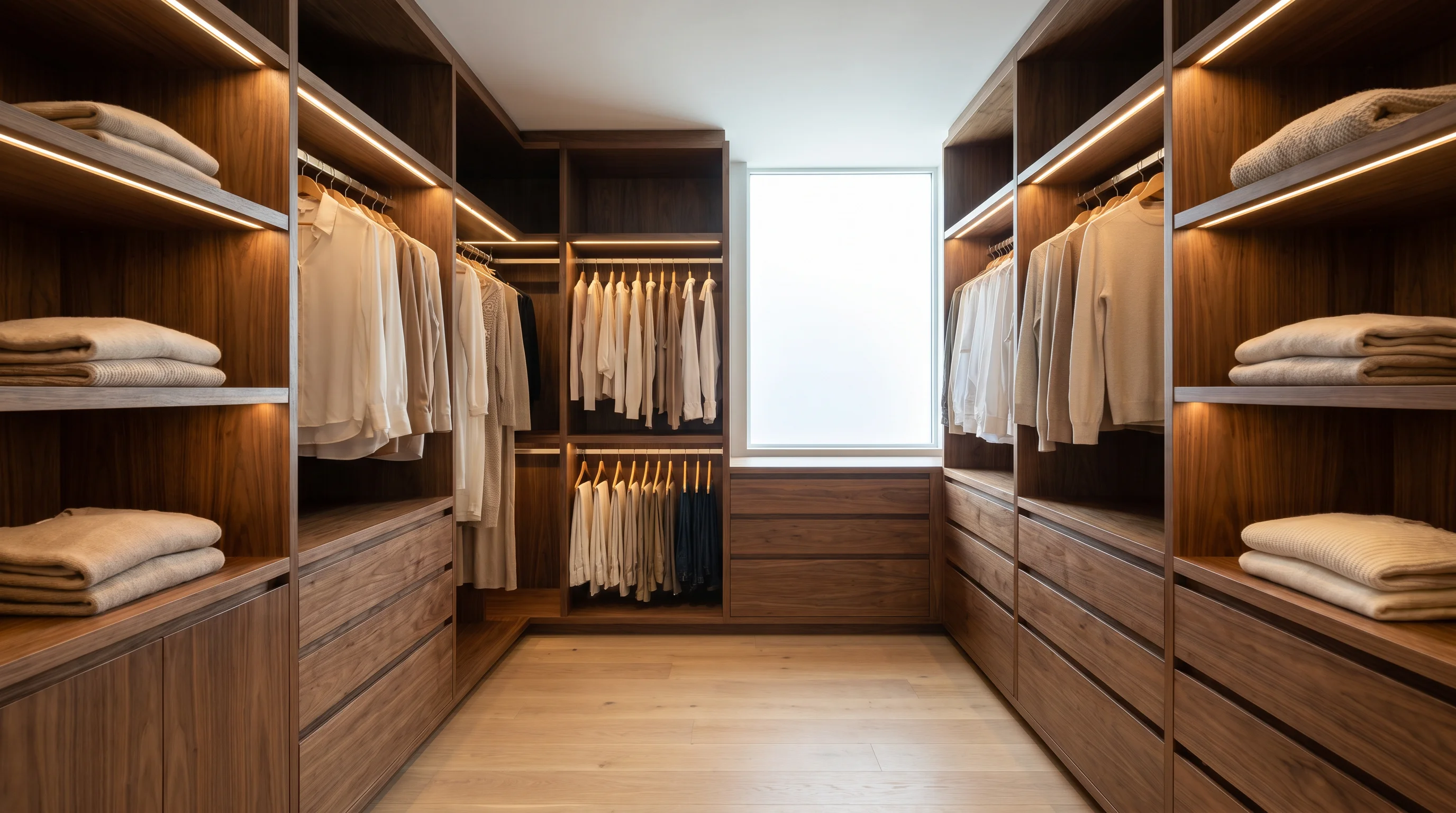
3. U-shape for maximum capacity. Storage wrapping three walls extracts the most from a room. You'll want roughly 7 feet of width so opposing sections don't collide.
4. Island layout for the dream closet. A freestanding island in the center of a U or double-wall plan — realistic once you pass roughly 10 feet in both directions. It anchors the room and adds drawer storage.
5. Mix your storage types within any layout. Double-hang rods for shirts, long-hang for dresses and coats, shelves for knits (they stretch on hangers), and drawers for everything else.
Small walk-ins and spare-room conversions
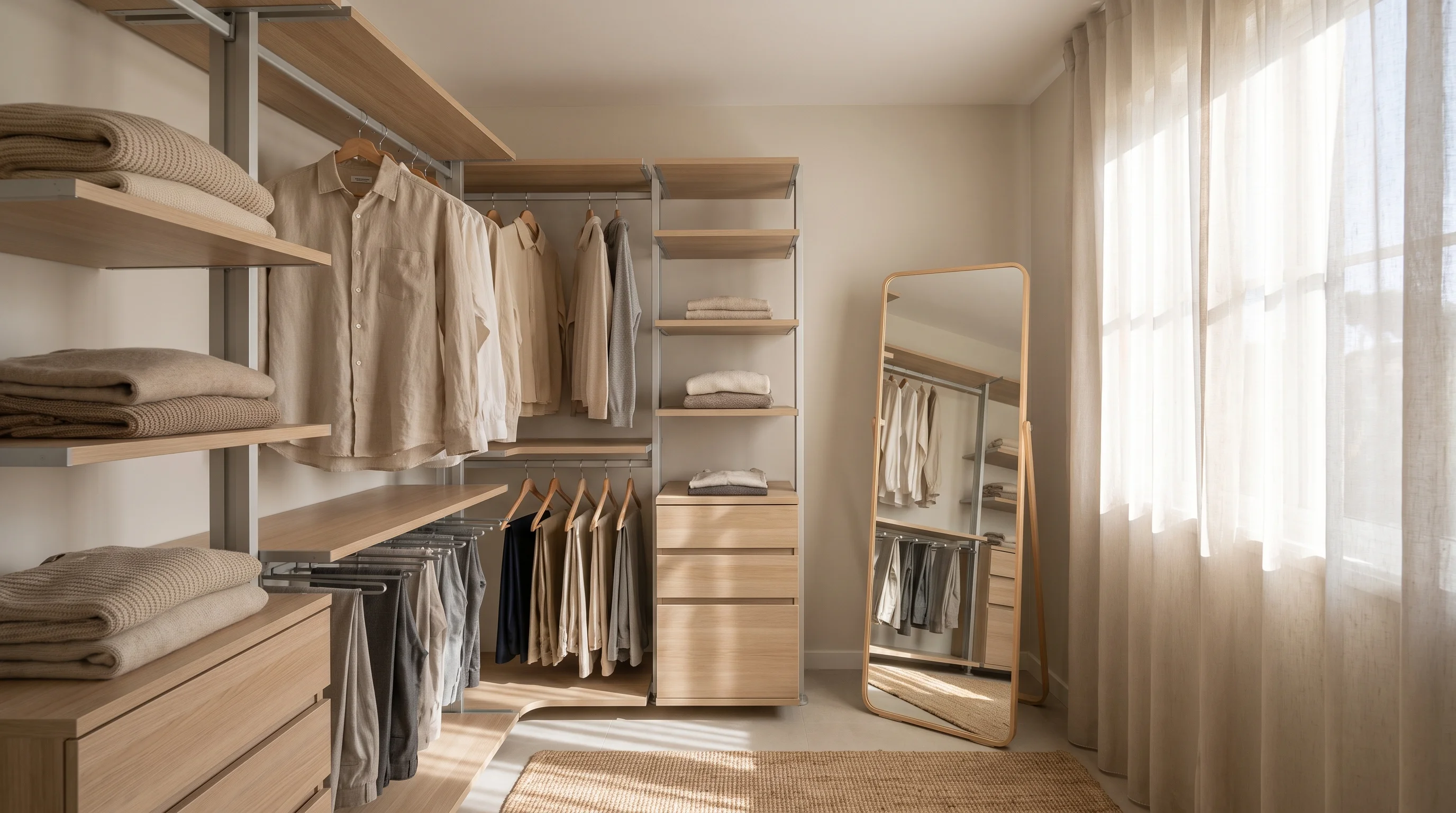
6. Convert a small spare bedroom. A 6×8 or 8×10 room that's too small for a comfortable guest room makes a genuinely luxurious closet — line two or three walls with systems and keep the window for daylight. (If it still needs to sleep guests occasionally, see our guest room ideas for dual-use setups.)
7. Steal awkward space. Sloped-ceiling rooms, wide landings, and the dead zone behind a bedroom door can all hold a compact walk-in with custom or semi-custom systems.
8. Go floor-to-ceiling in tight rooms. Run storage all the way up and keep a folding step stool inside; the top shelf becomes off-season and special-occasion storage.
9. Use a pocket door instead of a swing door. A pocket door reclaims the 8–10 square feet of floor lost to door swing — meaningful in a small walk-in.
10. Keep the walkway honest. Leave at least 24 inches of clear walking path — a walk-in you have to shuffle through sideways will never stay tidy.
Redesign Your Closet with AI
Upload a photo of your space to test 16 curated design styles instantly with AI — 100% free.
Supports JPG, PNG, WebP up to 10MB
Open shelving vs closed cabinetry
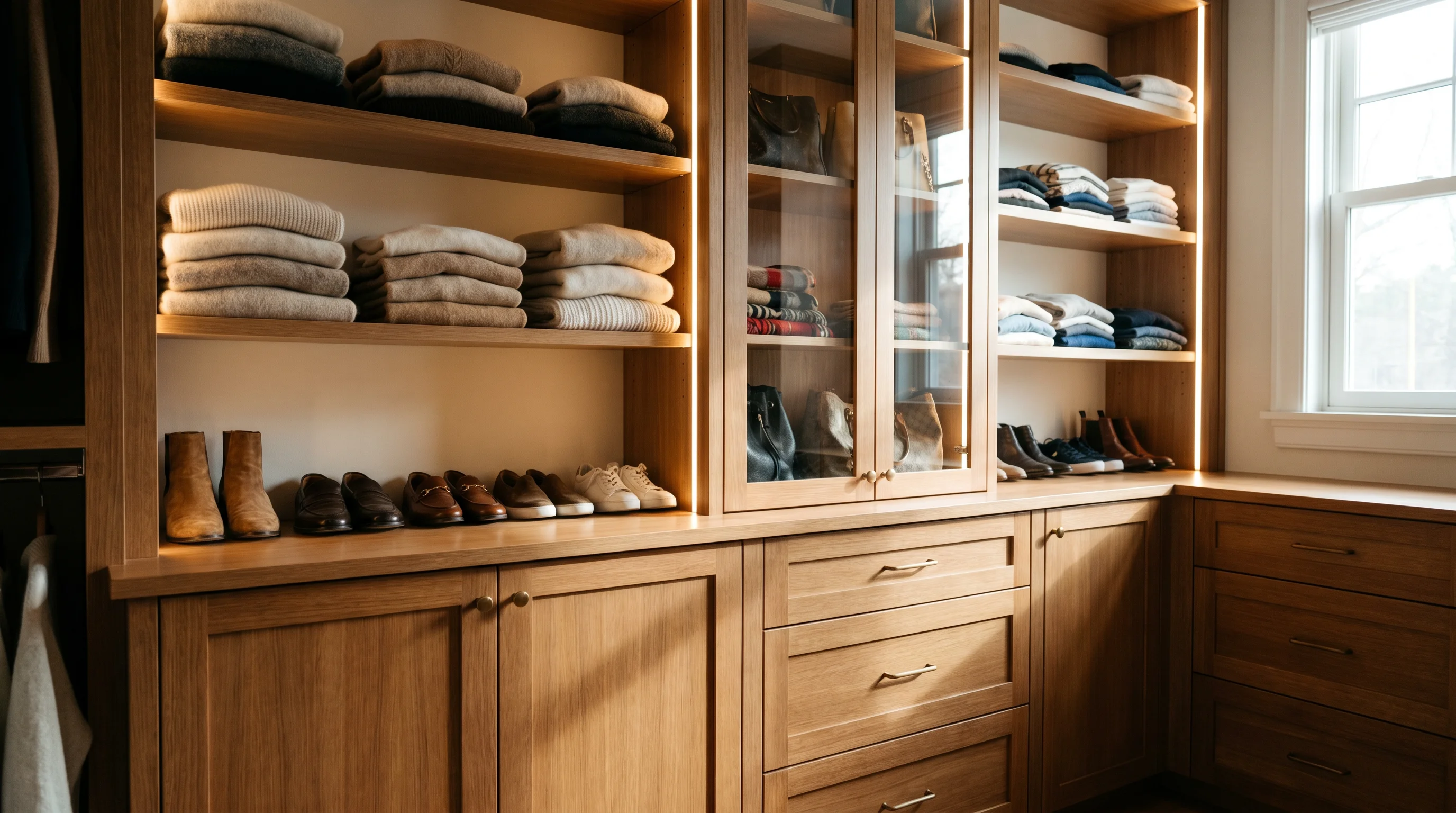
11. Open shelving and rods for the everyday wardrobe. Everything is visible and reachable — you dress faster, and a well-folded stack of knits genuinely looks good. The cost: dust, and zero tolerance for mess.
12. Closed cabinetry for a calm, finished look. Doors and drawers hide chaos, protect clothes from dust and sunlight, and read expensive. The cost: more money, and you can't see what you own at a glance.
13. Glass-front cabinets for display-worthy pieces. Requested in roughly a third of custom closet projects — they showcase bags and special items while keeping dust off. The boutique move of 2026.
14. Pull-out bins or hamper inserts for laundry. A built-in laundry bin means dirty clothes never hit the floor. Tilt-out or pull-out bins fit inside cabinet bases.
15. A dedicated shoe wall or shelf display. Angled shoe shelves or cubbies — either open for daily pairs or glass-fronted for a collection — add visual interest and keep pairs paired.
Lighting and mirrors
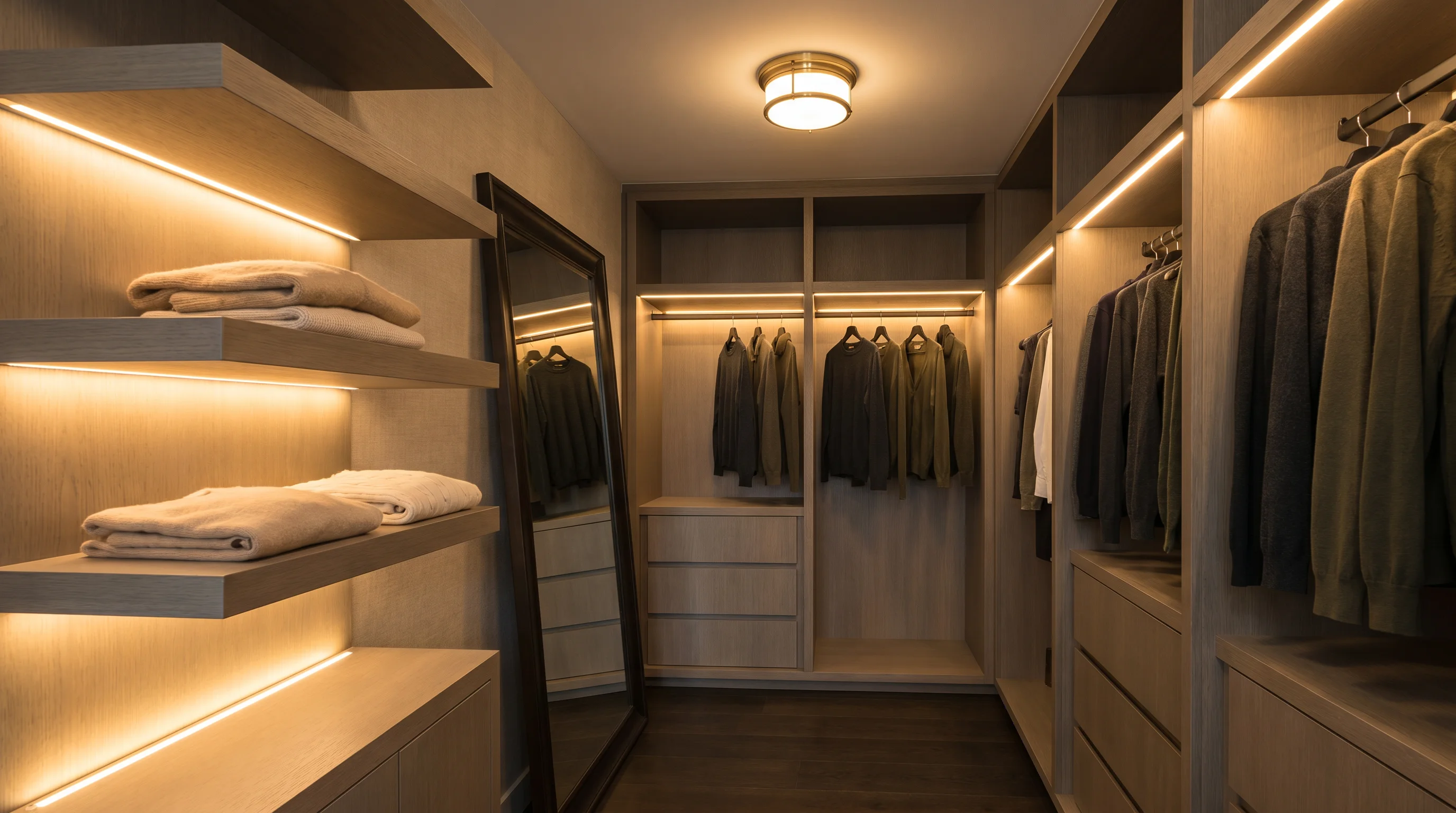
16. LED strips under shelves and inside hanging sections. Color-matching stops being guesswork — navy versus black, solved. Accent lighting appeared in 49.5% of custom closet projects in the 2026 industry report.
17. High-CRI, warm-neutral bulbs. Around 3000–3500K so clothes read true without feeling clinical. Skip cool-white fluorescents.
18. One statement overhead fixture. A small chandelier, pendant, or flush-mount lifts the room from utility to dressing room in one piece.
19. A full-length mirror (or mirrored cabinet door). It doubles as outfit check and light amplifier, visually expanding a small walk-in and making it feel twice the size.
20. Motion-sensor switches. The closet greets you lit, hands full or not — one of those small upgrades that makes the room feel truly custom.
Boutique-style finishes for 2026
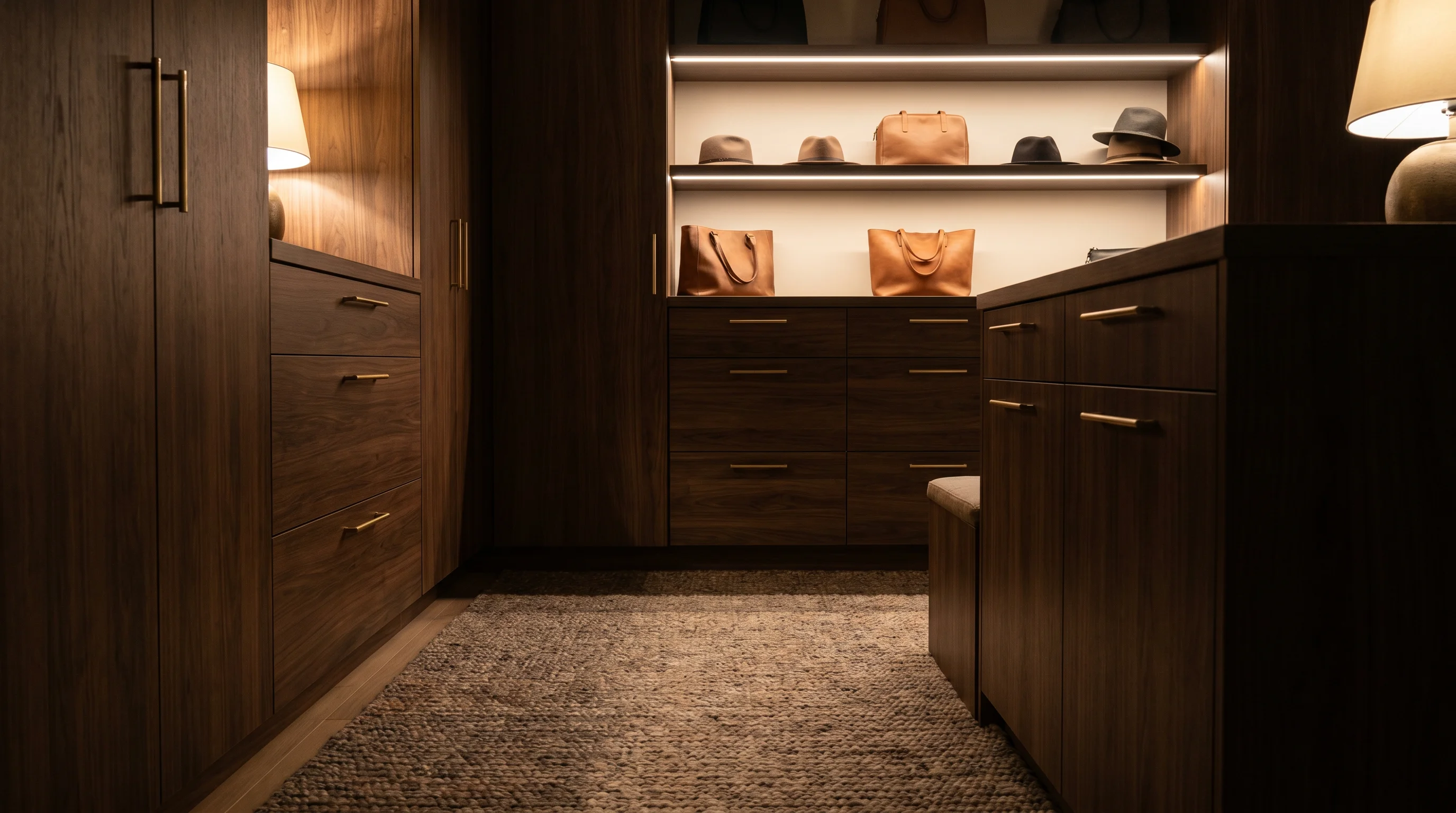
21. Warm wood-grain finishes over flat white. Walnut, oak, and wood-look melamine are the biggest material shift — the all-white utility closet is fading.
22. A moody, deep color palette. Greens, charcoals, and rich neutrals make a closet feel intentional. Pair them with warm lighting so they don't go somber.
23. Texture — rug, upholstery, linen-look panels. A soft area rug, an upholstered bench, and linen-look cabinet faces give the tactile, layered feel of retail done well.
24. Brass or matte-black hardware, valet rods, and jewelry inserts. The hardware sells the boutique story; jewelry trays and soft-close hardware are now among the most-added upgrades.
Islands and seating
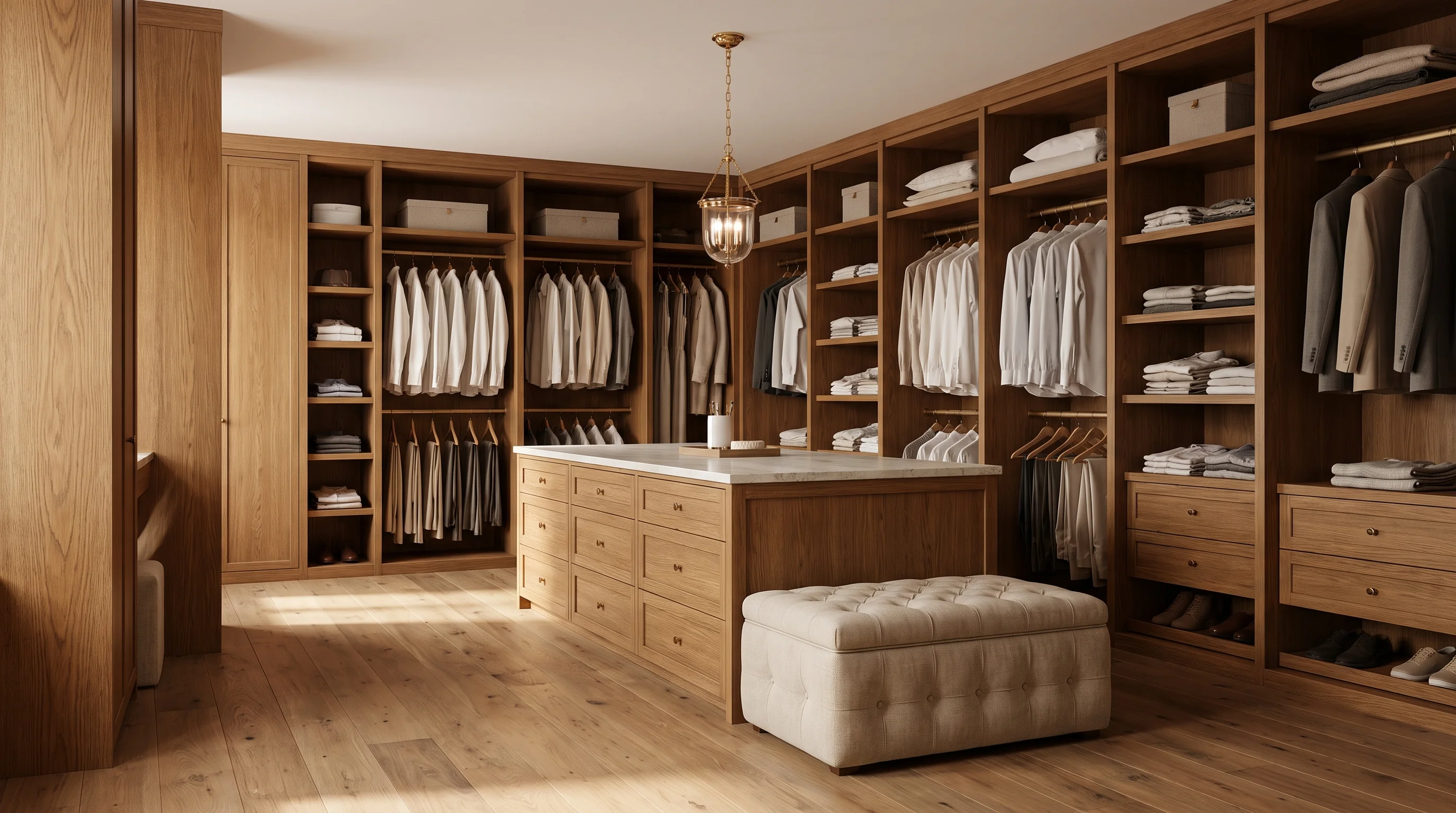
25. A center island with drawers and a countertop. Storage for folded clothes and jewelry, a surface for laying out outfits and packing suitcases, and a natural anchor for a statement pendant. Keep at least 3 feet of clearance on every side.
26. A narrow console or rolling cart if you don't have island clearance. A console against one wall or a rolling cart gives you the "lay it out" surface without the 3-foot clearance demands.
27. An upholstered bench or storage ottoman. Makes putting on shoes civilized and instantly reads "dressing room." Choose one with storage inside for off-season shoes.
Preview your walk-in closet before you build it
Closet systems are a commit-once decision — layouts, finishes, and colors are expensive to change after installation. Upload a photo of your spare room or existing closet to EasyRoomAI and preview it as a walk-in: test warm wood versus painted finishes, open versus closed storage walls, and light versus moody palettes before you order a single cabinet.
- Try a free room redesign — anonymous previews are free, no signup needed.
- Planning more hardworking rooms? See our specialty room ideas roundup and mudroom ideas, or browse bedroom design ideas.
Frequently asked questions
How small can a walk-in closet be? About 4 feet wide by 4 feet deep is the practical minimum for a single-wall walk-in — one run of storage plus a 24-inch walking path. An L-shape needs around 5–6 feet of width, a U-shape roughly 7 feet so opposing sections don't collide, and an island layout only works once the room passes about 10 feet in both directions.
Is converting a spare bedroom into a walk-in closet a good idea? If the room is too small to be a comfortable guest room, often yes — buyers consistently rank closet and storage space among the things they won't give up, and NAHB research shows organization features rank high on buyer wish lists. Keep the conversion reversible (freestanding or demountable systems rather than removing the closet or door) so the room can still count as a bedroom at resale.
Should a walk-in closet have open or closed storage? Use both. Open rods and shelves for the everyday wardrobe make dressing faster and keep everything visible; closed drawers handle smalls and visual clutter; and a glass-front cabinet or two protects display-worthy pieces from dust while keeping the boutique look. Fully open systems demand tidiness and collect dust; fully closed ones cost more and hide what you own.
What is the best lighting for a walk-in closet? Layered LED lighting: strips under shelves and inside hanging sections so you can judge colors accurately, plus one overhead fixture for general light. Choose high-CRI bulbs in a warm-neutral temperature (around 3000–3500K), add a full-length mirror to bounce light around, and put it all on a motion sensor. Accent lighting is the single most-requested closet upgrade for good reason.
Does a walk-in closet add value to a home? A well-organized walk-in is consistently cited as a feature that elevates a home at showings, and buyer surveys show storage is one of the last things buyers will sacrifice — more than 80% want organization-focused spaces. It won't add value like a kitchen remodel, but between two similar homes, the one with a finished, well-lit walk-in makes the stronger impression.
A great walk-in closet is a system, not a splurge: the right layout for your width, a mix of open and closed storage, lighting that lets you see what you own, and one or two boutique touches that make it yours. Preview the whole thing in your own spare room before you commit to cabinetry.
Ready to Transform Your Space?
Try AI room redesign for free - no credit card required.
Start Designing FreeRelated reading
Plum Bedroom Ideas: 12 Ways to Use 2026's Most Cocooning Color
Pinterest reports Plum Noir searches up 220% with saves up 335%. Deep plum is 2026's answer to the all-white bedroom — cocooning, sophisticated, and surprisingly easy to live with. Here are 12 ways to use it.
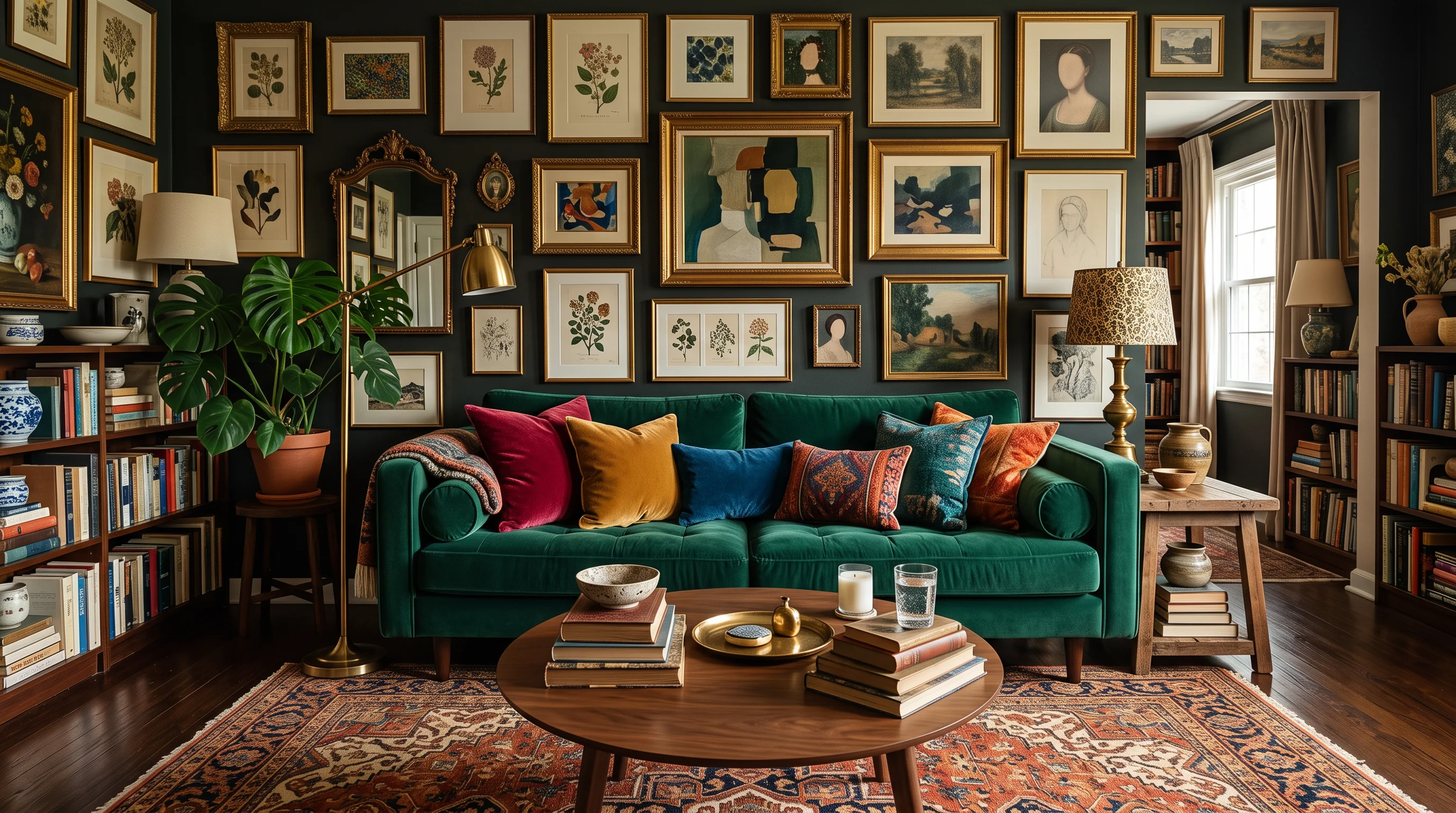
Maximalist Interior Design: The 2026 Guide to Bold, Curated, Personal Spaces
Minimalism had its decade. Pinterest reports eclectic apartment searches up 630% and vintage maximalism up 260%. Here is how to do maximalist interiors with intention — bold color, layered pattern, personal story, zero chaos.
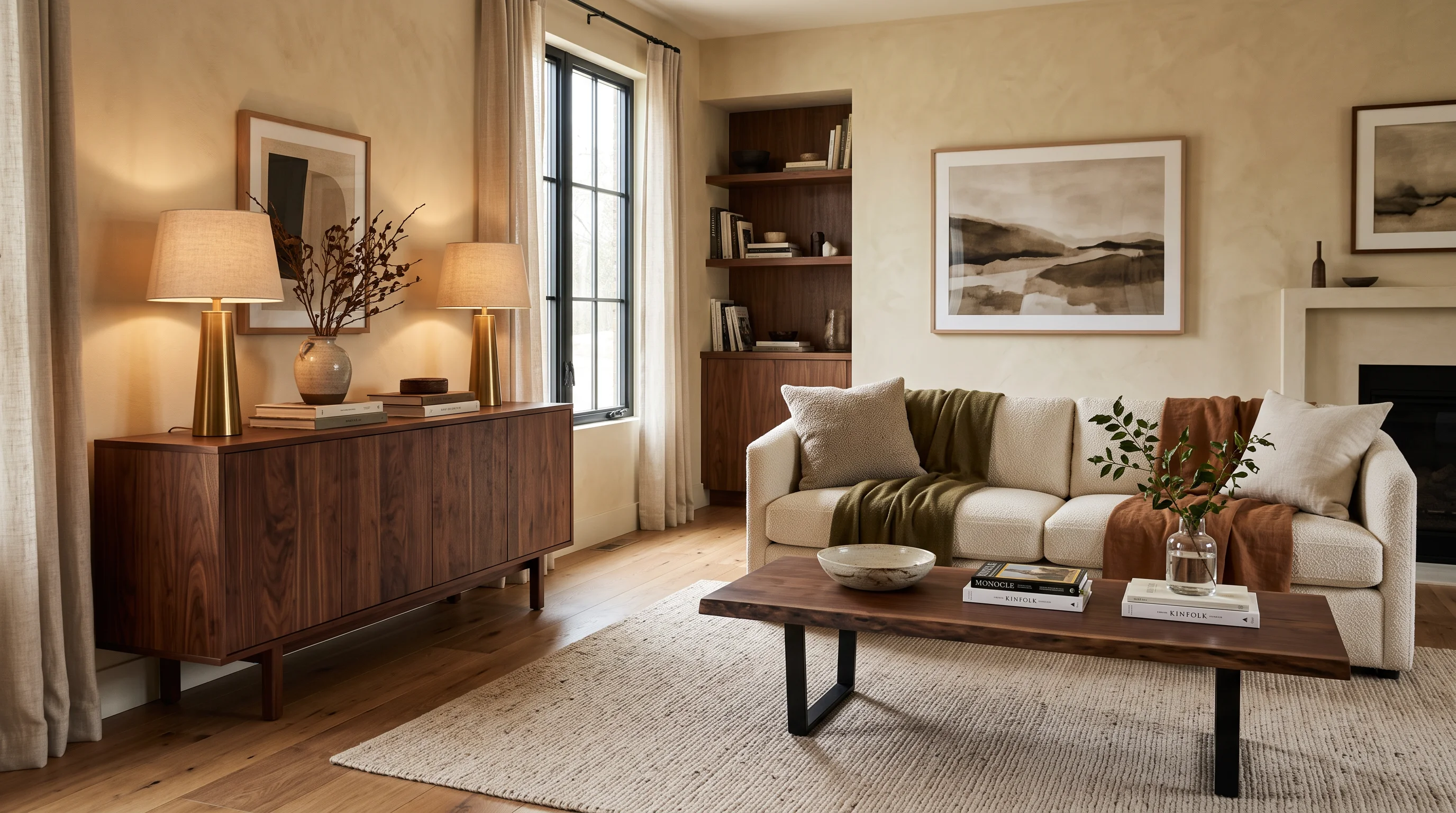
Dark Wood Interior Design: Why Walnut and Rich Tones Are Replacing Pale Oak in 2026
After fifteen years of pale Scandinavian oak, dark wood is back. Houzz reports searches up 187%. Here is how to bring walnut, mahogany, and rich timber into every room without making your home feel heavy.