Charcoal Living Room: 23 Warm, Dramatic Ideas for 2026
Charcoal is how a living room goes dramatic without going cold — if you get the undertone, lighting, and pairings right. Here are 23 charcoal living room ideas for 2026: charcoal vs black vs slate, keeping it warm, accent wall vs full drench, the best pairings, small-room strategies, and a before-and-after.
 Easy Room AI Team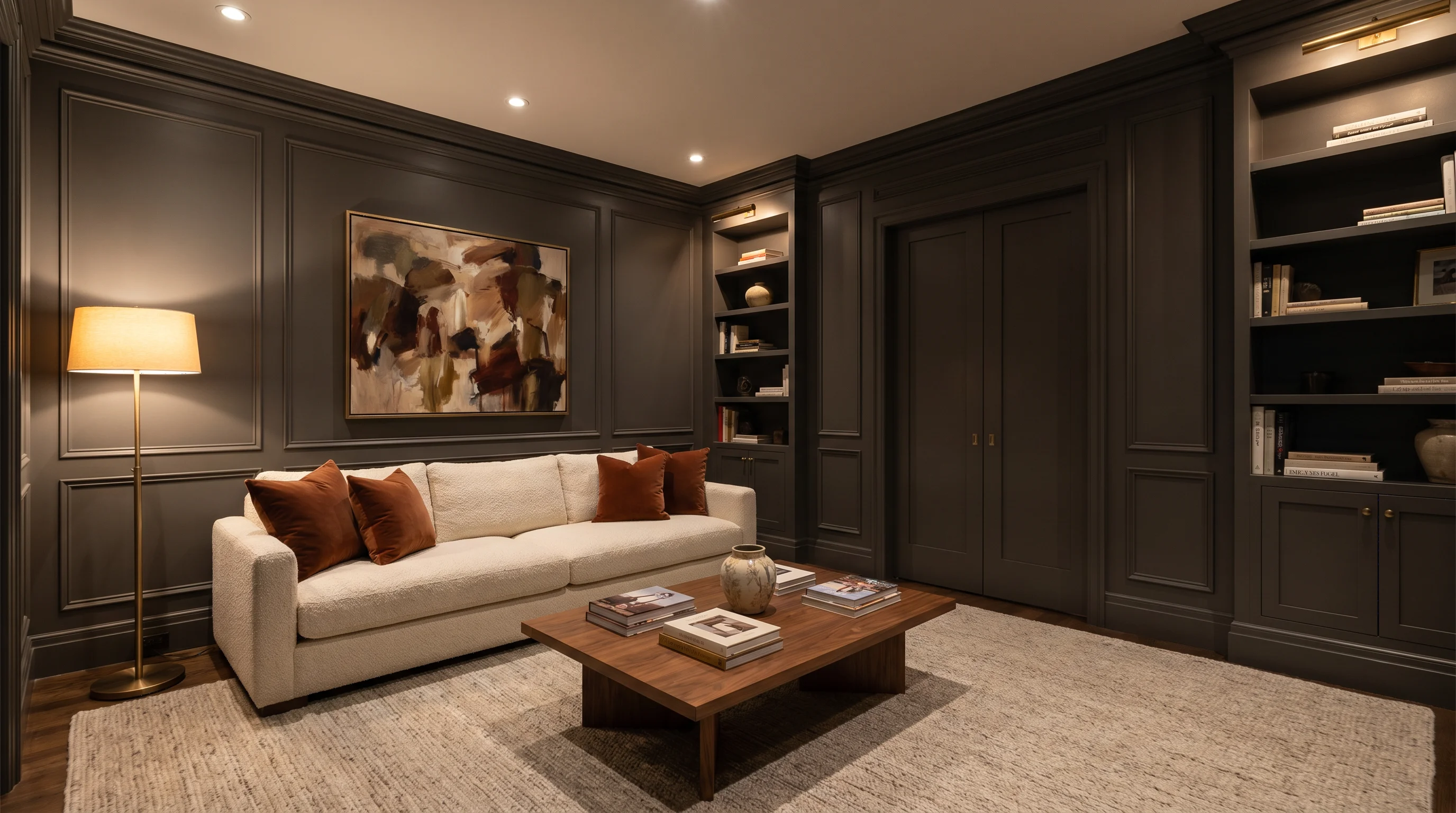
Gray was supposed to be over — but charcoal never got the memo, because charcoal was never really "gray." While the flat, blue-toned grays of the 2010s fade from favor, deep warm charcoals are having their best year yet. The clearest signal: Benjamin Moore's 2026 Color of the Year, Silhouette AF-655, a shade that "weaves luxurious burnt umber with delicate notes of charcoal." That's the 2026 formula in one color: dark, dramatic, and unmistakably warm.
This guide covers 23 charcoal living room ideas — how to pick a charcoal that won't turn cold on your walls, whether to accent or drench, what to pair it with, and how to make it work even in a small or dim room.
In this guide you will learn:
- The difference between charcoal, black, and slate (and why it matters)
- How to keep a charcoal room warm instead of cold
- Accent wall vs full color-drench
- The pairings that make charcoal sing — rust, brass, cream, wood
- Small and low-light room strategies
- What actually changes in a before-and-after
1. Charcoal vs black vs slate
The three "dark neutral" labels get used interchangeably, but they behave very differently on a wall:
- Charcoal is a deep gray with visible depth — dark enough for drama, light enough to still read as a color. Warm charcoals (like Benjamin Moore Kendall Charcoal) carry brown or taupe undertones; that warmth is what makes a living room feel enveloping rather than stark. Light reflectance (LRV) typically sits in the 8–15 range.
- Near-black (think Sherwin-Williams Iron Ore, LRV around 6) reads as black in most light. Stunning on cabinets and exteriors, but in a full living room it's a high-commitment, maximum-drama move that demands a resolved lighting plan.
- Slate leans blue-gray — cooler and moodier, at home in crisp modern schemes but the easiest of the three to turn cold in north light.
For a first dark living room, a warm charcoal is the forgiving choice: designers comparing the two consistently recommend charcoal over near-black for full rooms because it delivers the drama while staying liveable across varied lighting.
The takeaway: charcoal gives you the drama of a dark room while still reading as a color — pick a warm, brown-leaning charcoal for a full living room and save near-black for accents and cabinetry.
2. Keeping charcoal warm, not cold
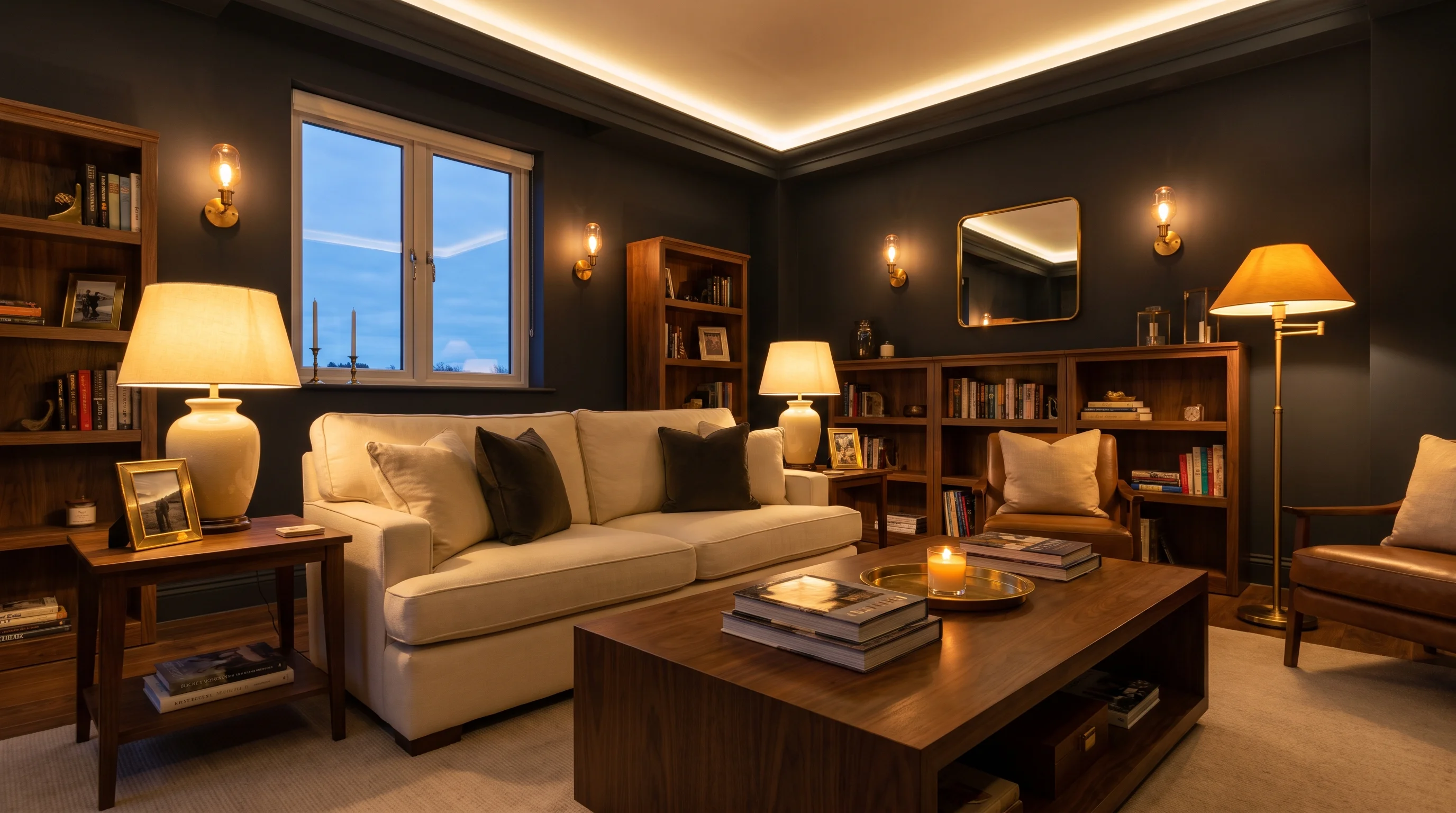
The number-one fear about dark walls — "won't it feel like a cave?" — is really a question about warmth, and warmth comes from three controllable things:
- Undertone: choose a charcoal with brown, taupe, or even green undertones rather than blue. The 2026 direction is explicitly warm charcoal replacing blue-toned gray. Always test a large sample through a full day — undertones reveal themselves at dusk.
- Lighting: dark walls absorb light, so layer it — a floor lamp, two table lamps, and sconces or picture lights, all in warm bulbs (2700K). Charcoal at night, well lit, produces the jewel-box glow people fall in love with.
- Warm accents everywhere the eye lands: brass hardware and lamp bases, warm wood furniture, cream textiles, a rust throw. Cool chrome and stark white against charcoal is how rooms drift somber.
The takeaway: warmth is a choice made three times — a brown-leaning undertone, layered 2700K lighting, and warm materials — get all three right and a charcoal room feels like a hug, not a cave.
Redesign Your Living Room with AI
Upload a photo of your space to test 16 curated design styles instantly with AI — 100% free.
Supports JPG, PNG, WebP up to 10MB
3. Charcoal accent wall vs full drench
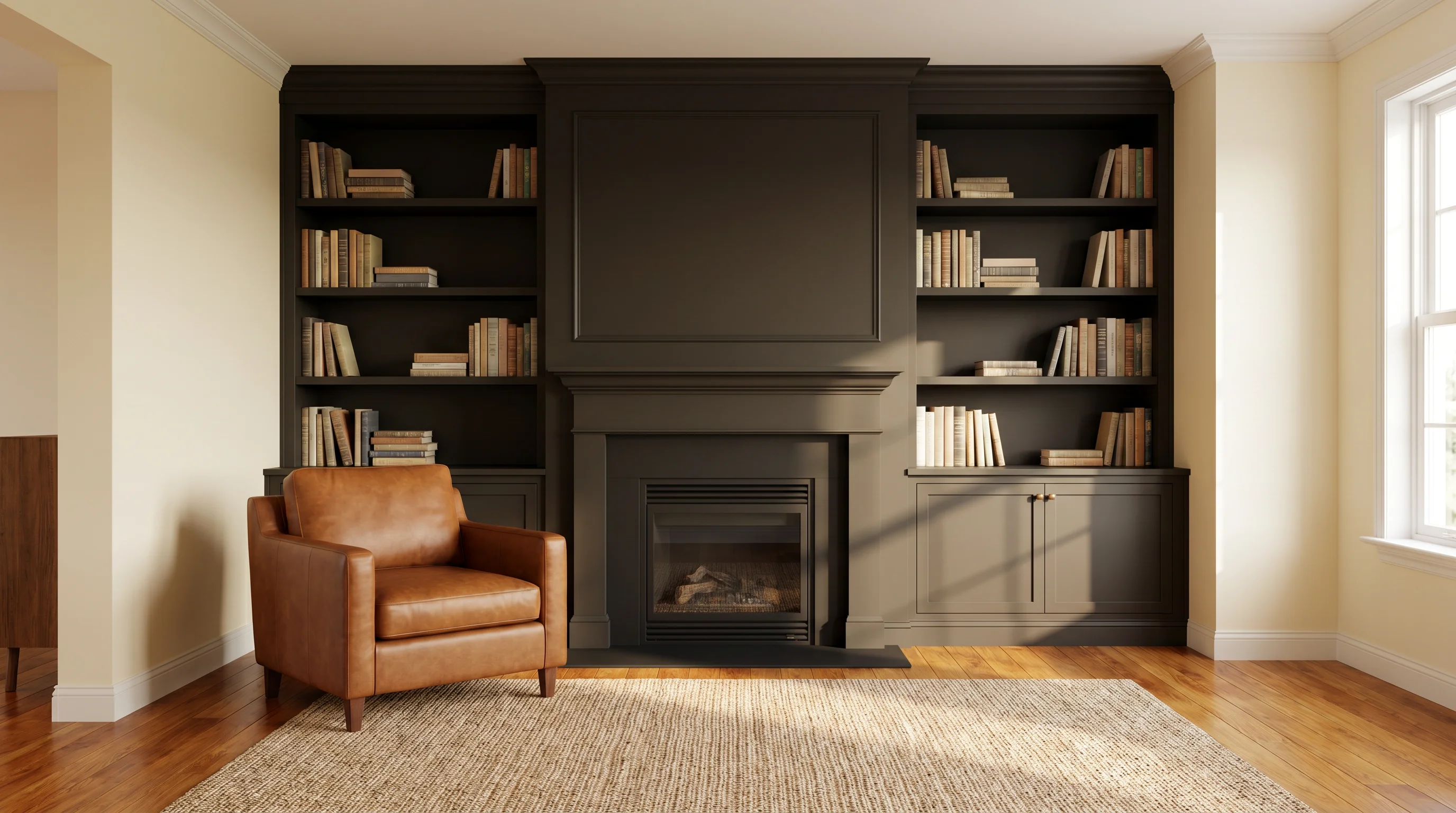
How much charcoal is the room-defining decision:
- The accent wall — usually the fireplace or TV wall — adds instant depth and anchors the room while the other walls stay light. It's the low-commitment entry, and painting built-ins or a fireplace surround charcoal delivers a similar hit with even less square footage.
- The full drench — walls, trim, ceiling, even radiators in one deep charcoal — is the confident 2026 move. Counterintuitively, drenching can make a room feel bigger than an accent wall, because unbroken color blurs the room's edges; contrast is what chops space up. Our color drenching guide walks through the technique.
- The middle path: charcoal to the picture rail with a warm white ceiling, or charcoal wainscoting under cream walls — classic ways to get depth while keeping light overhead.
The takeaway: an accent wall dips a toe and a drench commits — but if you want the enveloping, expensive look charcoal is famous for, drenching the whole envelope usually beats one lonely dark wall.
4. The pairings: rust, brass, cream, and wood
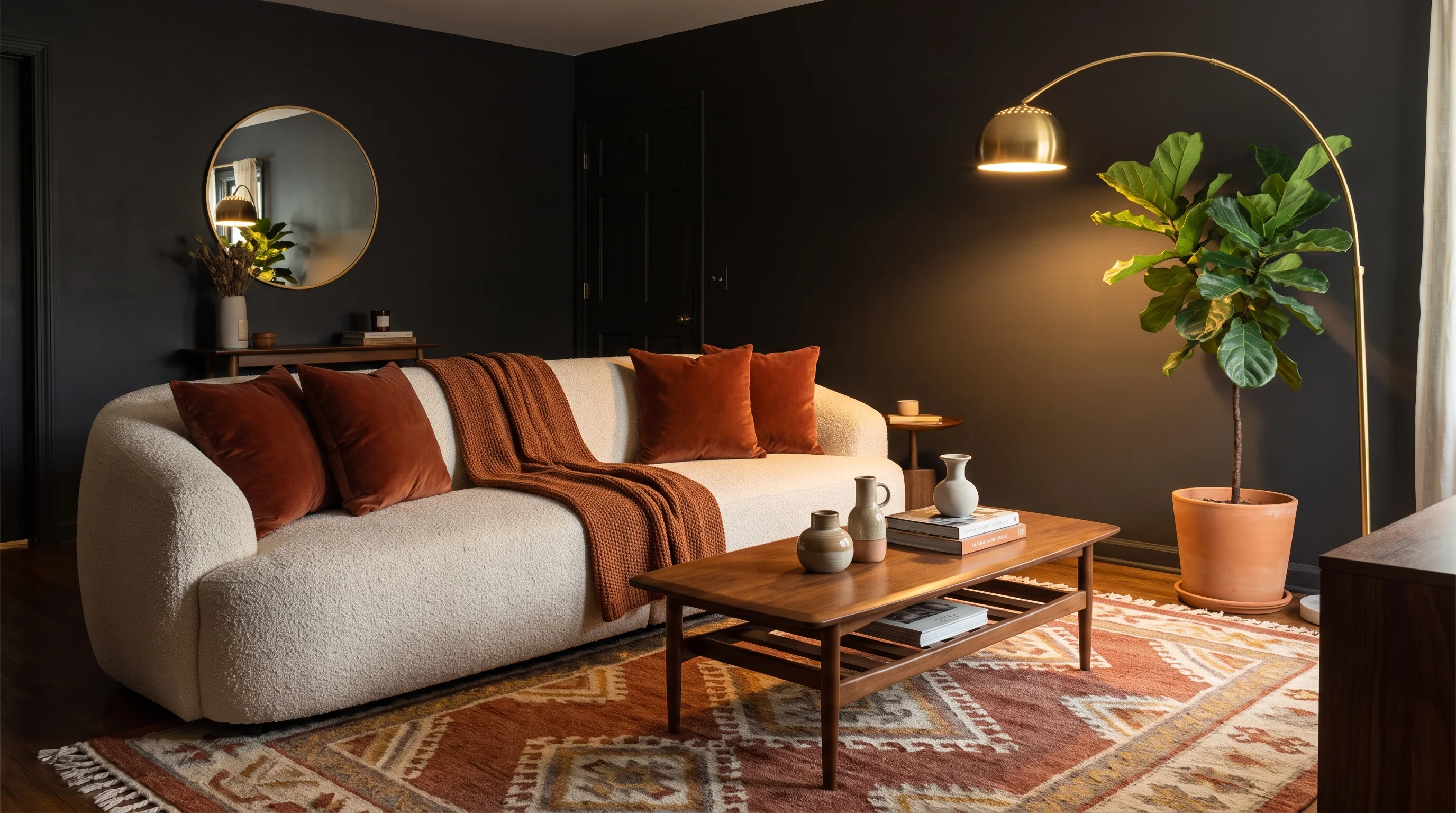
Charcoal is the ultimate backdrop color — nearly everything looks more expensive against it. The pairings doing the heavy lifting in 2026:
- Rust and terracotta: the signature combination of the warm-color era — earthy oranges glow against deep gray. One rust armchair or a terracotta-toned rug is enough. (More earth-tone pairing ideas in our terracotta living room guide.)
- Brass and aged gold: lamps, hardware, a mirror frame — warm metallics read like jewelry on charcoal.
- Cream and oatmeal: a lighter sofa against dark walls is the highest-contrast, most forgiving arrangement — boucle and linen textures keep it soft.
- Warm wood: walnut, oak, and teak keep the room organic; a wall of wood shelving against charcoal is a designer standby.
- Green, the wildcard: olive velvet or a large plant — green against charcoal reads sophisticated and alive.
The takeaway: charcoal is a backdrop that flatters — pair it with rust, brass, cream, and walnut and the palette does the decorating; every one of those elements looks richer against deep gray than it ever did against white.
5. Small and low-light living rooms
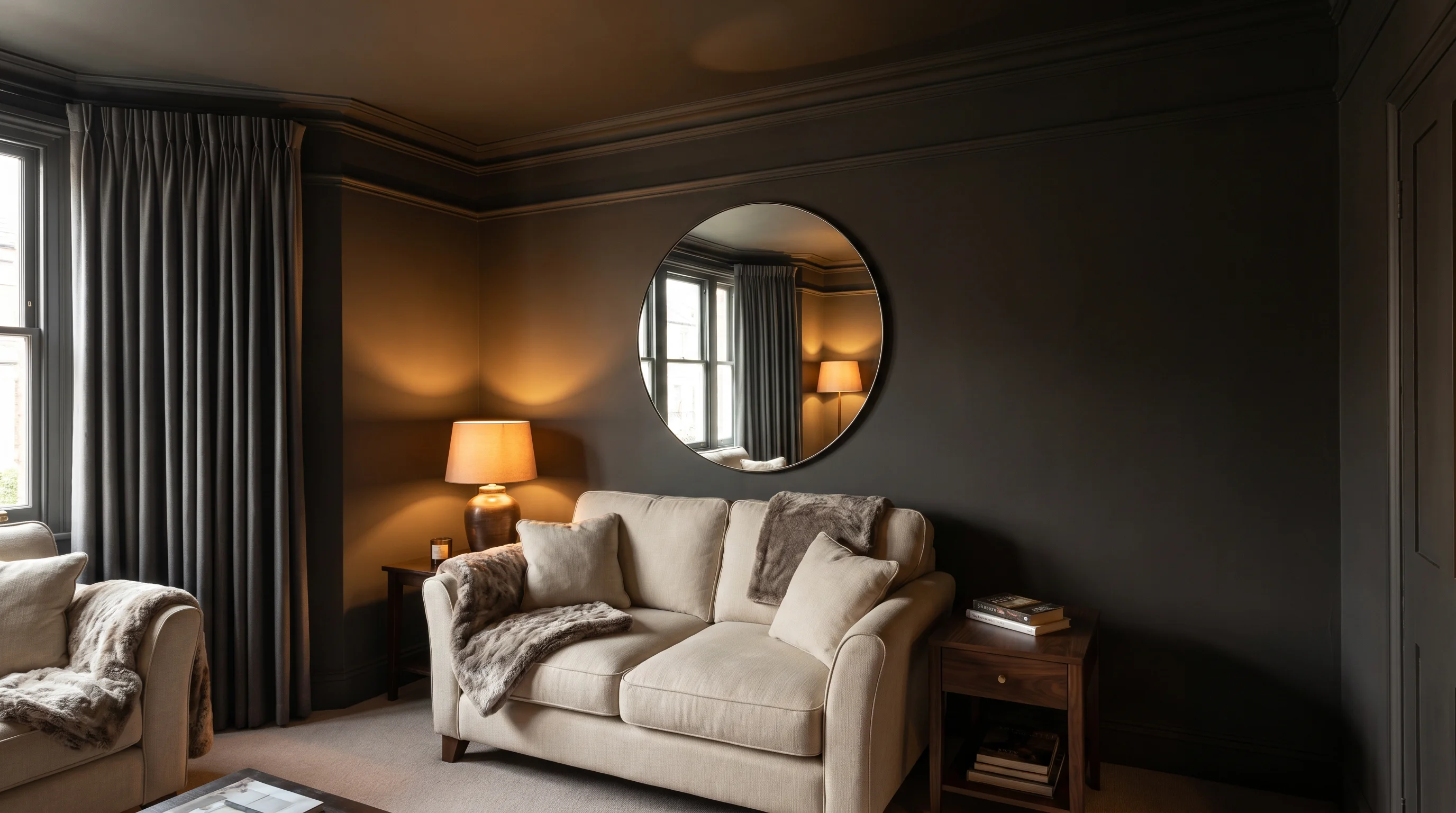
Received wisdom says dark colors shrink small rooms. The 2026 counterargument: a small or dim room was never going to feel airy — so let it feel intentional instead:
- Embrace the cocoon. A small charcoal room with layered warm light reads as a den, a snug, a jewel box — dramatic on purpose rather than dark by accident.
- Drench it — walls, trim, and ceiling — so no contrast lines chop up the space. In small rooms especially, edges are what make things feel tight.
- Double the light: a large mirror opposite the window, plus more lamps than you think you need.
- Keep upholstery light (cream, oatmeal) so furniture floats against the dark envelope, and hang curtains in a near-wall tone, floor to ceiling, to add height.
- North-facing rooms: cool light exaggerates blue undertones, so go decisively warm — a brown-leaning charcoal handles north light far better than a slate.
The takeaway: in a small or low-light room, stop fighting for brightness you'll never win and make darkness the design — a drenched, warmly lit charcoal snug feels intentional in a way a dim beige room never will.
6. Before and after
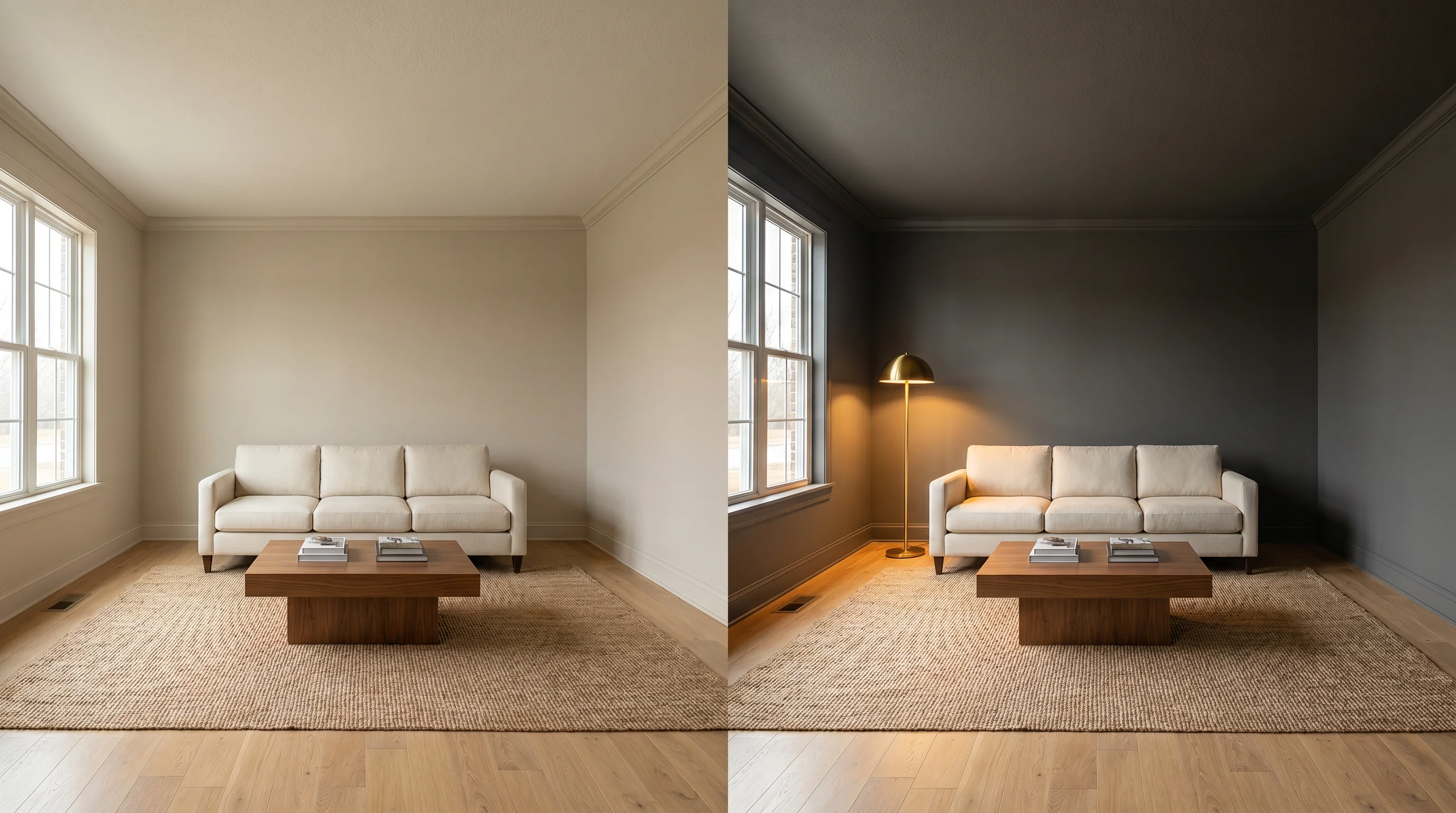
The transformation is easiest to grasp side by side: the same living room in flat builder-beige reads bland and slightly unfinished, while drenched in warm charcoal — same sofa, same layout — it suddenly reads considered and expensive. The cream sofa pops instead of disappearing, the walnut and brass glow instead of blending in, and the room's proportions look deliberate. Nothing moved; the color plus one warm brass lamp did all of it.
The takeaway: charcoal's real trick is making everything else in the room look better — the same furniture gains contrast, warmth, and presence the moment the backdrop goes dark.
See your living room in charcoal before you commit
Dark paint is the classic commitment-fear color — the gap between a two-inch swatch and four drenched walls is enormous, and undertones only show at full scale. Upload a photo of your living room to EasyRoomAI and preview it in charcoal first: accent wall versus full drench, warm charcoal versus near-black, with your actual furniture and light.
- Try a free room redesign — anonymous previews are free, no signup needed.
- Exploring the warm-dark direction? See our chocolate brown and cream living room ideas, the cooler cold minimalism look, or the full 2026 interior color trends. Browse more living room designs too.
Frequently asked questions
Is charcoal a good color for a living room? Yes — it's one of the most reliable dark neutrals for living rooms because it delivers drama while still reading as a color rather than black. A warm, brown-leaning charcoal creates an enveloping, sophisticated backdrop that makes furniture, wood, brass, and art look richer. The 2026 direction favors exactly these warm charcoals over the blue-toned grays of the last decade.
Does a charcoal living room feel dark and depressing? Only when it's cold and under-lit. Three things keep it cozy instead: a charcoal with warm (brown/taupe) undertones rather than blue, layered warm lighting — multiple lamps at 2700K rather than one overhead — and warm accents like brass, wood, cream, and rust. Done right, a charcoal room at night has a jewel-box glow that beige can't touch.
Should I do a charcoal accent wall or paint the whole room? An accent wall (usually the fireplace or TV wall) is the low-commitment entry and anchors the room well. But if you want the enveloping, expensive look, color-drenching — walls, trim, and ceiling in one charcoal — often works better, especially in small rooms, because removing contrast lines blurs the room's edges and can actually make it feel larger.
What colors go with charcoal in a living room? The 2026 pairings: rust and terracotta for warmth, brass and aged gold for glow, cream and oatmeal for contrast (especially on the sofa), and warm woods like walnut and oak throughout. Olive or forest green adds a sophisticated accent. Avoid pairing charcoal mainly with cool tones — chrome and stark white push it somber.
Can I use charcoal in a small or north-facing living room? Yes — often to great effect. In a room that will never be bright, drenched charcoal with layered warm lighting reads intentional and cocoon-like rather than accidentally dim. Choose a decisively warm charcoal (north light exaggerates blue undertones), add a large mirror, keep upholstery light, and use more lamps than you think you need.
Charcoal is the rare trend with staying power because it's really a formula: a warm undertone, layers of warm light, and pairings that glow against the dark. Choose the depth you can commit to, test it big, and let the backdrop do the decorating. Then preview the whole thing on your own four walls before you open a paint can.
Charcoal is one direction within a much larger living room shift. For all 22 trends shaping living rooms in 2026 — from warm neutrals to curved furniture — see living room ideas 2026.
Ready to Transform Your Space?
Try AI room redesign for free - no credit card required.
Start Designing FreeRelated reading
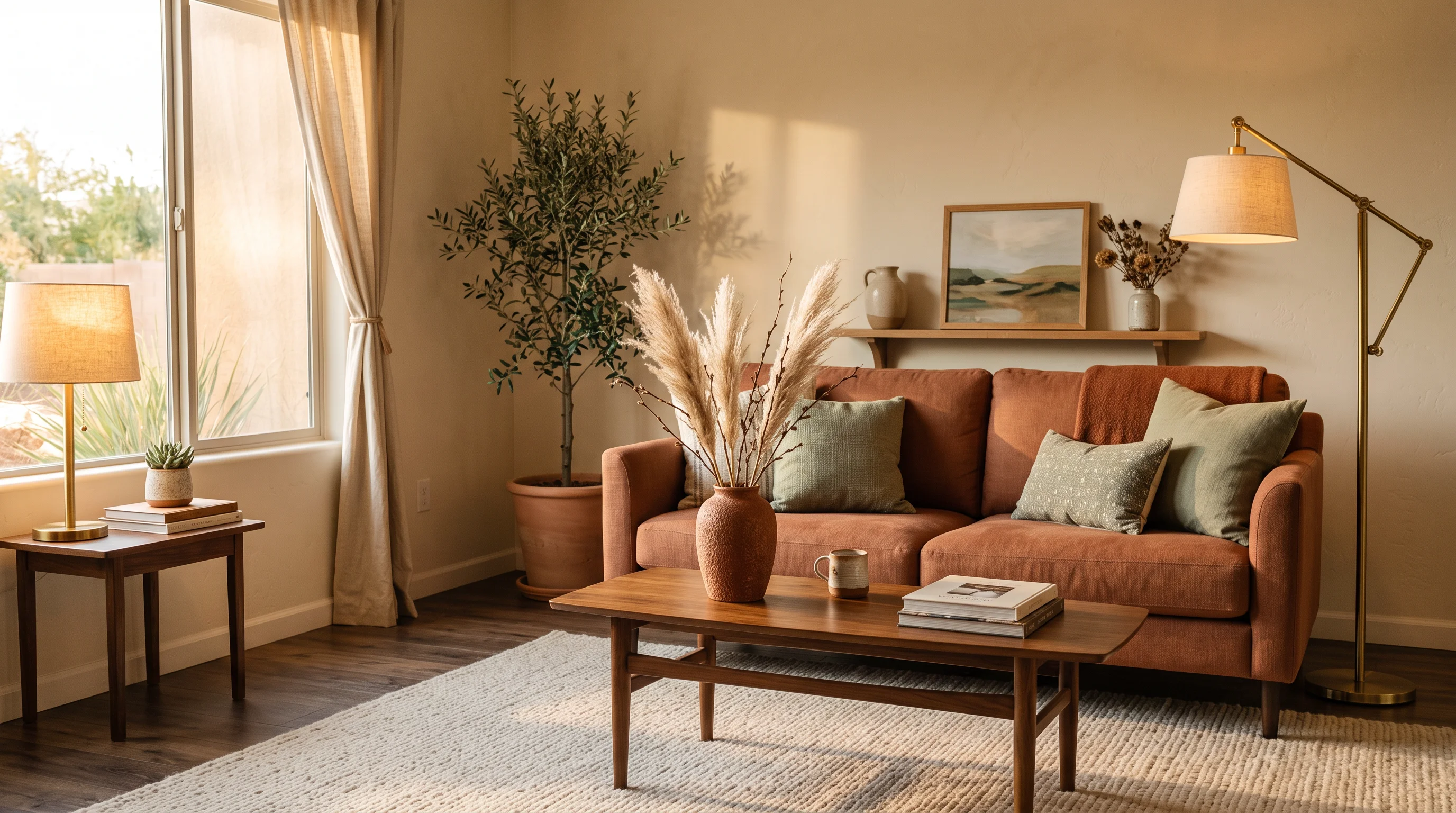
Earth Tone Living Room Ideas: 15 Warm Palettes Designers Are Using in 2026
Searches for earthy living rooms jumped 220% since 2023. Terracotta, sage, rust, and warm neutrals are replacing cool grays everywhere. Here are 15 earth-tone palettes that actually work — with styling rules to keep them warm without heavy.
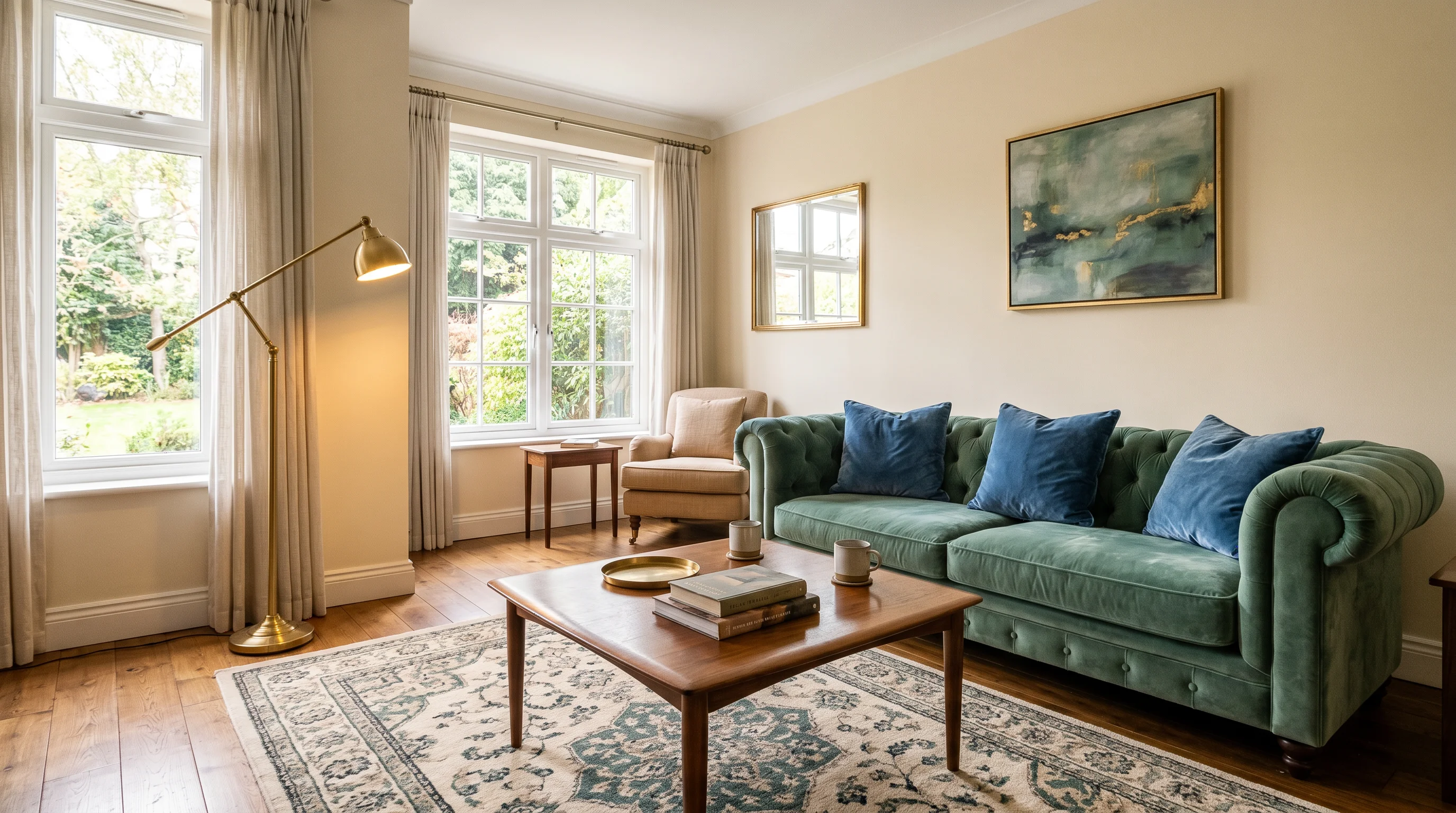
20 Jewel Tone Living Room Ideas — Dusty Emerald, Sapphire, and Ruby Done Right (2026)
Jewel tones are back — but dustier, moodier, and more wearable than the bold versions of a decade ago. Here are 20 jewel tone living room ideas for 2026: emerald sofas, sapphire accent walls, ruby accents, and the warm neutral pairings that keep rich color feeling expensive.
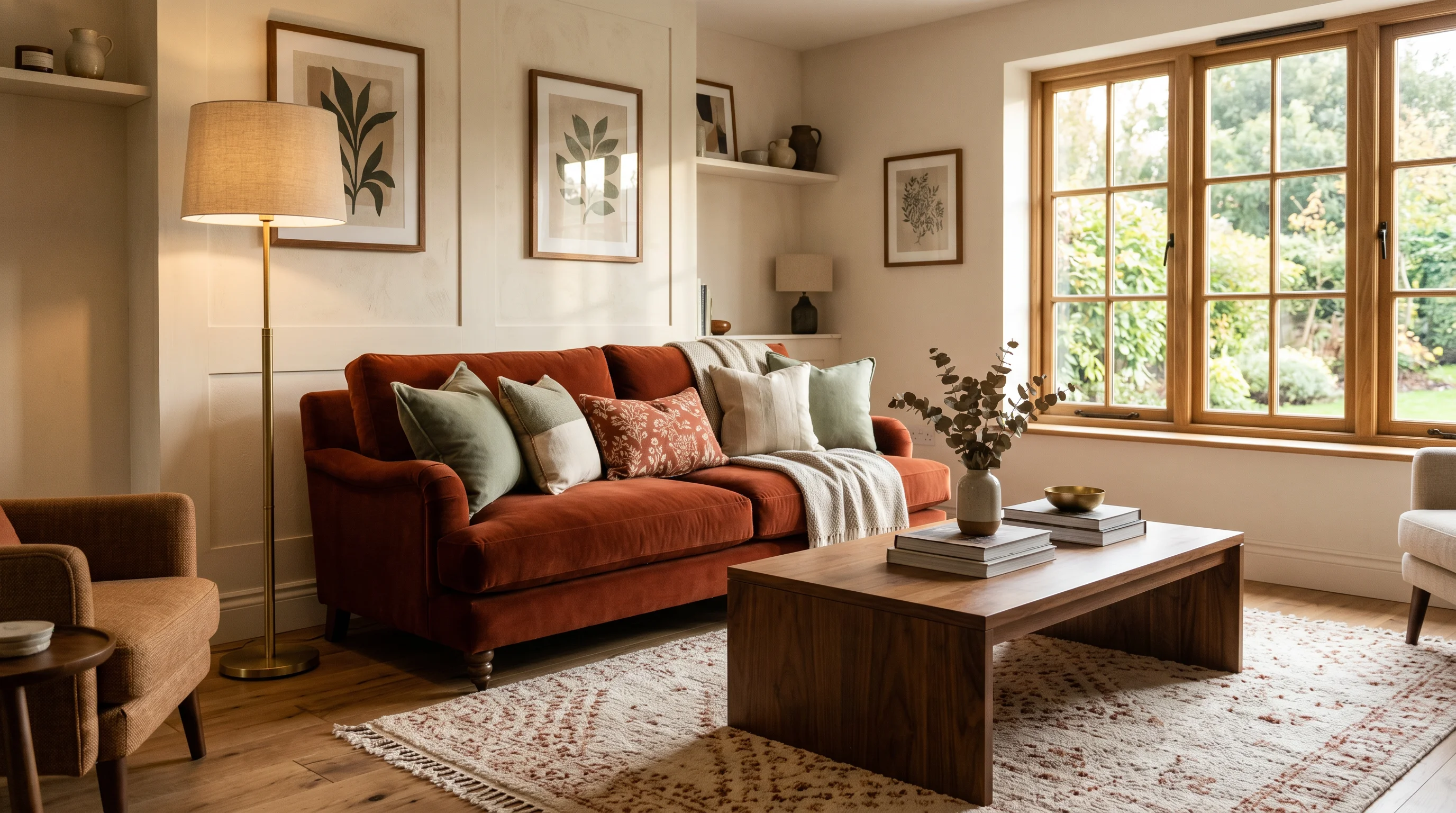
20 Rust Living Room Ideas — 2026's Warmest Color Trend, Styled Right
Rust is the fastest-growing color in home design — Houzz searches jumped 178% this year. Here are 20 rust living room ideas for 2026: sofa, accent wall, and rug ideas, plus the cream-charcoal-sage-navy pairings that keep rust warm without going overwhelming.