25 Mudroom Ideas for an Organized, Mess-Free Entry (2026)
A good mudroom stops mess at the door. Here are 25 mudroom ideas for 2026 — the bench-hooks-cubbies formula that always works, small hallway nooks, mudroom-laundry combos, garage-entry drop zones, dirt-hiding materials, and farmhouse vs modern looks.
 Easy Room AI Team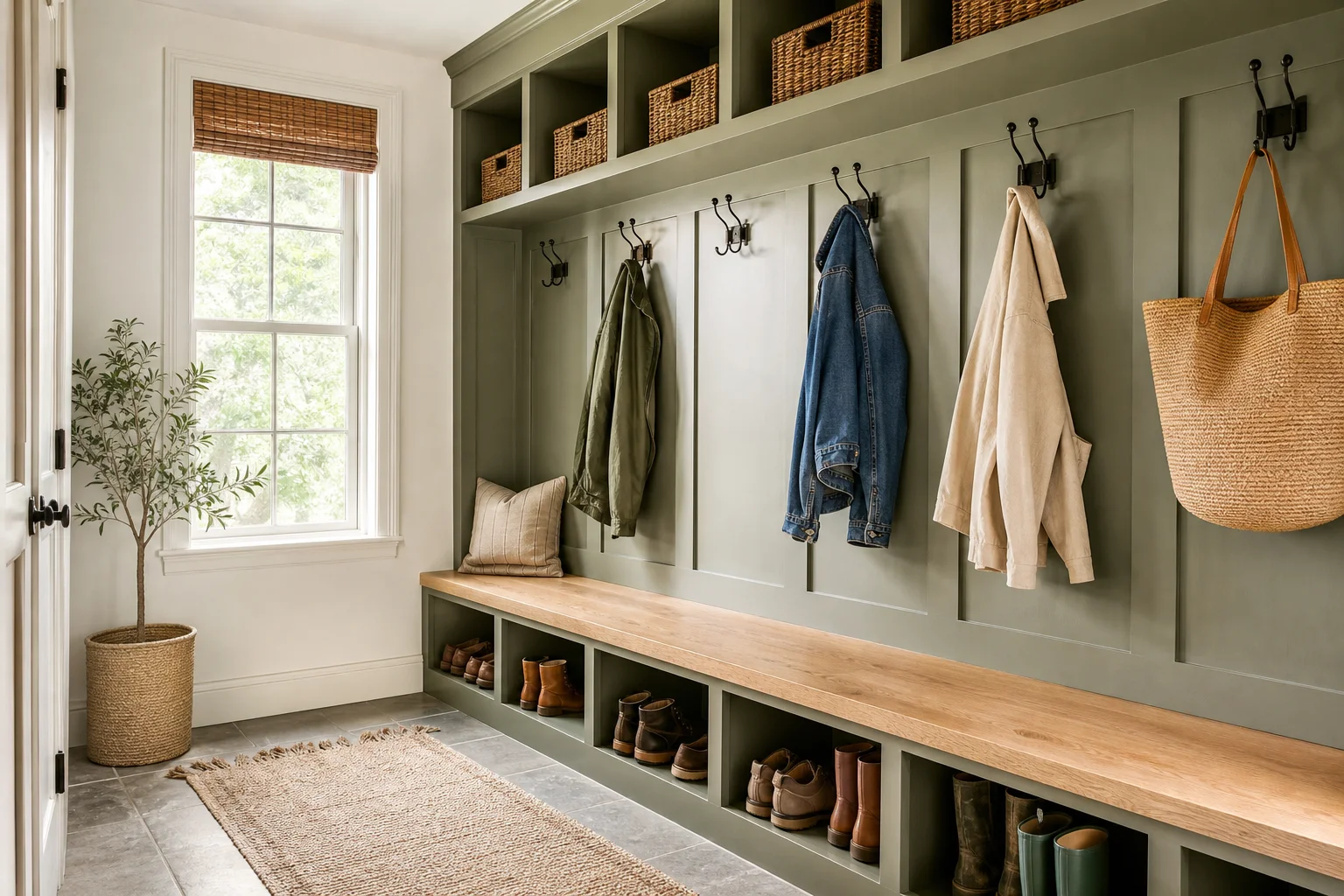
A mudroom does one quiet, powerful job: it stops the outside from spilling into the rest of your house. Wet boots, dropped backpacks, dog leashes, the day's coats — a good mudroom catches all of it at the door, so your kitchen and hallway stay calm.
You don't need a dedicated room to get the effect. A mudroom can be a built-in wall, a bench in the garage, a corner of the laundry, or a slim nook in a hallway. This guide rounds up 25 mudroom ideas for 2026, organized by the situation you're actually in — from a full custom build to a rented apartment entry.
In this guide you will learn:
- The bench-hooks-cubbies formula that makes any mudroom work
- How to build a mudroom "nook" in a small hallway
- Mudroom-laundry combos that double up on space
- Garage-entry drop zones that catch mess before it gets inside
- Durable, dirt-hiding materials for floors and walls
- How to choose between a farmhouse and a modern look
Organization sells a home, too. In the National Association of Home Builders' What Home Buyers Really Want study, a dedicated laundry room (86%) and garage storage (81%) rank among the 13 most-wanted features — buyers consistently prioritize spaces that keep a home clutter-free. A mudroom is where that organization starts.
1. The anatomy of a hardworking mudroom
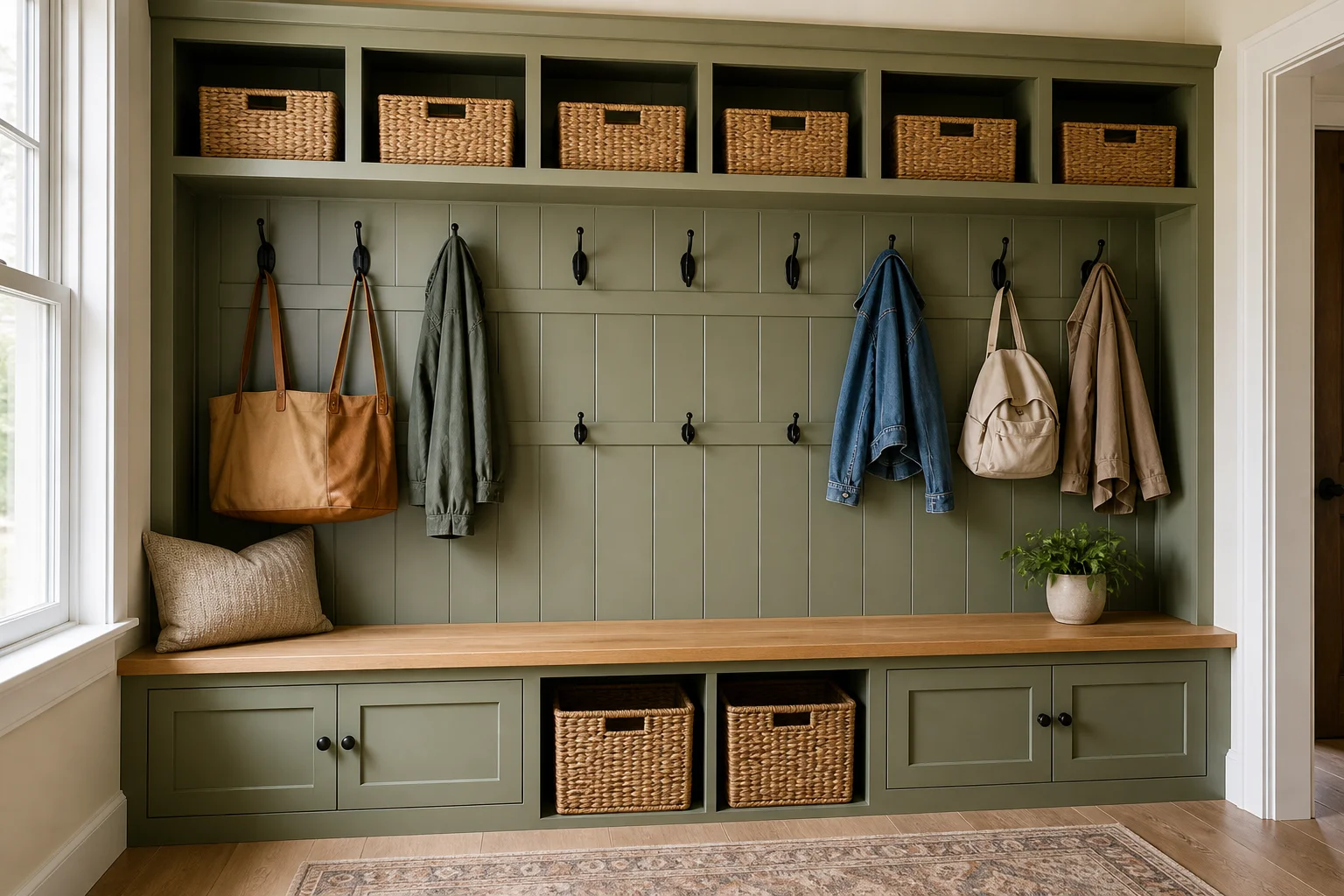
Almost every successful mudroom is built from the same four parts. Get these right and the style takes care of itself:
- A bench to sit and pull boots on and off (24–48 inches wide is the sweet spot).
- Hooks at two heights — high for adult coats, low for kids to reach their own.
- Cubbies or upper shelves for bags, hats, and seasonal gear.
- A closed drop zone below — baskets or a cabinet for shoes, so the messiest items stay out of sight.
The takeaway: assign a home for everything that comes through the door before you decorate. A mudroom fails when there's nowhere obvious to drop the thing in your hand.
2. Turn a cluttered entry into a drop zone
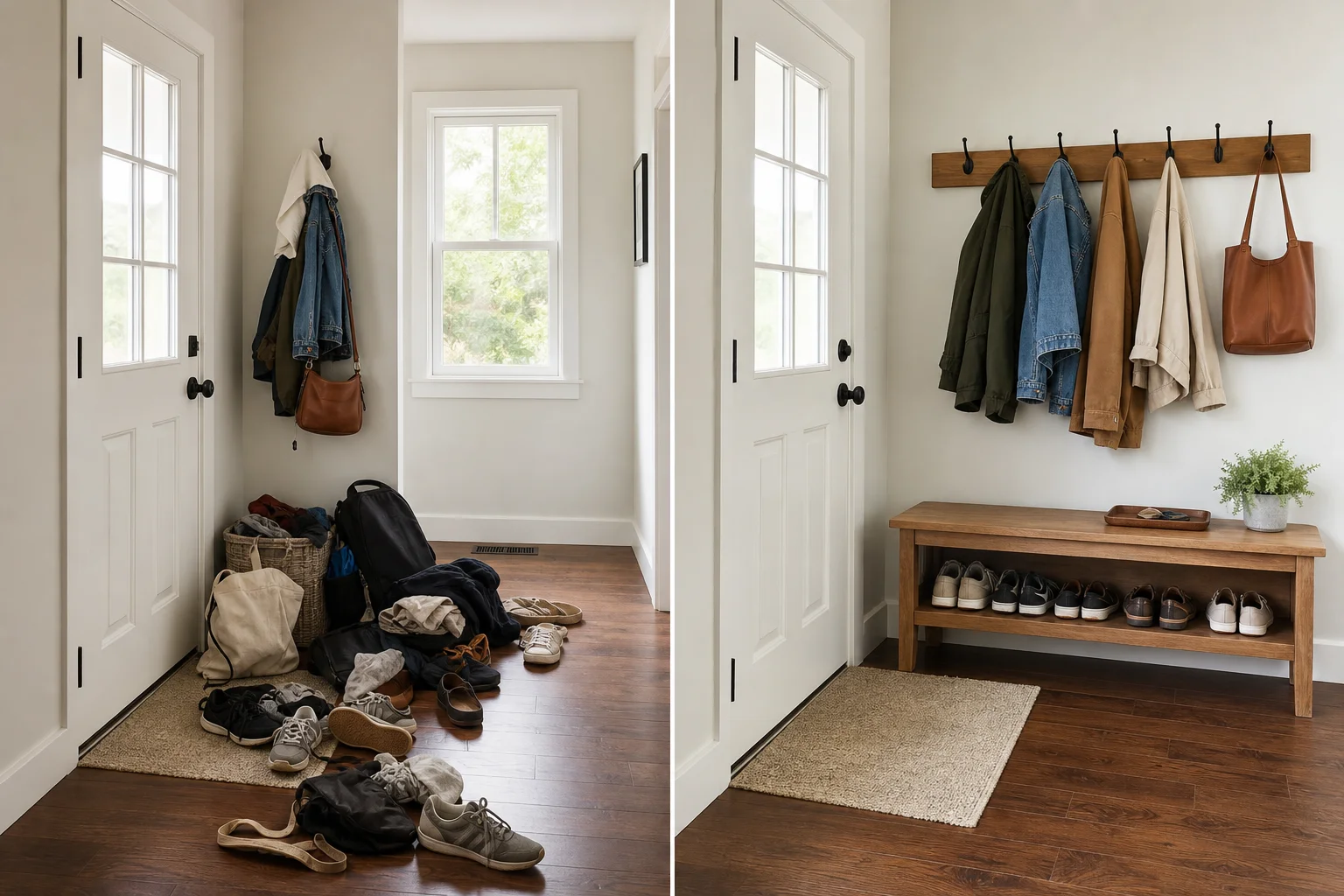
Most mess happens because the entry has no system, not because there's too much stuff. The fix is rarely a renovation — it's a wall. Add a bench with shoe storage beneath, a row of hooks above, and a tray for keys and mail, and the daily pile has somewhere to go.
If you're not sure what will fit, preview it first: photograph your current entry and redesign it with EasyRoomAI as a finished mudroom, so you can test a built-in versus freestanding furniture before buying anything.
Redesign Your Room in Seconds
Upload a photo of your space to test 16 curated design styles instantly with AI — 100% free.
Supports JPG, PNG, WebP up to 10MB
3. Small mudrooms and the hallway "nook"
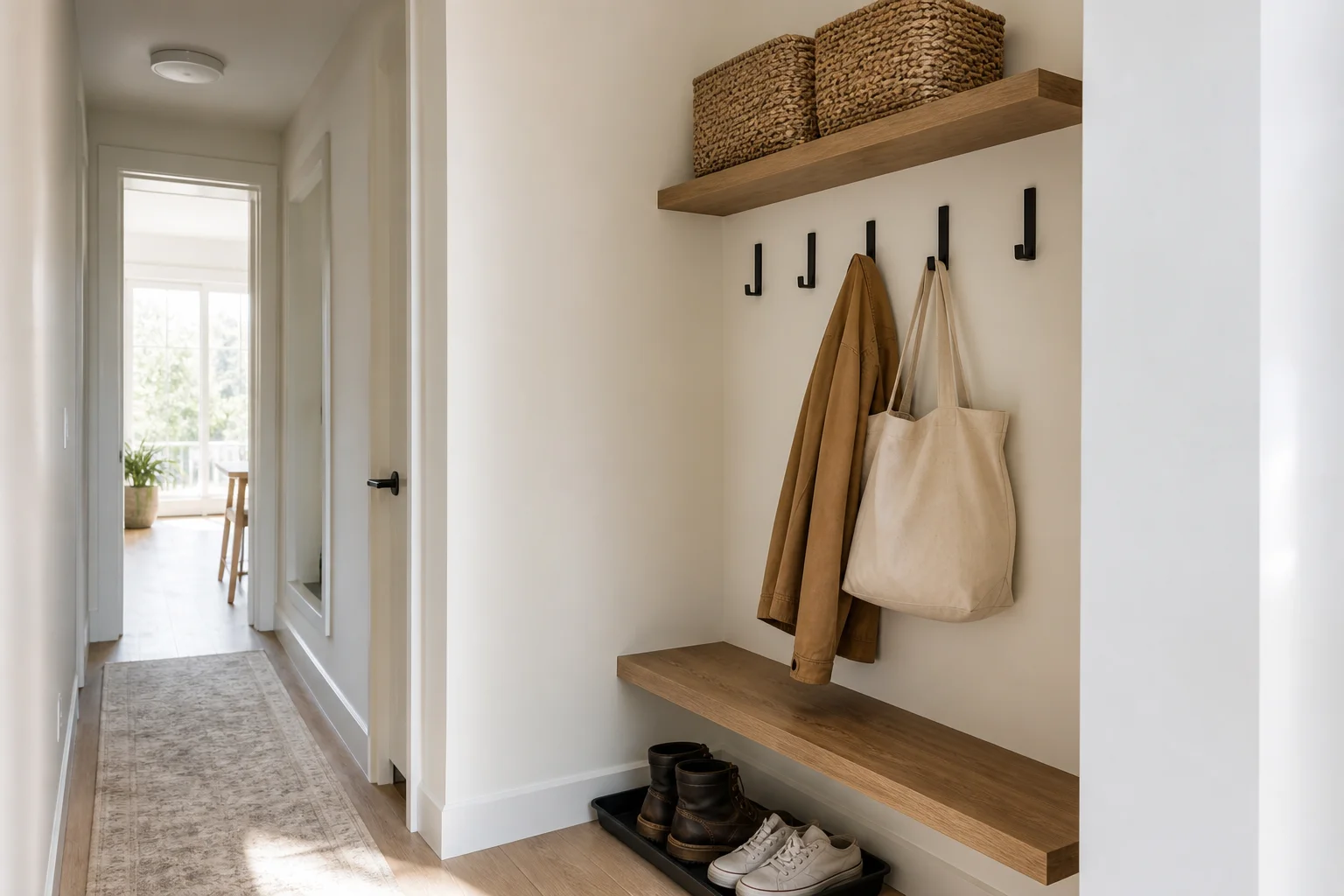
No spare room? A mudroom can live in a few feet of hallway. The trick is going vertical and shallow: a slim 10–12 inch bench, hooks mounted in a column up the wall, and a single shelf overhead for baskets. A boot tray under the bench keeps drips off the floor.
The same small-space design rules apply here — use the wall height, choose one dual-purpose piece, and keep the palette light so the nook reads as part of the hallway rather than clutter bolted on. For more entry-specific tricks, see our small hallway ideas.
4. Mudroom-laundry combos
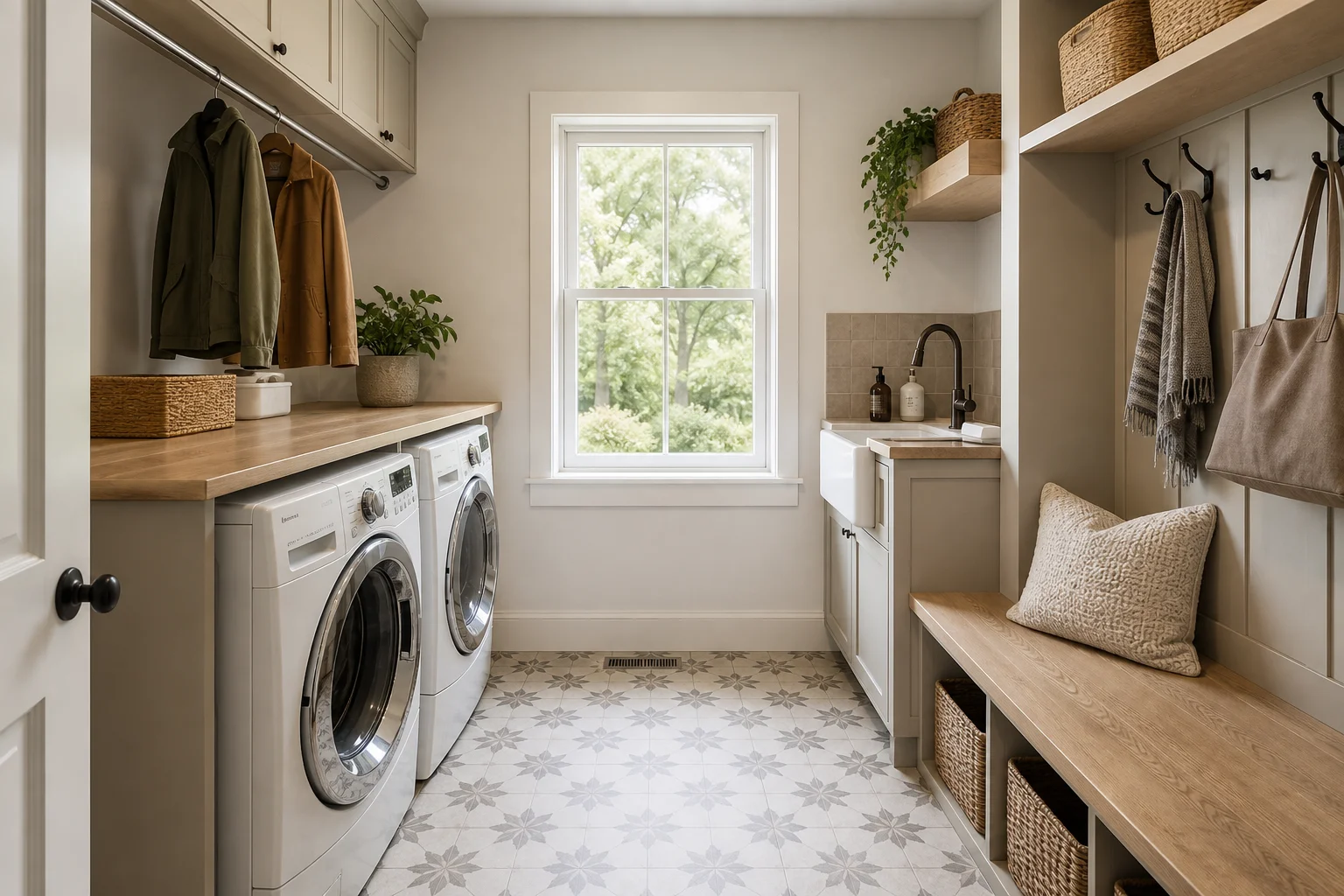
If your laundry sits near an entry, combine the two — it's one of the highest-value layouts in the house. Run a folding counter over a front-load washer and dryer, add a hanging rod for drip-dry coats, and put the bench-and-hooks wall opposite. A utility sink earns its keep for muddy paws and dirty cleats.
The win: every item that comes in dirty (sports kit, work clothes, pet towels) lands a step away from where it gets washed, instead of being carried through the house first.
5. Garage-entry mudrooms
Most families actually enter through the garage, so that's where the mess starts. A garage-entry mudroom — sometimes just a "locker wall" along the door you come in through — intercepts shoes, coats, and bags before they reach the kitchen.
Personal lockers or cubbies (one per family member) end the daily "where's my other shoe" hunt, and a closed cabinet hides the overflow of cleaning supplies and pet food that garages collect. Even a single bench with hooks beside the door makes a measurable difference.
6. Durable, dirt-hiding materials
A mudroom takes more abuse than any other room, so the materials matter more than the styling:
- Flooring: porcelain tile, luxury vinyl, or sealed concrete — anything waterproof and easy to mop. Add a washable runner over it, not under it.
- Walls: wainscoting, shiplap, or a tough semi-gloss or satin paint that wipes clean (flat paint shows every scuff).
- Colors that hide dirt: mid-tone greens, warm greiges, and charcoals disguise scuffs far better than crisp white. This is the rare room where a slightly darker, busier finish is the practical choice.
The takeaway: choose finishes you can hose-wipe, and let the color do some of the dirt-hiding work.
7. Farmhouse vs modern mudroom looks
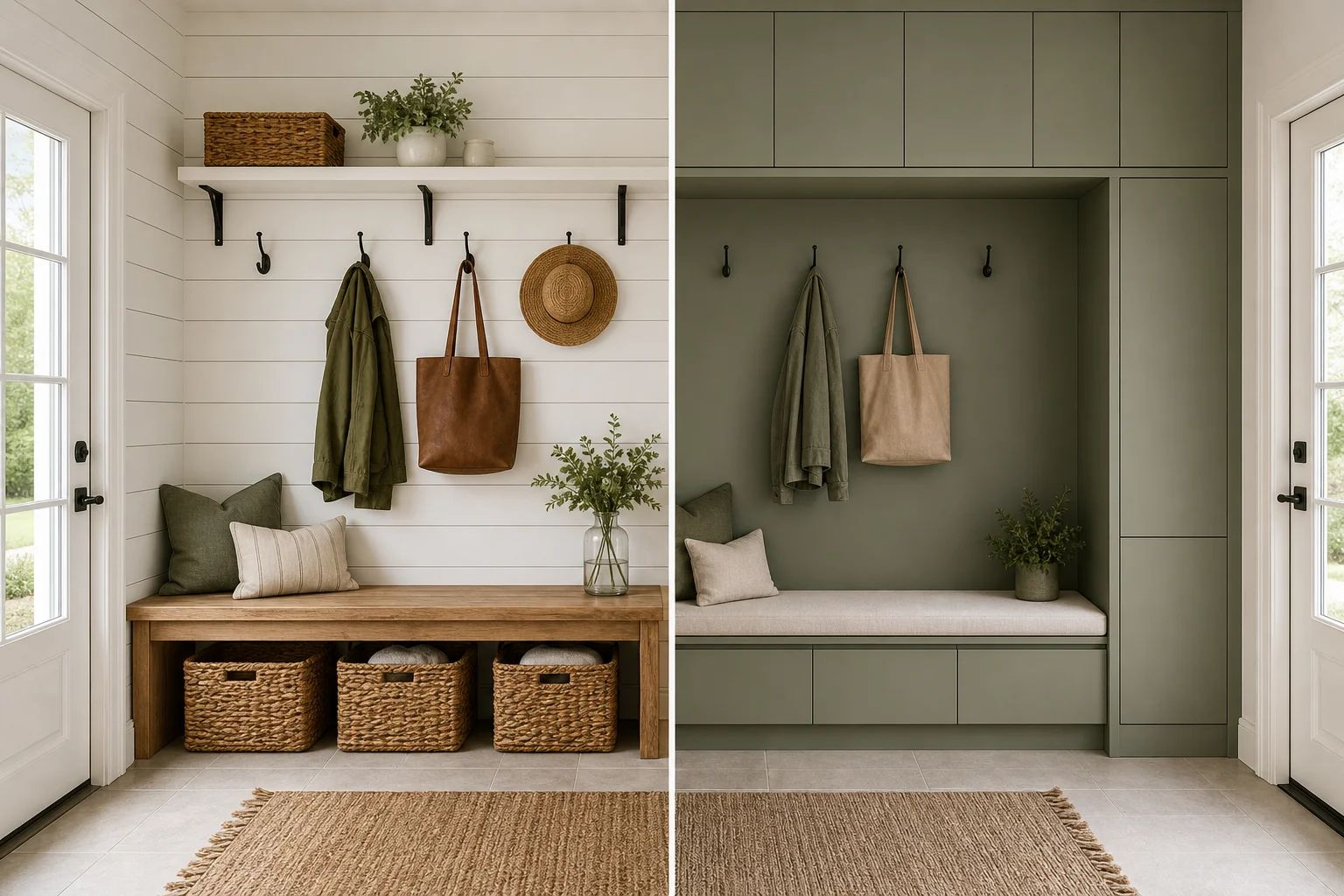
The same bench-hooks-cubbies formula carries any style — it's the finishes that set the mood:
- Farmhouse / cottage: shiplap or beadboard, black iron hooks, woven baskets, a wood bench, and warm whites or sage. Cozy and forgiving of wear.
- Modern: flat-panel cabinetry, an integrated bench, hidden handleless storage, and a moody monochrome palette — clean lines that read as built-in furniture.
Pick the one that matches the rest of your home so the mudroom feels connected, not like an afterthought tacked on at the door.
How to design your mudroom before you build
The hardest part of a mudroom is imagining it where a pile of coats currently lives. Upload a photo of your entry, hallway, or garage wall to EasyRoomAI and generate it as a finished mudroom — different layouts, materials, and built-in versus freestanding options — so you can plan the space before you spend on cabinetry.
- Try a free room redesign — anonymous previews are free, no signup needed.
- Designing the whole house? See our laundry room ideas, specialty room ideas, and browse hallway and entryway ideas.
Frequently asked questions
What is the difference between a mudroom and an entryway? An entryway (or foyer) is the formal front entrance, focused on first impressions. A mudroom is the working entrance — usually off the garage, side, or back door — built to catch coats, shoes, bags, and dirt before they reach the rest of the house. Many homes benefit from both.
How much space does a mudroom need? Less than you'd think. A functional mudroom can be as small as a 24-inch bench with hooks above — about three feet of wall. A comfortable walk-through mudroom is usually 5 to 7 feet wide, but the "nook" version fits in a hallway just a foot deep.
What is the best flooring for a mudroom? Waterproof, easy-clean surfaces: porcelain tile, luxury vinyl plank, or sealed concrete. Add a washable runner on top for comfort and to catch drips. Avoid hardwood and carpet, which stain and warp from the constant moisture and grit a mudroom sees.
Can I add a mudroom if I don't have a spare room? Yes. Most mudrooms are carved out of existing space — a few feet of hallway, a corner of the laundry room, a wall in the garage, or a repurposed closet. The bench-hooks-cubbies formula scales down to a single wall.
How do I design a mudroom layout before building it? Photograph the entry, hallway, or garage wall you want to convert and use a tool like EasyRoomAI to generate it as a finished mudroom. You can compare built-in versus freestanding storage and test materials before committing to cabinetry.
A mudroom earns its space by doing one thing reliably: catching the mess before it spreads. Nail the bench-hooks-cubbies basics, choose materials you can wipe clean, match the look to your home — then preview it in your own entry before you build.
Ready to Transform Your Space?
Try AI room redesign for free - no credit card required.
Start Designing FreeRelated reading
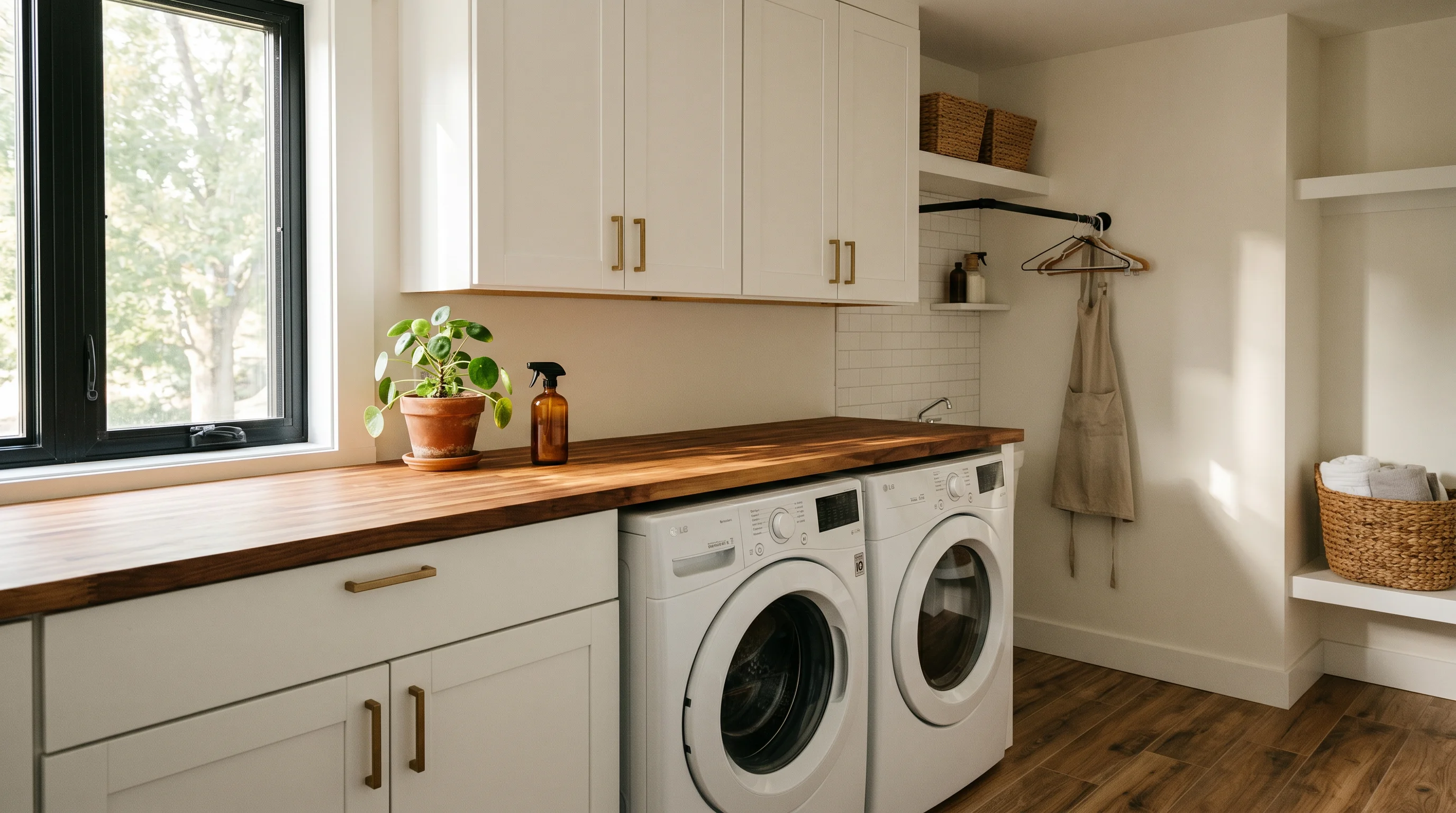
24 Laundry Room Ideas That Make This Hardworking Space Worth Designing (2026)
The laundry room is no longer a room you hide. Here are 24 laundry room ideas for 2026 — smart storage, small closet conversions, wallpaper that works, mudroom combos, and the finishes that turn a utility room into something you actually enjoy walking into.
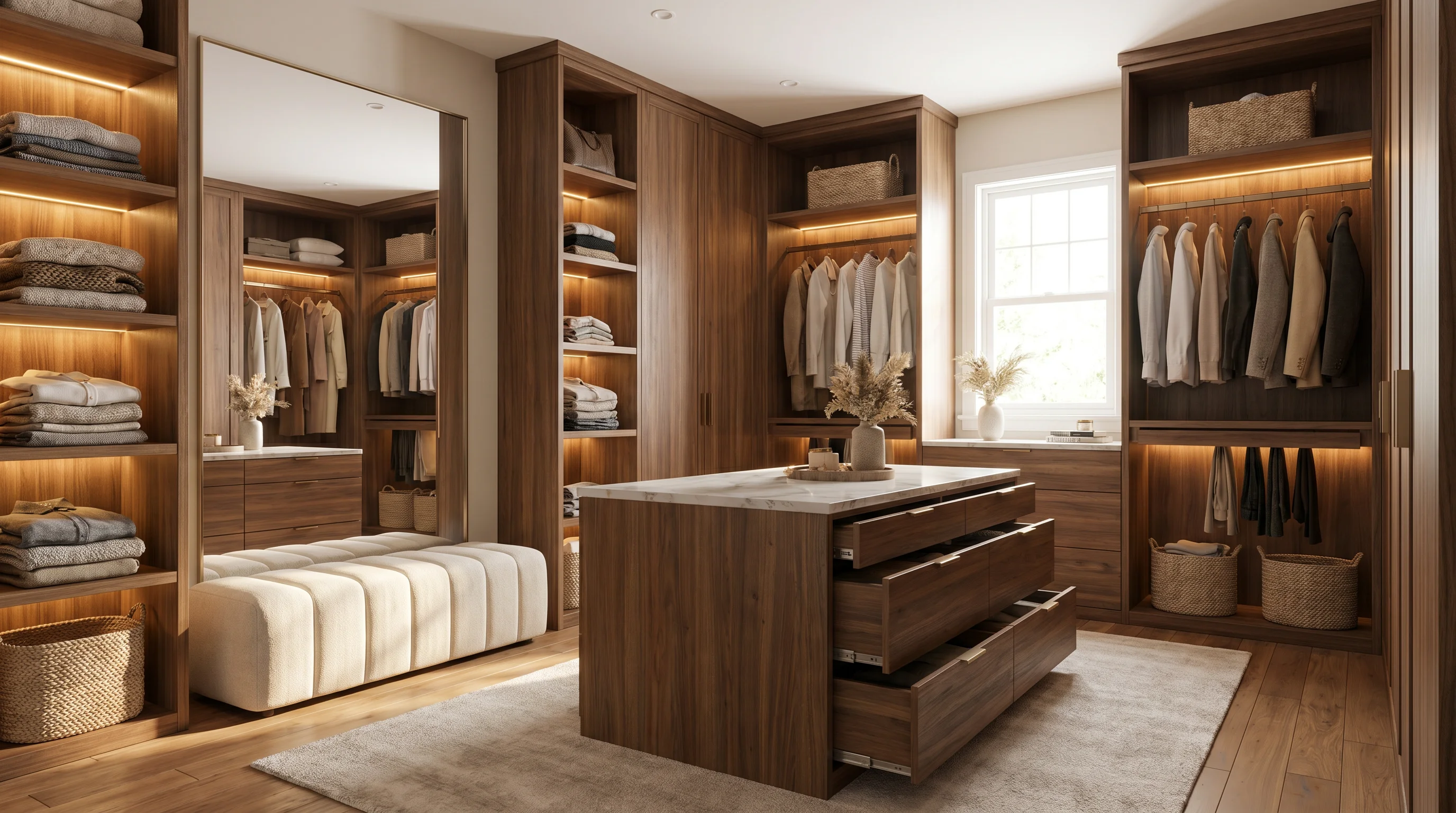
27 Walk-In Closet Ideas for Smart, Stylish Storage (2026)
A walk-in closet is one of the few spaces buyers refuse to shrink. Here are 27 walk-in closet ideas for 2026 — layouts from single-wall to island, spare-room conversions, open vs closed storage, lighting and mirrors, boutique-style finishes, and closet islands and seating.
28 Playroom Ideas Kids Love (and Parents Can Live With) — 2026
A great playroom is fun for kids and calm for adults. Here are 28 playroom ideas for 2026 — smart zoning, toy storage that actually works, small and shared-room solutions, budget makeovers, and the safety rules every parent should know.