25 Sunroom Ideas to Bring the Outdoors In (2026)
A sunroom is the room your house didn't know it had — light-filled, plant-friendly, and usable far beyond summer. Here are 25 sunroom ideas for 2026: three-season vs four-season rooms, furniture that survives sun and humidity, porch conversions, garden-room looks, year-round comfort, and sun-proof palettes.
 Easy Room AI Team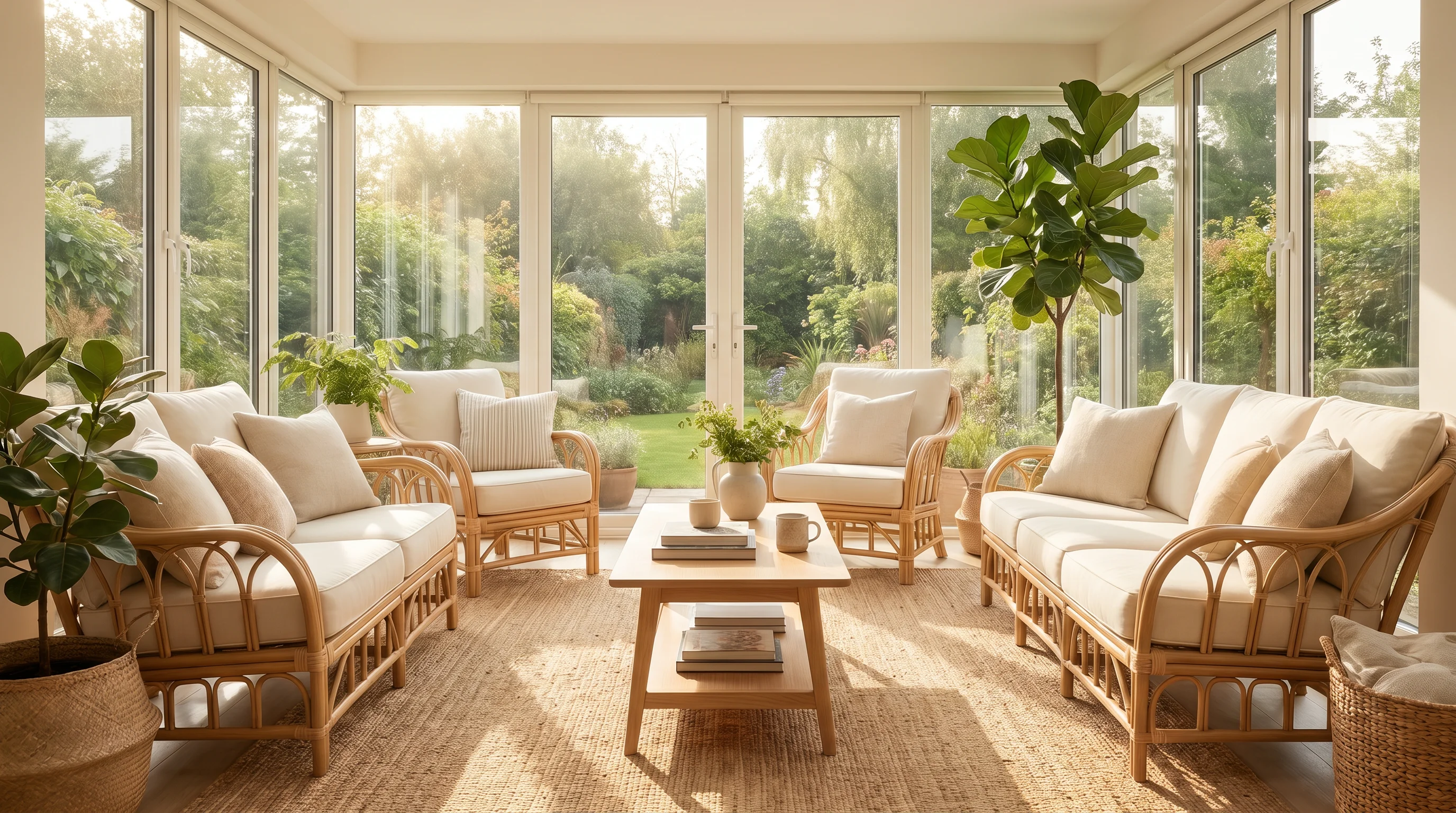
The line between indoors and out is officially blurring. The 2026 Houzz Outdoor Trends Study found homeowners designing outdoor spaces for everyday living rather than resale — lounge areas lead at 83%, and quiet retreats and reading corners appear in over half of renovations. A sunroom is where that trend meets four walls: all the light and garden connection of a patio, usable in far more weather.
This guide rounds up 25 sunroom ideas for 2026 — from choosing the right type of room to the furniture, plants, climate tricks, and palettes that make it the most-used room in the house.
In this guide you will learn:
- The three sunroom types (and which fits your climate and budget)
- Furniture that survives sun and humidity
- Small sunroom and enclosed-porch conversions
- The plant-filled "garden room" look
- Heating and cooling for genuine year-round use
- Sunroom palettes and textiles that don't fade flat
1. Three-season, four-season, or conservatory?
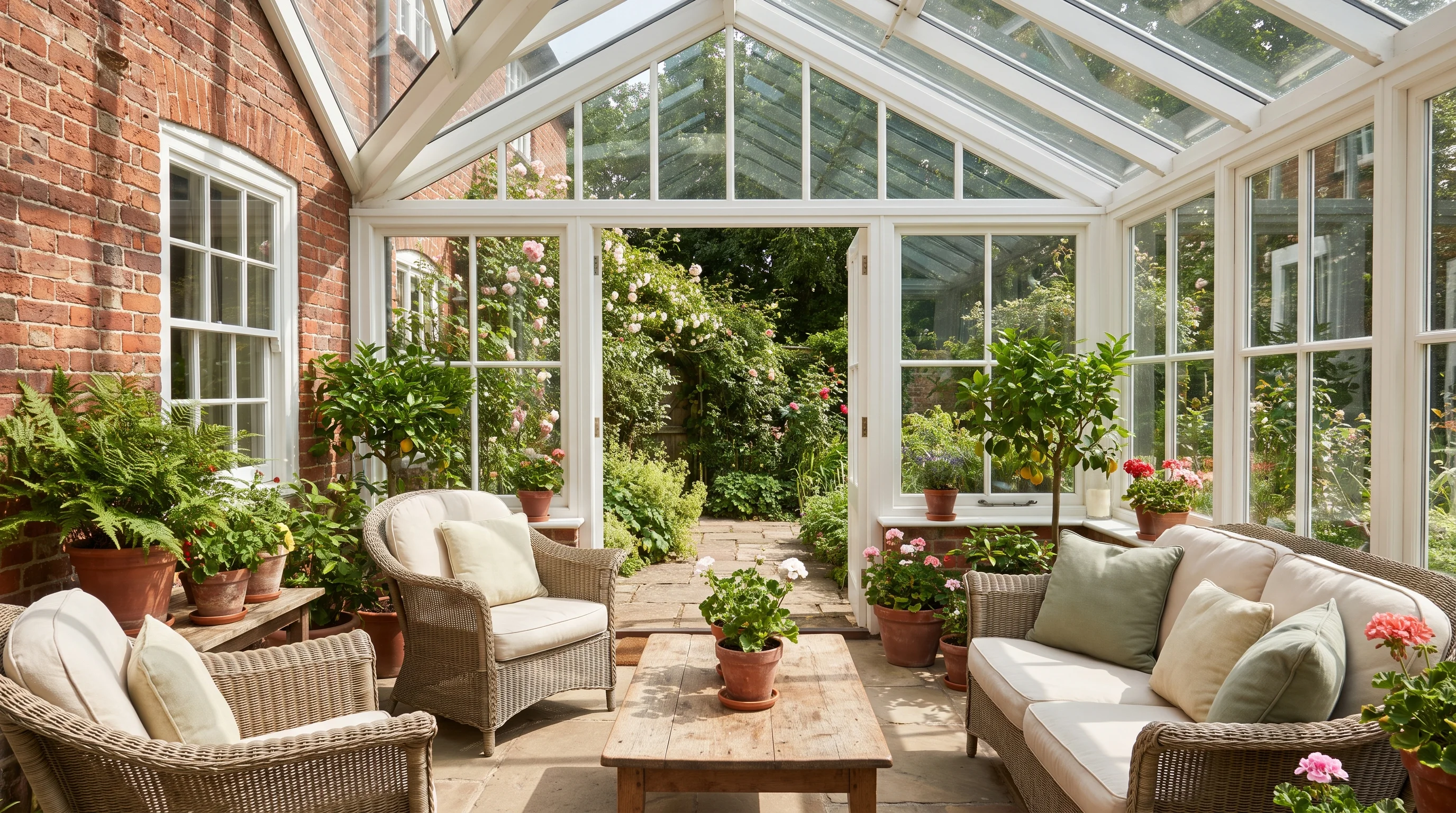
Before styling anything, know which kind of room you're working with — it decides budget, comfort, and how many months a year you'll actually sit in it:
- Three-season room: enclosed with single-pane or lighter glazing, no HVAC. Wonderful spring through fall, parked in winter. The most affordable path, especially as a porch conversion.
- Four-season room: insulated construction, energy-efficient double glazing, and heating/cooling — a true year-round living space. Costs more, but it converts a seasonal perk into everyday square footage.
- Conservatory: the glass-roofed, garden-facing classic. Maximum light and drama, and the natural home of the plant-filled looks later in this guide.
Demand for the year-round version is climbing — the trend is backyards and sun spaces usable in every season, not just on nice afternoons.
The takeaway: match the room to your climate honestly — a three-season room where winters are mild, a four-season build where they're not, and a conservatory when light (and drama) is the whole point.
2. Furniture that survives sun and humidity
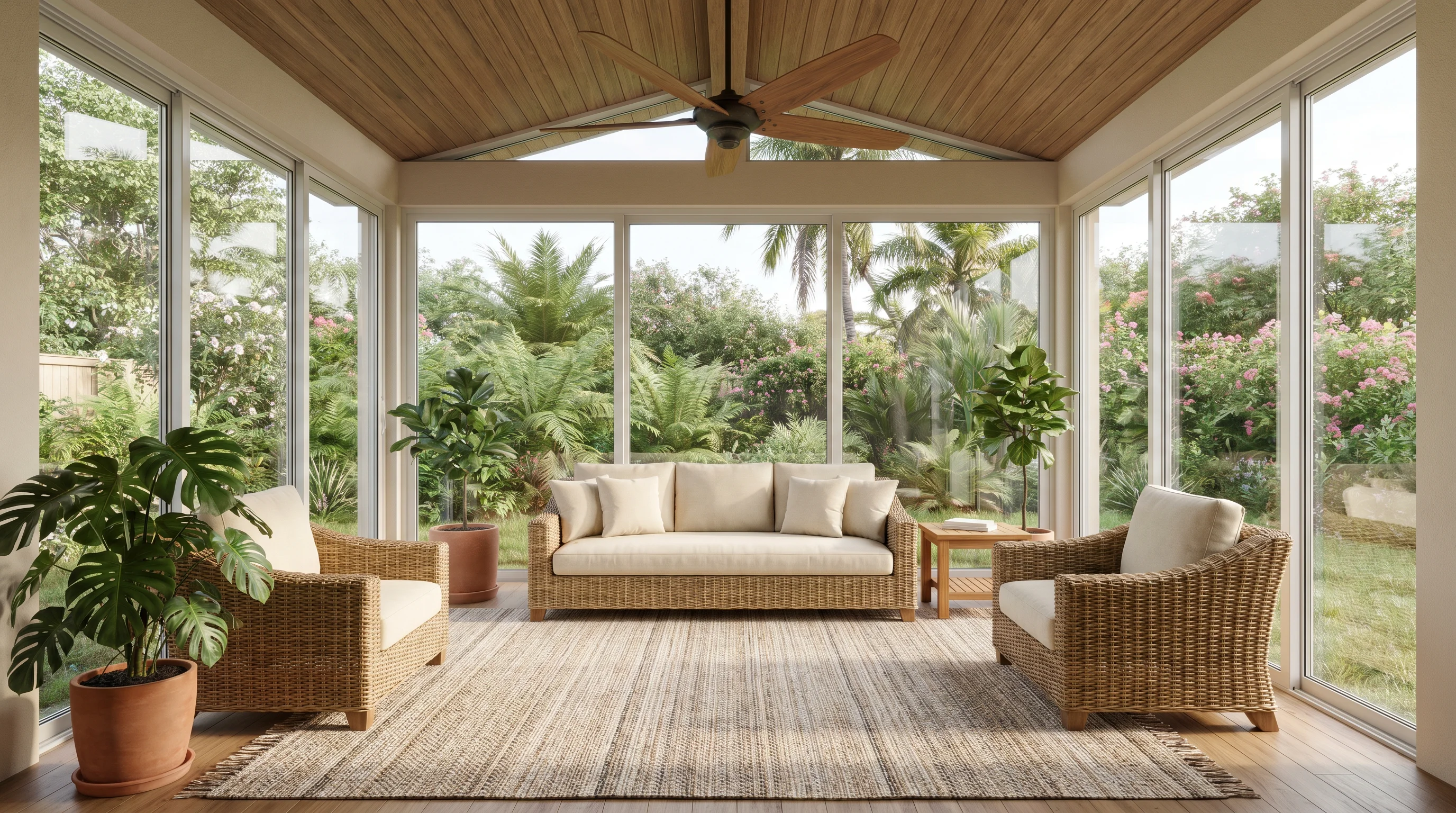
A sunroom is the hardest room in the house on furniture: UV all day, temperature swings all year, and (in three-season rooms) real humidity. Choose accordingly:
- Frames: rattan, wicker, teak, powder-coated metal, and quality outdoor-rated resin all shrug off sun and moisture. Natural woven textures also happen to be exactly the look the room wants.
- Cushions: performance and outdoor fabrics (solution-dyed acrylics) resist fading and mildew — modern versions feel like indoor linen, not a boat cover.
- Rugs: flatweave indoor-outdoor rugs or jute define the seating zone and survive sun and damp feet.
- Skip: fine veneers, untreated dark hardwoods, silk, and anything precious — dark saturated fabrics fade fastest in all-day sun.
The takeaway: buy the sunroom furniture the patio would want — woven frames, performance cushions, indoor-outdoor rugs — and it will still look right after its third summer.
Redesign Your Room in Seconds
Upload a photo of your space to test 16 curated design styles instantly with AI — 100% free.
Supports JPG, PNG, WebP up to 10MB
3. Small sunrooms and enclosed-porch conversions
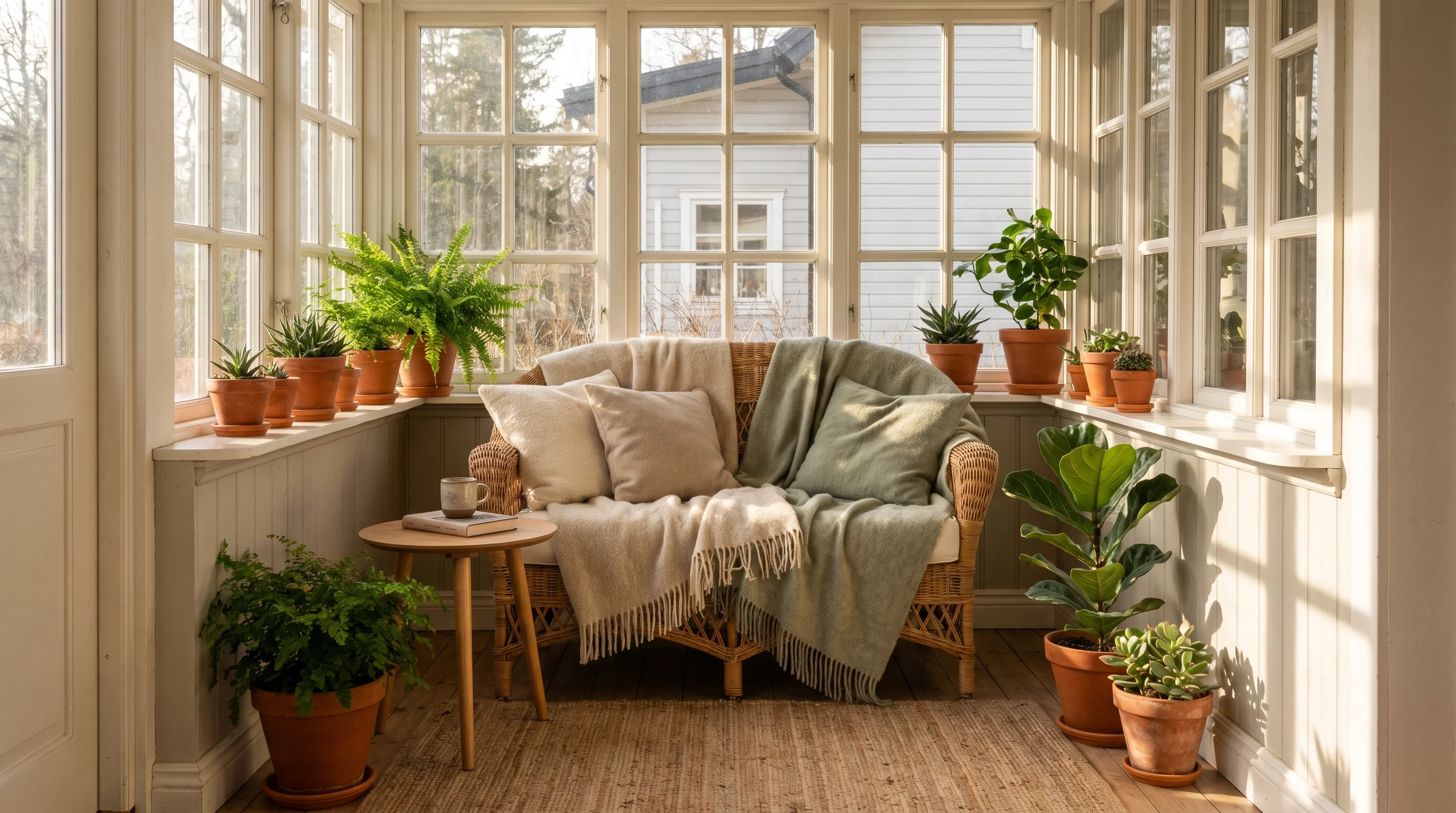
The most affordable sunroom is usually the one hiding in your existing footprint:
- Enclose a covered porch: the roof and floor already exist — adding glazing turns a six-month porch into a nine-month room. This is the classic budget path to a three-season space.
- Furnish small spaces to the walls: in a narrow sunroom, run a loveseat or built-in bench along the window wall instead of floating furniture — every inch counts and the view stays open.
- One function, done well: a small sunroom trying to be a dining room, office, and lounge ends up as none of them. Pick its best job — morning-coffee spot, reading retreat, plant room — and commit.
- Think vertically: hanging planters, wall-mounted shelves, and tall lean-to greenery use the one dimension small rooms have plenty of.
If a reading retreat is the goal, our home library ideas pair beautifully with a sunny corner.
The takeaway: an underused covered porch is 80% of a sunroom already — enclose it, furnish along the walls, and give the room one clear job instead of three vague ones.
4. The plant-filled "garden room" look
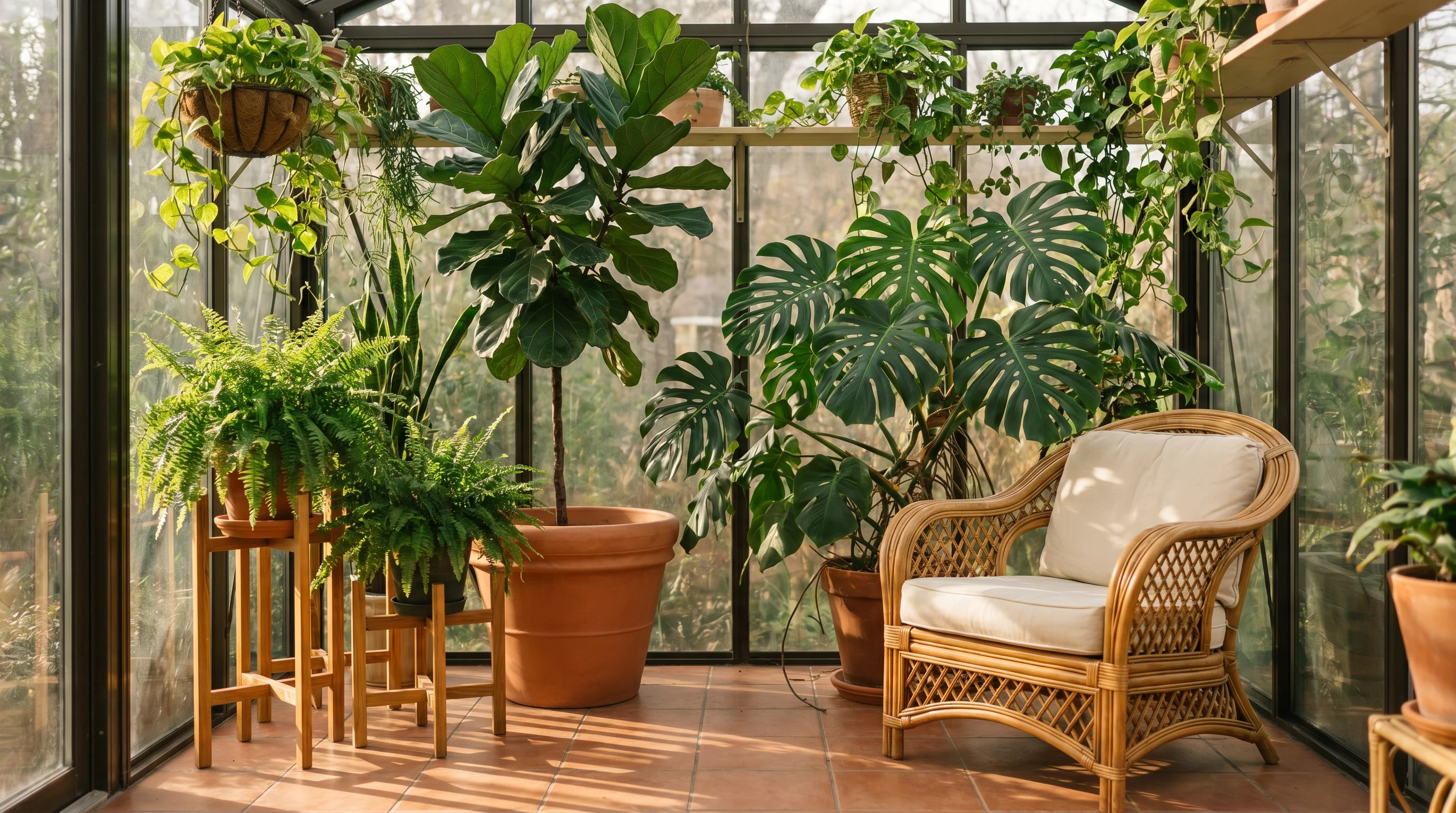
A sunroom is the one room where "too many plants" barely applies — all that glass makes it the best growing environment in the house, and greenery is what turns a glazed room into a garden room:
- Anchor with statement plants: a fiddle-leaf fig, monstera, or olive tree in an oversized pot gives instant structure. Group smaller pots in odd numbers around them.
- Layer heights: floor plants, mid-height plants on stands and stools, trailing plants (pothos, string-of-pearls) from hooks or high shelves.
- Match plant to exposure: south-facing rooms suit sun-lovers (citrus, succulents, herbs); north-facing glass suits ferns, calatheas, and other bright-indirect fans.
- Repeat your pots: terracotta and warm ceramic in a consistent family keeps two dozen plants reading as a collection, not clutter.
- Add one garden-furniture cue — a potting bench, a vintage metal café set — to complete the conservatory feel.
The takeaway: structure the jungle — a few statement plants, layered heights, pots in one material family — and the room reads lush garden retreat rather than plant-shop overflow.
5. Year-round comfort: heat, cooling, and shade
The difference between a sunroom you use in July and one you use in January is climate control — and it's usually simpler to add than people expect:
- Heating: a ductless mini-split is the gold standard (heating and cooling in one wall unit, no ductwork); electric baseboard or a freestanding stove suit smaller budgets. A plush rug warms the floor underfoot.
- Cooling and airflow: that same mini-split cools in summer; a ceiling fan keeps air moving; operable windows on two sides give real cross-ventilation.
- Shade control: all-glass rooms overheat without it. Cellular shades or roller blinds tame afternoon glare (and insulate at night), and a deciduous tree outside shades summer sun while letting winter light through.
- Glazing matters most: if you're building or upgrading, energy-efficient Low-E double glazing is what separates a true four-season room from a greenhouse with chairs.
The takeaway: a mini-split, a ceiling fan, and decent shades turn a three-season room into a twelve-month one — glazing and shade control do more for comfort than any amount of styling.
6. Sunroom palettes and textiles
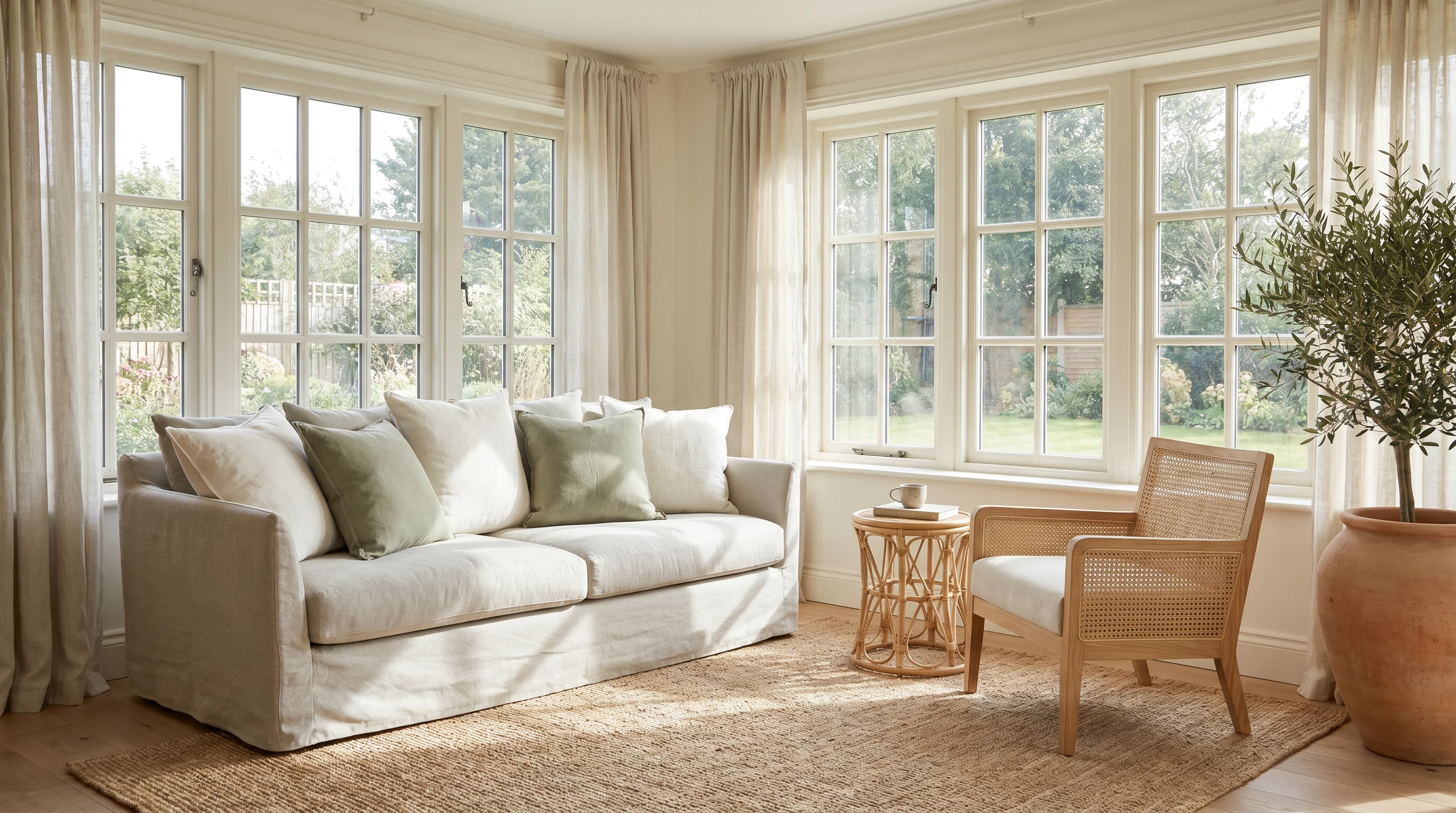
Sunlight is the room's decorator — your palette just has to work with it:
- Sun-washed neutrals (warm white, cream, oatmeal, sand) amplify the light and take fading gracefully.
- Garden greens — sage, olive, fern — bridge the view outside and read natural in daylight.
- Earth accents — terracotta, clay, warm wood — ground all that brightness; a terracotta floor is a sunroom classic that hides real life admirably.
- Go light on saturated color: deep moody shades fade visibly in all-day UV and can turn a glass room heavy. Save drama for a north-facing study.
- Textiles: washed linen, cotton slub, and performance weaves in those same tones; layered, not precious.
The takeaway: let the light lead — warm neutrals and garden greens with earthy accents look better every sunny hour, while dark saturated color fights the room and fades first.
Preview your sunroom before you furnish it
A sunroom's all-glass walls and hard light make it genuinely difficult to picture furniture and color in — showroom pieces can look completely different flooded with daylight. Upload a photo of your sunroom, porch, or garden-facing room to EasyRoomAI and preview it styled: test the garden-room look against sun-washed minimal, rattan against modern, before you buy a single chair.
- Try a free room redesign — anonymous previews are free, no signup needed.
- Building out more purposeful spaces? See our outdoor patio ideas, specialty room ideas roundup, and home library ideas for the reading-retreat angle, or browse outdoor design ideas.
Frequently asked questions
What's the difference between a three-season and four-season sunroom? A three-season room is enclosed but not insulated or conditioned — light glazing, no HVAC — so it's comfortable spring through fall but too cold (or hot) at the extremes. A four-season room is built like the rest of the house: insulated construction, energy-efficient double glazing, and heating/cooling, making it a true year-round living space. The four-season build costs more but adds everyday square footage rather than a seasonal perk.
What furniture works best in a sunroom? Furniture that tolerates UV and temperature swings: rattan, wicker, teak, and powder-coated metal frames with performance or outdoor-fabric cushions, plus indoor-outdoor or jute rugs. Avoid fine veneers, silk, and dark saturated fabrics, which fade fastest in all-day sun. Modern performance fabrics feel like indoor linen while resisting fading and mildew.
How do I keep a sunroom warm in winter and cool in summer? A ductless mini-split is the most popular single answer — efficient heating and cooling in one wall-mounted unit with no ductwork. Add a ceiling fan for airflow, cellular or roller shades for glare and nighttime insulation, and cross-ventilation from operable windows. If you're building or upgrading, Low-E double glazing makes the biggest difference of all.
Can I turn a covered porch into a sunroom? Often, yes — it's the most common budget path. Since the roof, floor, and structure already exist, enclosing a covered porch with windows or glazing panels creates a three-season room for far less than a new addition. Upgrading to a four-season space means adding insulation, proper glazing, and heating/cooling, which raises cost but makes it year-round. Check local permitting either way.
What colors are best for a sunroom? Sun-washed warm neutrals (cream, oatmeal, sand), garden greens (sage, olive), and earthy accents like terracotta and warm wood. These amplify daylight, connect to the garden view, and fade gracefully. Deep saturated colors tend to fight all that light and show UV fading soonest, so keep drama to accents you can swap.
A sunroom earns its keep when it's designed for real use — the right room type for your climate, furniture that shrugs off sun, plants with structure, and climate control that stretches the season to twelve months. Get those right and it stops being "the sun porch" and becomes the room everyone migrates to. Preview it styled in your own light first.
Ready to Transform Your Space?
Try AI room redesign for free - no credit card required.
Start Designing FreeRelated reading

DIY Virtual Staging Software: How to Stage Listings Yourself in 2026 (Tools, Costs & Step-by-Step Guide)
Stop paying $24–$35 per photo to outsourcing agencies. Compare the top DIY virtual staging software in 2026, master the 5-step realtor staging workflow, and avoid costly MLS disclosure and perspective mistakes.
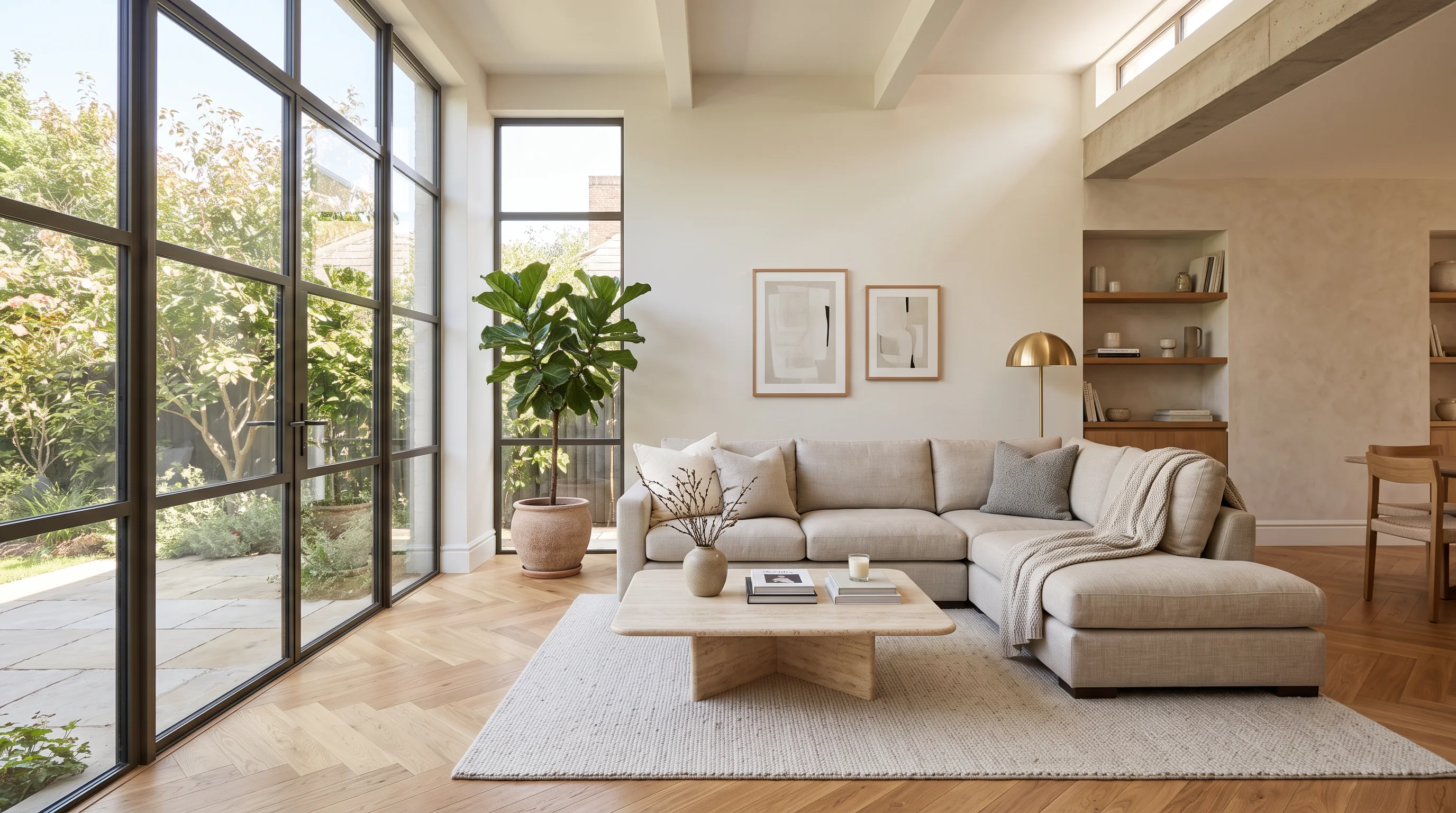
Floor Virtual Staging: How to Replace Flooring in Real Estate Photos – Without Renovating (2026 Guide)
Discover how AI floor virtual staging replaces worn carpet and dated vinyl with luxury white oak hardwood in seconds. Recover 147% resale ROI while staying 100% MLS compliant.
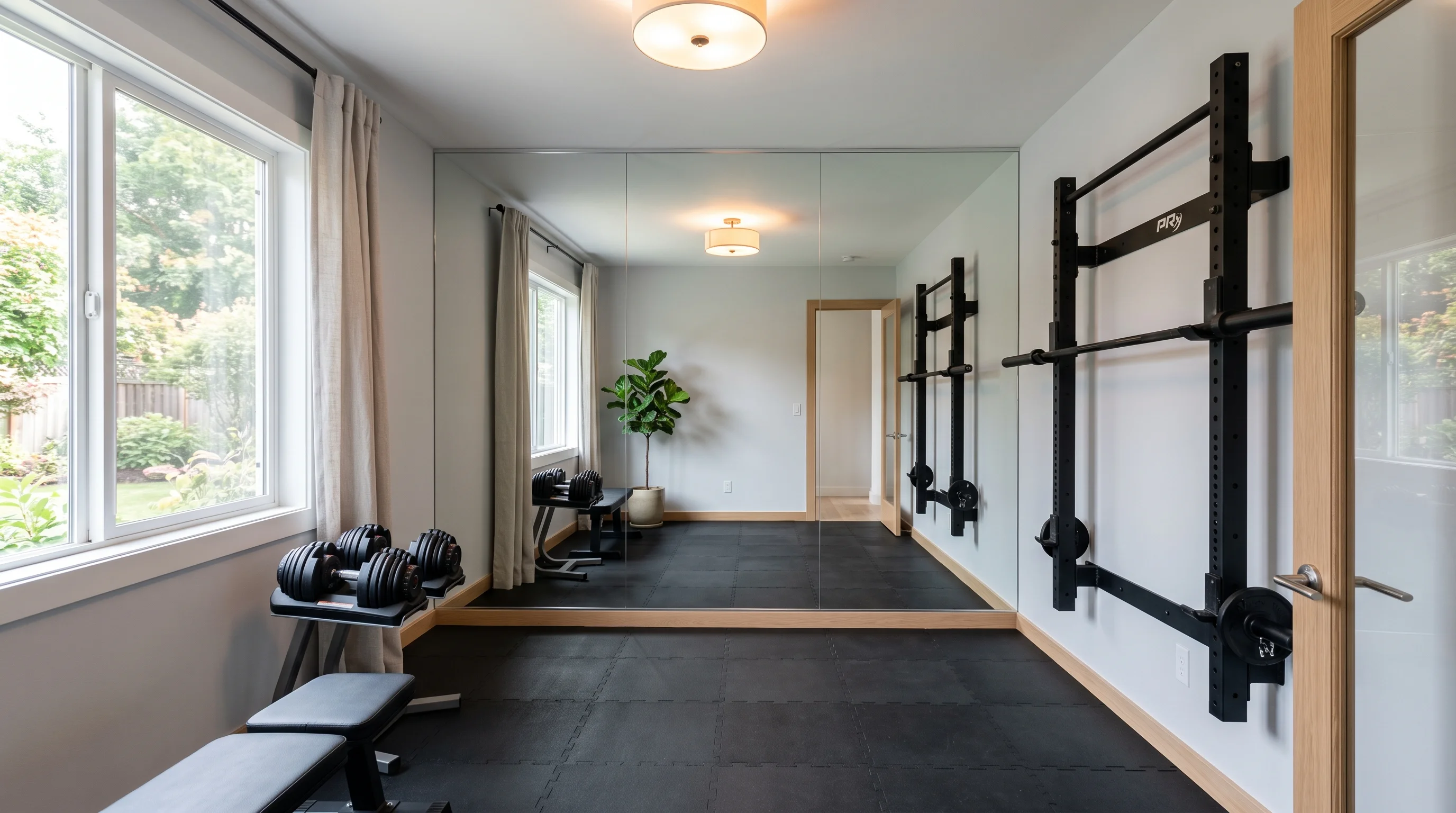
Small Home Gym Ideas 2026: How to Fit a Serious Gym in Under 100 Sq Ft
Discover clever small home gym layout ideas for 50 to 100 sq ft. Learn how to combine folding wall-mounted racks, selectorized dumbbells, vertical storage, and dual-purpose office zoning to build a studio-grade gym without sacrificing square footage.