Sage Green Kitchen Ideas: 8 Ways to Use 2026's Most-Wanted Color
86% of designers rank green #1 for 2026. Explore 8 sage kitchen ideas: two-tone cabinets, island accents, brass & oak pairings, plus free AI room previews.
 Easy Room AI Team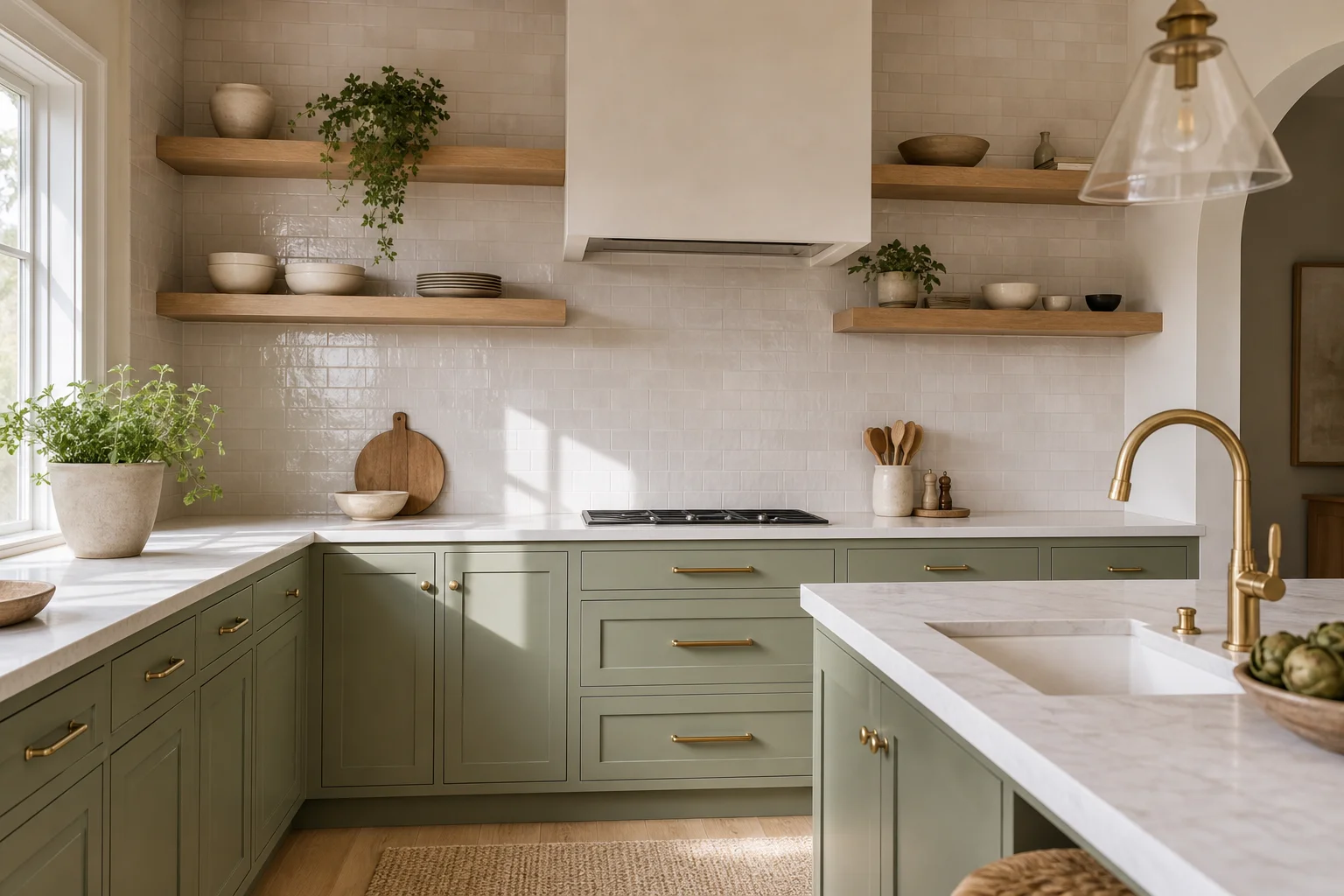
Gray had a long run. It is over. In the NKBA 2026 Kitchen Trends Report, designers put green in first place — cited by 86%, ahead of blue (78%) and brown (67%) — while white (47%) and gray (43%) round out the bottom of the top five. Cabinet maker MasterBrand goes further: in its 2026 survey of 1,100+ designers, "greens, especially muted and sage, have overtaken gray in popularity," echoing the trajectory blue took a decade ago.
Sage is the version of green doing the heavy lifting: soft enough to act as a warm neutral, but grounded and nature-led in a way gray never was. This guide covers eight ways to use it — and the pairings that keep it looking expensive rather than dated.
In this guide you will learn:
- Why sage green is the kitchen color of 2026
- How to choose the right sage for your light
- Eight ways to use it: two-tone, island, full-drench, walls, and more
- What to pair with sage (hardware, wood, counters, backsplash)
- How to preview sage in your own kitchen before you commit
Why sage green took over the kitchen in 2026
Two shifts meet in sage. The first is the death of the all-gray kitchen — after a decade of cool, flat neutrals, homeowners want warmth and nature, and the 2026 color trends all point earthy. The second is green's range: a muted sage reads almost neutral and pairs with anything, so it carries the risk-averse buyer who would never paint a kitchen navy. Houzz's 2026 study confirms the momentum in real renovations — green has now edged ahead of gray for cabinets, and sits third for lower cabinets behind only wood and blue.
The takeaway: sage is being treated as a long-term neutral, not a fad color. That changes how boldly you can use it.
Choose the right sage for your light
The single most common sage mistake is ignoring undertones. Sage ranges from gray-green (cool) to olive and gold-green (warm), and the wrong one looks murky.
- North-facing or low-light kitchen: pick a warmer, gold-leaning sage. Cool grays-greens turn flat and cold in blue northern light — the same rule that governs north-facing room colors.
- Bright, south-facing kitchen: you can take a cooler, grayer sage; strong daylight warms it back up.
- Always test big: paint a 2 × 2 ft board, move it around the room across the day. Sage shifts more than almost any other color between morning and evening light.
Try Muted Green & Warm Wood in Your Kitchen
Upload a photo of your space to test Muted Green & Warm Wood instantly with AI — 100% free.
Supports JPG, PNG, WebP up to 10MB
1. Two-tone: sage below, light above
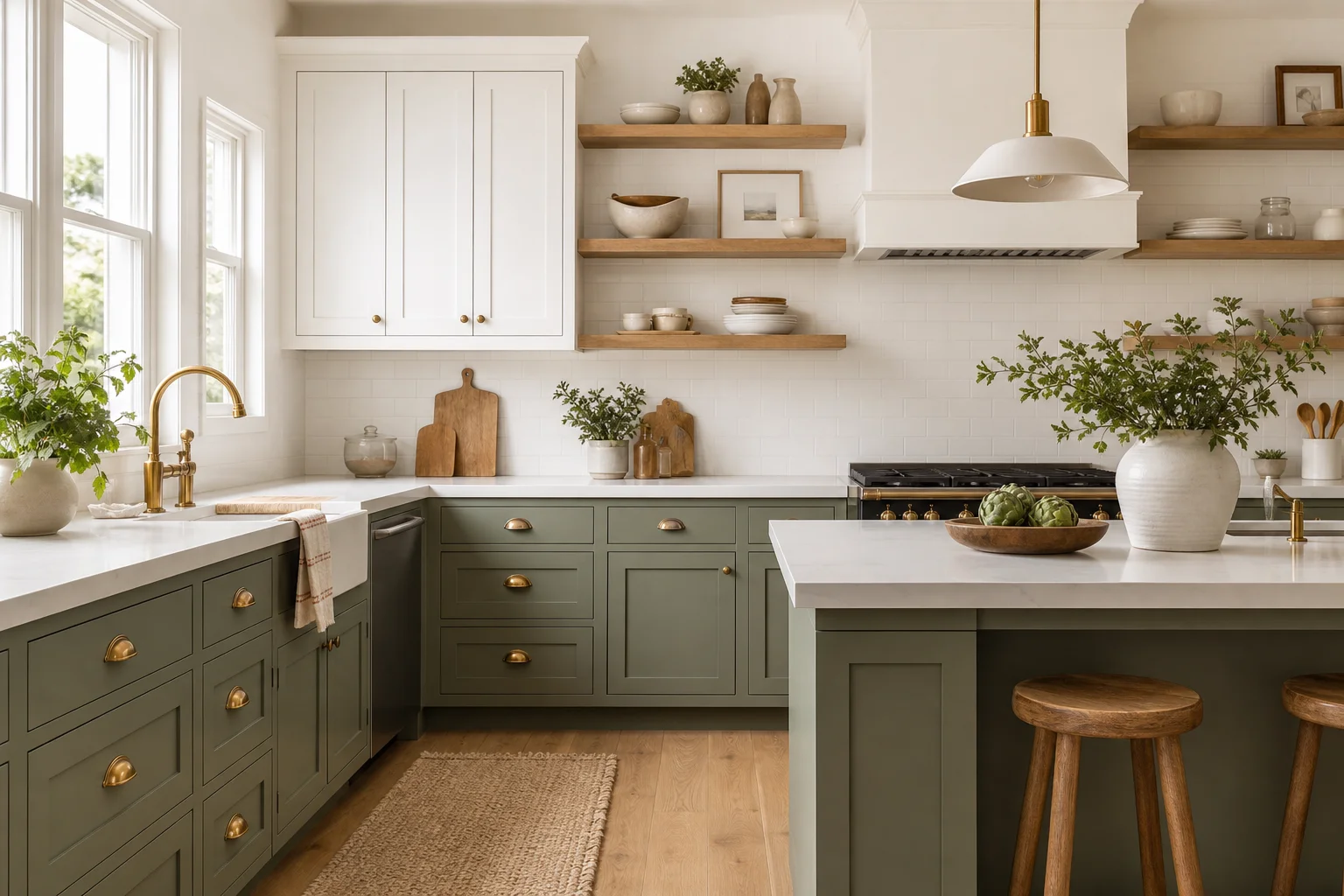
The lowest-risk, highest-payoff way in. Sage on the lower cabinets and island grounds the room; white, off-white, or light wood uppers keep it bright. This "darker below, lighter above" formula is the most-photographed kitchen layout of 2026 — it adds color without closing the room in, and resale buyers read it as tasteful rather than bold.
2. A sage green island in a neutral kitchen
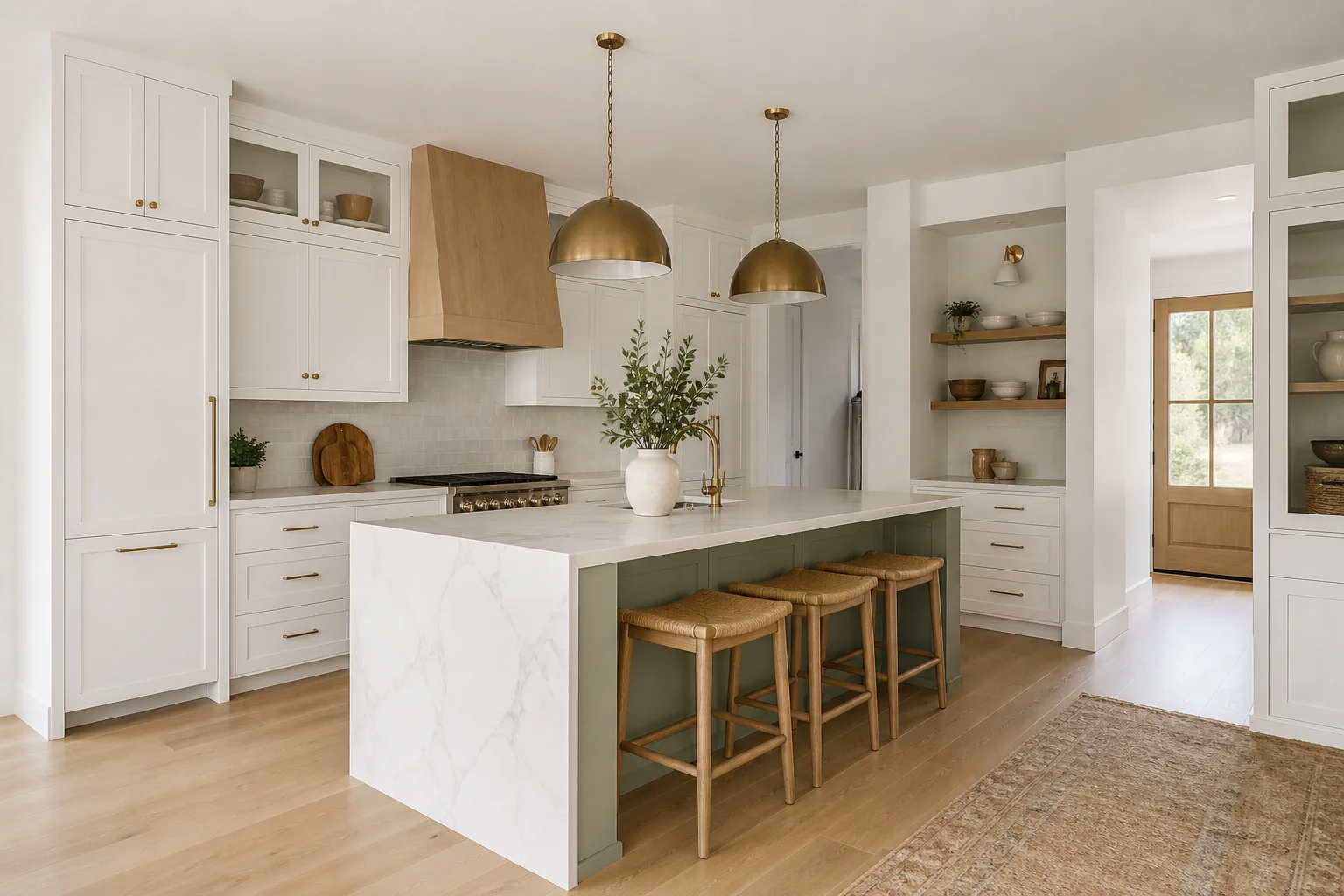
If you are not ready to recolor the cabinets, color just the island. A sage island in an otherwise white or wood kitchen gives you the trend in one controllable move — repaintable in a weekend, and the natural focal point of the room. Top it with a contrasting counter (white stone or butcher block) and hang warm brass pendants to finish it.
3. Go all-in: the sage-drenched kitchen
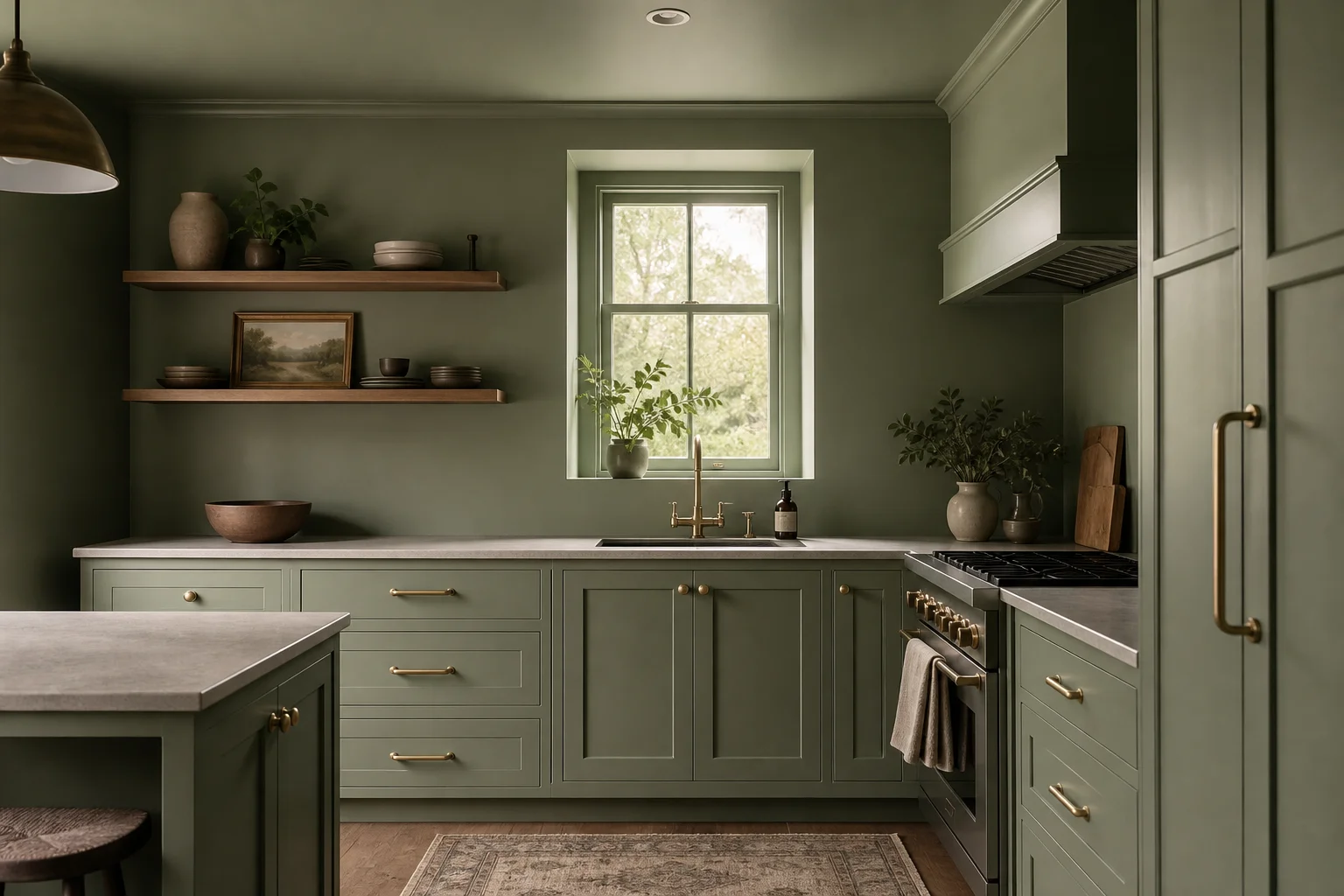
For the confident, color drenching a kitchen in a single sage — cabinets, walls, even the ceiling — creates an enveloping, expensive-looking calm. It works best in muted, grayer sages (a saturated green everywhere is overwhelming) and in rooms with decent light. Because there is no contrast fighting for attention, a drenched kitchen actually feels larger and more serene, not smaller.
4. Small kitchen? Put sage on the walls or shelving
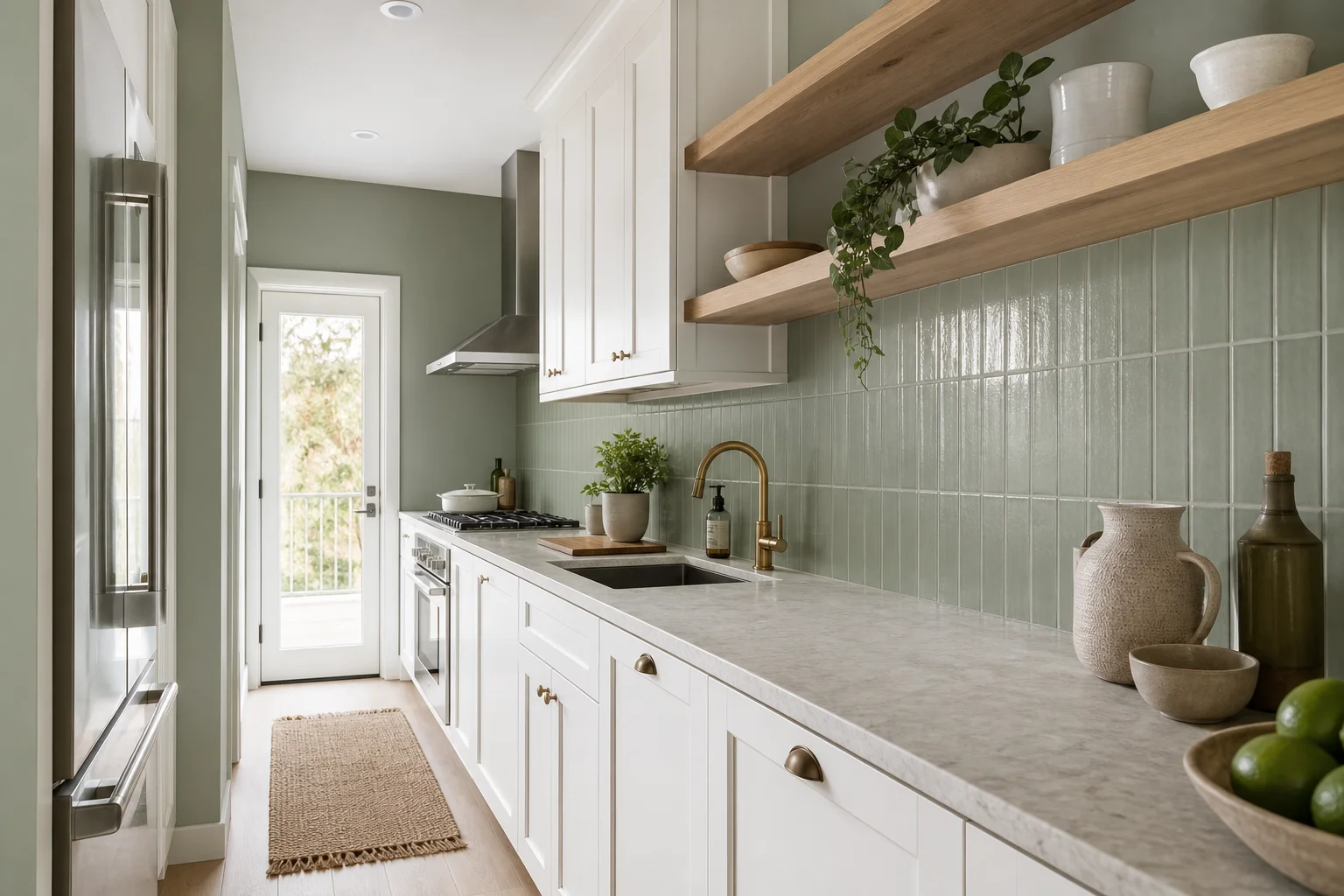
No cabinet budget — or a galley too tight to darken? Bring sage in through walls, a tiled backsplash, or open shelving instead. A sage backsplash behind white cabinets is one of the cheapest ways to date-proof a builder kitchen, and the small-space rules that make any room feel bigger still apply: keep uppers light, let the color land at eye level.
5–8. Four faster ways to add sage
- 5. Open shelving brackets and trim: paint just the trim, window frames, or shelf brackets sage for a near-zero-cost hint.
- 6. The pantry or scullery: treat a walk-in pantry or scullery as the place to be bold — a fully sage pantry behind a closed door is a low-stakes test run.
- 7. A sage range or larder cabinet: one freestanding piece (a painted hutch or larder) drops the color in without a full reno.
- 8. Soft furnishings: sage roman blinds, bar stools, or a runner pull the color in for renters and the commitment-averse.
What to pair with sage green
Sage is forgiving, but these pairings are why some sage kitchens look high-end and others look flat:
- Hardware: unlacquered or brushed brass is the defining 2026 partner — warm metal against cool-warm green. Black hardware works for a sharper, more modern look.
- Wood: light oak open shelving and floors keep it Scandinavian and fresh; walnut takes it richer and more traditional.
- Counters: white or cream stone keeps it bright; a warm-veined marble or butcher block leans cottage.
- Backsplash: zellige or handmade tile in white, cream, or a deeper green adds texture without clashing.
Preview your sage green kitchen before you commit
Cabinet color is the most expensive thing to get wrong in a kitchen. Before you order doors or open a paint can, upload a photo of your current kitchen to EasyRoomAI and generate it in sage — two-tone, full-drench, or just the island — to see which version actually suits your room and light.
- Try a free kitchen redesign — anonymous previews are free, no signup needed.
- Want the wider palette first? See olive green kitchen ideas, the 2026 interior color trends, and browse kitchen ideas.
Frequently asked questions
Is sage green still in style for kitchens in 2026? Yes — more than ever. Designers ranked green the number-one kitchen color for 2026 (cited by 86% in the NKBA report), and cabinet surveys show muted sage overtaking gray. It is now treated as a long-term neutral rather than a passing trend.
What colors go with a sage green kitchen? Warm brass or black hardware, light oak or walnut wood, and white or cream stone countertops. For the backsplash, white, cream, or deeper green handmade tile adds texture without clashing.
Should sage green go on upper or lower cabinets? Lower cabinets and the island are the safest, most popular placement — the "darker below, lighter above" two-tone look keeps the room bright while grounding it. Reserve all-over sage for kitchens with good natural light.
Does sage green make a small kitchen look smaller? Not if you use it right. A muted sage drenched across a small kitchen can actually feel larger because there is no high contrast breaking up the space. In tight galleys, keep upper cabinets light and add sage through walls, backsplash, or shelving.
What is the best sage green for a north-facing kitchen? Choose a warmer, gold-leaning sage. North light is cool and blue, so a cool gray-green will read flat and murky — a warmer undertone counteracts it. Always test a large painted sample across the day before deciding.
Can I see sage green in my own kitchen before painting? Yes — upload a photo of your kitchen to EasyRoomAI and generate sage versions (two-tone, island, or full-drench) to compare against your real cabinets and lighting before spending anything.
Gray is finally leaving the kitchen, and sage is the color most likely to last in its place. Start with the island or a two-tone base, pair it with brass and warm wood — then preview it in your own room before the first cabinet door comes off.
For the full picture of what's shaping kitchens this year — layouts, materials, storage, and beyond color — see our complete guide to kitchen design ideas for 2026.
Ready to Transform Your Space?
Try AI room redesign for free - no credit card required.
Start Designing FreeRelated reading
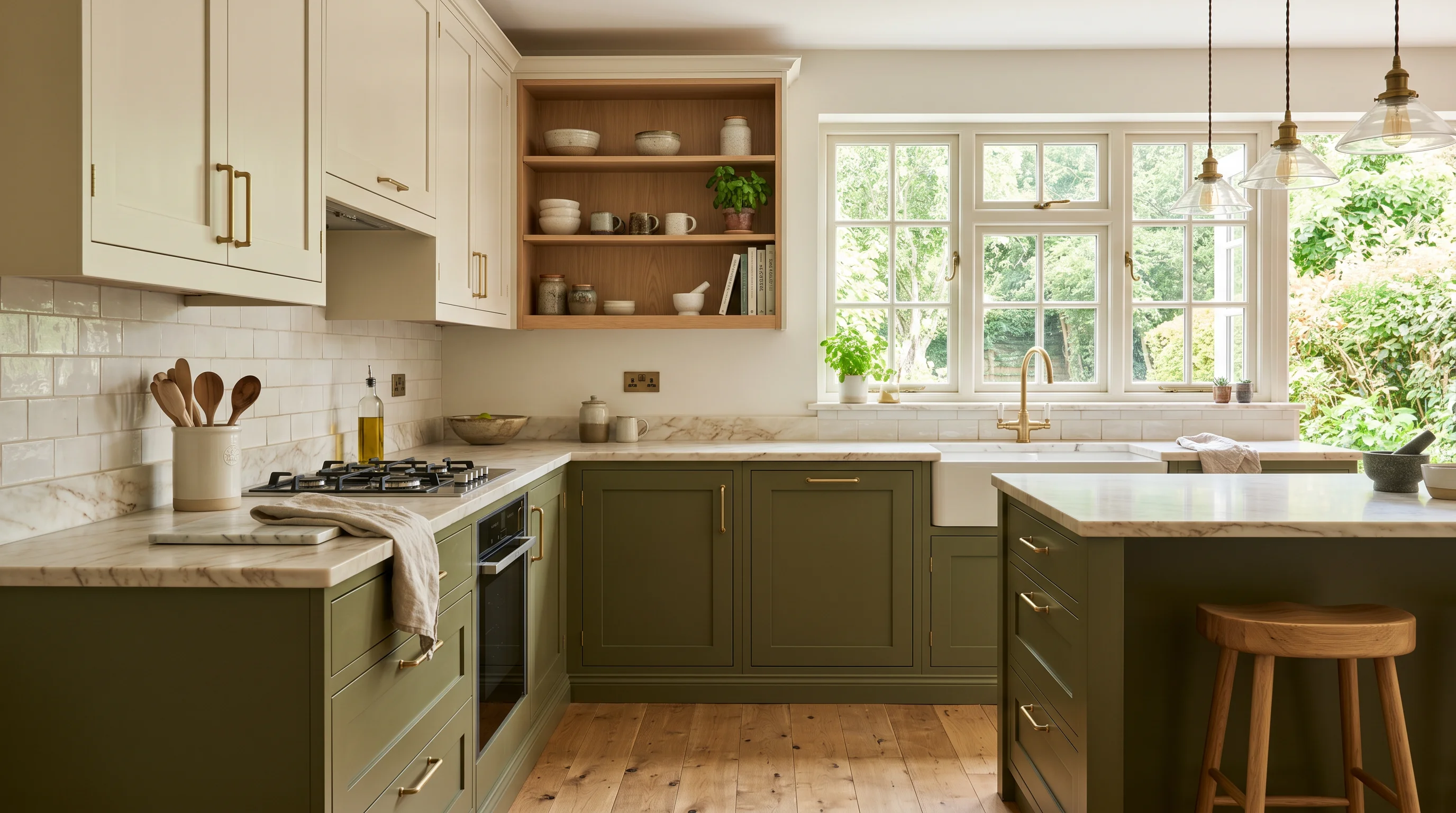
18 Olive Green Kitchen Ideas – The Warmer Green Replacing Sage (2026)
Sage had a moment — olive is taking over. Here are 18 olive green kitchen ideas for 2026: cabinets, islands, backsplashes, and the wood-brass-stone pairings that keep olive looking expensive. Plus how to tell olive from sage before you pick the wrong green.
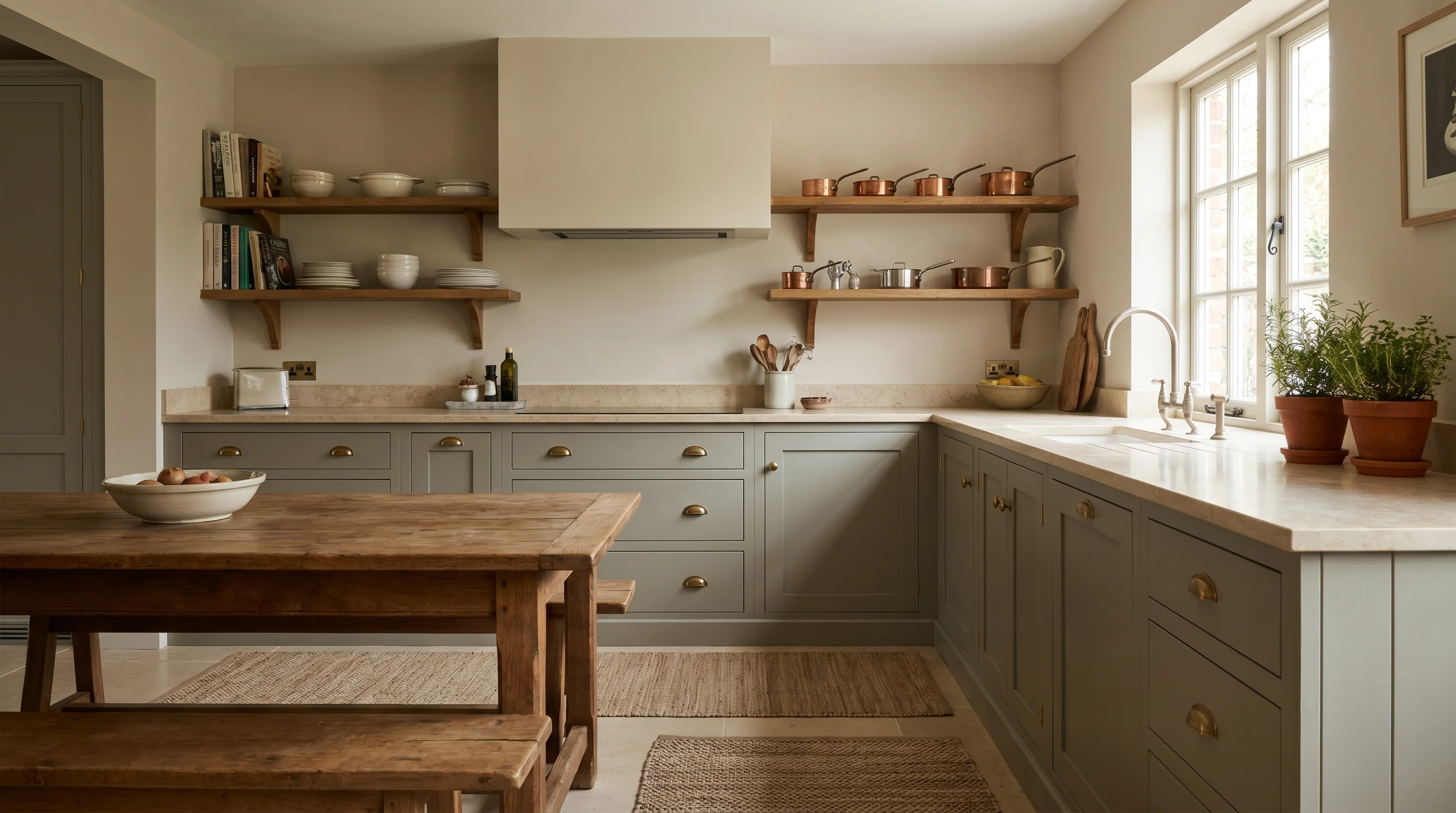
Muted Kitchen Colors: 24 'Dirty' Tone Ideas for 2026
Crisp white kitchens are giving way to softer, 'dirty' tones with warmth and depth. Here's a guide to muted kitchen colors for 2026 — what makes a color 'muted,' the full palette family from mushroom to muddy green, where to use them, how to pair them with wood and stone, and before-and-after inspiration.
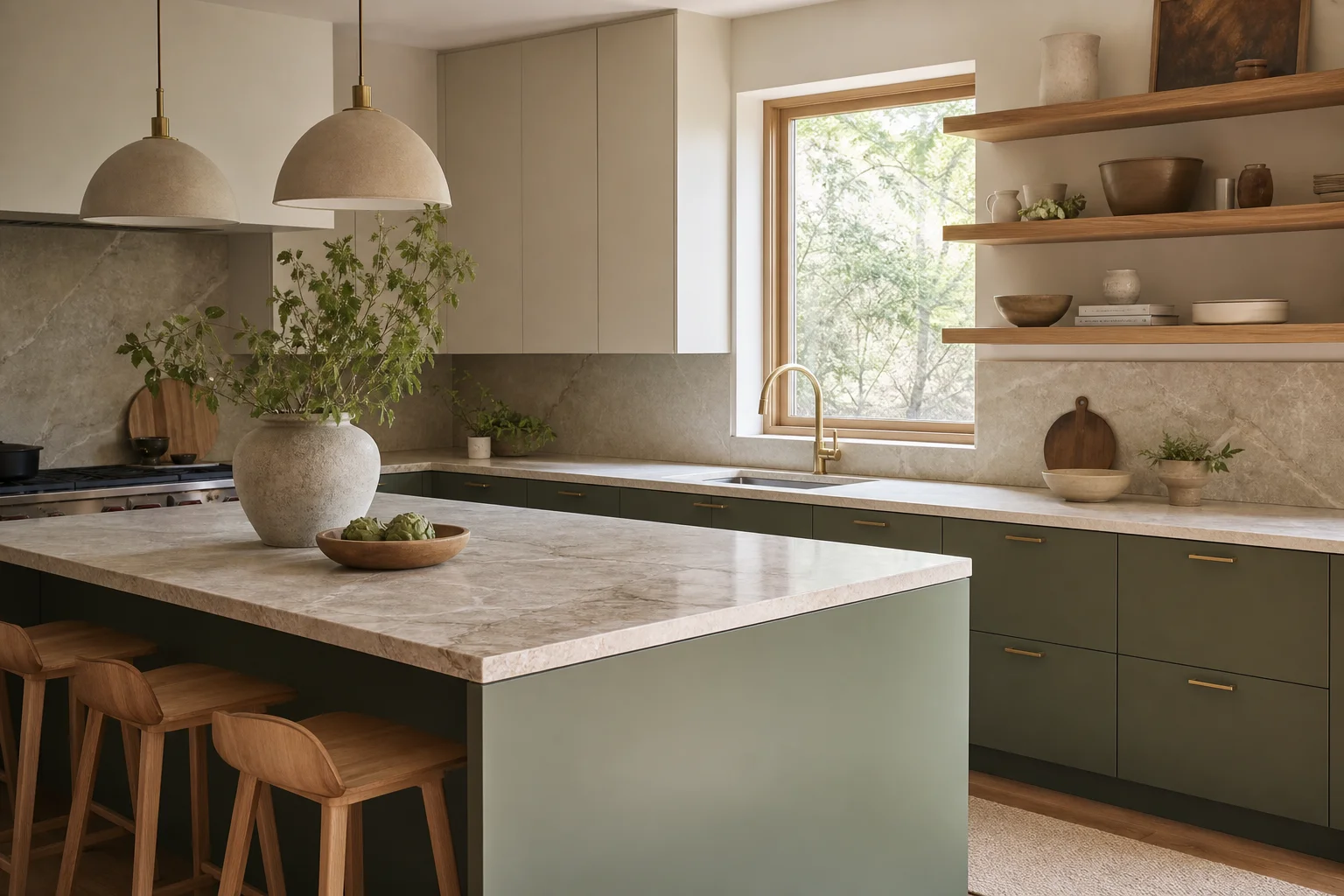
Kitchen Cabinet Color Trends 2026: The Colors Designers Ranked #1 (and What's Out)
634 industry pros ranked the kitchen colors that matter for 2026. Green leads at 86%, navy and warm neutrals are in, gray and bright white are fading — plus the two-tone and wood-grain looks taking over cabinetry.