18 Olive Green Kitchen Ideas – The Warmer Green Replacing Sage (2026)
Sage had a moment — olive is taking over. Here are 18 olive green kitchen ideas for 2026: cabinets, islands, backsplashes, and the wood-brass-stone pairings that keep olive looking expensive. Plus how to tell olive from sage before you pick the wrong green.
 Easy Room AI Team
Sage green has been the safe kitchen color for two years. Now the greens are getting warmer, deeper, and more grounded — and the version leading that shift is olive. On Houzz, searches for olive in the kitchen rose 57% year-over-year in early 2026, while sage held flat. The difference matters: sage is a cool, gray-green that reads almost neutral; olive is a warm, yellow-green that reads earthy and rich. One calms a room; the other grounds it.
If sage green kitchens felt like easing into color, olive is the confident next step — the green for people who actually want their kitchen to feel warm. This guide covers 18 ways to use it, the pairings that make it look expensive, and how to avoid the one mistake that turns olive muddy.
In this guide you will learn:
- What makes olive different from sage (and why it matters for your light)
- 18 ways to bring olive green into a kitchen — cabinets, island, walls, tile, and more
- The wood, metal, and stone pairings that make olive look high-end
- How to preview olive in your own kitchen before you commit
Olive vs sage: the difference that decides everything
Before you pick a paint swatch, know which green you are looking at. The two are often confused in online inspiration photos, but they behave very differently on a cabinet:
- Sage is a cool, gray-green — it reads almost neutral, pairs easily with white, and recedes. It is the green you choose when you want color but not drama.
- Olive is a warm, yellow-green with brown or gold undertones — it reads earthy, rich, and grounded. It advances rather than recedes, and it wants warm materials around it (wood, brass, stone).
The practical difference: olive gets warmer in warm light and muddier in cool light. In a north-facing kitchen with blue daylight, olive can turn flat and dirty — the same light problem that affects every warm paint. If your kitchen faces north, lean toward a cleaner, lighter olive (more green, less brown) or consider north-facing room color strategies. South- and west-facing kitchens are olive's natural habitat.
Cabinets and two-tone approaches
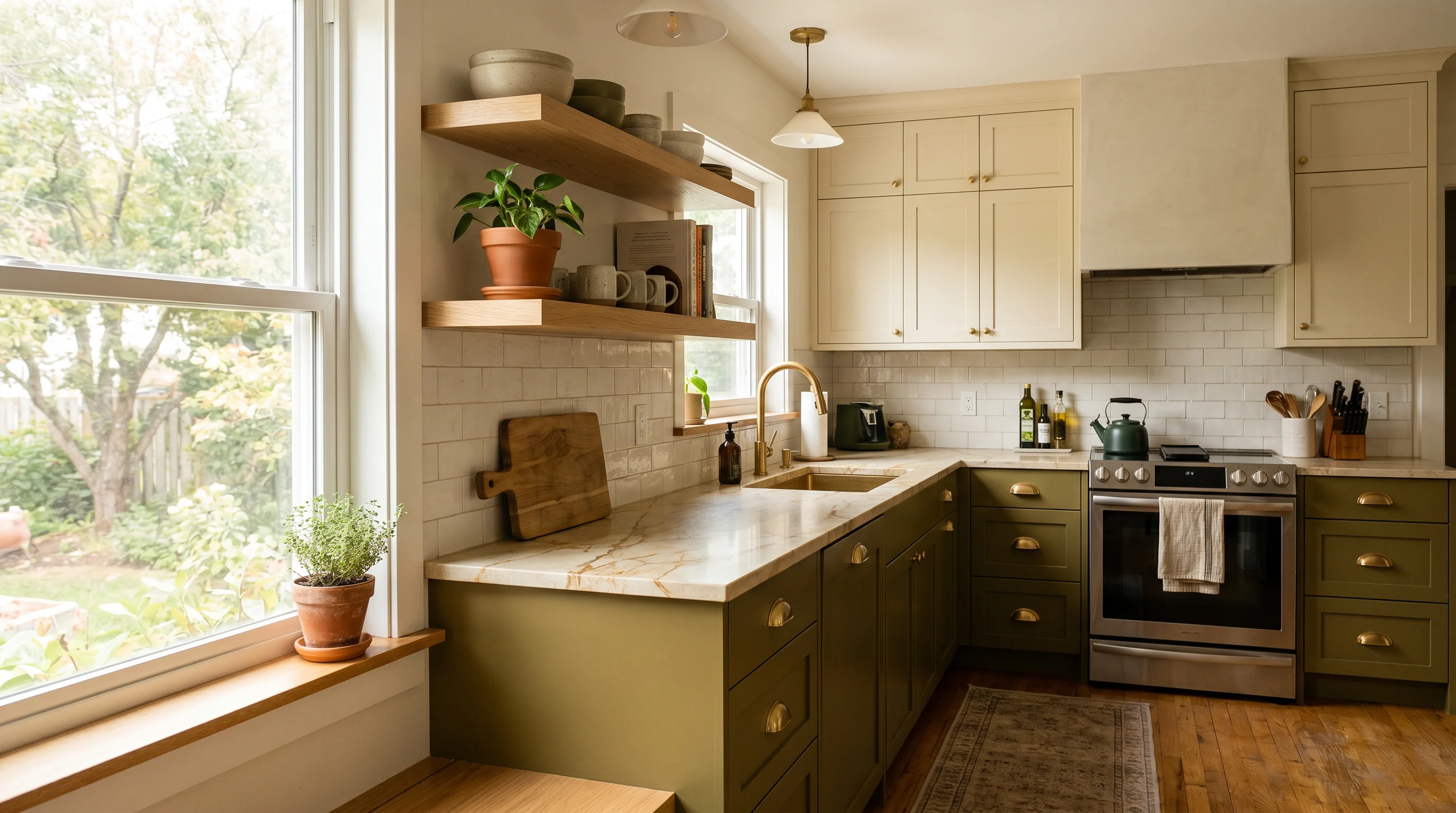
1. Olive lower cabinets with cream or warm white uppers. The two-tone formula that works just as well in olive as it does in sage — darker below, lighter above. The key difference: pair olive with warm white or cream, not bright white. Bright white against olive creates a jarring cold-warm clash.
2. Full olive cabinet drench for a cocooning kitchen. If the room gets strong daylight, drenching all cabinets, walls, and even the ceiling in a single olive creates the same enveloping, luxurious effect as a chocolate brown living room — warm, grounded, and far from boring. Use a matte finish to keep it soft.
3. Olive on the island only. Paint or order the island in olive and leave the perimeter cabinets neutral. It is the lowest-commitment way to test the color, repaintable in a weekend, and the natural focal point of the room.
4. Olive on a single run of base cabinets. Not ready for a full kitchen recolor? Paint one continuous run — the sink wall or the range wall — and leave the rest wood or white. One wall of olive anchors the whole room without overwhelming it.
5. Olive exterior on a freestanding pantry or larder cabinet. A single painted freestanding piece (a tall pantry, a vintage hutch, or a larder cabinet) drops olive into the kitchen with no cabinetry commitment at all.
Try Muted Green & Warm Wood in Your Kitchen
Upload a photo of your space to test Muted Green & Warm Wood instantly with AI — 100% free.
Supports JPG, PNG, WebP up to 10MB
Walls, backsplash, and tile
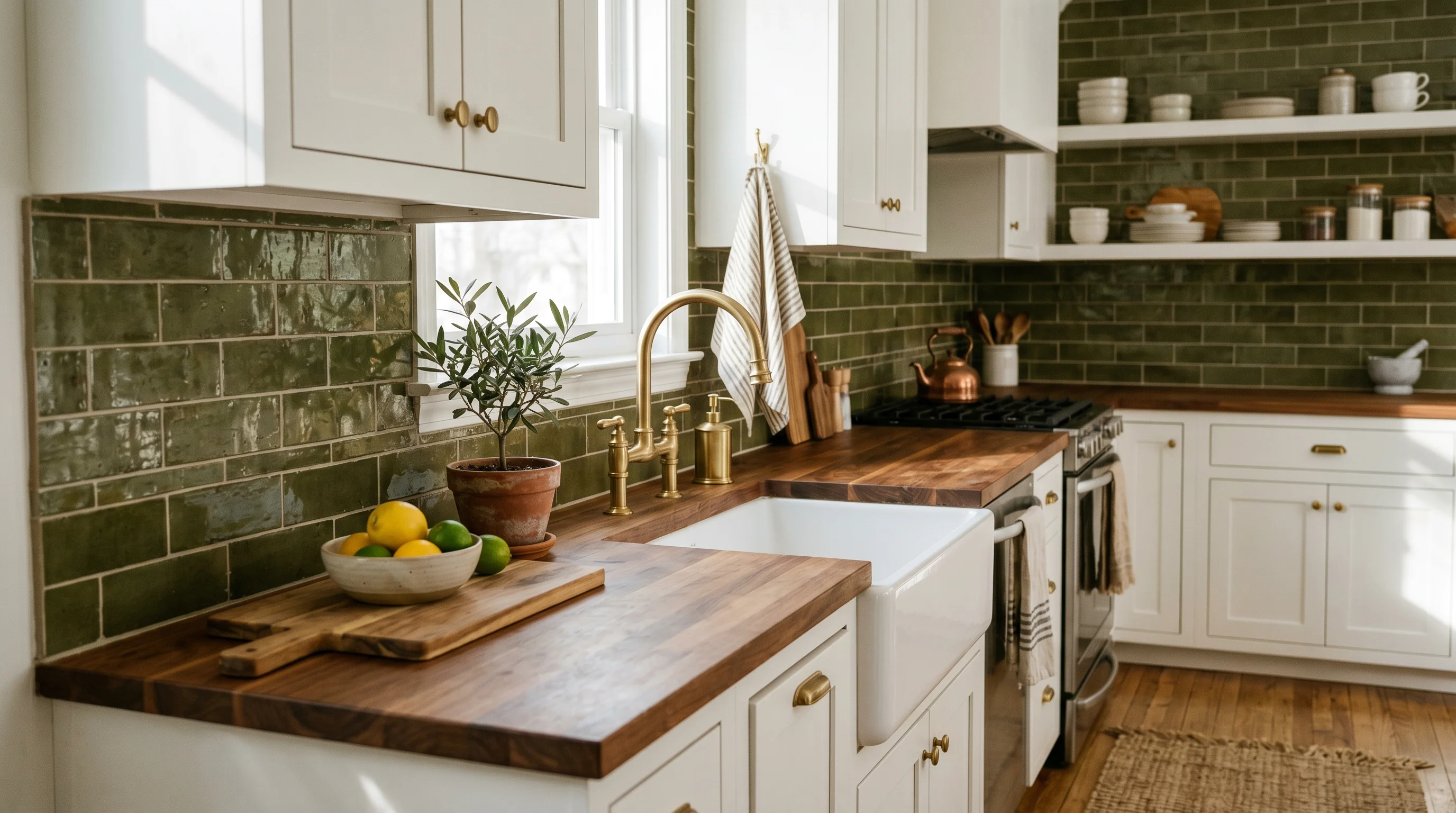
6. An olive tile backsplash behind neutral cabinets. Zellige, subway, or handmade tile in olive behind white or wood cabinets is one of the cheapest, most impactful ways to bring the color in. The texture of handmade tile makes olive come alive in a way flat paint can't.
7. Olive painted walls with wood cabinets. Skip the cabinet paint entirely — paint the walls olive and let natural wood cabinets (oak, walnut, or birch) do the rest. This is the European farmhouse look that's driving the warm-kitchen trend, and it works beautifully with the warm wood grain finishes dominating 2026.
8. A patterned olive floor tile. Encaustic or cement-look porcelain tile with olive in the pattern grounds the kitchen from the floor up — unexpected, and far more interesting than the standard gray or white floor.
9. Olive on the range hood or open shelving brackets. For a hint rather than a commitment: paint just the range hood surround or the brackets on open shelving. Olive in small doses still registers, and you can repaint in an afternoon.
Pairings that make olive look expensive
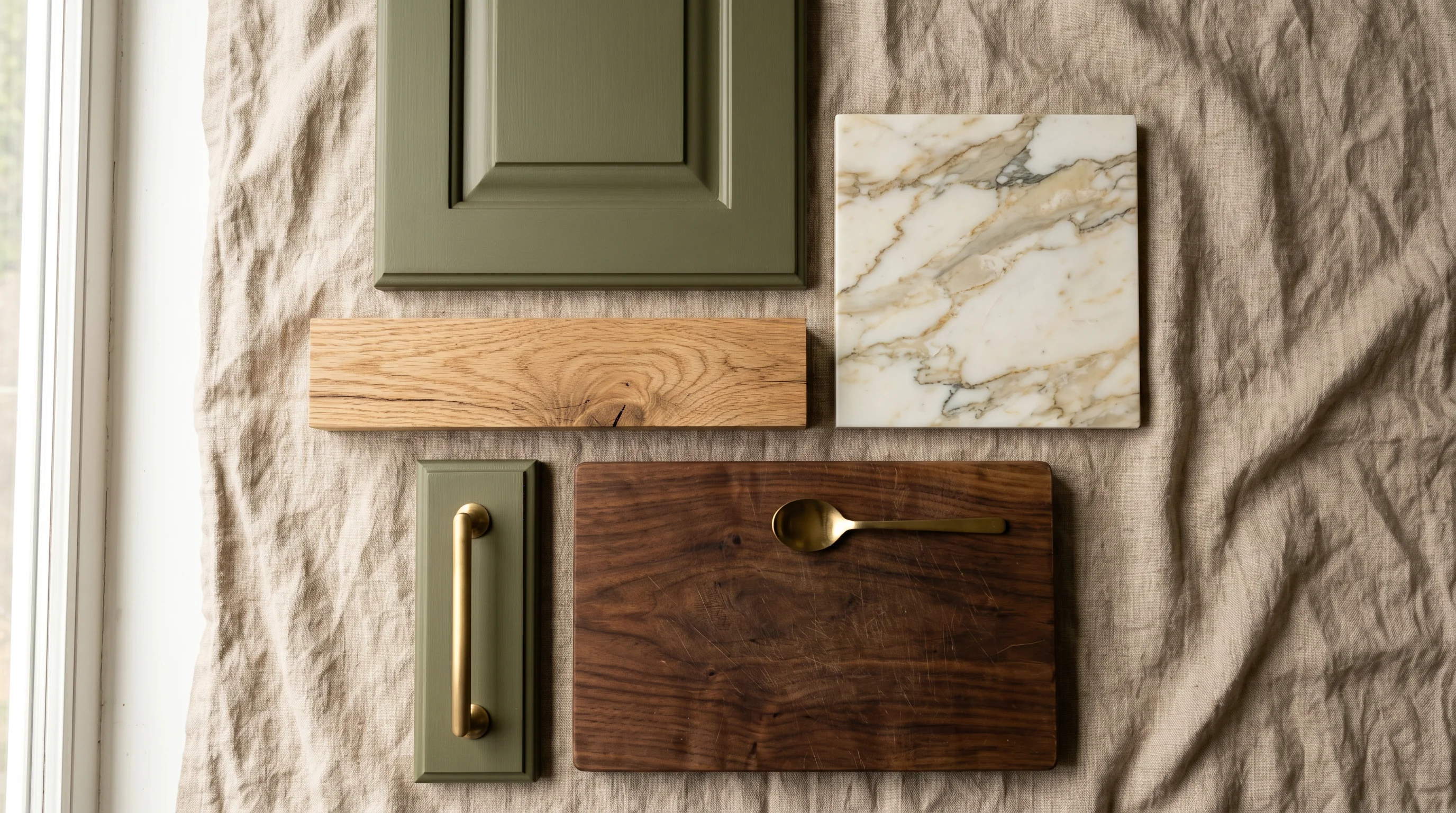
10. Brushed brass hardware. Brass is olive's defining metal partner — warm against warm, with enough contrast to catch light. Unlacquered brass that patinas over time suits olive's earthy personality even better than polished.
11. Light oak or white oak open shelving and floors. Light wood keeps an olive kitchen from going dark. Oak's warm grain and olive's warm undertone belong to the same family — together they read Scandinavian-warm, never cold.
12. Walnut for a richer, darker pairing. If you want olive to feel more dramatic, swap the oak for walnut. Walnut's chocolate tones intensify olive's depth — but balance it with a light countertop so the room doesn't close in.
13. Warm-veined marble or quartzite countertops. A cream or warm-white counter with soft gold or taupe veining bridges the olive cabinets and the light upper zone. Avoid pure bright white stone — it fights the warmth olive wants.
14. A cream or oatmeal linen roman blind. Soft textiles in cream, oatmeal, or warm white at the window soften the hard surfaces and keep the color story cohesive.
Small kitchens and quick adds
15. Olive in a galley kitchen — use it on the lower half only. In a tight galley, olive on lower cabinets plus open shelving or light uppers keeps the ceiling feeling high. A single dark color all around a narrow room can compress it.
16. A removable olive peel-and-stick backsplash (renter-friendly). Peel-and-stick tile or wallpaper in olive gives renters the trend with zero damage. Pair it with a light wood cutting board and brass utensil holder for the full look.
17. Olive green small appliances and accessories. A stand mixer, kettle, or canisters in olive grouped on the counter bring the color in without painting a single surface — the zero-commitment version for anyone testing the trend.
18. Olive herbs and plants as living decor. A row of potted herbs (rosemary, thyme, basil) or a trailing pothos on the counter or windowsill reinforces the olive palette with living color and makes the kitchen smell like it looks.
Preview olive green in your own kitchen before you commit
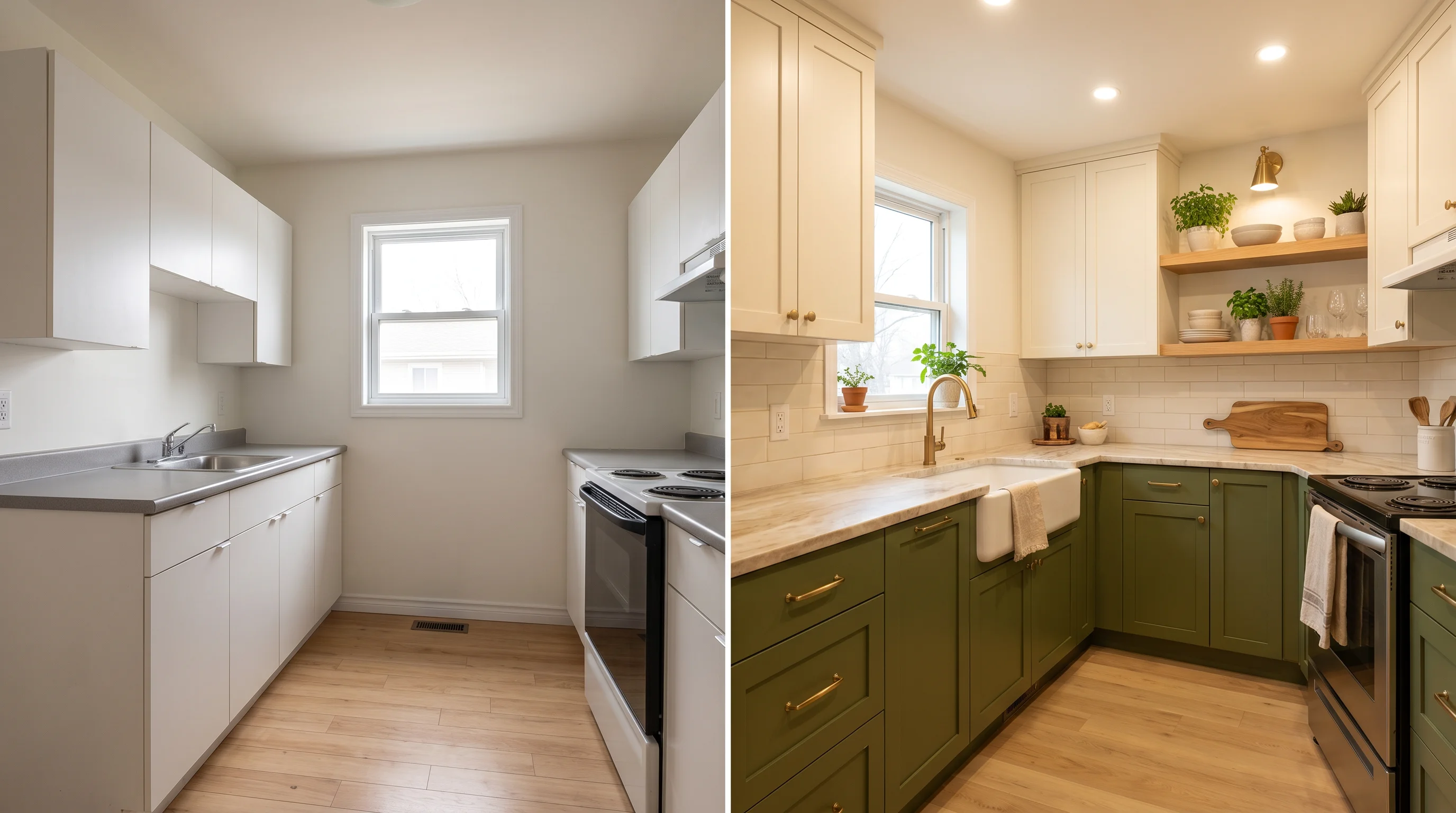
Cabinet color is the most expensive thing to get wrong in a kitchen — and olive is more sensitive to light than most greens. Before you order doors or open a paint can, upload a photo of your current kitchen to EasyRoomAI and generate it in olive green — two-tone, full-drench, island-only, or just the backsplash — to see which version actually suits your room and light.
- Try a free kitchen redesign — anonymous previews are free, no signup needed.
- Want to compare greens? See the sage green kitchen guide, muted kitchen colors, the wider 2026 kitchen cabinet color trends, and browse kitchen ideas.
Frequently asked questions
What is the difference between olive green and sage green for kitchens? Sage is a cool, gray-green that reads almost neutral and recedes; olive is a warm, yellow-green with brown or gold undertones that reads earthy and advances. Sage pairs easily with bright white; olive wants warm white, cream, and warm metals. Choose sage for a calm, neutral feel; choose olive for warmth and richness.
Is olive green a good color for kitchen cabinets in 2026? Yes — olive searches on Houzz rose 57% year-over-year in early 2026, and the wider trend is moving from cool grays and sages toward warmer, earthier greens. Olive is being treated as a warm neutral that pairs naturally with wood, brass, and stone.
Does olive green make a kitchen look smaller? Only if you use it everywhere in a tight space with little light. In a small or galley kitchen, keep olive on the lower cabinets or island and use cream or light wood above. In a kitchen with good natural light, a full olive drench can feel warm and enveloping rather than small.
What colors go with olive green cabinets? Cream, warm white, and oatmeal are the core neutral partners. For metals, brushed brass is the defining 2026 pairing. Light oak and walnut both work for wood tones. Warm-veined marble or quartzite bridges the cabinets and countertop. Avoid bright white and cool grays — they clash with olive's warm undertone.
Will olive green date quickly? Olive is part of the broader shift toward warm, earthy tones that has been building since 2023 (chocolate brown, terracotta, warm neutrals). It is being treated as a warm alternative to sage and gray — a long-term neutral rather than a trend color. That said, it is bolder than sage, so start with the island or a two-tone if resale is on your mind.
Can I see olive green in my own kitchen before painting? Yes — upload a photo of your kitchen to EasyRoomAI and generate olive green versions (two-tone, island, full-drench, or backsplash) to compare against your real cabinets, light, and flooring before spending anything.
Sage eased the kitchen world into green. Olive is what happens when you stop tiptoeing — warmer, richer, and unmistakably intentional. Start with the island or a tile backsplash, pair it with brass and warm wood, and preview it in your own kitchen before the first swatch goes up.
Olive is one piece of a much bigger kitchen shift in 2026. For the complete guide — layouts, storage, materials, and all 25 trends — see kitchen design ideas for 2026.
Ready to Transform Your Space?
Try AI room redesign for free - no credit card required.
Start Designing FreeRelated reading
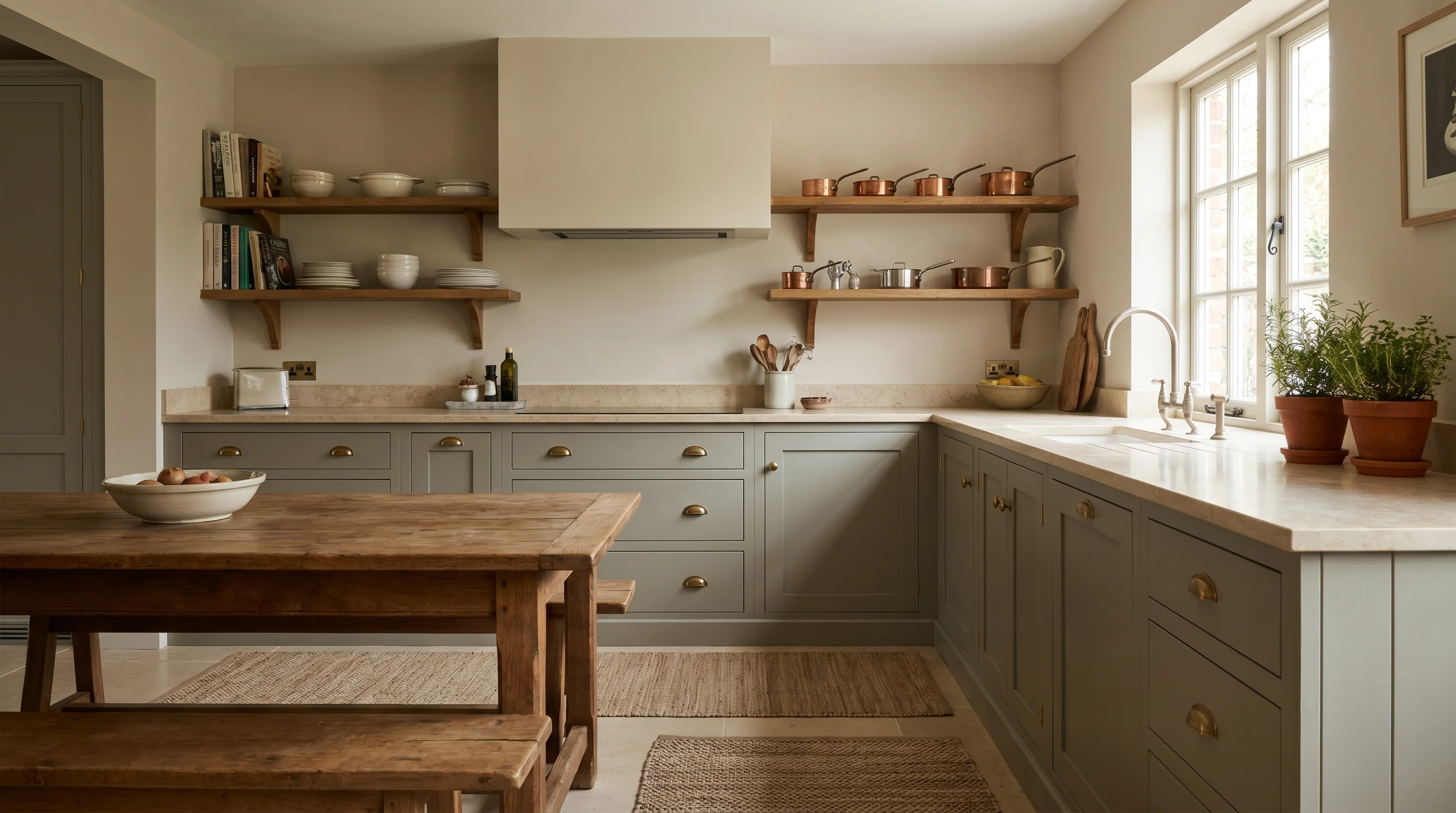
Muted Kitchen Colors: 24 'Dirty' Tone Ideas for 2026
Crisp white kitchens are giving way to softer, 'dirty' tones with warmth and depth. Here's a guide to muted kitchen colors for 2026 — what makes a color 'muted,' the full palette family from mushroom to muddy green, where to use them, how to pair them with wood and stone, and before-and-after inspiration.
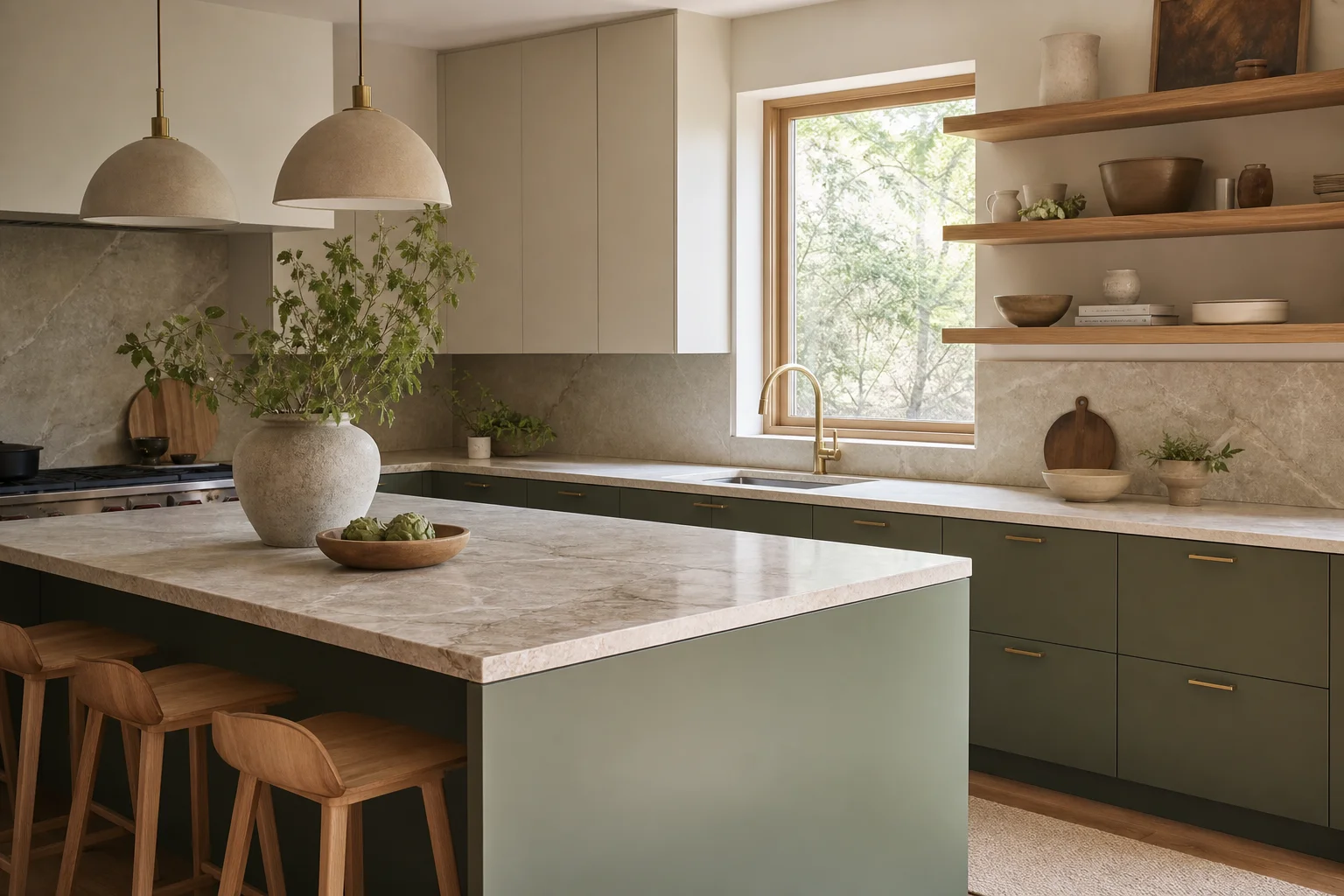
Kitchen Cabinet Color Trends 2026: The Colors Designers Ranked #1 (and What's Out)
634 industry pros ranked the kitchen colors that matter for 2026. Green leads at 86%, navy and warm neutrals are in, gray and bright white are fading — plus the two-tone and wood-grain looks taking over cabinetry.
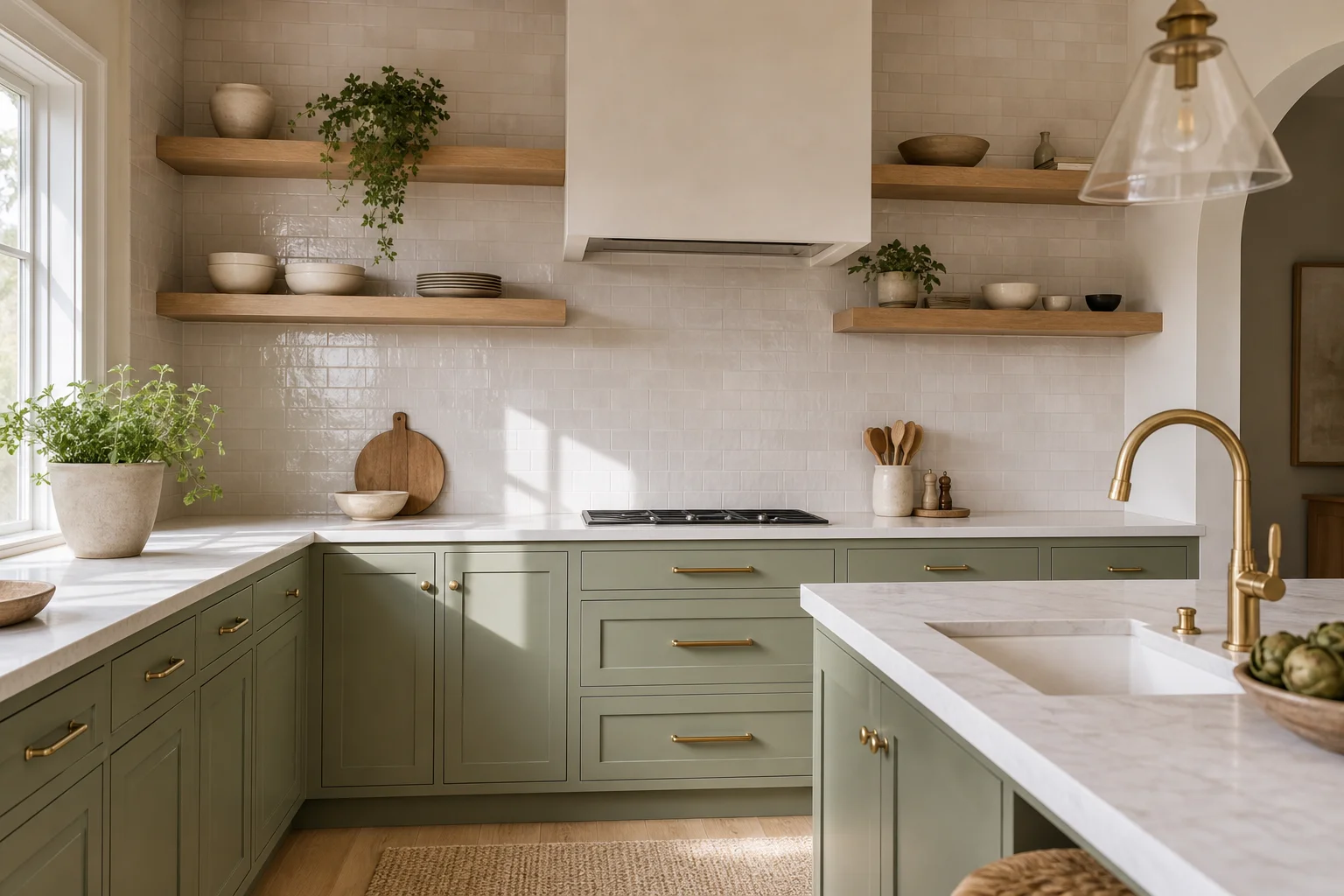
Sage Green Kitchen Ideas: 8 Ways to Use 2026's Most-Wanted Color
86% of designers rank green #1 for 2026. Explore 8 sage kitchen ideas: two-tone cabinets, island accents, brass & oak pairings, plus free AI room previews.