Game Room Design Ideas 2026: Clearances, Zones & Grown-Up Lounges
Stop buying the pool table first. Clearance charts for pool, ping-pong, and consoles — plus basement, small-room, and adult lounge layouts that actually fit in 2026.
 Easy Room AI Team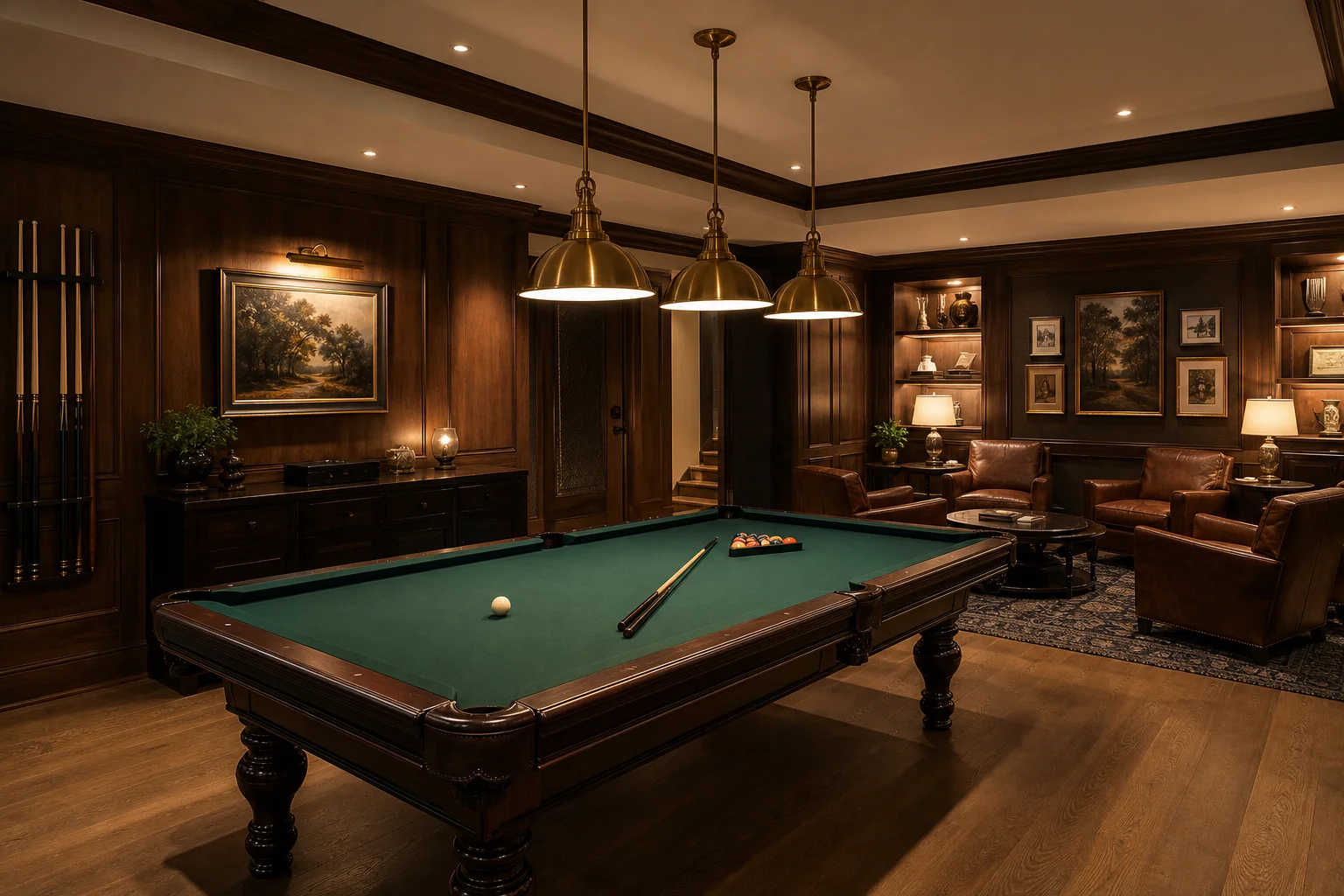
The deliberately useless room is gone; the purposeful one is back. In its 2026 emerging trends report, Houzz flagged rising interest in rooms built for a specific passion — game rooms, libraries, wellness retreats — and remodelers report the same shift: away from one big open plan, toward defined zones that adapt as families change. Add the fact that Houzz alone hosts over 1,400 basement game room projects, and the picture is clear: the game room has graduated from man-cave punchline to mainstream 2026 design project.
This guide covers the layouts, measurements, and design rules that make one work — whether you have a full basement or a spare corner.
In this guide you will learn:
- Why game rooms are one of 2026's purposeful-space trends
- How to plan the space before buying anything
- Basement game rooms: the classic, done right
- Small-room and corner setups
- Family rooms vs grown-up games lounges
- Five design rules that keep the room usable
Why game rooms are back
Two 2026 currents meet here. The first is the purposeful-spaces trend: homeowners are carving out rooms with a single, named job — a library, a music room, a game room — because a room with a purpose actually gets used. The second is broken-plan living: after a decade of open-concept everything, designers are reintroducing zones, half-walls, and dedicated rooms so different activities stop competing for the same air. A game room is the most fun expression of both.
Plan the space before the toys
The classic mistake is buying the pool table first and discovering the cues hit the wall. Work from clearances, not equipment:
- Pool table: the table itself needs only ~30 sq ft, but with cue clearance you want a room zone of roughly 12 × 16 ft. Planner 5D's guidelines suggest at least 70 sq ft as the bare minimum for the table zone alone.
- Table tennis: around 100 sq ft of clear zone to play without rage.
- Mixed game room: 120+ sq ft lets you combine a play zone with a lounge zone.
- Console / PC corner: as little as 25–30 sq ft — which is why a game corner is a legitimate option in a small home.
Then zone it: a play zone (table, dartboard, screen), a lounge zone (sofa, viewing seats), and a refuel zone (bar cart, mini fridge, snack shelf). Even in one room, lighting and a rug can separate the three.
Redesign Your Room in Seconds
Upload a photo of your space to test 16 curated design styles instantly with AI — 100% free.
Supports JPG, PNG, WebP up to 10MB
The basement game room
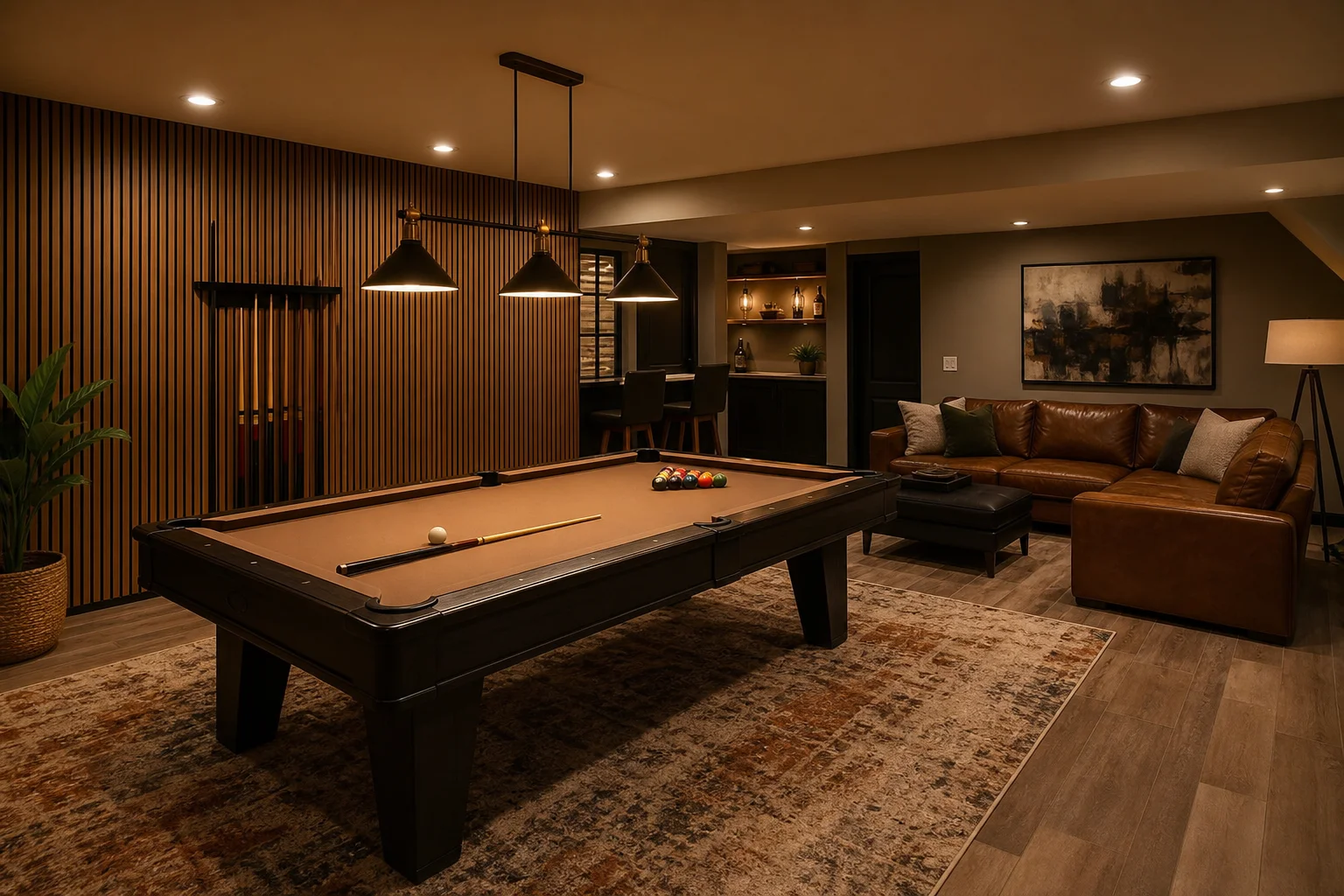
The basement is the natural habitat: isolated for noise, generous in square footage, and not fighting any other function. Three things separate the good ones from the damp ones:
- Light in layers. Below grade means no daylight to waste. Combine warm ambient light (2700K), task lighting over the table, and a few low lamps in the lounge zone — never one bright ceiling grid.
- Moisture-proof materials. Vinyl plank or tile flooring with area rugs beats carpet; below-grade walls want moisture-tolerant finishes before anything decorative.
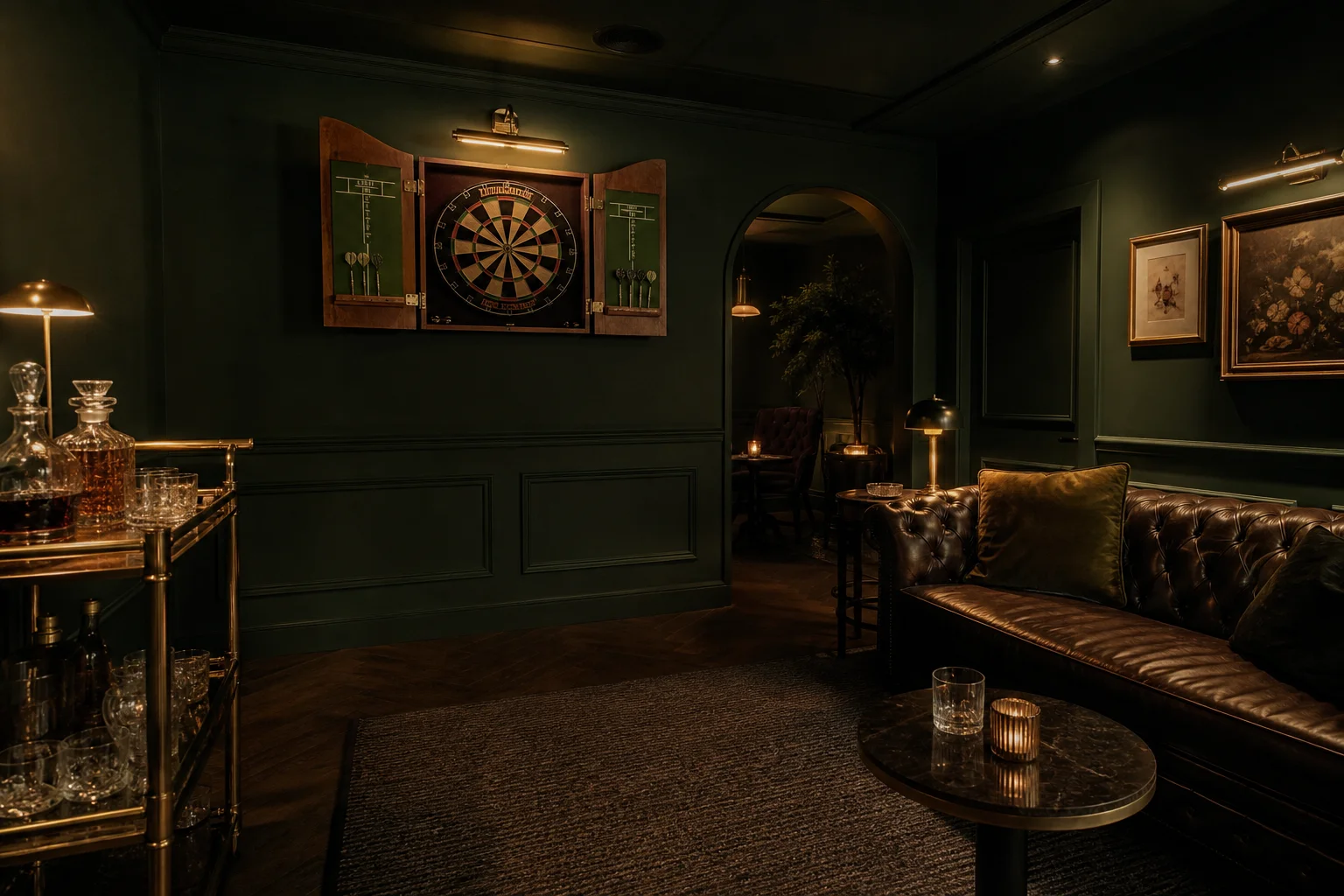
- Embrace the dark. Basements fight daylight and lose — so stop fighting. A deep, moody color drench in olive, brown, or dark blue turns "no windows" into "intentional lounge."
Planning a bigger basement overhaul first? Start with the fundamentals in our basement design ideas hub.
Small rooms and game corners
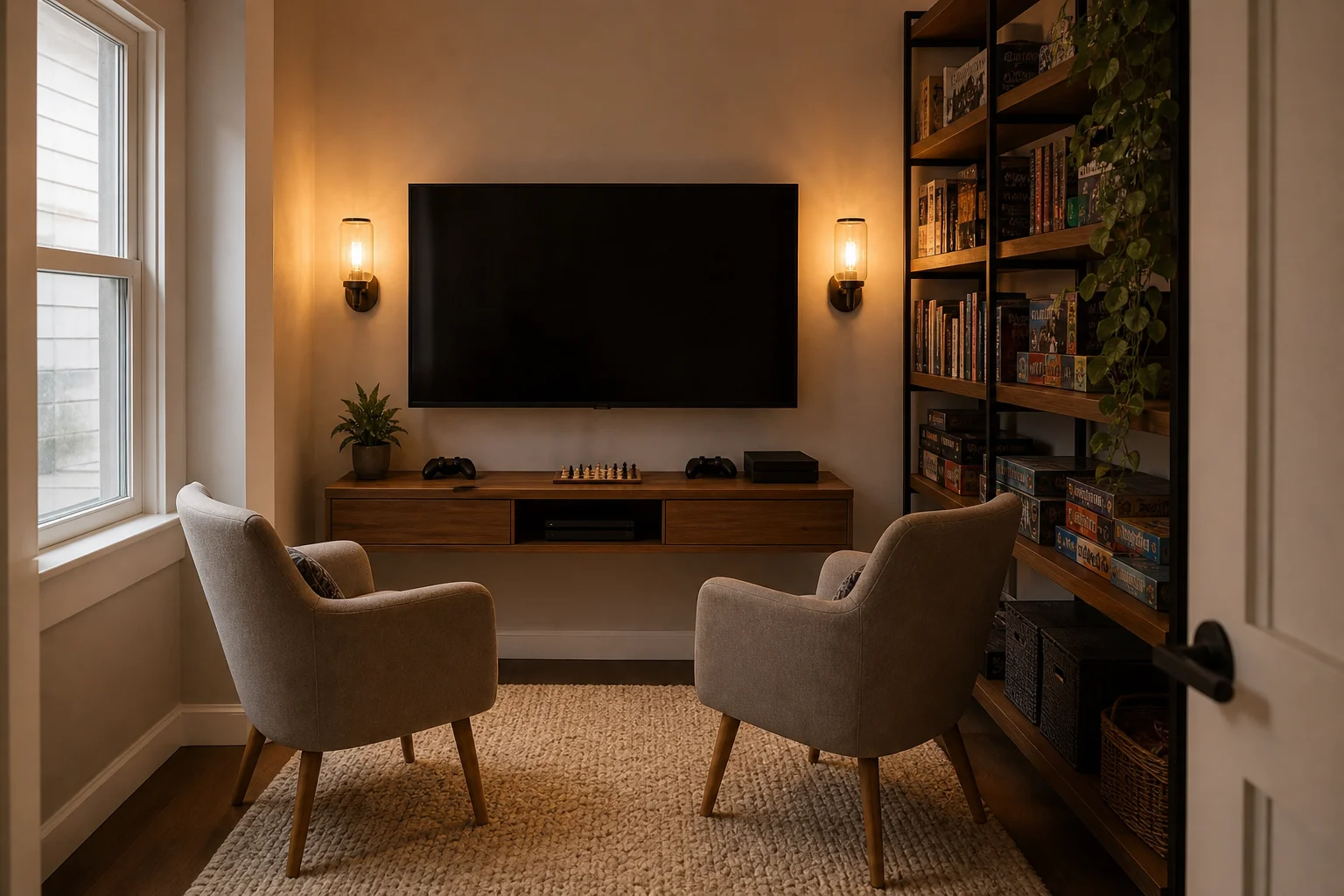
No basement required. A 9 × 10 spare room — or one well-planned corner of a living room — handles a serious setup:
- Go vertical. Wall-mount the screen, float a console shelf beneath it, and use full-height shelving for games and controllers. Floor space is for people.
- Choose folding and stacking. A fold-away games table, nesting stools, and storage ottomans let the room switch jobs in two minutes.
- Define the zone. A rug, a pair of sconces, and a paint moment mark "this corner is for play" without a single wall. The same tricks that make small spaces feel bigger apply doubled here.
Family game rooms vs grown-up lounges
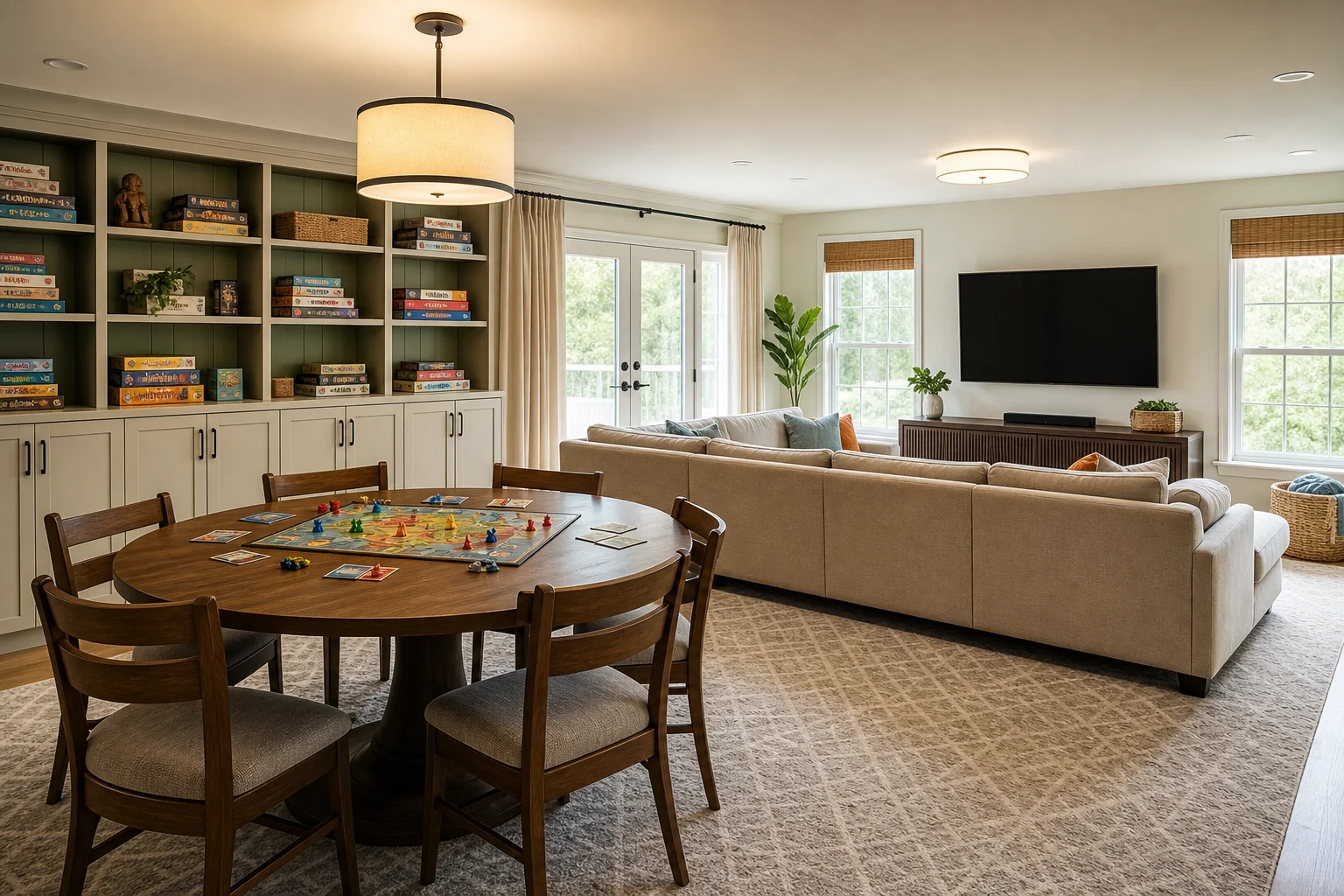
The family version optimizes for durability and turnover: performance fabrics, a big table that hosts board games and homework equally, closed storage low (kids reach) and display high. Multi-zone matters most here — one screen zone, one table zone — so two generations can occupy the room without negotiating.
The grown-up games lounge optimizes for atmosphere. Think dark drenched walls, a proper bar cart (one of the season's returning entertaining trends), brass picture lights over the dartboard, and a leather sofa that outlives trends. It borrows more from a hotel bar than a rec room.
Five design rules that keep it usable
- Storage beats display. Games multiply. Closed cabinets keep the room a lounge instead of a warehouse; open shelves are for the ten things you actually love.
- Layer the lighting. Ambient + task + accent, all warm, all dimmable. Glare on a screen or shadow on a table kills the room faster than any decor mistake.
- Treat the acoustics. A big rug, upholstered seating, and curtains keep echo and noise leakage down — critical if the room shares a wall (or floor) with bedrooms.
- Pick surfaces that take abuse. Performance fabric, wood that wears in rather than out, and drink-proof side tables. A precious game room is an unused game room.
- Leave circulation space. Keep at least 3 ft of walkway behind seating and around tables. If people have to shuffle sideways, the layout failed.
Preview your game room before you build it
The hardest part is seeing past the boxes currently stacked in that basement or spare room. Upload a photo to EasyRoomAI and preview the same room redesigned as a warm, finished space — layout kept, potential revealed.
- Start a free redesign — anonymous previews are free, no signup needed.
- Working below grade? Browse basement ideas for moisture-smart, light-layered inspiration first.
Frequently asked questions
How big does a game room need to be? It depends on the headline activity: roughly 12 × 16 ft for a pool table with cue clearance, about 100 sq ft of clear zone for table tennis, and 120+ sq ft for a mixed play-plus-lounge room. A console gaming corner needs as little as 25–30 sq ft.
What is the cheapest way to start a game room? Start with a corner, not a room: wall-mounted screen, a rug to define the zone, two comfortable chairs, and closed storage for games. Upgrade to dedicated tables only after the corner proves it gets used.
Are basements too damp for a game room? Not if you sequence it right: address moisture first (drainage, dehumidification), choose vinyl or tile flooring over carpet, and use moisture-tolerant wall finishes. Then layer warm lighting to replace the missing daylight.
What lighting works best in a game room? Three warm, dimmable layers: ambient ceiling light, task light over tables and screens, and low accent lamps in the lounge zone. Avoid a single bright ceiling fixture — it creates glare on screens and flattens the room.
How do I make a game room work for both kids and adults? Zone it: a table zone and a screen zone that operate independently, durable performance fabrics everywhere, kid-reachable closed storage low and adult display high. Lighting on separate dimmers lets the same room shift moods after bedtime.
Can I preview a game room design before committing? Yes — upload a photo of the empty basement or spare room to EasyRoomAI and generate finished versions of the same space to test layouts and moods before you spend on furniture.
A room with a named purpose gets used; a room with clearances planned gets loved. Pick the zone, plan the measurements, keep the light warm — then let the games begin.
Ready to Transform Your Space?
Try AI room redesign for free - no credit card required.
Start Designing FreeRelated reading
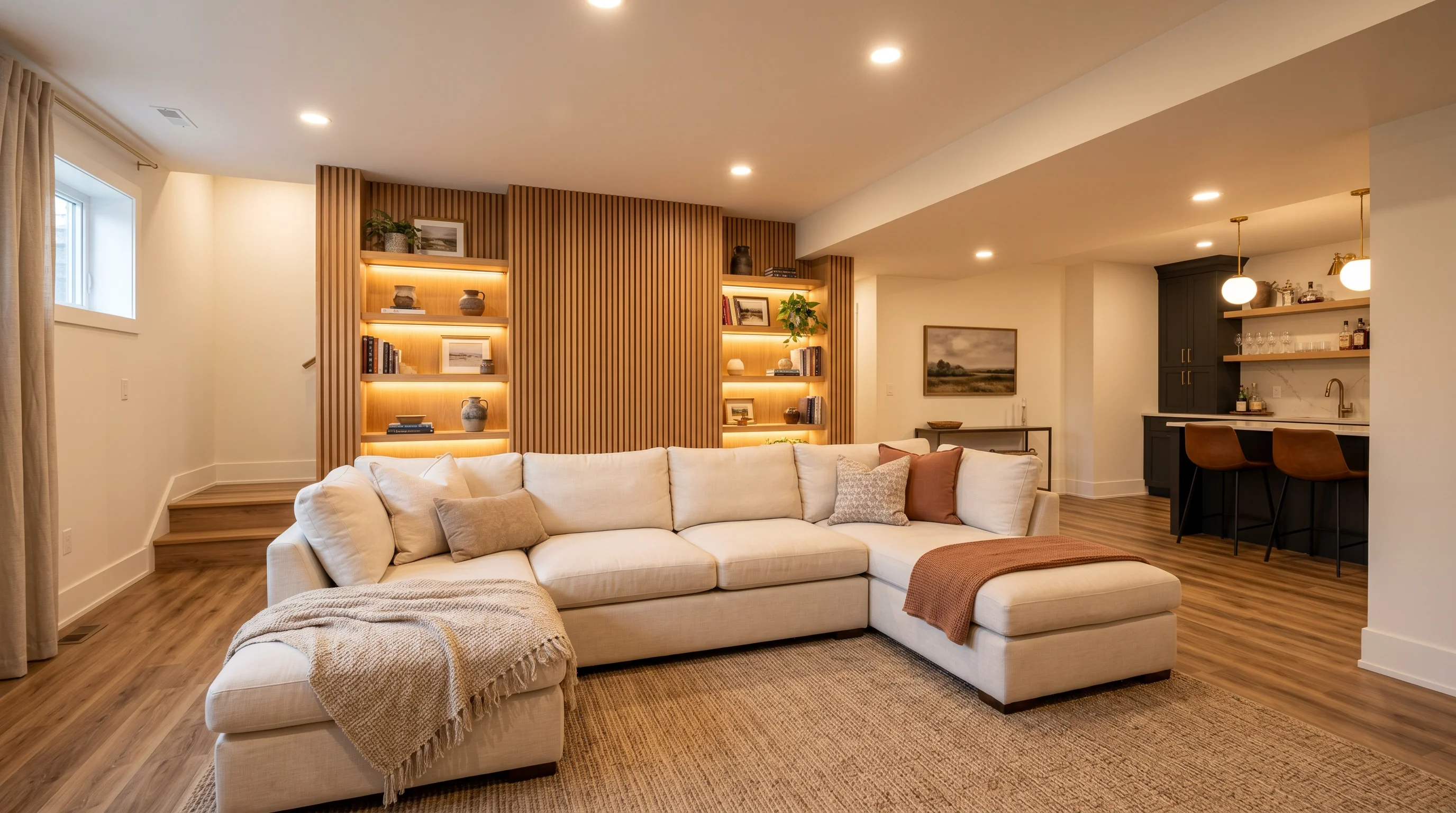
20 Basement Design Ideas That Make Below-Grade Feel Like Main-Floor Living (2026)
A finished basement recoups about 71% of its cost at resale — and it's the cheapest square footage you can add. Here are 20 basement design ideas for 2026: multi-zone layouts, home bars, gyms, media rooms, guest suites, and the warm finishes replacing cold gray.
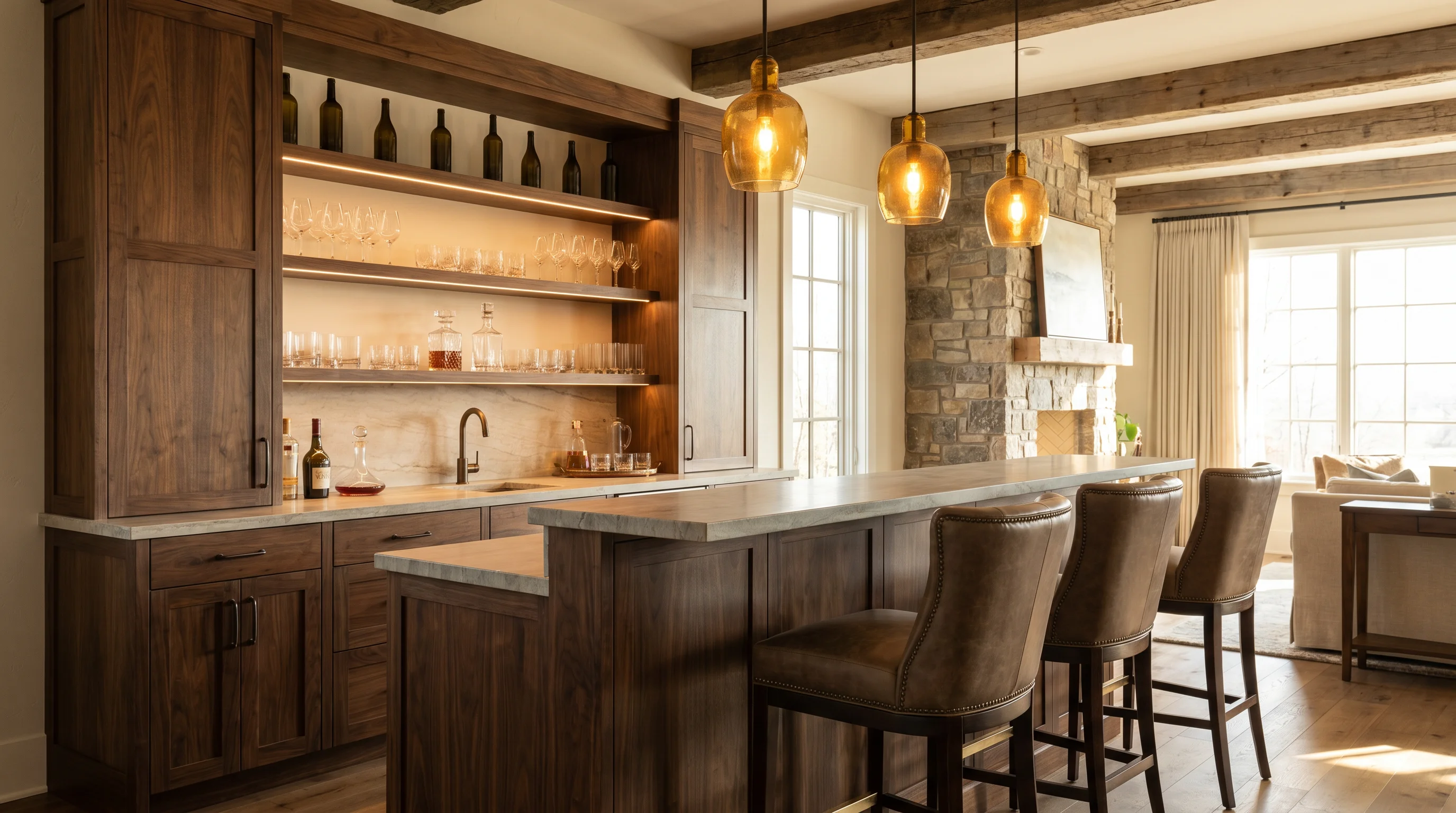
26 Home Bar Ideas, From Bar Carts to Built-Ins (2026)
Whether you have a spare corner or a whole basement, there's a home bar to fit. Here are 26 home bar ideas for 2026 — the bar cart-to-built-in spectrum, small and under-stairs bars, basement and garage builds, wet vs dry essentials, statement lighting, and shelf styling.
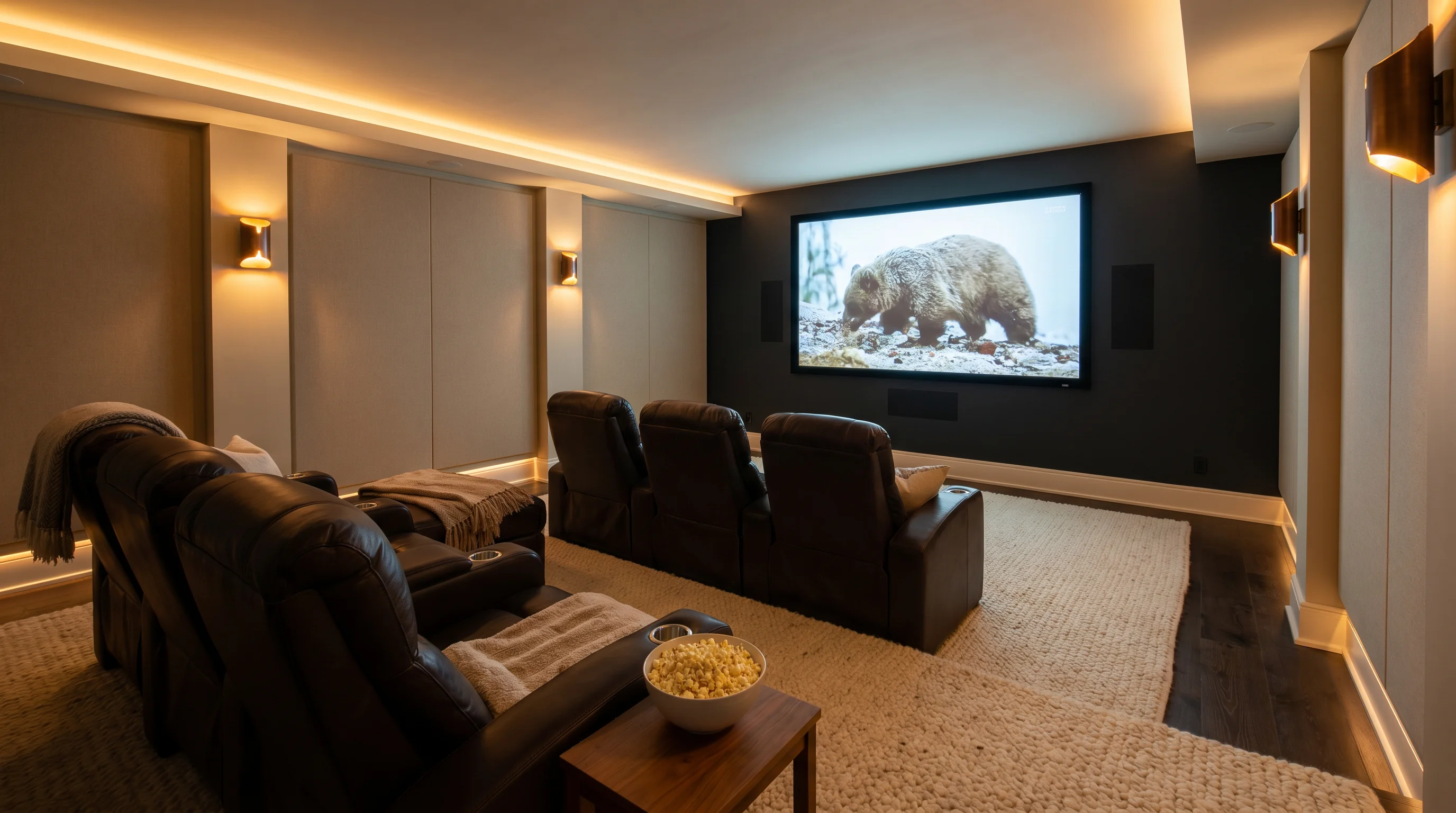
22 Home Theater & Media Room Ideas for Every Budget (2026)
You don't need a dedicated cinema to get a great movie night. Here are 22 home theater and media room ideas for 2026 — dedicated vs flex rooms, seating and sightlines, lighting and acoustics, screen vs projector, basement builds, and cozy styling on any budget.