22 Home Theater & Media Room Ideas for Every Budget (2026)
You don't need a dedicated cinema to get a great movie night. Here are 22 home theater and media room ideas for 2026 — dedicated vs flex rooms, seating and sightlines, lighting and acoustics, screen vs projector, basement builds, and cozy styling on any budget.
 Easy Room AI Team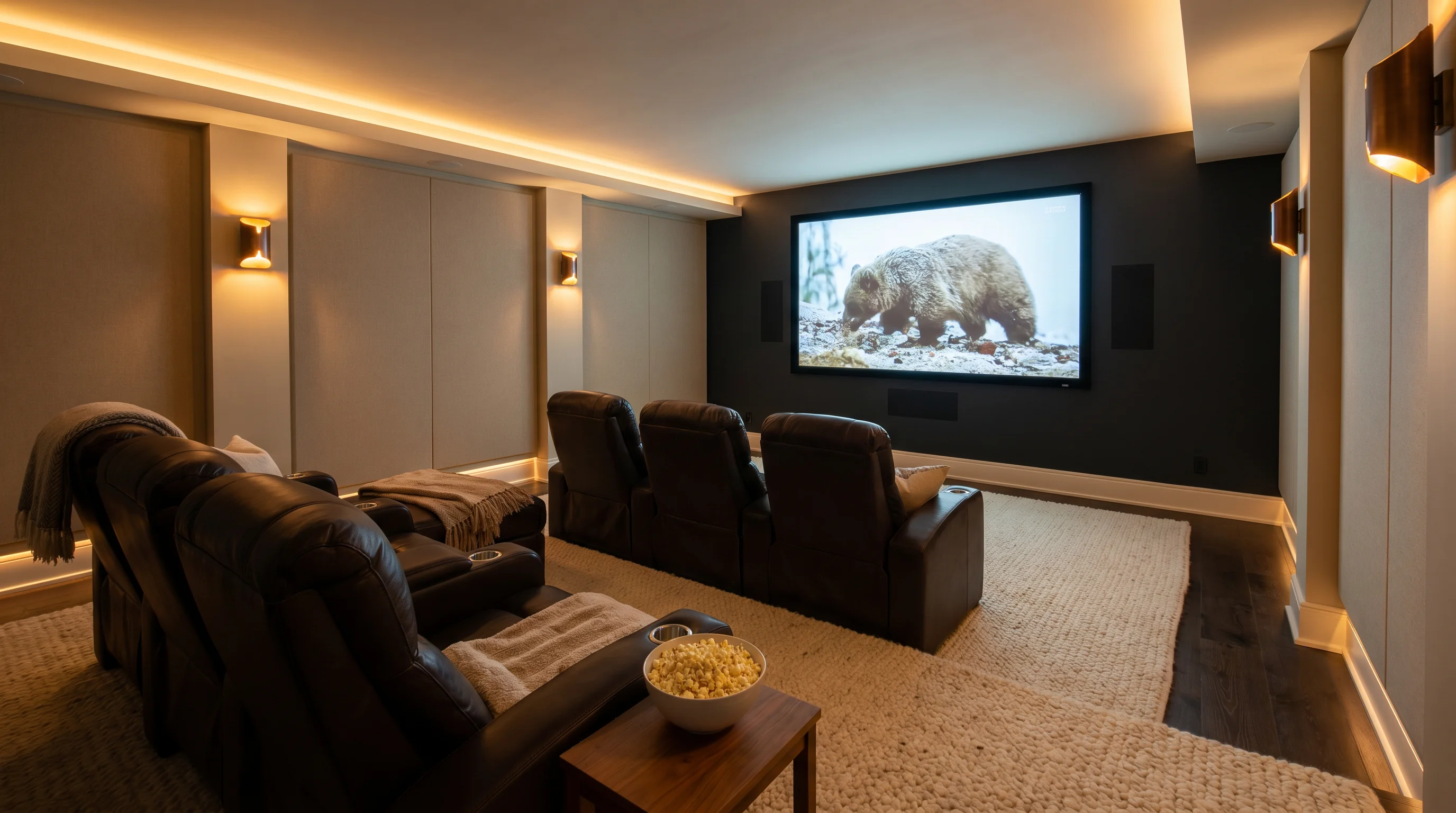
A great home theater isn't about owning the most expensive gear — it's about controlling three things: light, sound, and sightlines. Get those right and a spare bedroom, a basement, or even a corner of the living room can deliver a genuine movie-night experience.
Demand backs the effort up. In a Hippo survey of 2,000+ U.S. homeowners, a game or media room ranked among the most-wanted flex spaces — 36% of new-construction owners specifically prioritized one. Here are 22 home theater and media room ideas for 2026, from a fully dedicated cinema to a flexible family room, with budget-friendly options throughout.
The room itself
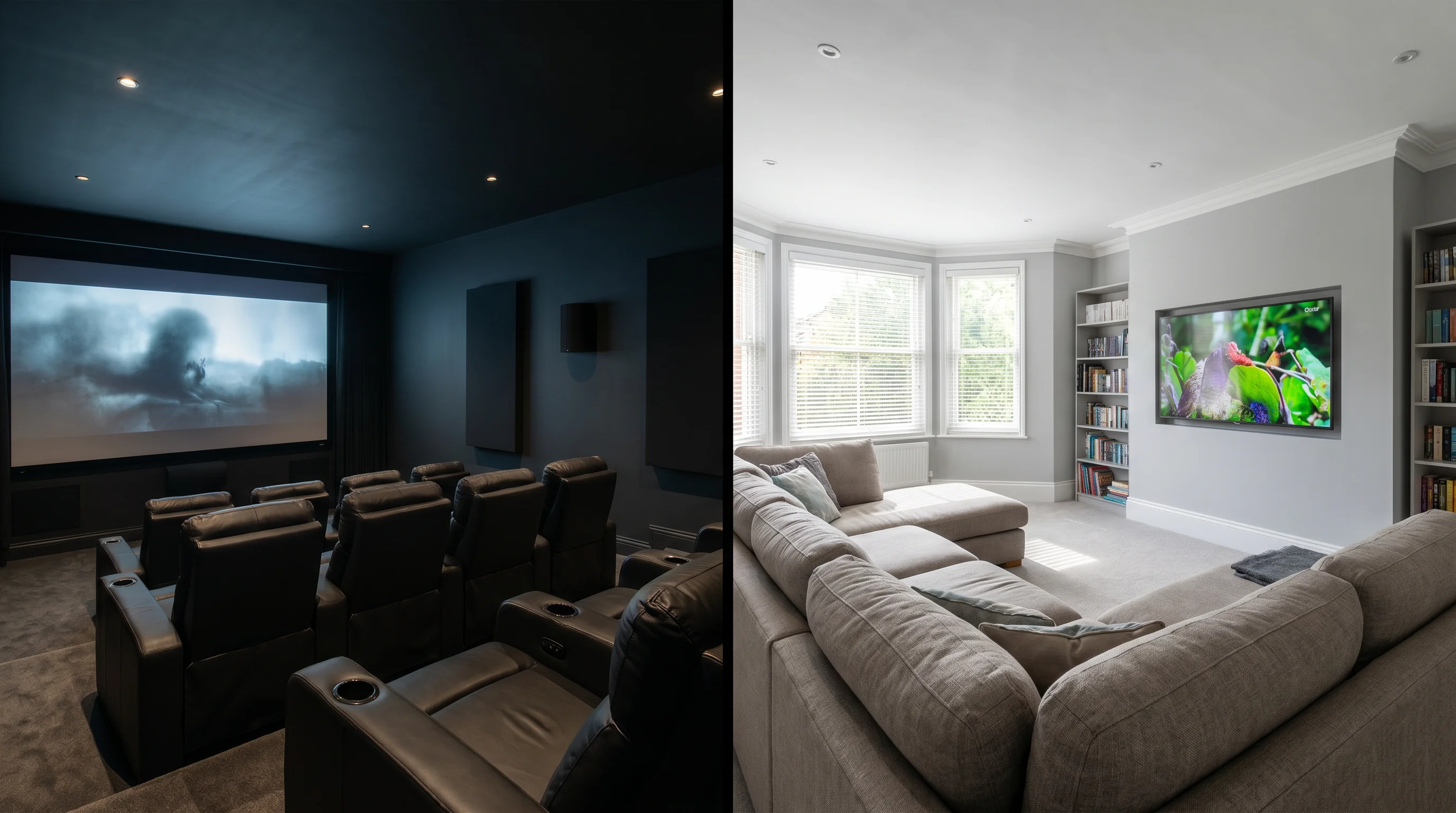
1. Go dedicated if you can commit the room. A light-controlled room built around the screen — dark walls, tiered seating, no other purpose — delivers the best cinema experience. Reserve it for a basement or spare room you can fully darken.
2. A flex media room earns its space every day. If the room doubles as a family or living room, design for comfort first and film second: a big screen, dimmable lighting, blackout capability. Most people get more use from this format than a pure theater.
3. Convert an underused room rather than building new. A spare bedroom, a bonus room above the garage, or even a large home office can become a media room with screen, seating, and light control — no construction needed.
Seating and sightlines
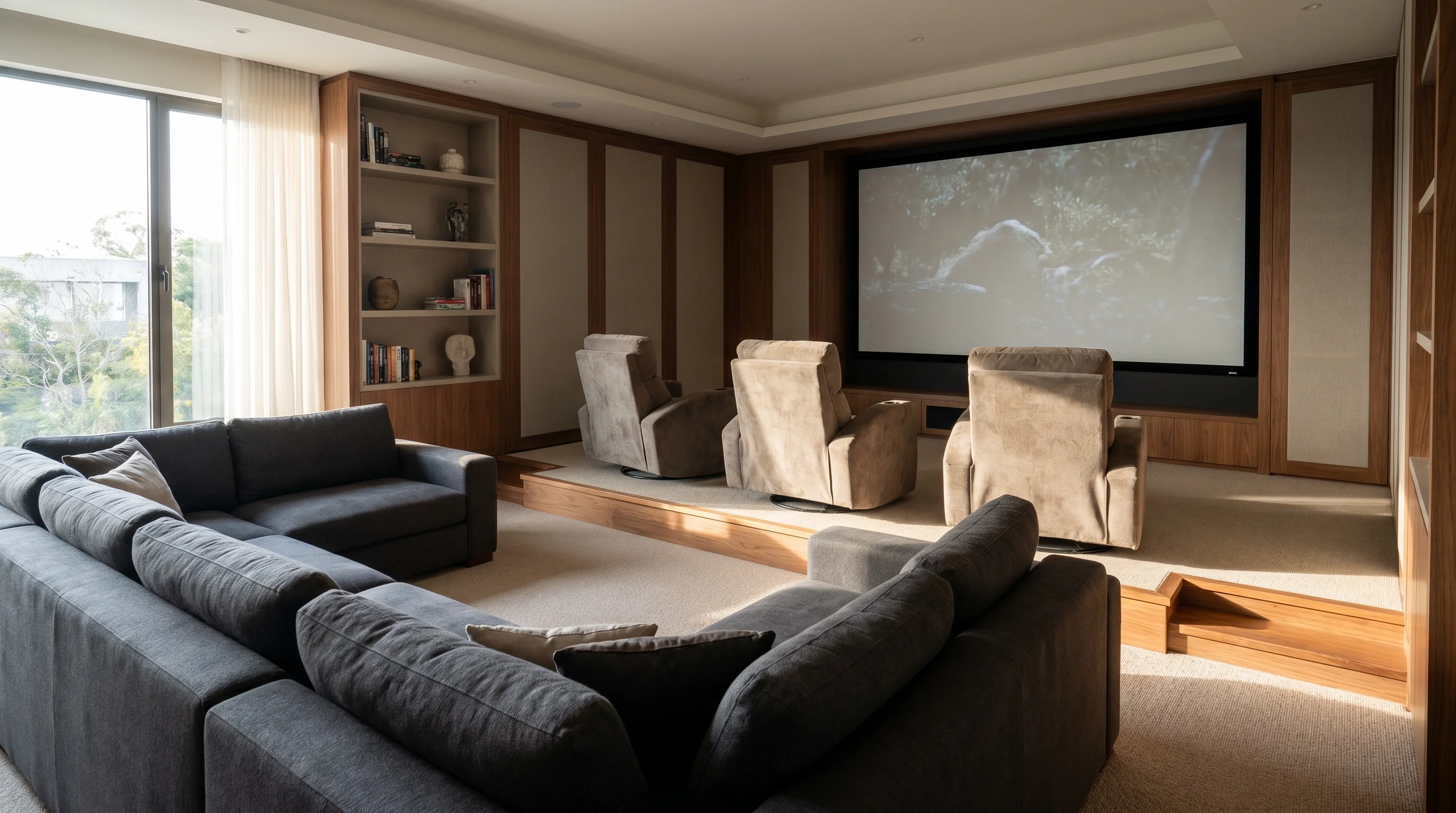
4. Place the screen and primary seat first, then build everything else around that sightline. The center of the screen should sit near seated eye level — roughly 40–48 inches off the floor for a flat screen.
5. A deep sectional is the modern theater workhorse. It seats the whole family, invites lounging, and fills the front row without a row of individual chairs.
6. Add a tiered second row on a simple riser. If you have two rows, raise the back row 8–12 inches on a platform so no one stares at the back of someone's head.
7. Keep beanbags or oversized floor cushions for kids and overflow. They're cheap, stackable, and give the room a relaxed, welcoming feel on movie night.
8. Angle every seat slightly toward the screen center. Even a slight curve of the seating plan eliminates neck-craning from the edges.
Redesign Your Room in Seconds
Upload a photo of your space to test 16 curated design styles instantly with AI — 100% free.
Supports JPG, PNG, WebP up to 10MB
Lighting
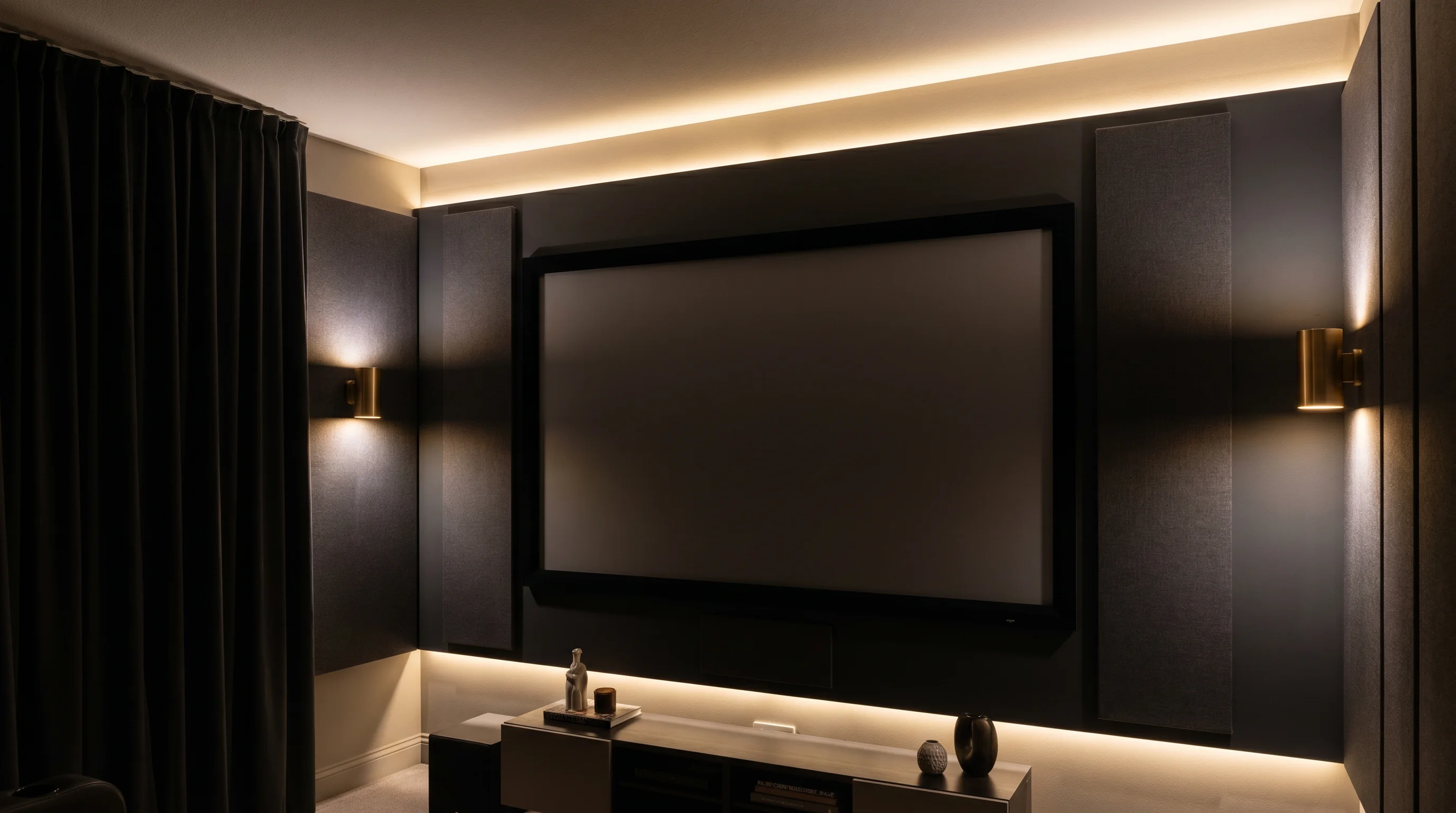
9. Start with full blackout — curtains, shades, or both. Even a little ambient light washes out a projector and kills the cinema immersion. Budget blackout roller shades behind decorative curtains cover both function and style.
10. Use warm dimmable wall sconces instead of a ceiling fixture. Pools of warm light on the side walls mimic a real cinema and give the room atmosphere at low levels without hitting the screen.
11. Add LED bias lighting behind the screen. A strip of warm white LEDs behind the TV reduces eye strain during long sessions and makes the picture appear to have better contrast — a $20 upgrade that looks custom.
12. Paint the screen wall dark and matte. Charcoal, deep navy, or forest green stop light from bouncing back onto the image and anchor the screen as the room's focal point.
Acoustics and sound
13. Lay a thick, heavy rug. It's the single most effective way to tame echo in a theater room, and it adds comfort underfoot for anyone sitting on floor cushions.
14. Hang fabric acoustic panels on the side walls. Two or three panels flanking the screen area absorb reflections and often do more for sound quality than upgrading the speakers themselves.
15. Use heavy curtains double-duty. Blackout curtains that cover windows during a film also absorb sound. Floor-to-ceiling, wall-to-wall curtains on the window wall are a cinema cliché because they work.
16. Consider a basic soundbar with a subwoofer before a full surround system. For a flex media room, a good soundbar delivers 80% of the cinema-sound experience at 20% of the cost and wiring headaches of 5.1 or 7.1.
Screen and tech choices
17. A large modern TV wins in any room with ambient light. OLED and QLED panels are now available at 85–98 inches with brilliant contrast — ideal for a flex media room that has windows.
18. A projector and screen deliver true cinema scale. Go projector only if you can fully darken the room. A 100–120 inch projected image in a light-controlled space is the immersive experience no TV can match.
19. A motorized retractable screen hides the tech when the room's not in cinema mode. Ceiling-mounted motorized screens drop for movie night and disappear the rest of the time — worth it in a living room that doubles as a theater.
Small rooms and basements
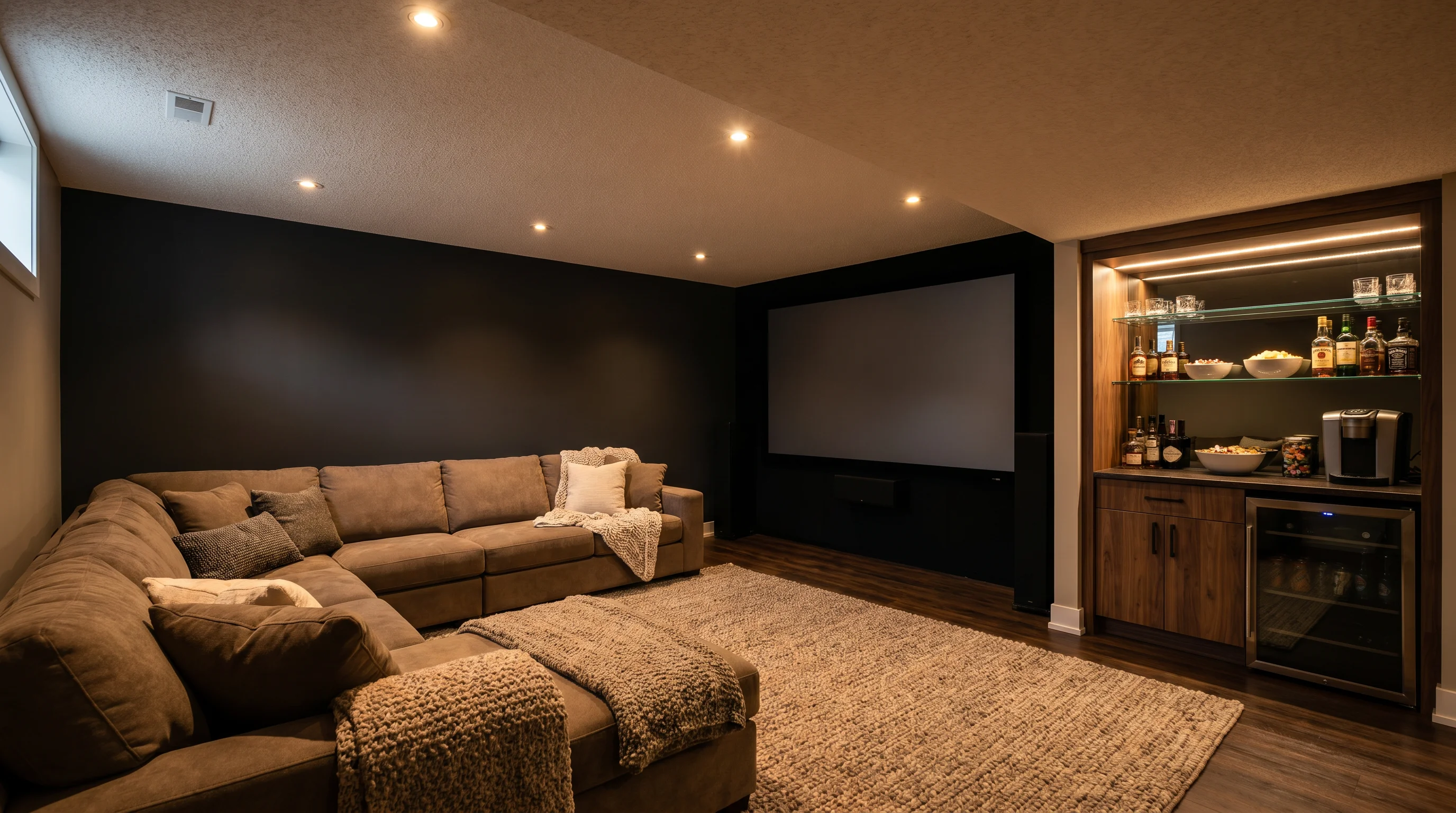
20. A basement is the ideal theater location — naturally dark, quiet, and separate. Lean into the darkness with deep wall colors and warm pot lights. See more layout tricks in our basement design ideas.
21. In a small room, mount the screen on the shortest wall and use a corner sectional. Maximizes seating in a tight footprint and creates a natural wrap-around viewing angle.
Styling that sells the movie-night feel
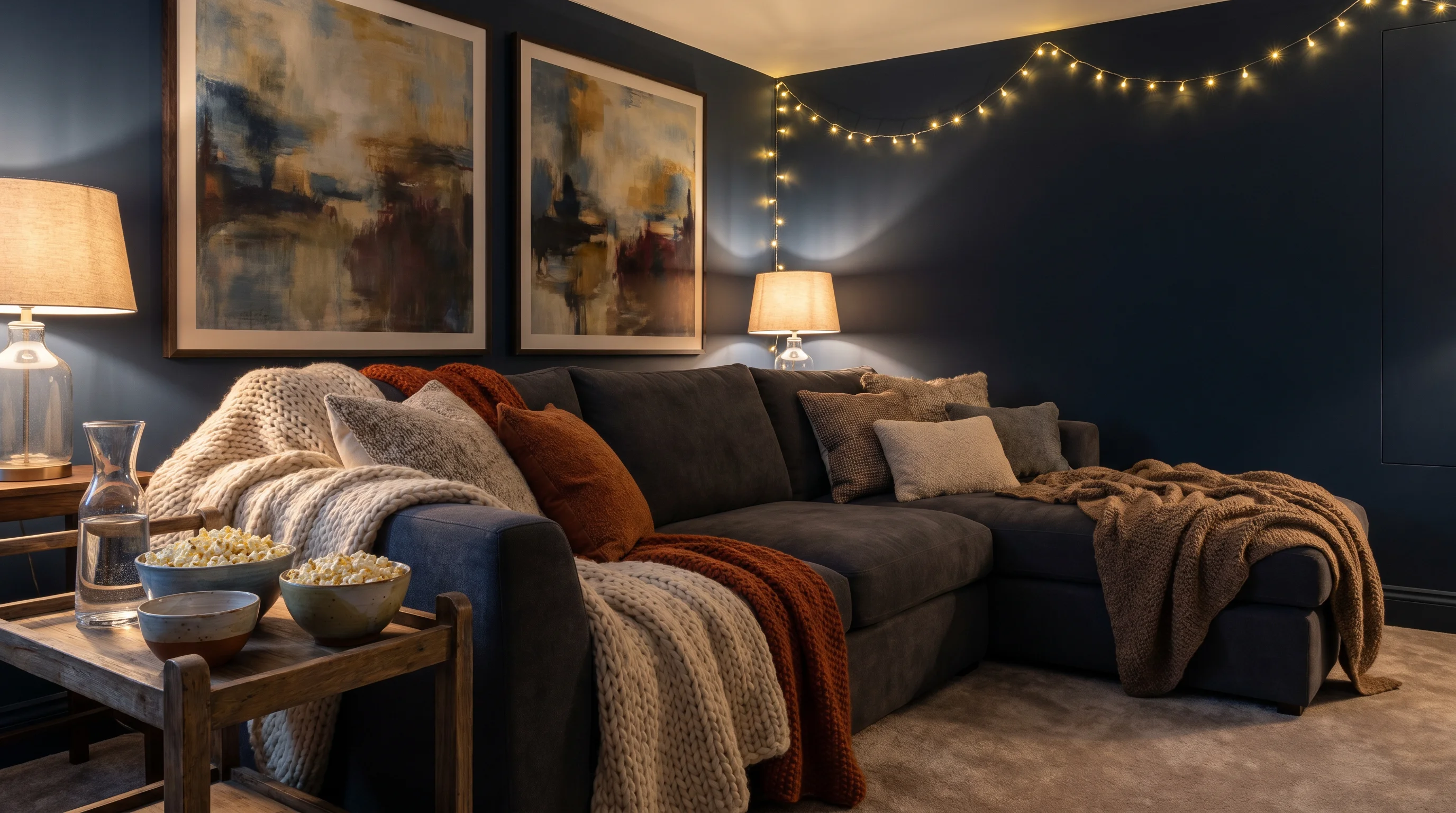
22. Pile on comfort: throws, cushions, a snack cart, and personal touches. The gear gets people in the door once; the comfort and styling are what bring them back. Framed posters, a popcorn machine, or a shelf of favorites turn a room with a screen into a destination. If your media room overlaps with gaming, our game room ideas pair perfectly with a theater setup.
How to design your home theater before you build
It's hard to picture a bright basement or spare room as a dim, cozy cinema. Upload a photo to EasyRoomAI and generate it as a finished media room — test dark feature walls, seating layouts, and lighting moods — before you commit to paint, screens, or seating.
- Try a free room redesign — anonymous previews are free, no signup needed.
- Planning the whole house? See our basement design ideas, specialty room ideas, and browse basement ideas.
Frequently asked questions
What is the difference between a home theater and a media room? A home theater is a dedicated, light-controlled room built only for watching films — dark walls, tiered seating, no other use. A media room is a flexible space that doubles as a family or living room with a large screen and dimmable lighting. Media rooms suit most homes because they're used daily, not just on movie night.
How far should seating be from the screen in a home theater? A good rule is to sit about 1.5 to 2.5 times the screen's diagonal away — for a 100-inch screen, that's roughly 12 to 20 feet. Close enough to feel immersed, far enough to take in the whole image comfortably. Set the screen's center near seated eye level.
Should I get a projector or a big TV for my media room? Choose a projector only if you can fully darken the room — it delivers the biggest, most cinematic image but washes out in ambient light. A large modern TV (OLED or QLED, up to 85–98 inches) looks better in a multi-use room with windows and is far easier to set up.
How do I soundproof or improve the acoustics of a home theater? Add soft surfaces to absorb echo: a thick rug, heavy blackout curtains, upholstered seating, and a few fabric acoustic panels on the walls. These improvements often do more for sound quality than upgrading the speakers, and they also help contain noise from the rest of the house.
Can I build a home theater in a small room or basement? Yes — a basement is ideal because it's naturally dark and quiet. Mount the screen on the darkest wall, use a corner sectional to maximize seating, choose deep matte wall colors, and add warm dimmable lighting. Even a small spare room works if you can control the light.
A home theater that works comes down to light, sound, and sightlines — not the price of the gear. Treat the room, lay out the seating around one perfect view, add cozy styling, and preview it in your own space before you spend a cent on equipment.
Ready to Transform Your Space?
Try AI room redesign for free - no credit card required.
Start Designing FreeRelated reading
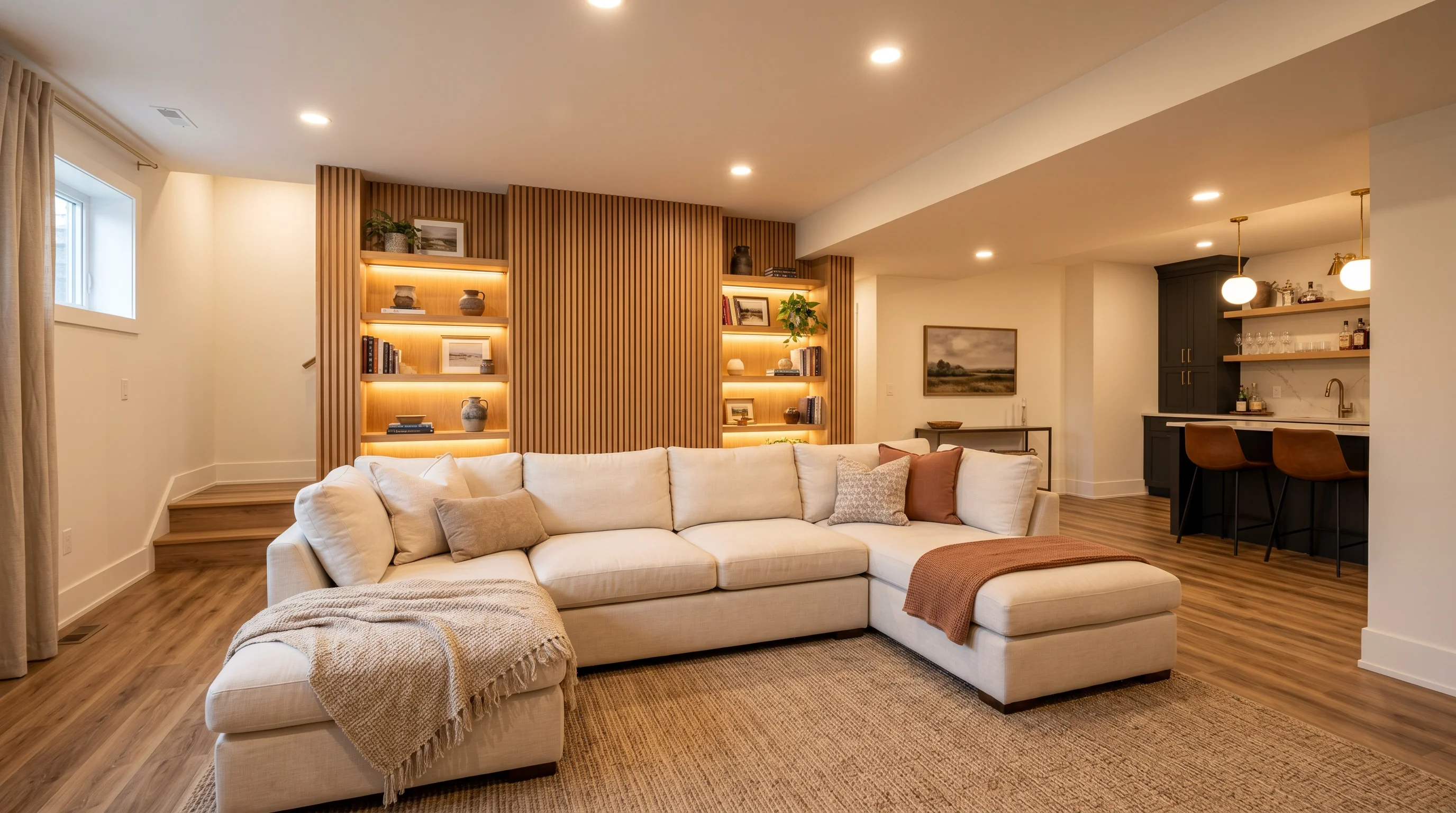
20 Basement Design Ideas That Make Below-Grade Feel Like Main-Floor Living (2026)
A finished basement recoups about 71% of its cost at resale — and it's the cheapest square footage you can add. Here are 20 basement design ideas for 2026: multi-zone layouts, home bars, gyms, media rooms, guest suites, and the warm finishes replacing cold gray.
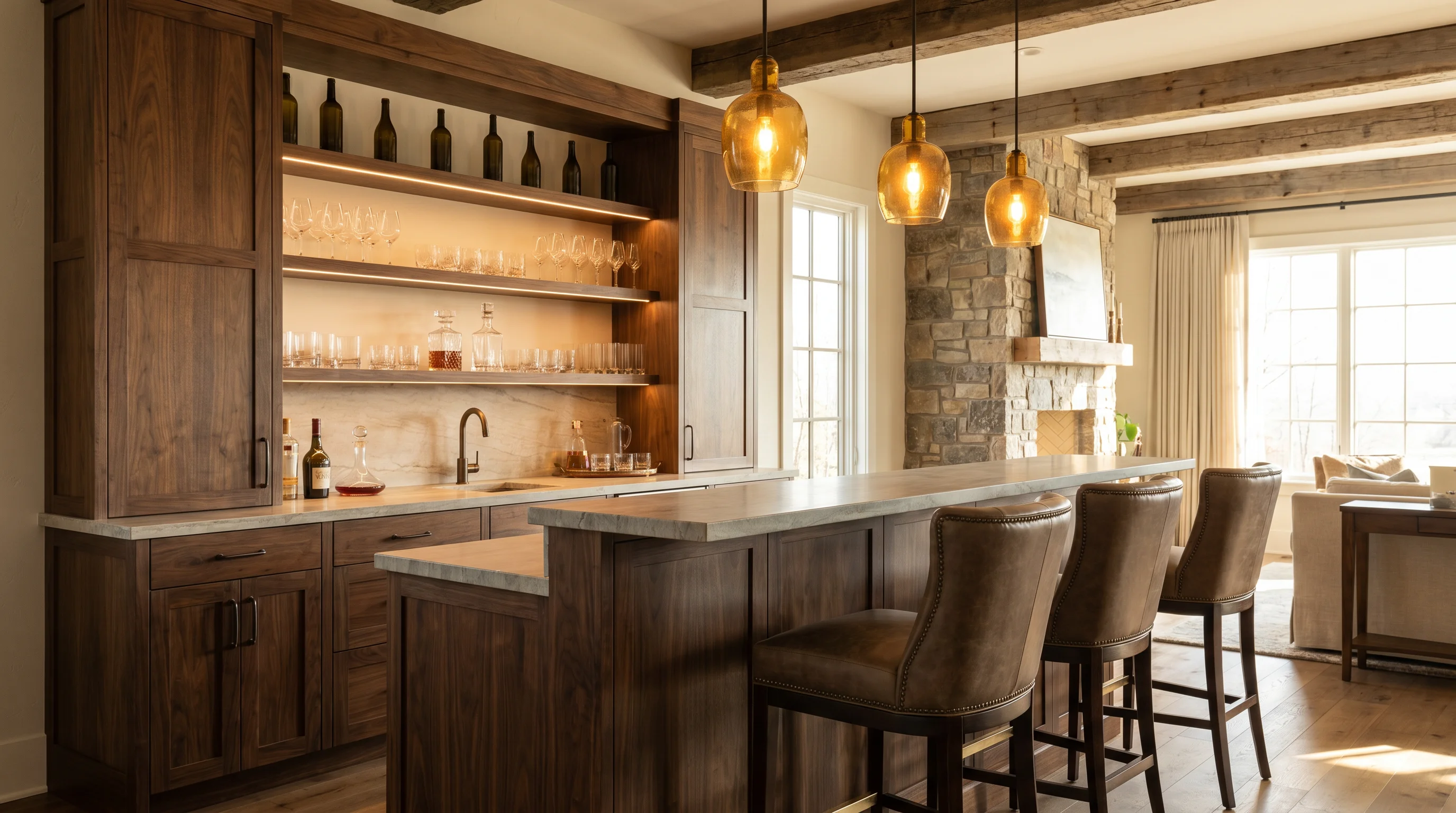
26 Home Bar Ideas, From Bar Carts to Built-Ins (2026)
Whether you have a spare corner or a whole basement, there's a home bar to fit. Here are 26 home bar ideas for 2026 — the bar cart-to-built-in spectrum, small and under-stairs bars, basement and garage builds, wet vs dry essentials, statement lighting, and shelf styling.
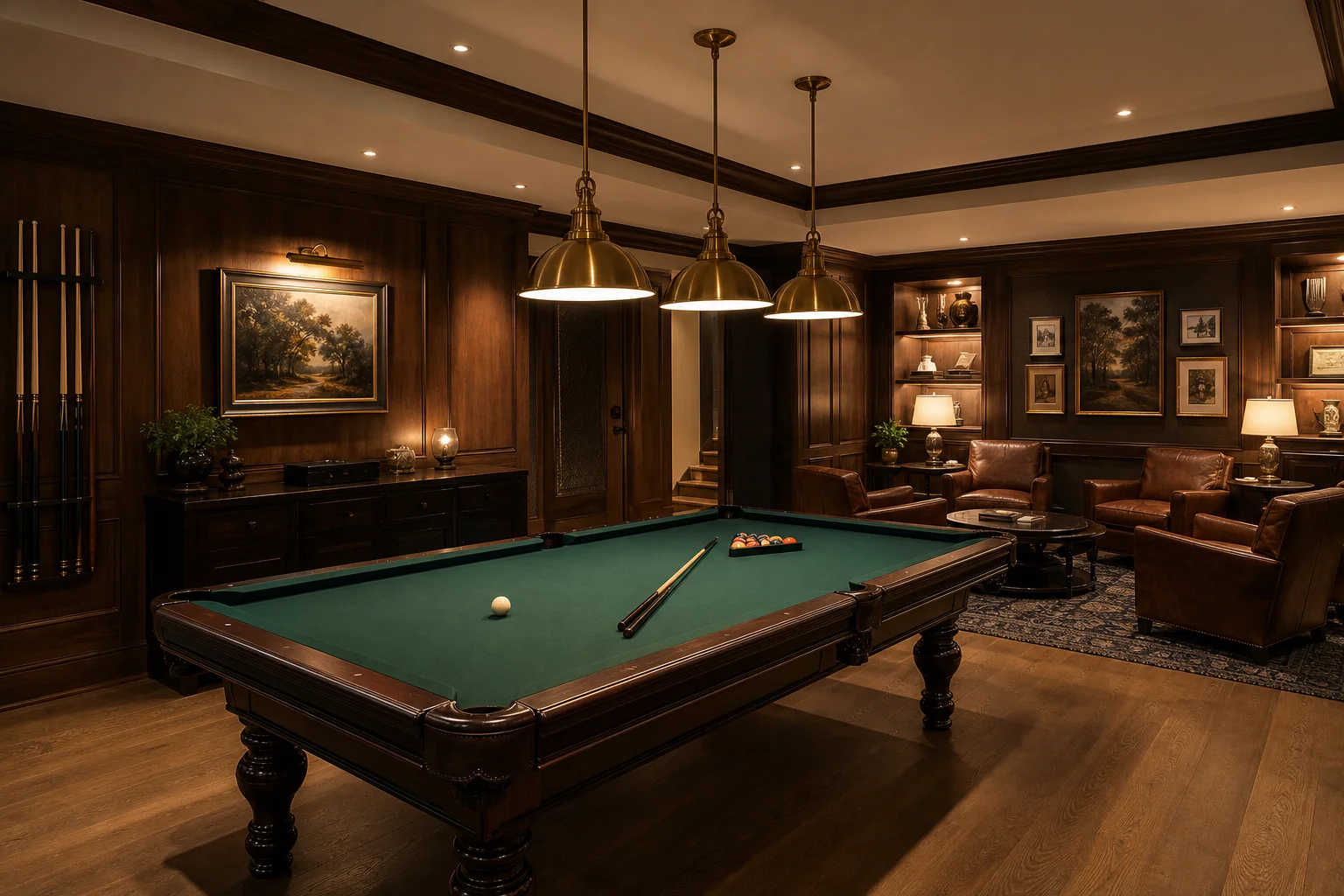
Game Room Design Ideas 2026: Clearances, Zones & Grown-Up Lounges
Stop buying the pool table first. Clearance charts for pool, ping-pong, and consoles — plus basement, small-room, and adult lounge layouts that actually fit in 2026.